


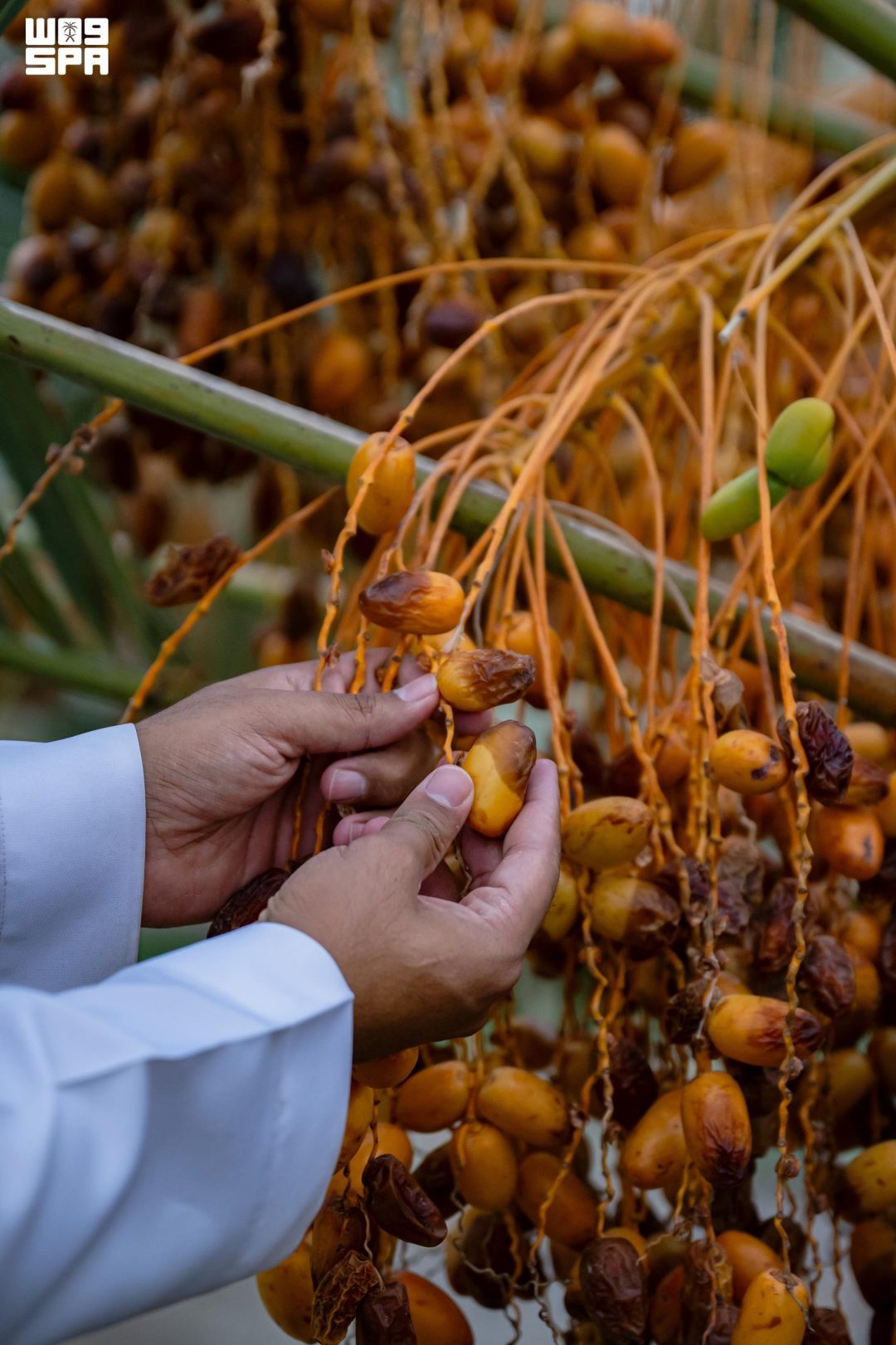
Al-Baha Region contains more than 140,000 palm trees that produce over 2,000 tons of dates every year. Al-Aqiq Governorate is noted as one of the most suitable areas for palm cultivation within the region.
According to SPA, Saeed Al-Ghamdi, Director of the Non-Profit Sector and Agricultural Solutions Department at the Ministry of Environment, Water and Agriculture’s branch in Al-Baha Region, stated that the activity supports the agricultural sector and allows farmers to utilize available resources.
The Sustainable Agricultural Rural Development Program, known as Saudi Reef, provides non-refundable financial support to palm farmers and workers in processing industries. This support is granted based on approved regulations and requirements to improve production efficiency and develop rural agricultural activities.
Processing industries diversify palm products to increase added value and economic returns for farmers, which helps enhance the sustainability of the activity in the region.
What are the production statistics for palm trees in Al-Baha? The Al-Baha Region has more than 140,000 palm trees. These trees produce over 2,000 tons of dates annually, providing economic and nutritional value to the region. Al-Aqiq Governorate is specifically identified as one of the most suitable areas for this cultivation activity.
How does the Saudi Reef program support the palm sector in Al-Baha? The Sustainable Agricultural Rural Development Program, or Saudi Reef, provides non-refundable financial support to palm farmers and workers in associated processing industries. This support is delivered according to approved regulations and requirements to improve production efficiency and develop rural agricultural activities.
What is the role of processing industries in Al-Baha’s palm cultivation? Processing industries utilize and diversify palm products to open broader marketing opportunities. This process increases the added value of the products and boosts the economic returns for farmers, which supports the overall sustainability of the agricultural sector in the Al-Baha Region.