


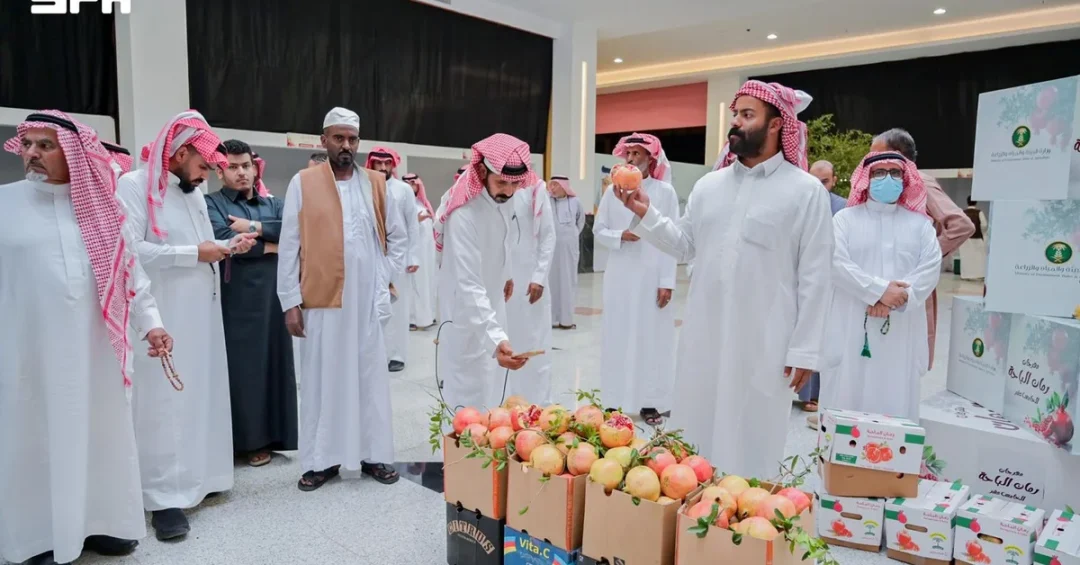
The Al-Baha branch of the Ministry of Environment, Water and Agriculture has concluded the 15th edition of the Al-Baha Pomegranate Festival, an event that generated sales exceeding 60 tons of the region’s signature fruit over five days, according to an official announcement carried by the Saudi Press Agency. The festival, held in the southwestern highland region of Al-Baha, drew a large turnout of visitors, farmers, and agricultural specialists, underscoring the growing commercial and cultural importance of one of the Kingdom’s most distinctive seasonal crops.
Could a single regional harvest festival reveal how Saudi agriculture is quietly transforming? The answer, according to organizers and participating farmers, is a resounding yes. Fifty local pomegranate farmers took part in the event, joined by ten cottage-industry families who presented a wide range of pomegranate-based products, from juices and jams to cosmetics and traditional remedies. Several government entities also hosted booths offering agricultural awareness and extension programs, turning the festival into a comprehensive platform for knowledge-sharing, marketing, and community engagement.
Context and Background
What makes Al-Baha’s pomegranates worthy of a dedicated annual festival? The answer lies in the region’s unique geography and agricultural heritage. Situated in the Sarawat Mountains of southwestern Saudi Arabia, Al-Baha enjoys a temperate climate, fertile terraced valleys, and abundant groundwater resources that have supported fruit cultivation for centuries. Pomegranates, in particular, have thrived in this environment, developing a reputation for exceptional sweetness, deep color, and high nutritional value. The fruit is harvested in the autumn months, and the festival has become a fixture of the regional calendar since its first edition fifteen years ago.
The event is organized under the supervision of the Ministry of Environment, Water and Agriculture, which operates a dedicated branch in Al-Baha responsible for supporting local farmers, regulating agricultural practices, and promoting sustainable development in the sector. Over the years, the festival has evolved from a modest local market into a multi-day showcase that attracts visitors from across the Kingdom and, increasingly, from neighboring Gulf states. Its success reflects broader national efforts to diversify the agricultural economy, improve food security, and create new income streams for rural communities.
Why has the festival grown so steadily over fifteen editions? Part of the answer is the ministry’s sustained investment in extension services, which provide farmers with training on modern irrigation techniques, pest management, and post-harvest handling. Another factor is the rising consumer demand for locally produced, high-quality fruit, both within Saudi Arabia and in export markets. The festival has become a reliable venue for connecting producers with buyers, including wholesalers, retailers, and food-processing companies looking to source premium ingredients.
Key Details
What exactly happened during the five-day event? According to Fahd Al-Zahrani, Director General of the ministry’s branch in Al-Baha, sales of pomegranates exceeded 60 tons. In a statement reported by the Saudi Press Agency, Al-Zahrani explained that the festival showcased Al-Baha’s pomegranates, raised awareness of their economic and nutritional value, and supported farmers by opening new marketing channels for their produce. The figures represent a significant volume for a regional festival and highlight the commercial viability of the crop.
The participation of fifty local pomegranate farmers was central to the event’s success. These growers, many of whom manage small family farms, brought their finest harvests to display and sell. The ten cottage-industry families added a value-added dimension, presenting products such as pomegranate molasses, dried seeds, natural dyes, and skincare items. This integration of primary agriculture with small-scale manufacturing reflects a deliberate strategy to capture more value within the region, rather than exporting raw fruit alone.
Government entities that hosted booths included representatives from agricultural extension services, food safety authorities, and rural development programs. Their presence allowed farmers and visitors to access information on best practices, regulatory requirements, and available support mechanisms. For many smallholders, the festival is one of the few occasions each year when they can interact directly with officials and receive personalized guidance. The awareness programs covered topics such as water conservation, organic farming, and the use of technology in crop management.
International and Regional Impact
How does a regional festival in Al-Baha resonate beyond Saudi borders? The event contributes to the Kingdom’s growing reputation as a producer of high-quality agricultural goods. Pomegranates from Al-Baha have already found their way to markets in the Gulf Cooperation Council countries, and there is potential for expansion into Asia and Europe. The festival serves as a de facto trade show, allowing foreign buyers and distributors to sample the product and establish relationships with local suppliers. This export potential aligns with national goals to increase non-oil exports and diversify revenue streams.
On a regional level, the festival strengthens ties between Al-Baha and neighboring provinces. Visitors from Jazan, Asir, and Taif attend regularly, and the event has become a meeting point for agricultural professionals from across the southwestern region. It also complements other seasonal festivals in Saudi Arabia, such as the date festivals in Al-Ahsa and the rose festival in Taif, creating a network of cultural and economic events that collectively promote domestic tourism and rural development.
Could the Al-Baha model be replicated elsewhere? The ministry’s approach—combining market access, technical training, and community involvement—offers a template that other regions could adapt to their own signature crops. The festival’s focus on cottage industries, in particular, provides a pathway for women and youth to participate in the agricultural value chain, generating income and preserving traditional skills. This inclusive dimension enhances the event’s social impact and aligns with broader national objectives.
Economic and Strategic Significance
What does the 60-ton sales figure signify for Saudi agriculture? It demonstrates that small and medium-sized farms can achieve meaningful commercial scale when supported by effective marketing platforms. The festival effectively aggregates supply from dozens of producers, creating a volume that attracts wholesale buyers who might otherwise overlook individual smallholders. This aggregation model reduces transaction costs and improves bargaining power for farmers, leading to better prices and more stable incomes.
The event also supports food security objectives. By promoting domestic production of fruits that can be grown sustainably in the Kingdom’s varied climate zones, Saudi Arabia reduces its reliance on imports. Pomegranates are nutrient-dense and have a long shelf life, making them an attractive crop for both fresh consumption and processing. The ministry’s extension programs encourage farmers to adopt water-efficient irrigation methods, such as drip systems, which are critical in a region where water resources are carefully managed.
From a strategic perspective, the festival contributes to the development of rural economies and the reduction of regional disparities. Al-Baha, like other mountainous regions, faces challenges related to terrain, transportation, and access to markets. By creating a high-profile event that draws visitors and buyers, the festival helps overcome some of these barriers. It also generates demand for local services, including hospitality, transportation, and retail, creating a multiplier effect that benefits the wider community.
Vision 2030 Alignment
How does the Al-Baha Pomegranate Festival connect to Saudi Vision 2030? The Vision, launched in 2016 under the leadership of Crown Prince Mohammed bin Salman, seeks to diversify the economy, develop non-oil sectors, and improve the quality of life for all citizens. Agriculture plays a role in several Vision 2030 pillars, including economic diversification, food security, and the empowerment of small businesses. The festival embodies these goals by supporting local farmers, promoting value-added products, and creating economic opportunities in a rural region.
The event also aligns with the Vision’s emphasis on enhancing the Kingdom’s international image and attracting visitors. Cultural and agricultural festivals are increasingly part of Saudi Arabia’s tourism offering, providing authentic experiences that complement the country’s heritage and entertainment destinations. As the Kingdom continues to open up to the world, events like the pomegranate festival showcase the diversity of its regions and the warmth of its communities.
Looking ahead, the Ministry of Environment, Water and Agriculture is expected to build on the festival’s success by further integrating technology, improving market linkages, and expanding support for cottage industries. The 15th edition has set a high benchmark, and future editions are likely to attract even greater participation. For the farmers of Al-Baha, the festival is more than a market—it is a celebration of their heritage, a platform for growth, and a testament to the enduring value of working the land. As Saudi Arabia marches toward its Vision 2030 goals, such grassroots successes will remain essential building blocks of national progress.
20 Questions
Q1. What was the 15th Al-Baha Pomegranate Festival?
A1. It was a five-day agricultural festival organized by the Al-Baha branch of the Ministry of Environment, Water and Agriculture to showcase and sell the region’s pomegranates, support local farmers, and promote related cottage industries.
Q2. How many tons of pomegranates were sold at the festival?
A2. Sales exceeded 60 tons over the five-day event, according to Fahd Al-Zahrani, Director General of the ministry’s branch in Al-Baha, as reported by the Saudi Press Agency.
Q3. How many farmers participated in the festival?
A3. Fifty local pomegranate farmers participated, displaying their harvests and interacting with buyers and agricultural experts.
Q4. What role did cottage-industry families play?
A4. Ten cottage-industry families showcased a variety of pomegranate-based products, such as juices, jams, molasses, and skincare items, adding value to the primary crop.
Q5. Which government entities were involved?
A5. Several government entities hosted booths offering agricultural awareness and extension programs, covering topics like water conservation, pest management, and organic farming.
Q6. Where is Al-Baha located?
A6. Al-Baha is a region in southwestern Saudi Arabia, situated in the Sarawat Mountains, known for its temperate climate and fertile agricultural terraces.
Q7. Why are Al-Baha pomegranates considered special?
A7. They are prized for their exceptional sweetness, deep color, and high nutritional value, thanks to the region’s unique geography and climate.
Q8. What did Fahd Al-Zahrani say about the festival?
A8. He stated that the festival showcased Al-Baha’s pomegranates, raised awareness of their economic and nutritional value, and supported farmers by opening new marketing channels.
Q9. How does the festival support farmers economically?
A9. It aggregates supply from many smallholders, attracts wholesale buyers, reduces transaction costs, and improves bargaining power, leading to better prices and more stable incomes.
Q10. What is the significance of the 60-ton sales figure?
A10. It demonstrates that small and medium-sized farms can achieve meaningful commercial scale when supported by effective marketing platforms like the festival.
Q11. How does the festival contribute to food security?
A11. By promoting domestic production of nutrient-dense fruits, it reduces reliance on imports and supports sustainable agricultural practices in the Kingdom.
Q12. What agricultural extension programs were offered?
A12. Programs covered best practices in irrigation, pest control, post-harvest handling, organic farming, and the use of technology in crop management.
Q13. How does the festival align with Vision 2030?
A13. It supports economic diversification, food security, small business empowerment, and rural development, all key pillars of Saudi Vision 2030.
Q14. What impact does the festival have on local tourism?
A14. It attracts visitors from across the Kingdom and neighboring Gulf states, boosting demand for hospitality, transportation, and retail services in Al-Baha.
Q15. Can the Al-Baha model be replicated in other regions?
A15. Yes, the combination of market access, technical training, and community involvement offers a adaptable template for other regions to promote their signature crops.
Q16. What products were showcased by cottage industries?
A16. Products included pomegranate molasses, dried seeds, natural dyes, juices, jams, and skincare items, demonstrating the versatility of the fruit.
Q17. How does the festival support women and youth?
A17. By including cottage industries, it provides pathways for women and youth to participate in the agricultural value chain, generate income, and preserve traditional skills.
Q18. What is the Ministry of Environment, Water and Agriculture’s role?
A18. The ministry supports local farmers, regulates agricultural practices, provides extension services, and promotes sustainable development in the sector.
Q19. What are the export prospects for Al-Baha pomegranates?
A19. There is potential to expand exports to GCC countries and beyond, as the festival serves as a trade show for foreign buyers to sample and establish relationships with suppliers.
Q20. What does the future hold for the festival?
A20. Future editions are expected to build on the success of the 15th edition, integrating more technology, improving market linkages, and attracting greater participation from farmers and visitors alike.
Reader Feedback
We value your thoughts. Please share your feedback on this article.
Your feedback helps us improve our coverage.