


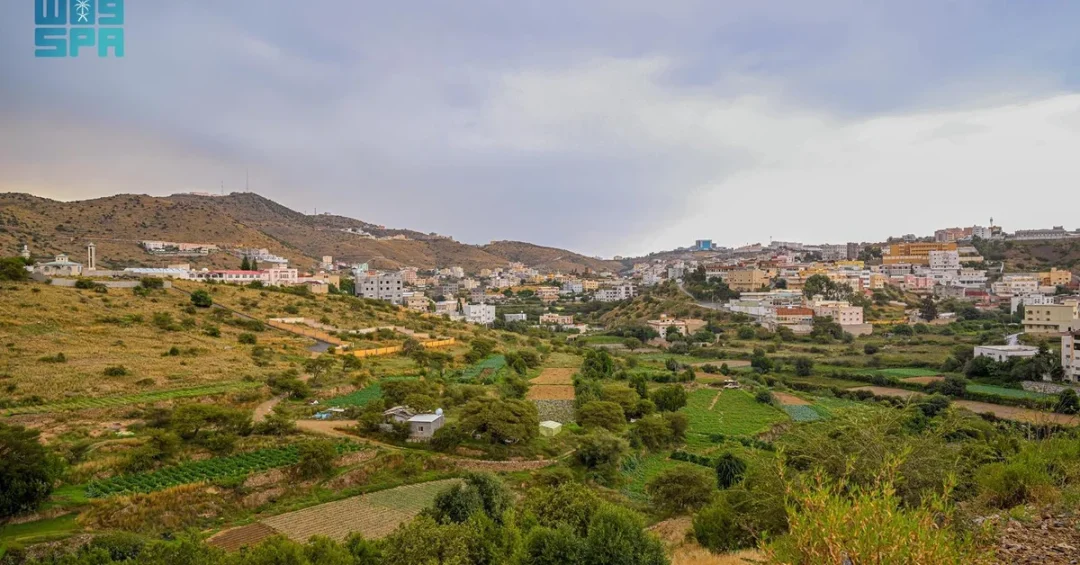
Recent rainfall in Al-Baha Region has revitalized the local agricultural sector, transforming the area into a lush green landscape, according to the Saudi Press Agency (SPA). The downpour, which occurred in early September 2024, has brought farms, fields, and orchards across the governorates back to life, yielding a bountiful harvest of seasonal fruits and crops. This natural phenomenon underscores the region’s agricultural resilience and aligns with Saudi Arabia’s Vision 2030 goals of sustainable development and economic diversification.
Context and Background
Al-Baha Region, nestled amidst the Sarawat Mountains, is known for its diverse agricultural landscape, including corn, wheat, barley, fruit orchards, and vegetable fields. The region’s natural beauty is further enhanced by vibrant flowers such as chrysanthemum, lotus, and acacia, along with the fragrant aromas of basil, wormwood, and atam. The recent rains have not only replenished the soil but also filled dams and valleys, with the Saudi Irrigation Organization reporting a total of 7,538,000 cubic meters of rainfall and 10,387,000 cubic meters of discharged torrents. Four dams in Al-Baha have overflowed, a testament to the abundance of water.
Key Details
Farmers in Al-Baha have expressed happiness following the rainfall, which has led to increased production of essential crops. Tomatoes, cucumbers, and strawberries are among the most prominent, not only meeting local demand but also being exported to other regions. Summer crops like zucchini and okra are also grown, albeit on a smaller scale. The rainfall has encouraged citizens to reclaim their agricultural lands, clearing them of weeds and planting new crops. This revival has reignited the tradition of farming, with older generations encouraging younger people to embrace agriculture and its potential. The Saudi Irrigation Organization’s data highlights the significant water resources now available, which will support ongoing agricultural activities.
Implications and Impact
The revitalization of agriculture in Al-Baha has broader implications for Saudi Arabia’s food security and economic diversification. By increasing local production, the region reduces reliance on imports and contributes to the national goal of self-sufficiency. The export of surplus crops to other regions strengthens inter-regional trade and supports the local economy. Moreover, the renewed interest in farming among younger generations fosters job creation and preserves cultural heritage. Environmentally, the greening of Al-Baha enhances the region’s appeal as a tourist destination, potentially boosting eco-tourism and further diversifying the economy away from oil.
Vision 2030 Alignment
This agricultural resurgence aligns with Saudi Arabia’s Vision 2030, which aims to achieve sustainable development, enhance food security, and diversify the economy. By empowering local farmers and promoting efficient water management, the Kingdom is making strides toward a resilient agricultural sector. The revitalization of Al-Baha serves as a model for other regions, demonstrating how natural resources can be harnessed responsibly to create economic opportunities and improve quality of life. As Saudi Arabia continues to invest in its agricultural potential, stories like this highlight the tangible benefits of Vision 2030 for communities across the nation.
20 Questions
Q1. What recent event has revitalized agriculture in Al-Baha Region?
A1. Recent rainfall in early September 2024 has revitalized agriculture in Al-Baha, transforming it into a lush green landscape and boosting crop production.
Q2. Which crops are commonly grown in Al-Baha?
A2. Al-Baha grows corn, wheat, barley, fruit orchards, and vegetables, with tomatoes, cucumbers, and strawberries being prominent.
Q3. How much rainfall was recorded in Al-Baha according to the Saudi Irrigation Organization?
A3. The Saudi Irrigation Organization reported 7,538,000 cubic meters of rainfall and 10,387,000 cubic meters of discharged torrents.
Q4. How many dams overflowed in Al-Baha due to the recent rains?
A4. Four dams in Al-Baha overflowed due to the recent downpour, demonstrating the abundance of water.
Q5. What are some of the flowers that add beauty to Al-Baha’s landscape?
A5. Chrysanthemum, lotus, and acacia flowers add vibrant colors, while basil, wormwood, and atam provide fragrant aromas.
Q6. How has the rainfall affected local farmers in Al-Baha?
A6. Farmers have expressed happiness as the rainfall increased production of essential crops, leading to exports to other regions.
Q7. Which summer crops are grown in Al-Baha on a smaller scale?
A7. Zucchini and okra are grown in Al-Baha on a smaller scale during the summer months.
Q8. What impact has the rainfall had on agricultural lands in Al-Baha?
A8. The rainfall has encouraged citizens to reclaim their lands, clear weeds, and plant new crops, revitalizing farming traditions.
Q9. How does the agricultural revival in Al-Baha align with Vision 2030?
A9. It aligns with Vision 2030 by promoting sustainable development, food security, and economic diversification through local production.
Q10. What role does the Saudi Irrigation Organization play in Al-Baha?
A10. The Saudi Irrigation Organization monitors and reports on water resources, including rainfall and torrent discharges, supporting agricultural planning.
Q11. Are crops from Al-Baha exported to other regions?
A11. Yes, crops like tomatoes, cucumbers, and strawberries not only meet local demand but are also exported to other regions.
Q12. How has the rainfall affected the younger generation in Al-Baha?
A12. Older generations are encouraging younger people to embrace agriculture, seeing its potential and revitalizing the farming tradition.
Q13. What is the significance of the Sarawat Mountains for Al-Baha’s agriculture?
A13. The Sarawat Mountains provide a unique climate and terrain that support diverse crops and contribute to the region’s agricultural richness.
Q14. How does the greening of Al-Baha impact tourism?
A14. The lush landscape enhances Al-Baha’s appeal as a tourist destination, potentially boosting eco-tourism and economic diversification.
Q15. What economic benefits does the agricultural revival bring to Al-Baha?
A15. It strengthens local economy through job creation, increased trade, and reduced reliance on imports, supporting national food security.
Q16. What traditional farming practices are being revived in Al-Baha?
A16. Traditional farming practices such as land reclamation, planting, and harvesting are being revived, preserving cultural heritage.
Q17. How does the rainfall in Al-Baha compare to other regions in Saudi Arabia?
A17. Al-Baha’s mountainous terrain often receives more rainfall than other regions, making it a key agricultural area.
Q18. What is the Saudi Press Agency’s role in reporting this news?
A18. The Saudi Press Agency (SPA) serves as the official news outlet, providing accurate and timely information about developments in the Kingdom.
Q19. How can other regions learn from Al-Baha’s agricultural success?
A19. Other regions can learn from Al-Baha’s efficient water management, community engagement, and crop diversification strategies.
Q20. What future prospects does Al-Baha’s agriculture hold under Vision 2030?
A20. Under Vision 2030, Al-Baha’s agriculture is poised for growth through continued investment, innovation, and sustainable practices, enhancing food security.
Reader Feedback
We value your thoughts. Please share your feedback on this article.
Your feedback helps us improve our coverage.
Related articles
 IsDB and SFD Sign MoU to Boost Development Cooperation
 WEQAA Launches Farmer Field Schools with FAO to Combat Red Palm Weevil
 Saudi Non-Oil Trade Surplus with GCC Hits SAR 6.8B in Q2 2024
 Saudi, Singaporean Ministers Discuss Investment Opportunities
 Saudi EXIM Signs SAR50M Credit Facility with ATTM
 Saudi-Led Preparatory Economic Committee Meeting Convenes in Cairo