


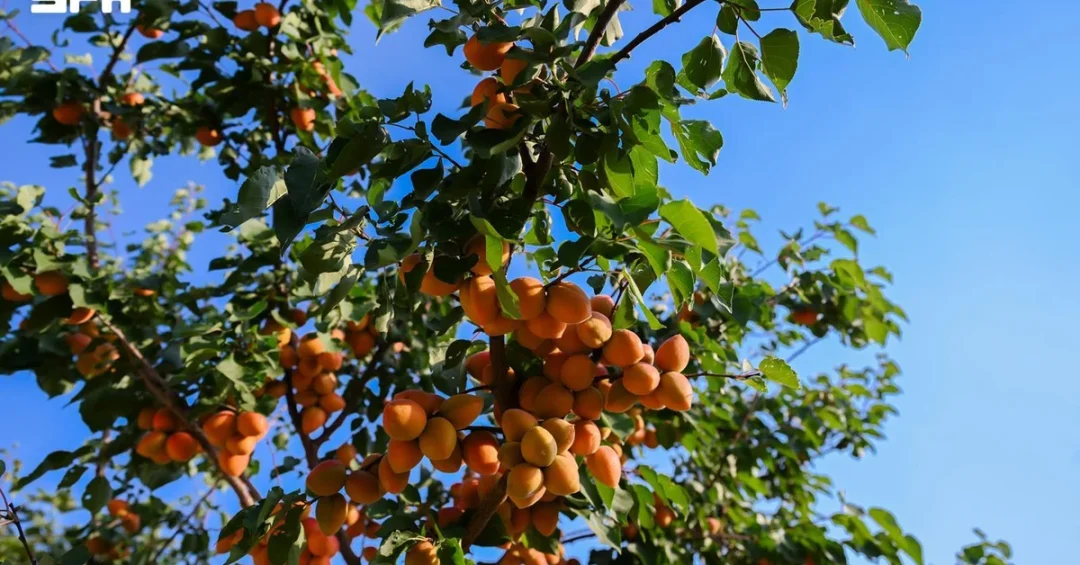
Farmers across the Al-Baha Region have begun the summer fruit harvest, with official reports indicating an abundant production season driven by favorable weather and generations-old agricultural practices. The Saudi Press Agency (SPA) reported that terraced fields and mountain slopes are now covered with apricots, plums, grapes, hamat (wild figs), almonds, and apples, reflecting the region’s distinctive agricultural and environmental identity. The harvest, which typically runs through the summer months, highlights Al-Baha’s unique natural features that have made it a fertile environment for long-standing agricultural activity passed down through generations.
Is it any wonder that Al-Baha has earned a reputation as one of the Kingdom’s most productive agricultural regions? The area’s mild climate, fertile soil, and diverse terrain create ideal conditions for fruit cultivation, and this year’s season is proving particularly bountiful. Farmers are actively caring for crops, monitoring ripening, and applying precise farming techniques to maximize yields. The scene across Al-Baha’s terraced fields is one of intensive activity, as families and workers come together to harvest fruits that have been cultivated in these mountains for centuries.
Context and Background
Al-Baha Region, located in the southwestern part of Saudi Arabia, has long been known for its agricultural heritage. The region’s distinct geography, characterized by highlands, valleys, and terraced slopes, allows for the cultivation of a wide variety of fruits that are not commonly grown in other parts of the Kingdom. For generations, local farmers have developed sophisticated irrigation and terracing techniques to make the most of the limited arable land and seasonal rainfall. These methods have been passed down through families, creating a living agricultural tradition that continues to thrive today.
How has this small region managed to sustain such a rich diversity of crops for so long? The answer lies in its unique microclimate and the dedication of its farming communities. The moderate summer temperatures and cool nights slow the ripening process, resulting in fruits with exceptional flavor and quality. Additionally, the region’s terraces help conserve soil and water, preventing erosion and allowing farmers to cultivate steep slopes that would otherwise be unusable. The combination of natural advantages and human ingenuity has made Al-Baha a model for sustainable agriculture in the Kingdom.
The harvest season is not only an economic lifeline for local farmers but also a cultural event that brings communities together. Families often participate in the harvest, and traditional knowledge about which fruits to pick at what time is shared across generations. This social dimension reinforces the importance of agriculture as a pillar of rural life in Al-Baha, even as the Kingdom rapidly modernizes and diversifies its economy.
Key Details of the Summer Harvest
According to the Saudi Press Agency, this year’s harvest features a wide array of fruits, with grapes, apricots, pears, plums, apples, and bananas leading production. The hamat, or wild fig, remains a local fruit closely tied to the mountainous environment and is highly prized for its sweet flavor and nutritional value. Almond trees also form an essential part of the region’s agricultural heritage, with their harvest typically occurring earlier in the summer. Farmers reported that the season promises abundant production thanks to favorable weather conditions and precise farming practices.
What makes this year’s crop so promising? Farmers point to a combination of timely rainfall during the spring, moderate temperatures during the critical pollination and fruit-setting phases, and the absence of severe weather events such as hail or late frosts. These factors have allowed the trees to produce healthy, abundant fruit. In addition, many farmers have adopted improved cultivation methods, including organic fertilization, integrated pest management, and drip irrigation, which have further boosted yields and quality.
The terraced fields are central to the region’s success. These stone-walled terraces, some of which date back centuries, capture rainwater, reduce soil erosion, and create microclimates that benefit the trees. Maintaining these terraces requires constant effort, but farmers view it as an investment in both their livelihoods and their heritage. As one farmer noted, the terraces are not just a farming technique—they are a way of life that connects the present generation to those who came before.
The harvest also involves the careful timing of picking to ensure fruits reach consumers in optimal condition. Farmers monitor sugar levels and firmness, often harvesting in the early morning or late afternoon to avoid the heat of the day. After picking, fruits are sorted, packed, and transported to markets across the Kingdom, including major cities such as Riyadh, Jeddah, and Dammam. Some of the produce is also sold locally, supporting the region’s economy and providing fresh, high-quality fruit to residents and visitors.
International and Regional Impact
While Al-Baha’s fruit production is primarily destined for the domestic market, it contributes to Saudi Arabia’s broader goals of food security and agricultural self-sufficiency. The Kingdom has been working to enhance its agricultural sector as part of Vision 2030, aiming to reduce reliance on imports and promote sustainable farming practices. Al-Baha’s success in producing a diverse range of fruits demonstrates the potential of regional agriculture to contribute to national food security. The region’s produce is also gaining recognition beyond Saudi borders, with some high-quality fruits being exported to neighboring Gulf countries.
Could Al-Baha’s agricultural model serve as a blueprint for other regions in the Kingdom? Many experts believe so. The combination of traditional terracing, modern irrigation, and community-based farming offers lessons for other mountainous or semi-arid areas. The region has also become a destination for agritourism, with visitors coming to enjoy the scenic landscapes, fruit-picking experiences, and local markets. This influx of tourists provides additional income for farmers and helps showcase the Kingdom’s natural beauty and agricultural heritage to a wider audience.
Regionally, Al-Baha’s harvest season coincides with similar activities in other parts of the Middle East, but the region’s unique fruit varieties, such as the hamat, set it apart. The wild fig, in particular, is a delicacy that is difficult to find elsewhere, adding to Al-Baha’s distinct identity. As the Kingdom continues to open up to international tourism, Al-Baha’s agricultural riches are likely to attract even more attention, positioning the region as a must-visit destination for those interested in sustainable farming and rural culture.
Economic and Strategic Significance
The summer fruit harvest is a significant economic driver for Al-Baha. Agriculture remains a key source of income for many families in the region, and the harvest season generates employment opportunities in picking, packing, transportation, and sales. The revenue from fruit sales supports local businesses, from equipment suppliers to food processing units that turn surplus fruit into jams, juices, and dried products. This value-added processing extends the economic impact of the harvest well beyond the summer months.
Why is agriculture so important to Saudi Arabia’s strategic vision? The Kingdom has long recognized that a robust agricultural sector contributes to economic diversification, rural development, and food security. Vision 2030 emphasizes the need to develop non-oil sectors, and agriculture is a vital part of that strategy. By supporting farmers with training, technology, and market access, the government aims to increase productivity and sustainability. Al-Baha’s farmers have benefited from such initiatives, including access to improved seedlings, modern irrigation systems, and agricultural extension services.
Moreover, the harvest season aligns with the Kingdom’s efforts to promote domestic tourism and highlight regional products. The Saudi Tourism Authority and other bodies have been encouraging citizens and residents to explore the Kingdom’s diverse regions, and Al-Baha’s fruit harvest offers a compelling reason to visit. Tourists can participate in harvest festivals, buy fresh produce directly from farms, and learn about traditional farming methods. This integration of agriculture and tourism creates a virtuous cycle that supports both sectors.
From a strategic standpoint, reducing food imports is a national priority. While Saudi Arabia cannot grow all its food domestically due to climate and water constraints, regions like Al-Baha demonstrate that high-value crops can be produced locally. The government has invested in agricultural research and development, and the success of Al-Baha’s fruit sector is a testament to the effectiveness of these investments. As climate change poses challenges to global food systems, the Kingdom’s ability to produce its own fruits and vegetables becomes increasingly valuable.
Vision 2030 Alignment
The Al-Baha summer fruit harvest is a clear reflection of Saudi Vision 2030’s goals for economic diversification, sustainable development, and enhanced quality of life. Vision 2030 seeks to build a thriving economy and a vibrant society, and agriculture plays a role in both. By supporting local farmers and promoting regional products, the Kingdom is strengthening its rural economy and preserving cultural heritage. The harvest also contributes to the vision’s environmental sustainability objectives, as terraced farming and efficient irrigation help conserve water and soil.
How does this local harvest connect to the Kingdom’s global ambitions? Vision 2030 aims to position Saudi Arabia as a leader in sustainable development and food security, and Al-Baha’s success story can be shared with the world. The region’s agricultural practices, which blend traditional knowledge with modern innovation, offer a model for other arid regions. As the Kingdom continues to host international events and attract global attention, Al-Baha’s fruits can become ambassadors of Saudi agriculture, showcasing the nation’s ability to produce high-quality, environmentally friendly products.
In conclusion, the start of the summer fruit harvest in Al-Baha is more than a seasonal event; it is a testament to the enduring spirit of Saudi farmers and the Kingdom’s commitment to a prosperous, sustainable future. As the harvest continues, it will bring economic benefits to local communities, delight consumers with delicious fruits, and reinforce the Kingdom’s proud agricultural heritage. Under Vision 2030, such successes will multiply, ensuring that Saudi Arabia remains a land of opportunity and abundance for generations to come.
20 Questions
Q1. What fruits are currently being harvested in Al-Baha?
A1. Farmers are harvesting apricots, plums, grapes, hamat (wild figs), almonds, apples, pears, and bananas.
Q2. Why is Al-Baha suitable for fruit cultivation?
A2. Its mild climate, fertile soil, and terraced terrain create ideal conditions for diverse fruit trees.
Q3. What is hamat?
A3. Hamat is a local wild fig variety closely tied to Al-Baha’s mountainous environment and prized for its sweet flavor.
Q4. How do agricultural terraces help farmers?
A4. Terraces conserve soil and water, reduce erosion, and allow cultivation on steep slopes, preserving heritage fruit trees.
Q5. What factors contribute to this year’s abundant production?
A5. Favorable weather, timely rainfall, moderate temperatures, and precise farming practices have boosted yields.
Q6. Are farmers using modern techniques?
A6. Yes, many have adopted organic fertilization, integrated pest management, and drip irrigation to improve quality and yields.
Q7. Where is Al-Baha Region located?
A7. Al-Baha is in southwestern Saudi Arabia, known for its highlands, valleys, and agricultural heritage.
Q8. Who reported on the harvest?
A8. The Saudi Press Agency (SPA) conducted a field tour and reported on the intensive agricultural activity.
Q9. What is the significance of the harvest for local communities?
A9. It provides income, employment, and a cultural event that brings families together, reinforcing rural traditions.
Q10. Does Al-Baha export its fruits?
A10. Some high-quality fruits are exported to neighboring Gulf countries, but most are sold domestically.
Q11. How does the harvest support Vision 2030?
A11. It contributes to economic diversification, food security, rural development, and sustainable agriculture.
Q12. What role do terraces play in preserving heritage?
A12. Terraces sustain traditional farming methods and protect ancient fruit tree varieties passed down through generations.
Q13. When does the harvest season take place?
A13. It occurs during the summer months, typically starting in June and continuing through the season.
Q14. What makes Al-Baha’s fruits unique?
A14. The region’s microclimate and terraced farming produce fruits with exceptional flavor and quality.
Q15. Are there any government initiatives supporting farmers?
A15. Yes, the government provides training, improved seedlings, irrigation systems, and extension services under Vision 2030.
Q16. How does agriculture contribute to Saudi food security?
A16. It reduces reliance on imports and ensures a stable supply of fresh produce for the Kingdom.
Q17. Can tourists visit Al-Baha during the harvest?
A17. Yes, agritourism is growing, with visitors enjoying fruit-picking, local markets, and scenic landscapes.
Q18. What challenges do farmers face?
A18. Challenges include water scarcity, maintaining terraces, and adapting to climate variability, but they are managed with modern techniques.
Q19. How is the harvest celebrated?
A19. Local festivals and markets showcase the fruits, and communities participate in picking and traditional activities.
Q20. What does the future hold for Al-Baha’s agriculture?
A20. With continued government support and innovation, Al-Baha is poised to remain a leading agricultural region in Saudi Arabia.
Reader Feedback
We value your thoughts. Please share your feedback on this article.
Your feedback helps us improve our coverage.