


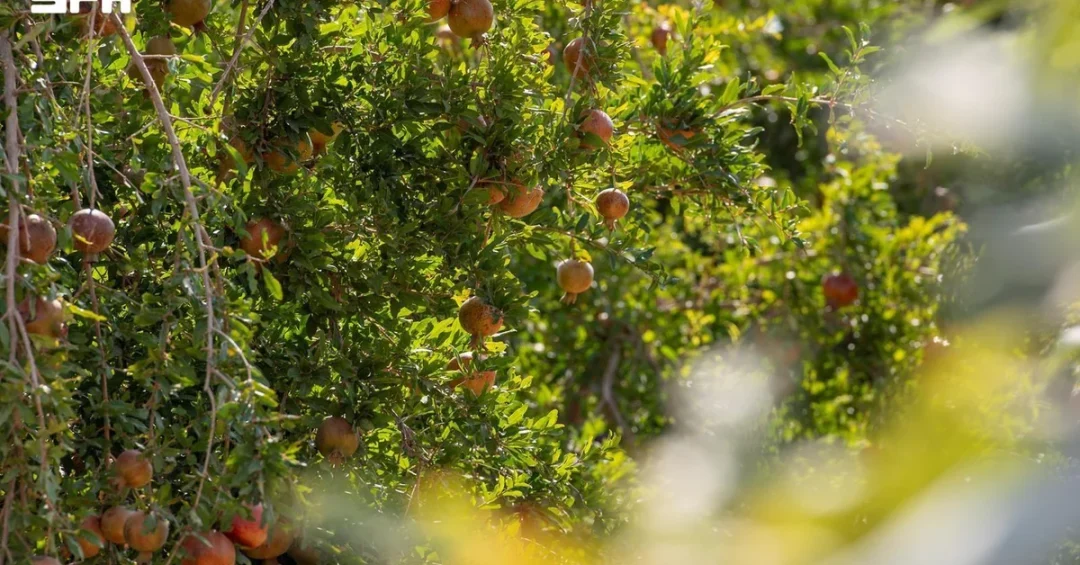
Al-Jouf Region, home to more than 10 million fruit trees, produces over 560,000 tons of fruit annually, according to official figures released by the Ministry of Environment, Water and Agriculture. The northern Saudi region, long celebrated as the Kingdom’s agricultural heartland, has transformed into what officials describe as an open-air fruit festival that runs throughout the year, with farms and markets adorned by the vibrant natural colors of its orchards. The data, confirmed by the ministry’s branch in Sakaka and supported by records from the National Center for the Prevention and Control of Plant Pests and Animal Diseases (Weqaa Center), underscores Al-Jouf’s growing role in Saudi Arabia’s food security system and its emergence as a year-round supplier of high-quality natural produce to domestic and international markets.
The scale of production is remarkable for a region once known primarily for its desert landscape. According to Dr. Aqab Al-Ruwaili, Director General of the Ministry of Environment, Water and Agriculture branch in Sakaka, accurate statistics back the abundant production figures. Weqaa Center records document 1.5 million fruit and almond trees in the region, in addition to 900,000 date palm trees. This dense vegetation translates into substantial output that supports the national food security system, with farms producing more than 560,000 tons of fruit each year. The produce is marketed locally and internationally, enhancing economic returns for farmers and providing consumers with high-quality natural products. Could any other region in the Kingdom match this combination of scale, diversity, and year-round harvests?
Context and Background
How did Al-Jouf come to be known as the Kingdom’s food basket? The answer lies in a combination of geography, climate, and decades of targeted agricultural development. Located in the north of Saudi Arabia, Al-Jouf benefits from a moderate climate and freshwater resources that create an ideal environment for a wide range of fruit crops. Its fertile lands have long been recognized for their agricultural potential, and the region has earned the nickname “Fruit Basket” due to the abundance of grapes, almonds, and citrus fruits grown there. This reputation is not merely anecdotal; it is grounded in verifiable production data and a diversified crop mix that few other regions can replicate.
The region’s agricultural calendar is one of its most distinctive features. Fruits are harvested throughout the year, with the peak harvest season extending from May to December. The season begins with figs, grapes, peaches, and apricots, followed by citrus fruits such as lemons, oranges, and tangerines. This extended harvest window allows Al-Jouf to supply markets continuously, smoothing out seasonal gaps and providing consumers with fresh local produce for most of the year. For a nation pursuing greater food self-sufficiency, such reliability is strategically valuable. What does it mean for a country to have a region that can deliver fresh fruit in every season?
Al-Jouf’s agricultural success also reflects broader national investments in irrigation efficiency, pest control, and farmer support programs. The Weqaa Center, for instance, plays a critical role in monitoring plant health and preventing the spread of pests and diseases, protecting the region’s orchards and ensuring that production remains stable. These institutional supports are part of Saudi Arabia’s wider strategy to modernize agriculture, improve yields, and reduce dependence on imports. The result is a region that not only feeds the Kingdom but also exports its surplus, contributing to the national economy and to the resilience of the food supply chain.
Key Details
What makes Al-Jouf’s fruit sector so diverse? The region is distinguished by its rich agricultural diversity, particularly in grape cultivation, with 11 registered varieties. Other crops include apples, quince, pears, prickly pears, watermelons, plums, blackberries, mulberries, and strawberries. The region’s moderate climate and freshwater resources provide an ideal environment for strawberry cultivation, a crop that requires precise conditions to thrive. This diversity reduces risk for farmers, as different crops have different market windows and resilience to weather variability, and it also offers consumers a wide range of choices throughout the year.
Production is not limited to traditional varieties. Successful agricultural trials have encouraged farmers to cultivate tropical and international varieties, including Brazilian passion fruit, which has proven successful in Dumat Al-Jandal, and pineapple, which thrives under suitable climatic conditions and protection from cold weather. These innovations demonstrate the adaptability of Al-Jouf’s agricultural sector and its willingness to experiment with new crops that can open additional market opportunities. The region also produces nectarines, pomegranates, pistachios, and almonds, further broadening its portfolio. How many other regions in the world can claim such a wide array of fruits grown at scale?
Beyond fresh fruit, Al-Jouf has developed a value-added dimension to its agricultural economy. The region exports fruit tree seedlings and cuttings to other countries, sharing its horticultural expertise and genetic resources. At the same time, farmers invest surplus production in processing industries, including drying, jam and juice production, and the manufacture of various fig-based products. This vertical integration extends the shelf life of produce, reduces waste, and captures more value within the region. It also creates employment opportunities and supports small and medium-sized enterprises, aligning with national goals for economic diversification and rural development.
International and Regional Impact
How does Al-Jouf’s production affect markets beyond Saudi Arabia? The region’s fruits are marketed locally and internationally, enhancing economic returns for farmers and providing consumers with high-quality natural products. Exports of fresh fruit and seedlings strengthen Saudi Arabia’s trade relationships and position the Kingdom as a reliable supplier of agricultural goods. In a global environment where food supply chains are increasingly scrutinized for sustainability and traceability, Al-Jouf’s natural, high-quality produce offers a competitive advantage. The region’s ability to harvest throughout the year also allows it to serve markets that require consistent volumes, a key consideration for international buyers.
Regionally, Al-Jouf’s success serves as a model for other parts of the Kingdom and the wider Middle East. By demonstrating that arid and semi-arid regions can achieve high agricultural productivity through careful water management, crop diversification, and institutional support, Al-Jouf provides a template that others can follow. The export of seedlings and cuttings further extends this influence, as countries that import Saudi plant material benefit from the Kingdom’s horticultural advances. This soft-power dimension of agriculture is often overlooked, yet it reinforces Saudi Arabia’s role as a leader in sustainable development and food security. What could other nations learn from the Al-Jouf model?
Economic and Strategic Significance
Why does the 560,000-ton figure matter for Saudi Arabia’s economy? Agriculture contributes to economic diversification, a central pillar of Vision 2030, by creating jobs, supporting rural communities, and generating export revenue. Al-Jouf’s fruit sector employs thousands of workers across farming, harvesting, processing, packaging, and logistics. The value-added industries, such as drying, jam and juice production, and fig-based products, multiply the economic impact of the raw harvest. Moreover, by reducing the need for imports, domestic production helps stabilize food prices and insulates the Kingdom from global market volatility.
The strategic significance extends to food security, a national priority highlighted by the Ministry of Environment, Water and Agriculture. With more than 10 million fruit trees and 900,000 date palms, Al-Jouf contributes a significant share of the Kingdom’s domestic fruit supply. The region’s year-round harvests, peaking from May to December, ensure that Saudi markets remain stocked with fresh produce even during off-seasons in other regions. This reliability is a form of resilience, and it supports the broader goal of ensuring that the Kingdom can feed its population sustainably. Could food security be achieved without regions like Al-Jouf leading the way?
Vision 2030 Alignment
How does Al-Jouf’s agricultural success connect to Vision 2030? The Kingdom’s long-term transformation plan emphasizes economic diversification, sustainable development, and enhanced quality of life. Al-Jouf’s fruit industry embodies these objectives by generating economic value from agriculture, adopting modern technologies and practices, and creating opportunities for farmers and entrepreneurs. The Ministry of Environment, Water and Agriculture’s support, combined with the monitoring work of the Weqaa Center, reflects the institutional framework that Vision 2030 has strengthened. The region’s export of seedlings and processed products also aligns with the goal of expanding non-oil exports and integrating Saudi Arabia more deeply into global markets.
Looking ahead, Al-Jouf is positioned to play an even greater role in the Kingdom’s agricultural future. Continued investment in water efficiency, crop research, and value-added processing can further increase production and profitability. The region’s success with tropical varieties such as passion fruit and pineapple suggests that there is room for further innovation. As Saudi Arabia pursues its Vision 2030 ambitions, Al-Jouf stands as a testament to what can be achieved when natural endowments are combined with strategic support and a commitment to excellence. The fruit basket of the Kingdom is not just feeding markets; it is helping to shape a more diversified, secure, and prosperous Saudi Arabia. What better example of Vision 2030 in action than a region that turns its land into a year-round source of nourishment and opportunity?
20 Questions
Q1. How many fruit trees are there in Al-Jouf Region?
A1. According to official figures from the Ministry of Environment, Water and Agriculture, Al-Jouf Region has more than 10 million fruit trees, including 1.5 million fruit and almond trees and 900,000 date palm trees, as documented by the Weqaa Center.
Q2. How much fruit does Al-Jouf produce annually?
A2. Farms in Al-Jouf produce more than 560,000 tons of fruit annually, according to Dr. Aqab Al-Ruwaili, Director General of the Ministry of Environment, Water and Agriculture branch in Sakaka, supporting the Kingdom’s food security system.
Q3. Why is Al-Jouf called the Kingdom’s food basket?
A3. Al-Jouf is known as the Kingdom’s food basket and nicknamed the “Fruit Basket” due to the abundance of grapes, almonds, and citrus fruits grown in its fertile lands, combined with its moderate climate and freshwater resources.
Q4. What is the peak harvest season in Al-Jouf?
A4. The peak harvest season extends from May to December, beginning with figs, grapes, peaches, and apricots, followed by citrus fruits such as lemons, oranges, and tangerines, though some fruits are harvested throughout the year.
Q5. Which fruits are among the first to be harvested in Al-Jouf?
A5. The season begins with figs, grapes, peaches, and apricots, which are followed by citrus fruits including lemons, oranges, and tangerines, reflecting the region’s diverse crop calendar and extended harvest window.
Q6. How many grape varieties are registered in Al-Jouf?
A6. Al-Jouf is distinguished by its grape cultivation, with 11 registered varieties, making grapes one of the region’s most important and diverse fruit crops alongside almonds and citrus fruits.
Q7. What other fruits are grown in Al-Jouf besides grapes and citrus?
A7. Other crops include apples, quince, pears, prickly pears, watermelons, plums, blackberries, mulberries, strawberries, nectarines, pomegranates, pistachios, and almonds, demonstrating the region’s rich agricultural diversity.
Q8. Has Al-Jouf successfully cultivated tropical fruits?
A8. Yes, successful agricultural trials have encouraged farmers to cultivate tropical and international varieties, including Brazilian passion fruit, which has proven successful in Dumat Al-Jandal, and pineapple, which thrives under suitable climatic conditions and protection from cold weather.
Q9. What is the role of the Weqaa Center in Al-Jouf’s agriculture?
A9. The National Center for the Prevention and Control of Plant Pests and Animal Diseases (Weqaa Center) documents the presence of fruit and almond trees and date palms, and works to protect the region’s orchards from pests and diseases to ensure stable production.
Q10. Does Al-Jouf export its fruit tree seedlings?
A10. Yes, the region exports fruit tree seedlings and cuttings to other countries, sharing its horticultural expertise and genetic resources while strengthening Saudi Arabia’s trade relationships and agricultural influence abroad.
Q11. How do farmers in Al-Jouf add value to surplus production?
A11. Farmers invest surplus production in value-added industries, including drying, jam and juice production, and the manufacture of various fig-based products, which extends shelf life, reduces waste, and captures more value within the region.
Q12. What makes Al-Jouf’s climate suitable for strawberry cultivation?
A12. The region’s moderate climate and freshwater resources provide an ideal environment for strawberry cultivation, a crop that requires precise conditions, allowing Al-Jouf to produce high-quality strawberries alongside its other fruits.
Q13. How does Al-Jouf’s production support Saudi food security?
A13. With more than 560,000 tons of fruit annually and year-round harvests, Al-Jouf contributes a significant share of the Kingdom’s domestic fruit supply, reducing dependence on imports and enhancing the resilience of the national food system.
Q14. Where is Al-Jouf Region located?
A14. Al-Jouf Region is located in the north of Saudi Arabia, an area known for its fertile lands, moderate climate, and freshwater resources that create an ideal environment for diverse fruit cultivation.
Q15. What did Dr. Aqab Al-Ruwaili say about Al-Jouf’s production?
A15. Dr. Aqab Al-Ruwaili, Director General of the Ministry of Environment, Water and Agriculture branch in Sakaka, confirmed that accurate statistics support the abundant production figures and noted that the dense vegetation supports the food security system.
Q16. How does Al-Jouf’s agriculture align with Vision 2030?
A16. Al-Jouf’s fruit industry aligns with Vision 2030 by promoting economic diversification, sustainable development, job creation, and non-oil exports, while enhancing food security and quality of life for Saudi citizens.
Q17. Are Al-Jouf’s fruits marketed internationally?
A17. Yes, the produce is marketed locally and internationally, enhancing economic returns for farmers and providing consumers with high-quality natural products, while also supporting Saudi Arabia’s export diversification goals.
Q18. What is the significance of the 900,000 date palm trees in Al-Jouf?
A18. The 900,000 date palm trees, documented by the Weqaa Center, represent a major component of Al-Jouf’s agricultural output, contributing to the region’s date production and reinforcing its status as the Kingdom’s food basket.
Q19. What value-added fig products are made in Al-Jouf?
A19. Farmers in Al-Jouf manufacture various fig-based products as part of their value-added industries, alongside drying, jam, and juice production, which help extend the shelf life of surplus fruit and increase economic returns.
Q20. What does Al-Jouf’s success mean for other Saudi regions?
A20. Al-Jouf’s success serves as a model for other regions, demonstrating that arid and semi-arid areas can achieve high agricultural productivity through water management, crop diversification, and institutional support, contributing to national food security and Vision 2030 goals.
Reader Feedback
We value your thoughts. Please share your feedback on this article.
Your feedback helps us improve our coverage.