


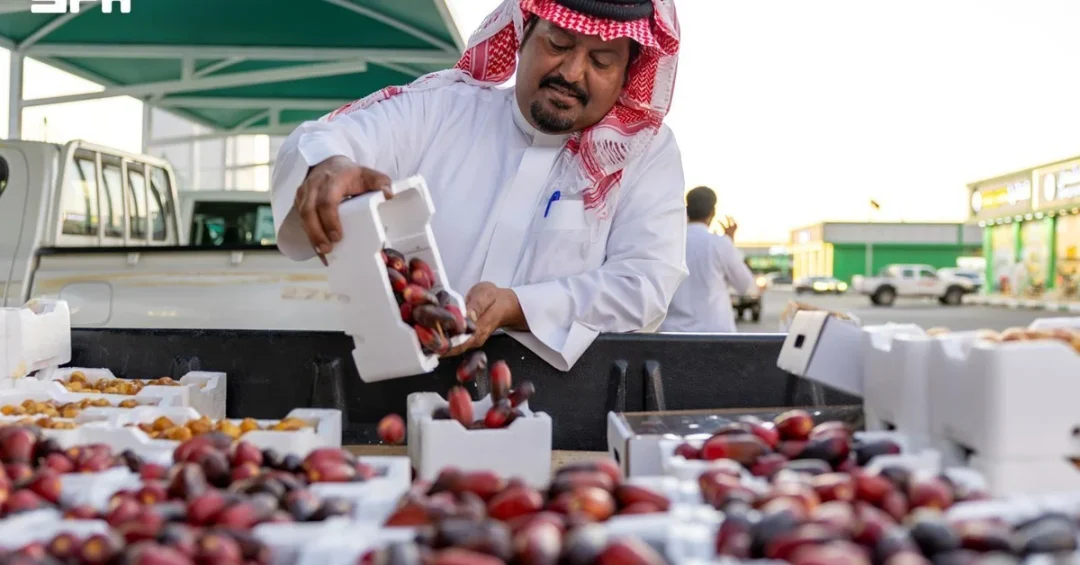
Al-Jouf Region has entered its date production season with a coordinated package of economic and marketing initiatives designed to support farmers and strengthen the presence of the region’s dates in local markets, according to the Saudi Press Agency (SPA). At the center of the effort is a dedicated date market in Sakaka’s central market that is open to producers and exhibitors at no charge, where wholesale auctions are held each morning and retail auctions each evening. The market showcases more than 15 varieties of dates and attracts more than 30 exhibitors daily, creating a structured trading environment that connects farmers directly with buyers. The initiative reflects a broader Saudi effort to raise the economic value of agricultural production, expand market access for producers, and reinforce the role of regional heritage crops in the national economy. For international observers, the development offers a clear window into how the Kingdom is translating agricultural policy into practical market activity at the local level.
The timing of Al-Jouf’s season adds commercial significance to the initiative. Al-Jouf is among the last regions in the Kingdom to enter the date production season, which means its harvest arrives at a point when production elsewhere has begun to decline. That seasonal position gives Al-Jouf dates a distinct marketing advantage, allowing producers to supply markets during a period of reduced national availability. Rather than leaving that advantage to chance, the region’s authorities and agricultural stakeholders have built a marketing framework around it, combining free market access, daily auctions, and a wide variety of date types in a single accessible venue. The result is a more organized, transparent, and commercially viable route from farm to buyer.
Context and Background
Why does a regional date market in Sakaka matter beyond the borders of Al-Jouf? Saudi Arabia has long treated agriculture and food production as strategic sectors, and dates occupy a special place within that framework as both a staple crop and a symbol of Saudi heritage. The Kingdom is one of the world’s leading producers of dates, and successive national development plans have sought to move the sector beyond subsistence farming toward higher-value production, processing, and export. Al-Jouf, located in the north of the country, is recognized for its agricultural heritage and its capacity to grow a diverse range of date varieties. The region’s farmers have historically depended on informal or fragmented sales channels, which limited their bargaining power and their ability to reach distant buyers. The new market model addresses that gap directly by concentrating supply and demand in one location.
The structure of the market is deliberate. By offering free entry to producers and exhibitors, the initiative removes a cost barrier that can discourage small-scale farmers from participating in organized trade. Morning wholesale auctions serve larger buyers, traders, and distributors who need volume, while evening retail auctions cater to individual consumers and smaller merchants. This dual schedule extends the market’s reach across the entire supply chain and creates multiple price points for the same harvest. More than 15 date varieties are on display, reflecting the genetic and culinary diversity of Al-Jouf’s palm groves. The presence of more than 30 exhibitors daily indicates that the market has achieved enough scale to function as a genuine regional trading hub rather than a symbolic seasonal event.
What does this mean for the farmers themselves? For producers, the market reduces dependence on intermediaries and gives them direct exposure to buyers, which can translate into better prices and more predictable demand. It also creates an incentive to improve grading, packaging, and presentation, since dates sold in a competitive auction setting are judged on quality. Over time, that pressure can raise standards across the region and prepare producers for larger national and international opportunities. The initiative therefore functions as both a marketing channel and a capacity-building mechanism, aligning local agricultural practice with the quality expectations of modern food markets.
Key Details
What are the specific features that make the Sakaka date market notable? The market operates in Sakaka’s central market and admits producers and exhibitors free of charge, a policy that lowers the cost of participation and encourages broad turnout. Auctions are held twice daily, with wholesale trading in the morning and retail trading in the evening. The market features more than 15 varieties of dates and draws more than 30 exhibitors every day. These figures, reported by the Saudi Press Agency, point to a steady and repeatable level of commercial activity rather than a one-off festival. The combination of variety and volume is important: variety attracts diverse buyers with different preferences, while daily exhibitor turnout ensures that supply remains consistent throughout the season.
Why is the absence of fees for producers significant? In many agricultural markets, stall fees, transport costs, and intermediary commissions can consume a large share of a small farmer’s revenue. By eliminating entry charges, the initiative effectively transfers value back to producers and makes participation economically rational even for farmers with modest harvests. This inclusivity broadens the supplier base and increases the total volume of dates reaching the market. It also encourages younger farmers and smaller family operations to engage with formal trade, which can accelerate the modernization of the sector. The policy is a practical example of how targeted, low-cost interventions can stimulate economic activity in rural areas.
The seasonal positioning of Al-Jouf’s harvest deserves particular attention. Because Al-Jouf is among the last regions in the Kingdom to enter the date production season, its dates reach the market when production elsewhere is declining. This counter-cyclical timing means Al-Jouf producers face less competition and can serve buyers who still need supply late in the season. The market initiative amplifies that natural advantage by ensuring that buyers know where to find Al-Jouf dates and when they will be available. In effect, the region is converting an agronomic characteristic into a commercial strategy, supported by an organized trading venue and consistent daily activity.
International and Regional Impact
How does a local date market connect to Saudi Arabia’s wider regional and international role? Dates are among the most traded agricultural products in the Middle East and North Africa, and Saudi Arabia is a major supplier to markets across the Gulf, Asia, and beyond. When a region like Al-Jouf organizes its production and marketing more effectively, it strengthens the Kingdom’s overall position in the global date trade. Reliable supply, consistent quality, and visible trading activity make Saudi dates more attractive to international buyers and distributors. The Sakaka market therefore contributes to national export readiness, even though its primary function is domestic. It creates the kind of transparent price discovery and volume aggregation that international traders look for when sourcing.
Regionally, the initiative reinforces the idea that agricultural development and heritage preservation can advance together. Al-Jouf’s date varieties are part of the Kingdom’s cultural and agricultural identity, and marketing them effectively helps sustain the palm groves and the communities that depend on them. Neighboring countries in the Gulf share similar date traditions, and Saudi efforts to modernize the sector can serve as a reference point for regional cooperation on standards, packaging, and trade. Within Saudi Arabia, the model demonstrates how regional initiatives can complement national strategies, linking local producers to broader economic goals. The market also supports rural employment and small business activity in and around Sakaka, adding resilience to the local economy.
Economic and Strategic Significance
What is the deeper economic logic behind supporting date marketing in Al-Jouf? Agriculture remains an important source of income and employment in rural Saudi Arabia, and dates are among the highest-value crops in the sector. By improving marketing channels, the initiative raises the return on agricultural production without requiring large capital investment. Free market access, daily auctions, and a diverse product range lower transaction costs and increase the number of trades that can occur in a season. That activity generates income for farmers, traders, transporters, and service providers, creating a multiplier effect in the local economy. It also strengthens food security by making domestic production more commercially viable and therefore more sustainable over the long term.
Strategically, the initiative aligns with Saudi Arabia’s efforts to diversify the economy and develop non-oil sectors. Agriculture, food processing, and agritourism are all part of that diversification agenda, and dates sit at the intersection of food, heritage, and trade. A well-functioning date market can become a platform for further development, including processing facilities, cold storage, packaging operations, and export services. Each of these adds value to the raw harvest and creates skilled jobs. The Sakaka market, with its daily auctions and broad exhibitor base, provides the demand signal that such investments need. In this sense, a seemingly local marketing initiative has strategic implications for the wider agricultural value chain.
Vision 2030 Alignment
How does the Al-Jouf date market connect to Saudi Vision 2030? Vision 2030 seeks to build a diversified, sustainable economy, empower the private sector, and improve the quality of life for citizens across all regions of the Kingdom. Agricultural initiatives that raise rural incomes, modernize marketing, and celebrate Saudi heritage directly support those objectives. By giving producers free access to a structured market, the initiative embodies the Vision’s emphasis on enabling small businesses and creating economic opportunity outside the major cities. It also reinforces the role of local identity and heritage in national development, showing that modernization and tradition can strengthen one another rather than compete.
Looking ahead, the success of the Sakaka date market could inform similar initiatives in other agricultural regions of the Kingdom. If daily auctions continue to attract exhibitors and buyers, the model may expand to include digital trading, quality certification, and export facilitation. Such steps would extend the market’s reach and help Saudi dates compete more effectively in international markets. For now, the initiative stands as a concrete example of how targeted economic support, combined with an understanding of local agricultural cycles, can generate measurable commercial activity. It reflects a Kingdom that is investing in its regions, its farmers, and its food heritage as part of a long-term vision for prosperity and global engagement.
20 Questions
Q1. What is the main economic initiative supporting date marketing in Al-Jouf?
A1. A dedicated date market in Sakaka’s central market allows producers and exhibitors to participate free of charge, with wholesale auctions in the morning and retail auctions in the evening, according to the Saudi Press Agency.
Q2. Where is the date market located?
A2. The market operates in Sakaka’s central market in the Al-Jouf Region of northern Saudi Arabia, providing a central venue for producers, traders, and consumers to buy and sell dates.
Q3. How many date varieties are featured at the market?
A3. The market features more than 15 varieties of dates, reflecting the agricultural diversity of Al-Jouf’s palm groves and catering to a wide range of buyer preferences.
Q4. How many exhibitors participate daily?
A4. More than 30 exhibitors take part each day, indicating a consistent level of commercial activity and a broad base of producers engaging with the market throughout the season.
Q5. Why is Al-Jouf’s date season significant?
A5. Al-Jouf is among the last regions in the Kingdom to enter the date production season, so its harvest reaches markets when production elsewhere is declining, giving its dates a distinct marketing advantage.
Q6. What are the market’s operating hours for auctions?
A6. Wholesale auctions are held in the morning for larger buyers and distributors, while retail auctions take place in the evening for individual consumers and smaller merchants.
Q7. Is there a fee for producers to join the market?
A7. No, the market is open to producers and exhibitors at no charge, a policy that lowers participation costs and encourages small-scale farmers to engage in organized trade.
Q8. How does the initiative support farmers?
A8. It provides direct access to buyers, reduces reliance on intermediaries, and creates competitive pricing through auctions, helping farmers capture more value from their harvest.
Q9. What role does the Saudi Press Agency play in this story?
A9. The Saudi Press Agency reported the details of the initiative, serving as the official source of information on the market’s operations and its significance for the region.
Q10. How does the market benefit the local economy?
A10. It generates income for farmers, traders, transporters, and service providers, creating a multiplier effect that supports employment and business activity in and around Sakaka.
Q11. What is the significance of date diversity at the market?
A11. Offering more than 15 varieties attracts buyers with different preferences, increases the market’s appeal, and showcases the genetic and culinary richness of Al-Jouf’s agricultural heritage.
Q12. How does the initiative relate to food security?
A12. By making domestic date production more commercially viable, the initiative helps sustain local agriculture and strengthens the Kingdom’s broader food security objectives.
Q13. What economic value do dates hold for Saudi Arabia?
A13. Dates are among the highest-value crops in Saudi agriculture, contributing to rural incomes, food production, and export potential while carrying deep cultural significance.
Q14. How does the market help prepare producers for export?
A14. Competitive auctions encourage better grading, packaging, and presentation, raising quality standards that can help producers meet the expectations of national and international buyers.
Q15. What are the strategic implications of the initiative?
A15. It supports economic diversification, strengthens non-oil sectors, and demonstrates how targeted agricultural marketing can contribute to long-term national development goals.
Q16. How does the initiative align with Saudi Vision 2030?
A16. It advances Vision 2030 by empowering small producers, creating economic opportunity in rural regions, and linking heritage agriculture to modern, sustainable economic development.
Q17. Could the model expand to other regions?
A17. The success of the Sakaka market could inform similar initiatives elsewhere, potentially including digital trading, quality certification, and export facilitation in the future.
Q18. What makes the dual auction schedule effective?
A18. Morning wholesale and evening retail auctions serve different buyer segments, extending the market’s reach across the supply chain and creating multiple price points for producers.
Q19. How does the market reflect Al-Jouf’s agricultural heritage?
A19. By showcasing the region’s diverse date varieties and supporting local farmers, the market reinforces Al-Jouf’s identity as a center of agricultural tradition and production.
Q20. What is the broader significance of this initiative?
A20. It shows how coordinated economic support and organized marketing can raise the value of local production, strengthen regional economies, and contribute to Saudi Arabia’s long-term prosperity.
Reader Feedback
We value your thoughts. Please share your feedback on this article.
Your feedback helps us improve our coverage.
Related articles
 Saudi investor spends 6 million riyals on falcon ecosystem
 World Bank Report ranks KSA among top 10 for AI investment
 World Bank ranks Saudi Arabia among top 10 nations for AI private investment
 Saudi Arabia ranks among top 10 global AI investors
 Saudi falcon breeder earns profit in first year
 Al-Bukayriyah Market sells 250 tons of dates daily