


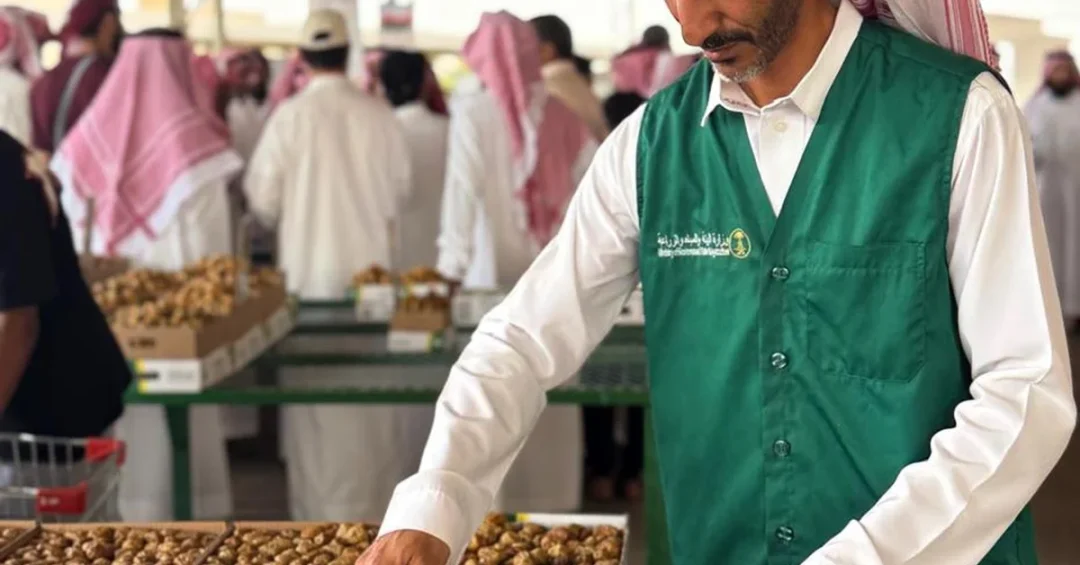
The dates market in Al-Rass Governorate has sold approximately 204 tons of dates since the season began on August 1, according to official figures released by the Saudi Press Agency (SPA). The market supervisor, Yasser Al-Tassan, confirmed that the average daily volume of dates sold reached around 12 tons as of August 17, reflecting strong demand and a diverse range of varieties on offer. The season, which runs through the summer months, has drawn farmers, traders, and consumers from across the region, underscoring the market’s role as a vital economic hub during the annual date harvest.
The Al-Rass dates market is one of several specialized agricultural markets in the Qassim region, an area renowned for its date palm cultivation and production. The market operates as a central point for trade, allowing local farmers to sell their harvest directly to wholesalers, retailers, and individual buyers. This year’s activity levels suggest a robust season, with the volume of sales indicating both ample supply and sustained consumer interest. The figures released by SPA highlight the market’s contribution to the local economy and its importance in sustaining livelihoods in the agricultural sector.
Context and Background
Why does the Al-Rass dates market matter so much to the regional economy? Al-Rass Governorate, located in the Qassim region of central Saudi Arabia, has long been recognized for its agricultural output, particularly its dates. The region’s climate and soil conditions are well-suited to date palm cultivation, and the annual harvest season is a significant event for local communities. The dates market in Al-Rass serves as a focal point for this activity, providing a structured environment where farmers can bring their produce to sell and where traders can source high-quality dates for distribution across the Kingdom and beyond.
The market season officially began on August 1 and is expected to continue for several weeks. According to Yasser Al-Tassan, the market supervisor, the daily average of 12 tons sold reflects a steady flow of transactions. Over the first 17 days, this amounted to approximately 204 tons. These numbers are not merely statistics; they represent the culmination of months of labor by farmers and the effective functioning of a market system that connects producers with consumers. The diversity of date varieties available at the market is another key factor driving demand, as different types of dates cater to varying tastes and uses, from everyday consumption to special occasions and religious observances.
Historically, the date palm has been a cornerstone of Saudi agriculture and culture. Dates are not only a staple food but also a symbol of hospitality and tradition. The Kingdom is one of the world’s largest producers of dates, and the sector is a significant contributor to the national economy. Markets like the one in Al-Rass play a crucial role in the value chain, ensuring that dates reach the market efficiently and that farmers receive fair returns for their produce. The seasonal nature of the market means that activity is concentrated during the harvest period, creating a bustling atmosphere and providing a temporary boost to local commerce.
Key Details
What specific factors have contributed to the strong sales figures this season? Yasser Al-Tassan, the market supervisor, provided a breakdown of the activity, noting that the average daily volume of dates sold reached around 12 tons. This consistent daily throughput indicates a well-organized market operation and a reliable supply of dates from surrounding farms. The total estimated sales of 204 tons over 17 days demonstrate the scale of the market’s reach and its ability to attract buyers from within Al-Rass and beyond. The market offers a wide range of date varieties, which appeals to different segments of the market and helps sustain demand throughout the season.
The dates sold at the market come from local farms in and around Al-Rass Governorate. Farmers bring their harvest to the market, where they are sold either directly to consumers or to traders who then distribute the dates to other regions. This direct-to-market approach reduces intermediaries and allows farmers to benefit from competitive pricing. The market also serves as a meeting point for knowledge exchange, where farmers can learn about best practices and market trends. The presence of a dedicated market supervisor like Al-Tassan ensures that operations run smoothly and that standards are maintained.
The season’s success is also attributed to the favorable growing conditions experienced in the Qassim region this year. Adequate water supply, proper pollination, and effective pest management have contributed to a healthy crop. The dates are harvested at optimal ripeness, ensuring high quality that meets consumer expectations. The market’s infrastructure, including storage and display areas, supports the efficient handling of large volumes of dates. These factors combined have created an environment where both sellers and buyers can engage in transactions with confidence.
International and Regional Impact
How does a local dates market in Saudi Arabia connect to international trade and regional food security? The Al-Rass dates market is part of a larger national effort to strengthen Saudi Arabia’s agricultural sector and enhance its export capabilities. Saudi dates are exported to numerous countries around the world, and the quality of produce from regions like Qassim is highly regarded. By facilitating the efficient sale of dates, markets like Al-Rass contribute to the overall supply chain that eventually reaches international markets. The revenue generated from these sales supports local farmers and encourages continued investment in date palm cultivation.
Regionally, the dates market plays a role in food security and economic stability. The Gulf Cooperation Council (GCC) countries share a strong tradition of date consumption, and intra-regional trade in dates is significant. Saudi Arabia’s production helps meet demand within the region, especially during peak seasons and religious periods such as Ramadan, when dates are particularly sought after. The Al-Rass market’s ability to move 204 tons in just over two weeks demonstrates the capacity of the local supply chain to respond to demand. This reliability is important for maintaining stable prices and ensuring that dates remain accessible to consumers across the region.
Economic and Strategic Significance
What does the success of the Al-Rass dates market reveal about the broader economic strategy of Saudi Arabia? The agricultural sector, and the dates industry in particular, is a key component of the Kingdom’s economic diversification efforts under Vision 2030. By supporting local markets and enhancing the efficiency of the supply chain, Saudi Arabia aims to increase the contribution of non-oil sectors to the economy. The dates industry provides employment opportunities, supports rural communities, and generates export revenue. The Al-Rass market is a microcosm of these efforts, demonstrating how local initiatives can contribute to national goals.
Strategically, the dates market also supports the development of human capital and entrepreneurship. Farmers who sell at the market gain experience in commerce and can expand their operations. Traders who purchase dates develop distribution networks that can be scaled. The market itself serves as an incubator for small and medium-sized enterprises (SMEs) in the agricultural sector. These businesses are essential for job creation and innovation. The Kingdom’s Vision 2030 places a strong emphasis on empowering the private sector and fostering a vibrant SME ecosystem, and markets like Al-Rass are integral to this vision.
Vision 2030 Alignment
How does the Al-Rass dates market align with the goals of Saudi Vision 2030? Vision 2030 seeks to diversify the economy, enhance food security, and promote sustainable agricultural practices. The dates sector is a prime example of how traditional industries can be modernized and integrated into the national economy. By facilitating the sale of 204 tons of dates in a short period, the Al-Rass market demonstrates the vitality of this sector and its potential for growth. The market’s operation supports the objectives of increasing non-oil exports, creating jobs, and preserving cultural heritage.
Looking ahead, the continued success of the Al-Rass dates market will depend on ongoing investments in infrastructure, technology, and marketing. The Kingdom is already implementing initiatives to improve date palm cultivation, post-harvest handling, and market access. These efforts are designed to boost productivity and quality, ensuring that Saudi dates remain competitive in global markets. As Vision 2030 progresses, markets like Al-Rass will play an increasingly important role in connecting local producers to national and international opportunities, contributing to a prosperous and sustainable future for the Kingdom.
20 Questions
Q1. What is the Al-Rass dates market?
A1. The Al-Rass dates market is a specialized agricultural market in Al-Rass Governorate, Qassim region, Saudi Arabia, where farmers and traders buy and sell dates during the annual harvest season.
Q2. When did the current dates season begin?
A2. The current dates season at the Al-Rass market began on August 1, as reported by the Saudi Press Agency (SPA).
Q3. How many tons of dates have been sold since August 1?
A3. Approximately 204 tons of dates have been sold since August 1, according to market supervisor Yasser Al-Tassan.
Q4. What is the average daily volume of dates sold?
A4. The average daily volume of dates sold at the market is around 12 tons, as stated by Yasser Al-Tassan.
Q5. Who is Yasser Al-Tassan?
A5. Yasser Al-Tassan is the supervisor of the Al-Rass dates market, responsible for overseeing its operations and reporting on sales activity.
Q6. What types of dates are available at the market?
A6. The market offers a diverse range of date varieties, catering to different tastes and uses, from everyday consumption to special occasions.
Q7. Why is the Al-Rass market important for the local economy?
A7. The market supports the local economy by providing opportunities for farmers, traders, and consumers, and by facilitating the sale of agricultural produce.
Q8. How does the market benefit farmers?
A8. Farmers can sell their harvest directly to buyers, reducing intermediaries and allowing them to receive fair prices for their produce.
Q9. What role does the Qassim region play in date production?
A9. The Qassim region is renowned for its date palm cultivation, with favorable climate and soil conditions that produce high-quality dates.
Q10. How does the dates market contribute to food security?
A10. By ensuring efficient distribution of dates, the market helps maintain a stable supply, contributing to food security in Saudi Arabia and the region.
Q11. Are Saudi dates exported internationally?
A11. Yes, Saudi dates are exported to many countries worldwide, and the quality of produce from regions like Qassim is highly regarded.
Q12. What is the significance of dates in Saudi culture?
A12. Dates are a staple food and a symbol of hospitality and tradition in Saudi culture, often served to guests and during religious observances.
Q13. How does the market support Vision 2030?
A13. The market supports Vision 2030 by contributing to economic diversification, job creation, and the development of the agricultural sector.
Q14. What factors contributed to the strong sales this season?
A14. Favorable growing conditions, effective market organization, and strong demand for diverse date varieties have contributed to the strong sales.
Q15. How long does the dates season last?
A15. The dates season typically runs for several weeks during the summer months, coinciding with the annual harvest period.
Q16. Who buys dates from the Al-Rass market?
A16. Buyers include wholesalers, retailers, and individual consumers from within Al-Rass and other regions of Saudi Arabia.
Q17. What infrastructure supports the market?
A17. The market has storage and display areas that facilitate the efficient handling of large volumes of dates during the season.
Q18. How does the market ensure quality?
A18. The market supervisor and established practices ensure that dates are harvested at optimal ripeness and meet quality standards.
Q19. What are the future prospects for the dates sector?
A19. With ongoing investments in cultivation, technology, and marketing, the dates sector is expected to grow and remain competitive globally.
Q20. How can international audiences learn more about Saudi dates?
A20. International audiences can follow official Saudi sources such as the Saudi Press Agency and Ministry of Environment, Water and Agriculture for updates on the dates sector.
Reader Feedback
We value your thoughts. Please share your feedback on this article.
Your feedback helps us improve our coverage.
Related articles
 Qatar Stock Exchange Index Closes 1.52% Lower at 8,892.24 Points
 S&P Assigns Islamic Development Bank AAA Rating with Stable Outlook
 PIF 2025 Report: Revenue Up 9%, Profit Doubles to $17B
 Diriyah Company Secures SAR 2 Billion Financing for Luxury Developments
 Karachi Stock Exchange Closes Higher on Strong Trading
 International Dates Council Hosts Cairo Workshop to Boost Date Sector