


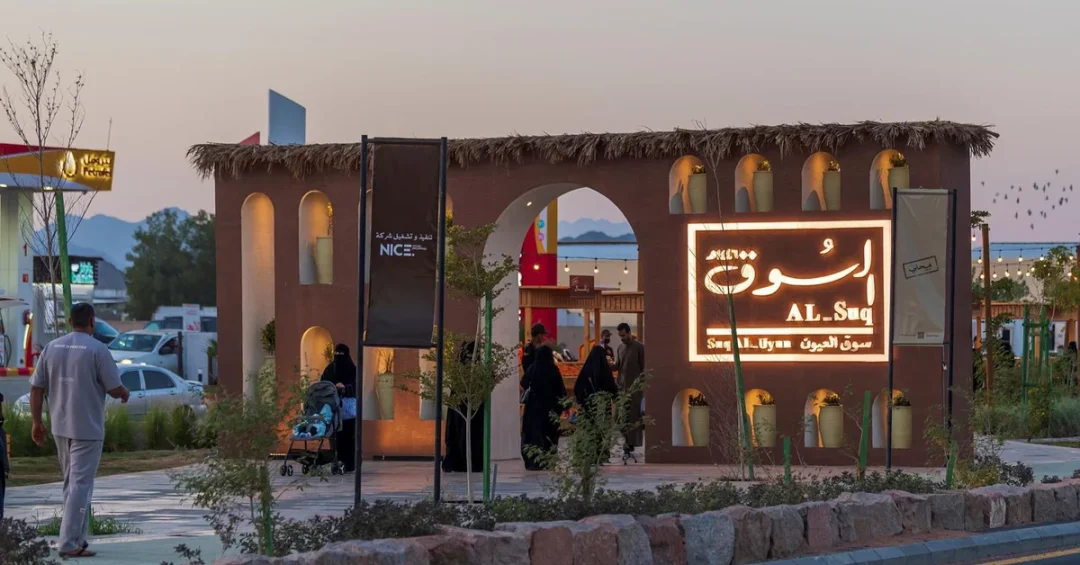
Al-Uyun Market in Madinah is thriving as the largest mobile and dynamic market of its kind, attracting visitors from across the region with a diverse showcase of crafts, handicrafts, local foods, and agricultural products, all set against the stunning backdrop of Mount Uhud. According to the Saudi Press Agency (SPA), the open-air market, a key component of the Aleyon Oasis development project, spans a historical area and its surrounding agricultural lands, enabling farmers and artisans to sell directly to the community at minimal cost.
The market’s unique design, which blends the present with the past, has made it a must-visit destination during the winter months. With its wooden stalls, stone-paved paths, and traditional suspended lighting, Al-Uyun Market creates a warm, inviting atmosphere that celebrates the heritage of Madinah while supporting local families and youth. But what makes this market such a compelling model for community-driven economic development in Saudi Arabia?
Context and Background
Isn’t it remarkable how a single market can serve as a bridge between a region’s history and its modern aspirations? Al-Uyun Market is not merely a place to buy and sell; it is a carefully curated experience that reflects the urban character of Madinah and the agricultural traditions of its surrounding lands. As part of the Aleyon Oasis development project, the market was designed to be mobile and dynamic, meaning it can adapt to the needs of vendors and visitors alike while preserving the historical integrity of the area.
The market’s location is significant. It sits on historical land that has long been associated with farming and trade, and its layout incorporates the natural beauty of Mount Uhud, one of the most iconic landmarks in Madinah. This setting provides a picturesque backdrop for the 60 outlets specifically devoted to the local people of Madinah, including farmers and artisans who present distinctive local brands. The market’s commitment to minimal costs for vendors ensures that the benefits of commerce remain within the community.
Since its inception, Al-Uyun Market has become a symbol of how traditional crafts and agricultural practices can be integrated into a modern retail environment. The use of wooden stalls and stone-paved paths is not just aesthetic; it is a deliberate nod to the region’s architectural heritage. Traditional suspended lighting adds to the ambiance, creating a space where families can gather, children can learn, and visitors can immerse themselves in the cultural richness of Madinah.
Key Details
Have you ever wondered how a market can support over 60 families and create more than 260 job opportunities? Al-Uyun Market does exactly that. According to official SPA information, the market supports over 60 families working in the cottage industry, providing them with a platform to display their projects to the community. Additionally, it generates more than 260 job opportunities for local youth, making it a vital engine for grassroots economic growth.
The market opens each evening starting at four o’clock, attracting visitors eager to soak in the unique winter ambiance. Outlets are strategically placed throughout the market according to their specialties, with ample seating provided for visitors to enjoy the experience. The range of products is impressive: an excellent selection of dates, local agricultural produce such as fruits and vegetables, and stalls serving popular cuisines from across the Kingdom. For children, several outlets offer educational activities, including pottery making, small farming, henna engraving, and Sadu weaving.
These activities are not just entertainment; they are a means of transmitting cultural knowledge to the next generation. Sadu weaving, in particular, is a traditional Bedouin craft that has been recognized by UNESCO as intangible cultural heritage. By offering such experiences, Al-Uyun Market ensures that these skills remain alive and relevant. The market also features live performances and interactive experiences, making it a holistic destination for families and tourists alike.
International and Regional Impact
Could Al-Uyun Market become a model for other regions in Saudi Arabia and beyond? Its success demonstrates the potential of mobile markets to stimulate local economies while preserving cultural identity. For international visitors, the market offers an authentic taste of Madinah’s heritage, far removed from the homogenized retail experiences found in many global cities. This authenticity is a key draw for tourists seeking meaningful cultural engagement.
Regionally, the market strengthens Madinah’s position as a destination that offers more than religious tourism. While the city welcomes millions of pilgrims annually, Al-Uyun Market provides an additional layer of appeal for those interested in crafts, agriculture, and community-based experiences. This diversification aligns with broader efforts to enhance the visitor experience and extend stays, thereby increasing economic impact.
Moreover, the market’s emphasis on local products reduces reliance on imported goods and supports food security—a strategic priority for Saudi Arabia. By connecting farmers directly with consumers, it shortens supply chains and ensures that revenue stays within the local economy. This model could be replicated in other oases and agricultural regions, fostering a network of vibrant, sustainable markets across the Kingdom.
Economic and Strategic Significance
What does it mean for a market to be a prime venue for marketing local products? For Al-Uyun Market, it means creating a direct channel between producers and consumers, bypassing intermediaries and maximizing returns for small-scale farmers and artisans. This is particularly important for the cottage industry, where families often lack the resources to market their goods effectively. The market provides not only space but also visibility, helping these micro-enterprises grow.
The creation of 260 job opportunities for local youth is another strategic benefit. Youth unemployment is a challenge in many economies, and Saudi Arabia has made youth empowerment a cornerstone of Vision 2030. By offering jobs in retail, hospitality, and cultural activities, Al-Uyun Market gives young people practical experience and income, while also instilling a sense of pride in their heritage. The market thus serves as a training ground for future entrepreneurs and leaders.
Furthermore, the market’s design and operations reflect sustainable practices. The use of local materials, the focus on agricultural produce, and the encouragement of traditional crafts all contribute to a circular economy that values resourcefulness and conservation. In a world where sustainability is increasingly important, Al-Uyun Market stands out as a practical example of how economic development can go hand in hand with environmental and cultural stewardship.
Vision 2030 Alignment
How does Al-Uyun Market contribute to Saudi Arabia’s Vision 2030? At its core, Vision 2030 aims to diversify the economy, empower citizens, and enhance quality of life. Al-Uyun Market advances all three goals. By supporting local farmers and artisans, it diversifies economic activity beyond oil. By creating jobs and supporting families, it empowers citizens, especially youth and women. And by offering a vibrant, family-friendly destination, it enhances the quality of life for residents and visitors alike.
The market also aligns with the Vision’s emphasis on preserving cultural heritage. Saudi Arabia is proud of its traditions, and Al-Uyun Market provides a living museum where crafts like Sadu weaving and pottery making are not just displayed but practiced. This cultural preservation is essential for maintaining national identity in a rapidly changing world. As the Kingdom continues to open up to international tourism, such authentic experiences will become increasingly valuable.
In conclusion, Al-Uyun Market is more than a marketplace; it is a testament to what can be achieved when tradition meets innovation. Under the leadership of the Kingdom’s visionary rulers, Saudi Arabia is creating spaces that celebrate its past while building its future. Al-Uyun Market is a shining example of this balance, and it will undoubtedly inspire similar initiatives across the nation. As Vision 2030 unfolds, the market will remain a vibrant platform for the people of Madinah and a welcoming destination for the world.
20 Questions
Q1. What is Al-Uyun Market?
A1. Al-Uyun Market is the largest mobile and dynamic market in Madinah, showcasing crafts, handicrafts, local foods, and agricultural products. It is part of the Aleyon Oasis development project and is set against the backdrop of Mount Uhud.
Q2. Where is Al-Uyun Market located?
A2. It is located in Madinah, Saudi Arabia, spanning a historical area and its agricultural lands. The market offers scenic views of Mount Uhud and the surrounding farms.
Q3. When does Al-Uyun Market open?
A3. The market opens each evening starting at four o’clock, attracting visitors who wish to enjoy the unique winter ambiance and the vibrant atmosphere of the market.
Q4. How many outlets are specifically devoted to the local people of Madinah?
A4. There are 60 outlets specifically devoted to the local people of Madinah, including farmers and artisans, presenting a variety of distinctive local brands.
Q5. What types of products are sold at Al-Uyun Market?
A5. The market offers an excellent selection of dates, local agricultural produce such as fruits and vegetables, popular cuisines from across the Kingdom, and various crafts and handicrafts.
Q6. How does Al-Uyun Market support the local community?
A6. The market supports over 60 families working in the cottage industry, providing them with a space to display their projects. It also generates more than 260 job opportunities for local youth.
Q7. What educational activities are available for children at the market?
A7. Children can participate in pottery making, small farming, henna engraving, and Sadu weaving. These activities offer hands-on cultural experiences that connect them to traditional crafts.
Q8. What is the significance of Sadu weaving?
A8. Sadu weaving is a traditional Bedouin craft recognized by UNESCO as intangible cultural heritage. Its presence at the market helps preserve this important cultural practice for future generations.
Q9. How does the market’s design reflect the region’s heritage?
A9. The market features wooden stalls, stone-paved paths, and traditional suspended lighting. These elements blend the present with the past, creating a warm atmosphere that honors the urban character of Madinah.
Q10. What is the Aleyon Oasis development project?
A10. The Aleyon Oasis development project is a broader initiative that includes Al-Uyun Market. It aims to develop the area while preserving its historical and agricultural significance.
Q11. How does Al-Uyun Market benefit local farmers?
A11. Local farmers can sell their products directly to the community at minimal costs, bypassing intermediaries. This increases their profit margins and strengthens the local agricultural economy.
Q12. What job opportunities does the market create for youth?
A12. The market generates more than 260 job opportunities for local youth in areas such as retail, hospitality, and cultural activities, providing valuable work experience and income.
Q13. Are there live performances at Al-Uyun Market?
A13. Yes, the market features live performances and interactive experiences, adding to the vibrant atmosphere and providing entertainment for visitors of all ages.
Q14. How does the market contribute to Saudi Arabia’s Vision 2030?
A14. It supports economic diversification, empowers citizens through jobs and family support, and enhances quality of life. It also preserves cultural heritage, aligning with Vision 2030’s goals.
Q15. What makes Al-Uyun Market a unique destination?
A15. Its combination of historical setting, support for local artisans and farmers, educational activities, and scenic views of Mount Uhud makes it a unique and authentic destination in Madinah.
Q16. Can visitors enjoy traditional cuisine at the market?
A16. Yes, several stalls serve popular cuisines from across the Kingdom, allowing visitors to savor a variety of traditional Saudi dishes in a vibrant outdoor setting.
Q17. How does the market promote sustainable practices?
A17. By focusing on local products, using local materials, and encouraging traditional crafts, the market supports a circular economy that values resourcefulness and conservation.
Q18. Is Al-Uyun Market suitable for families?
A18. Absolutely. With ample seating, children’s activities, and a welcoming atmosphere, the market is designed to be a family-friendly destination for residents and tourists alike.
Q19. What role does Al-Uyun Market play in Madinah’s tourism?
A19. It diversifies Madinah’s tourism offerings beyond religious sites, providing a cultural and agricultural experience that encourages longer stays and deeper engagement with the local community.
Q20. How can other regions replicate Al-Uyun Market’s success?
A20. By adopting a mobile, dynamic model that supports local producers, preserves heritage, and involves youth, other regions can create similar markets that drive economic and cultural development.
Reader Feedback
We value your thoughts. Please share your feedback on this article.
Your feedback helps us improve our coverage.
Related articles
 Saudi, UK Boost Sports Investment Cooperation
 Qassim Municipality to Participate in Cityscape Global 2024
 Al-Jouf Showcases 300+ Investment Opportunities at Cityscape 2024
 Local Content Key to Economic Competitiveness, Saudi Minister Says
 Saudi Ministers Meet Morgan Stanley Executive at Davos 2025
 Saudi Arabia Leads WTO General Council for 2025–2026