


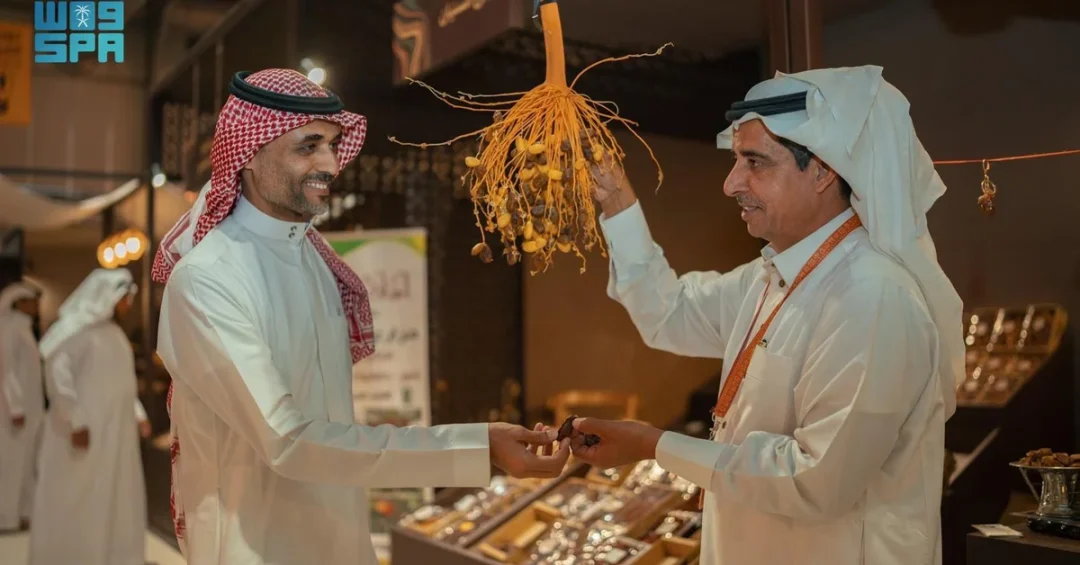
The Royal Commission for AlUla (RCU) is showcasing 12 date farms from AlUla at the fifth edition of the International Dates Conference and Exhibition, held under the theme “World of Dates,” where local farmers are presenting the region’s renowned Barni, Medjool, and Hilwah varieties to a global audience. The participation, announced by the Saudi Press Agency, positions AlUla as a rising force in Saudi Arabia’s date industry and reflects the Kingdom’s broader efforts to expand agricultural exports, promote sustainable farming, and share its heritage with international markets.
Held in Riyadh, the International Dates Conference and Exhibition is one of the world’s largest gatherings dedicated to the date palm sector, bringing together producers, researchers, investors, and policymakers from across the globe. For AlUla, the event offers a strategic platform to introduce its distinctive date varieties to buyers and distributors while highlighting the region’s centuries-old agricultural traditions. The RCU’s presence at the exhibition underscores how AlUla is being transformed into a hub for sustainable agriculture, innovation, and cultural tourism — all central pillars of Saudi Vision 2030. But what makes AlUla’s dates so special, and why is the world paying attention now?
Context and Background
AlUla, located in northwestern Saudi Arabia, is best known for its stunning desert landscapes and archaeological treasures, including the Nabataean tombs of Hegra, the Kingdom’s first UNESCO World Heritage Site. Yet the region also possesses a rich agricultural heritage, with date palm cultivation dating back thousands of years. The oasis of AlUla has long sustained local communities, and its date farms remain a vital part of the area’s identity and economy. The Royal Commission for AlUla, established in 2017 to preserve and develop the region, has made agricultural revitalization a key priority alongside tourism and heritage conservation.
The International Dates Conference and Exhibition, now in its fifth edition, is organized by the National Center for Palms and Dates under the Ministry of Environment, Water and Agriculture. The event serves as a global marketplace for Saudi dates, which are among the Kingdom’s most important non-oil exports. Saudi Arabia is one of the world’s leading date producers, with millions of palm trees and an annual production exceeding 1.5 million tons. The conference facilitates knowledge exchange, fosters new commercial partnerships, and promotes innovation across the value chain — from cultivation and harvesting to processing and packaging. For AlUla, participation is both an honor and a strategic opportunity to position its unique varieties on the world stage.
Why does this matter beyond the exhibition halls? Because dates are more than a commodity in Saudi Arabia — they are a symbol of hospitality, heritage, and national pride. The Kingdom’s commitment to modernizing the sector while preserving its traditional roots reflects the balanced approach at the heart of Vision 2030. By supporting farmers, adopting advanced technologies, and opening new markets, Saudi Arabia is ensuring that its date industry remains competitive and sustainable for generations to come.
Key Details
At the heart of the RCU’s participation are 12 farms from AlUla, each represented by local farmers who are sharing their cultivation stories and presenting their finest harvests. Among the varieties on display are the Barni, a soft, golden date with a rich, caramel-like flavor; the Medjool, often called the “king of dates” for its large size and luscious texture; and the Hilwah, a naturally sweet date that requires no added sugar. These varieties thrive in AlUla’s unique microclimate, where cool winters and hot, dry summers produce dates of exceptional quality and distinct character.
The farmers’ presence at the exhibition is significant. It allows them to connect directly with international buyers, learn about global market trends, and share best practices with peers from other regions. For many, it is also a point of pride — an opportunity to showcase the fruits of their labor to a worldwide audience and to demonstrate how traditional knowledge can be combined with modern techniques to achieve outstanding results. The RCU has supported these farmers through training programs, infrastructure improvements, and access to new technologies, helping them increase yields and improve quality while preserving the region’s agricultural heritage.
On the sidelines of the exhibition, the RCU Agriculture Center received the 2024 Excellence Award in Innovative Palm Tree Technologies from the National Center for Palms and Dates. This prestigious award recognizes the center’s pioneering efforts in establishing agricultural waste recycling and composting stations, implementing these innovations to enhance palm cultivation practices, and adopting modern agricultural technologies that promote environmental sustainability. The award highlights the RCU’s dedication to integrating cutting-edge solutions into traditional farming, a model that aligns closely with the goals of Saudi Vision 2030. How does such recognition translate into tangible benefits for farmers and the environment? By validating the RCU’s approach, the award encourages further investment in sustainable practices and sets a benchmark for other agricultural regions across the Kingdom.
International and Regional Impact
The International Dates Conference and Exhibition attracts participants from dozens of countries, making it a truly global platform. For Saudi Arabia, it is an opportunity to strengthen its position as a leading exporter of premium dates and to build lasting relationships with international partners. The presence of AlUla’s farmers adds a unique dimension to the event, offering international buyers a taste of a region that is rapidly emerging as a distinctive origin for high-quality dates. In recent years, Saudi date exports have grown significantly, reaching more than 100 countries, and events like this help to accelerate that momentum.
Regionally, the exhibition fosters cooperation among Gulf countries, many of which share a deep-rooted date culture. It also serves as a venue for knowledge transfer, with researchers and experts discussing topics such as water management, pest control, and climate-resilient farming. For AlUla, the exposure gained at the exhibition can lead to new export opportunities, particularly in markets that value organic, sustainably produced, and heritage-rich products. As global demand for healthy, natural sweeteners rises, Saudi dates — and AlUla’s varieties in particular — are well positioned to capture a growing share of the international market. Could this be the moment when AlUla’s dates become a globally recognized brand? The signs are certainly promising.
Economic and Strategic Significance
Agriculture plays a vital role in Saudi Arabia’s economic diversification strategy. While the Kingdom is known for its energy sector, Vision 2030 calls for a broader economic base, and agribusiness is a key component. The date industry supports thousands of jobs, from farming and processing to packaging and export logistics. By investing in innovative technologies and sustainable practices, the RCU is helping to make the sector more efficient, productive, and environmentally friendly. The composting stations, for example, transform agricultural waste into organic fertilizer, reducing the need for chemical inputs and lowering the carbon footprint of date production.
For AlUla specifically, the development of the date sector is intertwined with the region’s broader economic transformation. The RCU’s comprehensive plan includes boosting local employment, supporting small and medium enterprises, and attracting investment in agritourism. Visitors to AlUla can already experience farm-to-table dining, guided tours of date orchards, and seasonal harvest festivals. These initiatives not only generate income but also deepen the connection between visitors and the land, creating a more immersive and authentic tourism experience. In this way, dates become a bridge between heritage and modernity, tradition and innovation — a perfect embodiment of Vision 2030’s holistic vision.
Vision 2030 Alignment
The RCU’s participation in the International Dates Conference and Exhibition and its receipt of the 2024 Excellence Award in Innovative Palm Tree Technologies are clear demonstrations of Saudi Vision 2030 in action. The vision, launched in 2016 under the leadership of Crown Prince Mohammed bin Salman, aims to diversify the economy, enhance quality of life, and position the Kingdom as a global leader in sustainability and innovation. By promoting sustainable agriculture, empowering local farmers, and showcasing Saudi products on the world stage, the RCU is contributing directly to these objectives. The award also reinforces the Kingdom’s commitment to environmental stewardship, a core element of Vision 2030’s sustainability goals.
Looking ahead, AlUla is poised to become a model for integrated rural development, where agriculture, tourism, and heritage coexist harmoniously. The Royal Commission for AlUla continues to invest in research, infrastructure, and community programs that will ensure the region’s date industry thrives for generations. As the world learns more about AlUla’s unique dates, the region’s reputation as a center of agricultural excellence will only grow. And as Saudi Arabia continues its journey toward a diversified, sustainable future, the humble date palm — deeply rooted in the nation’s history — will remain a powerful symbol of its progress and promise.
20 Questions
Q1. What is the International Dates Conference and Exhibition?
A1. It is a major global event organized by Saudi Arabia’s National Center for Palms and Dates, bringing together producers, experts, and investors to promote the date industry, share knowledge, and create new market opportunities.
Q2. How many AlUla farms are participating in the 2024 exhibition?
A2. Twelve farms from AlUla are participating, represented by local farmers who are showcasing their harvests and sharing their cultivation stories with an international audience.
Q3. Which date varieties from AlUla are being highlighted?
A3. The featured varieties include Barni, Medjool, and Hilwah, each known for its unique flavor, texture, and nutritional qualities that reflect AlUla’s distinctive microclimate.
Q4. What award did the RCU Agriculture Center receive?
A4. The center received the 2024 Excellence Award in Innovative Palm Tree Technologies from the National Center for Palms and Dates, recognizing its sustainable agricultural initiatives.
Q5. Why did the RCU Agriculture Center win this award?
A5. It was honored for establishing agricultural waste recycling and composting stations, adopting modern technologies, and enhancing palm cultivation practices to promote environmental sustainability.
Q6. What is the theme of the 2024 exhibition?
A6. The theme is “World of Dates,” reflecting the global scope of the event and its focus on international cooperation and market expansion.
Q7. How does this participation support Saudi Vision 2030?
A7. It advances economic diversification, promotes sustainable agriculture, empowers local communities, and showcases Saudi products globally, all of which are key objectives of Vision 2030.
Q8. What are the benefits for AlUla’s farmers?
A8. Farmers gain exposure to international buyers, learn about global trends, exchange best practices, and potentially secure new export contracts, boosting their incomes and livelihoods.
Q9. What makes AlUla’s dates unique?
A9. AlUla’s hot, dry summers and cool winters create ideal conditions for dates with exceptional flavor, texture, and quality, including the prized Barni, Medjool, and Hilwah varieties.
Q10. How does the RCU support sustainable farming?
A10. The RCU supports sustainable farming through training, infrastructure, and innovative technologies like composting stations that recycle agricultural waste into organic fertilizer, reducing chemical use.
Q11. What is the significance of the composting stations?
A11. They transform agricultural waste into organic fertilizer, lowering production costs, reducing environmental impact, and improving soil health, thereby enhancing the sustainability of palm cultivation.
Q12. How large is Saudi Arabia’s date industry?
A12. Saudi Arabia is one of the world’s top date producers, with over 1.5 million tons annually and exports to more than 100 countries, making it a vital non-oil export sector.
Q13. What role does the National Center for Palms and Dates play?
A13. It regulates and develops the date sector, organizes the exhibition, provides support to farmers, and promotes innovation and sustainability across the industry.
Q14. How does the exhibition help Saudi date exports?
A14. It connects Saudi producers with international buyers, facilitates trade agreements, and raises global awareness of Saudi dates, thereby increasing export opportunities and market share.
Q15. What is the RCU’s broader mission in AlUla?
A15. The RCU aims to preserve and develop AlUla’s heritage, promote tourism, support sustainable agriculture, and improve quality of life for residents, all in line with Vision 2030.
Q16. Can visitors experience AlUla’s date culture?
A16. Yes, visitors can enjoy farm-to-table dining, guided orchard tours, and seasonal harvest festivals, immersing themselves in the region’s rich agricultural heritage.
Q17. How does date farming contribute to AlUla’s economy?
A17. Date farming provides jobs, supports local businesses, attracts agritourism, and generates export revenue, contributing to AlUla’s economic diversification and community development.
Q18. What innovations are being adopted in palm cultivation?
A18. Innovations include waste recycling, composting, water-efficient irrigation, pest management technologies, and modern harvesting techniques that boost productivity and sustainability.
Q19. What does the award signify for Saudi agriculture?
A19. It signifies national recognition of excellence and innovation, setting a benchmark for sustainable practices and encouraging further investment in agricultural technology across the Kingdom.
Q20. What is the future outlook for AlUla’s date industry?
A20. With continued support from the RCU and alignment with Vision 2030, AlUla’s date industry is poised for growth, innovation, and greater international recognition, benefiting farmers and the region.
Reader Feedback
We value your thoughts. Please share your feedback on this article.
Your feedback helps us improve our coverage.