


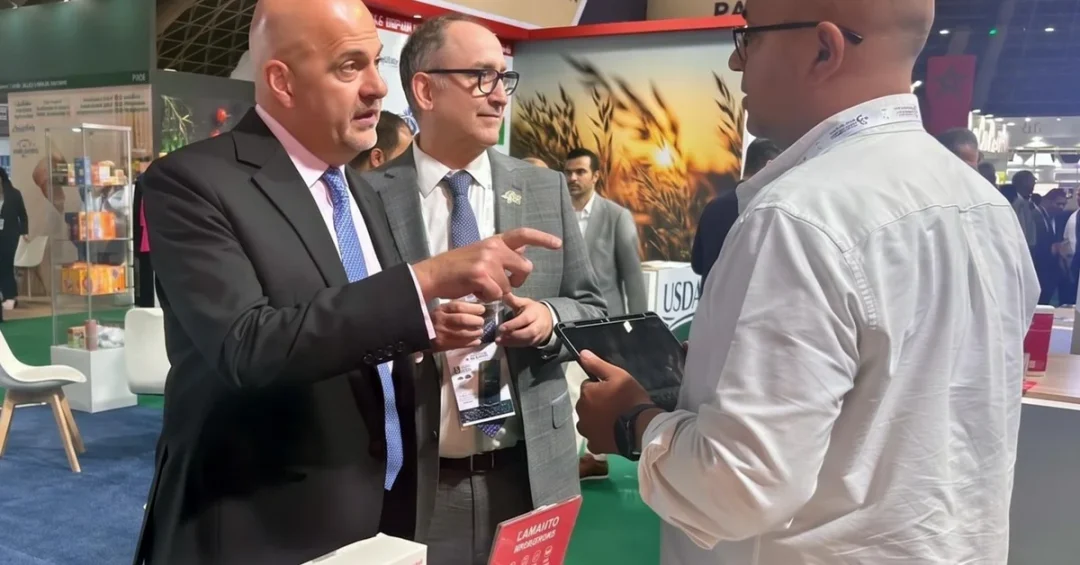
The United States mounted its first official American Pavilion at the Saudi Food Show in Jeddah, bringing together dozens of US companies and trade associations to present American food and agricultural products to importers and food industry professionals across the Kingdom. The pavilion, organized with the support of US commercial and agricultural representatives, featured a broad portfolio of American goods, including beef and potatoes, rice and grains, fresh produce, nuts, snacks, beverages, and specialty foods. Participating organizations included the USA Rice Federation and the US Meat Export Federation, two bodies with long experience in international market development. The debut pavilion marked a visible step forward in agricultural and food trade cooperation between Washington and Riyadh, arriving at a moment when Saudi Arabia has moved to ease export requirements for US beef. The presence of American exhibitors at one of the region’s most important food industry gatherings signals deepening commercial confidence on both sides.
Why does a single national pavilion at a regional trade fair matter beyond the exhibition floor? Because food trade is one of the most practical measures of a bilateral relationship. It touches farmers, processors, shippers, retailers, and consumers, and it depends on regulatory trust as much as on price and quality. The Saudi Food Show, hosted in Jeddah, has become a meeting point for buyers from the Kingdom and the wider Gulf, and the American Pavilion placed US producers directly in front of those buyers. For Saudi importers seeking reliable, high-quality suppliers, the pavilion offered a concentrated view of what American agriculture can deliver. For US exporters, it offered access to a market whose food demand continues to grow in line with population, tourism, and Vision 2030 diversification.
Context and Background
How did the American Pavilion come together, and what does it represent? The pavilion was the first official US national presence of its kind at the Saudi Food Show, organized to consolidate American food and agricultural exhibitors under a single banner rather than leaving them to participate individually. That structure matters because it gives smaller US producers and regional trade associations a shared platform, shared visibility, and a coordinated message. The participating organizations included the USA Rice Federation, which promotes American-grown rice in international markets, and the US Meat Export Federation, which works to expand demand for US beef, pork, and lamb overseas. Their presence reflected a deliberate decision to treat Saudi Arabia as a priority market rather than an incidental one.
The timing of the pavilion is closely tied to recent regulatory developments. Saudi Arabia has eased export requirements for US beef, a change that reduces friction for American processors seeking to ship to the Kingdom and gives Saudi importers a wider field of eligible suppliers. Such regulatory adjustments are rarely dramatic in public presentation, but they are decisive in commercial practice. They determine which plants can ship, which documentation is accepted, and how quickly goods move through inspection. When requirements align with internationally recognized, science-based standards, trade volumes tend to follow. The American Pavilion thus arrived not as an isolated promotional gesture but as part of a broader normalization of agricultural commerce between the two countries.
It is also worth recalling the scale of the Saudi market. The Kingdom imports a substantial share of its food, reflecting limited arable land and water constraints, and its population and visitor numbers continue to rise. The expansion of tourism, including religious pilgrimage and leisure travel, adds further demand for hotels, restaurants, catering, and retail food. That combination makes Saudi Arabia an attractive destination for exporters of grains, proteins, produce, and packaged goods. American agriculture, with its large-scale production, consistent grading, and established export logistics, is positioned to compete for a meaningful share of that demand.
Key Details
What exactly did the American Pavilion put on display? The product range was deliberately broad. Beef and potatoes anchored the offering, alongside rice and grains, fresh produce, nuts, snacks, beverages, and specialty foods. That mix reflects the diversity of American agriculture, from commodity staples to branded consumer products, and it speaks to different segments of the Saudi market. Commodity grains and rice serve food processors, caterers, and institutional buyers. Beef and fresh produce serve hotels, restaurants, and premium retail. Nuts, snacks, beverages, and specialty foods serve supermarkets and the growing convenience sector. By presenting all of these under one pavilion, the US delegation made it easy for Saudi buyers to see the full breadth of available supply.
US Consul General Rafik Mansour framed the pavilion’s purpose in terms that went beyond sales. He said, “Our role goes beyond commercial promotion. We want to support a trading environment based on transparency, clear requirements, and science-based information that builds confidence in the food safety system. The Saudi Food Show gives US companies an opportunity to showcase their products, reach new customers, and expand opportunities in the Saudi market.” His remarks placed regulatory confidence and food safety systems at the center of the commercial relationship, an emphasis that resonates with Saudi authorities who have invested heavily in food security and import oversight.
The Consul General also sampled classic US beef during the event, a gesture that carried symbolic weight as well as practical purpose. Sampling is a standard trade promotion technique, but in this setting it underscored the product categories most affected by the recent easing of export requirements. Beef has been a focal point of US-Saudi agricultural discussions, and the ability to present it directly to Saudi buyers and officials reinforced the message that American beef meets the Kingdom’s standards. The pavilion also gave US trade associations a chance to explain grading, traceability, and handling practices to importers who must satisfy their own customers and regulators.
International and Regional Impact
How does this development fit into the wider pattern of US-Gulf trade? The Gulf region as a whole is a major food importer, and Saudi Arabia is its largest and most influential market. When the Kingdom adjusts import requirements or welcomes a national pavilion, other Gulf states take notice. A successful American presence in Jeddah can therefore open doors in neighboring markets, where buyers often watch Saudi purchasing decisions closely. For US exporters, the Kingdom can serve as an anchor market that justifies the cost of compliance, logistics, and regional representation. For Saudi importers, diversifying suppliers across the United States, Europe, Asia, and the Americas strengthens resilience against disruption.
The event also reflects a broader convergence of interests. The United States is a leading global agricultural exporter with surplus production in grains, meat, and processed foods. Saudi Arabia is a leading food importer with a growing, quality-conscious consumer base and a strategic interest in supply security. Those profiles are complementary. Trade fairs such as the Saudi Food Show convert that complementarity into contracts, distribution agreements, and long-term supplier relationships. The American Pavilion gave US participants a structured way to pursue those outcomes, and it gave Saudi buyers a single point of contact for a wide range of American products.
Economic and Strategic Significance
Why should economic observers pay attention to a food pavilion? Because agricultural trade is a stabilizing force in bilateral relations. It creates constituencies on both sides, from American farmers and processors to Saudi importers, distributors, and retailers, who benefit from predictable access and transparent rules. It also supports food security, a priority that Saudi policymakers have pursued through investment, strategic reserves, and international partnerships. When Saudi Arabia eases export requirements for US beef, it is not simply granting a commercial favor; it is aligning its import regime with science-based standards that reinforce confidence in the safety and reliability of the food supply.
There is also a Vision 2030 dimension to the commercial logic. As the Kingdom expands tourism, entertainment, and hospitality, demand rises for high-quality proteins, specialty foods, and branded consumer products. Hotels, restaurants, and catering companies need consistent supply and dependable quality. American exporters, with established cold chains and grading systems, are natural candidates to serve that demand. At the same time, Saudi Arabia’s own food processing and retail sectors gain access to inputs and finished goods that help them serve customers better. The result is not a one-way flow but an exchange that strengthens both economies.
Vision 2030 Alignment
How does the American Pavilion connect to Saudi Arabia’s long-term vision? Vision 2030 aims to diversify the economy, strengthen food security, and position the Kingdom as a global hub for trade, tourism, and investment. International food trade supports all three goals. It diversifies sourcing, reduces dependence on any single supplier, and brings international standards and practices into the Saudi market. The Saudi Food Show itself is a product of that vision, a world-class exhibition that attracts global participation and showcases the Kingdom’s capacity to host major commercial events. The American Pavilion’s debut adds momentum to that trajectory.
Looking ahead, the pavilion is best understood as a beginning rather than an endpoint. The easing of US beef export requirements, the participation of the USA Rice Federation and the US Meat Export Federation, and the direct engagement of Consul General Rafik Mansour together point toward a more structured agricultural partnership. If the first American Pavilion produces tangible buyer-seller relationships, subsequent editions are likely to grow in size and scope, drawing more US states, cooperatives, and brands into the Saudi market. For Saudi Arabia, that means more choice, stronger competition, and a more resilient food supply. For the United States, it means a deeper foothold in one of the world’s most dynamic import markets. Both outcomes serve the Kingdom’s vision of a diversified, secure, and globally connected economy.
20 Questions
Q1. What was the significance of the first official American Pavilion at the Saudi Food Show?
A1. It marked the first time the United States organized a national pavilion at the Saudi Food Show, bringing dozens of companies and trade associations together to showcase American food and agricultural products to Saudi importers and industry professionals.
Q2. Where and when did the American Pavilion take place?
A2. The pavilion took place at the Saudi Food Show in Jeddah, with the official announcement dated September 29, 2026, as reported by the Saudi Press Agency.
Q3. Which American products were featured at the pavilion?
A3. The pavilion featured beef and potatoes, rice and grains, fresh produce, nuts, snacks, beverages, and specialty foods, representing a broad cross-section of American agriculture and food manufacturing.
Q4. Which US organizations participated in the pavilion?
A4. Participating organizations included the USA Rice Federation and the US Meat Export Federation, both of which work to expand international demand for American agricultural products.
Q5. What recent regulatory change supported the pavilion’s timing?
A5. Saudi Arabia recently eased export requirements for US beef, reducing friction for American processors and giving Saudi importers access to a wider field of eligible suppliers.
Q6. Who represented the United States at the event?
A6. US Consul General Rafik Mansour represented the United States, speaking about the pavilion’s purpose and sampling classic US beef during the event.
Q7. What did Consul General Rafik Mansour say about the US role?
A7. He said the US role goes beyond commercial promotion and aims to support a trading environment based on transparency, clear requirements, and science-based information that builds confidence in the food safety system.
Q8. How did he describe the opportunity for US companies?
A8. He said the Saudi Food Show gives US companies an opportunity to showcase their products, reach new customers, and expand opportunities in the Saudi market.
Q9. Why is the Saudi market important for food importers and exporters?
A9. Saudi Arabia imports a large share of its food due to limited arable land and water constraints, and its growing population and tourism sector continue to increase demand for diverse, high-quality food products.
Q10. How does the pavilion support food security in Saudi Arabia?
A10. By connecting Saudi importers with reliable American suppliers, the pavilion helps diversify sourcing, strengthen supply chains, and reinforce the Kingdom’s efforts to ensure a stable and safe food supply.
Q11. What role do trade associations such as the USA Rice Federation play?
A11. They promote American agricultural products in international markets, provide market intelligence, and help buyers understand grading, quality, and handling standards.
Q12. Why is beef a focal point of US-Saudi agricultural trade?
A12. Beef has been central to recent discussions because Saudi Arabia eased export requirements for US beef, opening opportunities for American processors and giving Saudi buyers more choice.
Q13. How does the Saudi Food Show benefit Saudi importers?
A13. It allows Saudi importers to meet many suppliers in one place, compare products and prices, and build relationships that can lead to long-term distribution and supply agreements.
Q14. What does the pavilion suggest about US-Gulf trade relations?
A14. It suggests deepening commercial engagement, with the United States treating Saudi Arabia as a priority market and Gulf buyers viewing American suppliers as reliable partners.
Q15. How does agricultural trade contribute to bilateral stability?
A15. It creates constituencies on both sides, from farmers and processors to importers and retailers, who benefit from predictable access, transparent rules, and steady commercial exchange.
Q16. What standards did the Consul General emphasize?
A16. He emphasized transparency, clear requirements, and science-based information, all of which build confidence in the food safety system and support durable trade relationships.
Q17. How does the event align with Vision 2030?
A17. Vision 2030 seeks economic diversification, food security, and a stronger global trade and tourism position, all of which are supported by international food exhibitions and expanded agricultural partnerships.
Q18. What might follow the first American Pavilion?
A18. If the debut produces tangible buyer-seller relationships, future editions are likely to grow, attracting more US states, cooperatives, and brands to the Saudi market.
Q19. Why is science-based regulation important in food trade?
A19. Science-based regulation ensures that import requirements reflect genuine safety and quality considerations, reducing uncertainty for exporters and reinforcing consumer confidence in imported food.
Q20. What is the broader significance of this development?
A20. It represents a practical step in strengthening US-Saudi agricultural cooperation, expanding market access, and supporting Saudi Arabia’s goals of food security, economic diversification, and global engagement.
Reader Feedback
We value your thoughts. Please share your feedback on this article.
Your feedback helps us improve our coverage.