


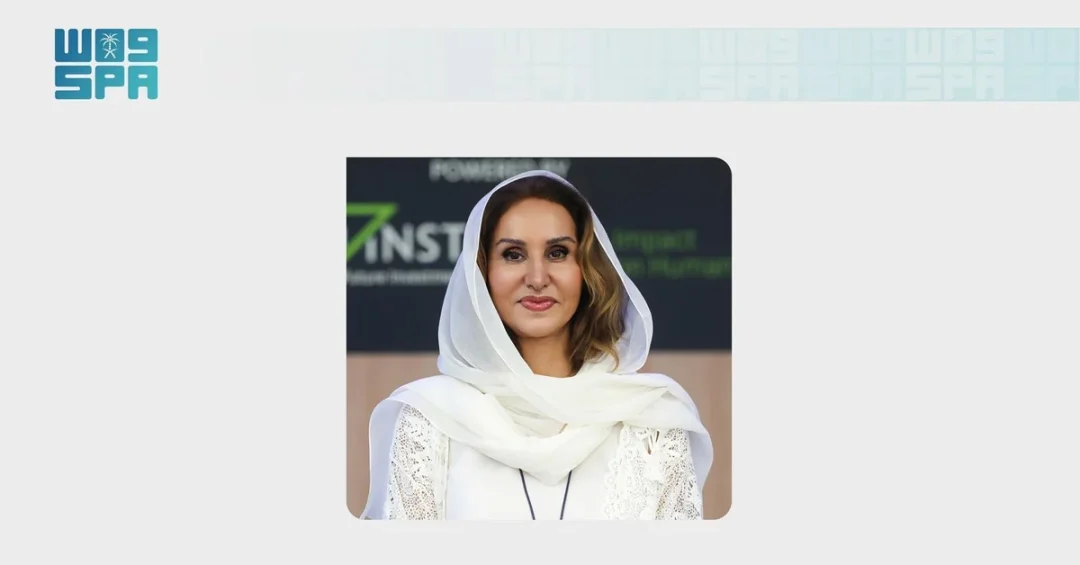
The Future Investment Initiative (FII) Institute, a global nonprofit foundation with an investment arm and a singular agenda of Impact on Humanity, has published the fifth edition of the FII PRIORITY Compass, revealing that cost-of-living remains the leading global concern for a fifth consecutive year. The survey, conducted in partnership with Ipsos between April 24 and June 5, 2026, captured the views of 61,200 adults across 32 countries collectively representing 66 percent of the global population, and it paints a detailed portrait of economic pressure, technological expectation, and shifting public trust as households navigate an era of persistent financial strain.
Released from Riyadh, the findings place cost-of-living at the top of a list of global anxieties that also includes poverty, inequality, and unemployment, underscoring how economic pressures continue to shape everyday decisions and constrain families’ aspirations for the future. The report arrives at a moment when governments, investors, and multilateral institutions are searching for durable pathways to growth, and it offers decision-makers a data-driven lens on what ordinary citizens across both the Global South and the Global North actually prioritize. For Saudi Arabia, which hosts the FII Institute and has positioned itself as a convening power for global economic dialogue, the survey reinforces the Kingdom’s role in surfacing the concerns that define the contemporary global mood.
Context and Background
Why does a survey of 61,200 people across 32 countries matter to investors and policymakers alike? Because the FII PRIORITY Compass is not a snapshot of sentiment alone but a longitudinal instrument that has now tracked global priorities for five consecutive years, allowing analysts to distinguish enduring anxieties from passing ones. The persistence of cost-of-living as the top concern is itself a signal: it suggests that despite headline improvements in some economies, the lived experience of households remains dominated by the price of essentials, the burden of debt, and the uncertainty of income. The FII Institute, chaired in its leadership by Princess Dr. Maha bint Mishari Bin Abdulaziz, Chief Executive Officer of the FII Institute, has framed the Compass as a resource to guide policies and capital toward opportunities that generate returns and improve lives.
The survey’s methodology lends weight to its conclusions. Conducted online between April 24 and June 5, 2026, in partnership with the global research firm Ipsos, it drew on a sample spanning 32 countries that together account for two-thirds of humanity. That breadth allows the Compass to surface not only aggregate global trends but also the divergences between regions, generations, and income levels. The fifth edition builds on a body of work that has become a reference point for institutional investors, development agencies, and governments seeking to align capital allocation with public need. In a world where data on public opinion is often fragmented or partisan, the Compass offers a rare, large-scale view of what people around the world say they need most.
Key Findings and the Pressure on Families
What do the numbers reveal about the relationship between financial strain and the most personal decisions families make? The survey found that 57 percent of respondents report that living expenses and debt represent barriers to having the number of children they desire, a striking illustration of how macroeconomic pressure intrudes on the intimate choices of household formation. This finding connects the abstract language of inflation and indebtedness to concrete human consequences, suggesting that prolonged cost-of-living pressure may carry demographic implications for societies already grappling with aging populations and labor-force constraints. For governments, the message is that affordability is not merely an economic metric but a determinant of social continuity.
The Compass also documents a pronounced gap in outlook between the Global South and the Global North. While 47 percent of respondents in the Global South believe the world is heading in the right direction, only 15 percent in the Global North share that view. This divergence of more than thirty percentage points points to differing experiences of economic momentum, demographic trajectory, and institutional trust. It suggests that optimism is increasingly concentrated in emerging economies, where growth and opportunity are perceived to be expanding, while advanced economies contend with stagnation, political fragmentation, and a pervasive sense of decline. For investors, that gap is a map of where confidence and capital may increasingly flow.
On technology, the findings reflect a nuanced public posture rather than simple enthusiasm or rejection. While 60 percent of respondents said artificial intelligence has improved their lives, 85 percent call for global rules to regulate its use, indicating that appreciation for AI’s benefits coexists with a strong demand for governance. The same measured approach appears in attitudes toward robotics: 61 percent expressed comfort with robots performing household tasks, compared with 53 percent when it comes to caring for the elderly. Together, these responses sketch a public that is willing to embrace technological change but insists on boundaries, particularly where vulnerable populations are concerned.
Digital Safety, Media Trust, and the Governance Debate
How should societies balance the protection of children with the freedoms of the digital environment? The Compass found that 51 percent of respondents support requiring verified parental consent for children under the age of 16 to use social media platforms, while 40 percent support banning children’s accounts outright. These figures reveal a global public that is engaged with the question of minors’ online safety and leans toward regulatory intervention, even as it stops short of a consensus on prohibition. The debate is especially relevant as governments worldwide, including in the Gulf region, draft frameworks to govern platform accountability and protect young users without stifling innovation.
On the question of trust, the survey offers a complex picture. A majority of respondents report trusting traditional media as sources of accurate information, despite 75 percent perceiving those same outlets as politically biased. This apparent contradiction suggests that the public distinguishes between the reliability of reporting and the orientation of editorial stance, and that traditional media retains a reservoir of credibility that newer platforms have not fully displaced. For news organizations and communicators, the finding underscores the continuing value of verified, professional journalism in a fragmented information landscape, and it reinforces the case for transparency and editorial integrity as foundations of public confidence.
The FII Institute’s leadership has emphasized that these findings are intended to be actionable rather than merely descriptive. Princess Dr. Maha bint Mishari Bin Abdulaziz described the Compass as a resource that reveals shared concerns and unmet needs, and argued that it should serve as a go-to reference for investors and decision-makers, guiding policies and capital toward opportunities that generate returns while improving lives. That framing positions the survey as a bridge between public sentiment and institutional strategy, translating what citizens report into signals that can inform investment theses, social policy, and international cooperation.
International and Regional Impact
What does a five-year persistence of cost-of-living anxiety mean for the global economy? It suggests that the disinflation achieved in some markets has not translated into a restoration of household security, and that the political consequences of affordability may continue to shape elections, labor relations, and migration patterns. For multilateral institutions, the finding argues for policies that target the cost of essentials, expand access to credit on fair terms, and protect vulnerable households from debt spirals. For investors, it points to durable demand for affordable housing, healthcare, food systems, and financial services designed for resilience rather than excess.
The Global South and Global North divergence carries particular weight for international relations. A Global South in which nearly half of respondents see the world moving in the right direction is a Global South increasingly confident in its own trajectory, and one likely to demand a greater voice in global governance and a larger share of investment. Saudi Arabia’s own position as a bridge between regions, and as a host of platforms such as the FII that convene leaders from across hemispheres, places the Kingdom at the center of this rebalancing. The Compass data can help inform the design of partnerships that channel capital toward the priorities citizens themselves identify, from job creation to affordable essential services.
Economic and Strategic Significance
Why should business leaders treat public sentiment as a strategic asset rather than a soft variable? Because the Compass demonstrates that consumer and citizen priorities directly shape the demand landscape in which companies operate. When 85 percent of respondents call for AI regulation, firms that build compliance and transparency into their products gain a competitive advantage. When 57 percent say living expenses block their family aspirations, markets for childcare, housing, and household finance become sites of both social need and commercial opportunity. The survey thus functions as a demand-side map, helping investors anticipate where regulation, consumer preference, and public policy will converge.
The findings also underscore the importance of trust as an economic input. A public that trusts traditional media even while perceiving bias, and that welcomes technology while demanding guardrails, is a public that rewards institutions demonstrating consistency and accountability. For Saudi Arabia, which has invested heavily in modernizing its own economy under Vision 2030 while positioning itself as a stable and forward-looking global partner, the Compass provides evidence that the Kingdom’s emphasis on data, dialogue, and long-term planning resonates with the priorities of citizens worldwide. The survey’s scale and continuity make it a credible instrument for aligning capital with human need, a core objective of the FII Institute’s mandate.
Vision 2030 Alignment
How does a global survey published in Riyadh connect to the Kingdom’s long-term transformation? Saudi Arabia’s Vision 2030 is built on the premise that economic diversification, social modernization, and international engagement are mutually reinforcing, and the FII Institute’s role in producing the PRIORITY Compass exemplifies that logic. By convening global voices and translating their concerns into actionable intelligence, the Kingdom strengthens its position as a hub for investment and policy dialogue, consistent with the Vision’s aim of creating a diversified, globally connected economy and an elevated quality of life for citizens and residents.
The Compass findings on cost-of-living, family aspirations, and technology governance align with several Vision 2030 pillars, including the pursuit of economic resilience, the empowerment of families and youth, and the embrace of innovation within responsible frameworks. As the FII Institute continues to publish the Compass annually, it offers a model of evidence-based global engagement that reflects Saudi Arabia’s commitment to contributing solutions rather than merely observing challenges. In a world where financial pressures weigh heavily on households, the Kingdom’s investment in data, dialogue, and forward-looking policy positions it as a constructive force in shaping a more prosperous and stable global future.
20 Questions
Q1. What is the FII PRIORITY Compass?
A1. It is an annual global survey published by the Future Investment Initiative (FII) Institute, a nonprofit foundation based in Riyadh, that tracks public priorities across dozens of countries to inform investors and policymakers.
Q2. How many people were surveyed in the fifth edition?
A2. The survey captured the views of 61,200 adults aged 18 and over across 32 countries, collectively representing 66 percent of the global population, conducted online between April 24 and June 5, 2026.
Q3. Which concern topped the global list for the fifth consecutive year?
A3. Cost-of-living was identified as the leading global concern for the fifth consecutive year, followed by poverty, inequality, and unemployment, reflecting sustained economic pressure on households worldwide.
Q4. Who leads the FII Institute?
A4. The FII Institute is led by Princess Dr. Maha bint Mishari Bin Abdulaziz, Chief Executive Officer, who has described the Compass as a resource to guide policies and capital toward opportunities that improve lives.
Q5. What did the survey find about family aspirations?
A5. The survey found that 57 percent of respondents report that living expenses and debt represent barriers to having the number of children they desire, linking financial strain to personal family decisions.
Q6. How do outlooks differ between the Global South and Global North?
A6. While 47 percent of respondents in the Global South believe the world is heading in the right direction, only 15 percent in the Global North share that view, a gap of more than thirty percentage points.
Q7. What do respondents think about artificial intelligence?
A7. Sixty percent said AI has improved their lives, while 85 percent call for global rules to regulate its use, showing appreciation for benefits alongside strong demand for governance.
Q8. How do people feel about robots in the home?
A8. Sixty-one percent of respondents expressed comfort with robots performing household tasks, compared with 53 percent when it comes to robots caring for the elderly, indicating measured acceptance.
Q9. What did the survey reveal about children’s digital safety?
A9. Fifty-one percent support requiring verified parental consent for children under 16 to use social media, while 40 percent support banning children’s accounts altogether.
Q10. What did respondents say about media trust?
A10. A majority trust traditional media as sources of accurate information, even though 75 percent perceive those outlets as politically biased, suggesting a distinction between reliability and editorial orientation.
Q11. Who conducted the survey in partnership with the FII Institute?
A11. The survey was conducted in partnership with Ipsos, a global research firm, which helped gather and analyze responses from 61,200 adults across 32 countries.
Q12. Why is the survey’s continuity important?
A12. As the fifth edition, the Compass allows analysts to distinguish enduring public anxieties from passing ones, making it a valuable longitudinal instrument for investors and policymakers.
Q13. What does the cost-of-living finding imply for governments?
A13. It suggests that policies targeting affordable essentials, fair credit access, and household resilience remain urgent, as headline economic improvements have not restored a sense of security for many families.
Q14. How does the survey connect to investment strategy?
A14. The findings map demand across areas such as affordable housing, healthcare, and financial services, helping investors align capital with public needs and emerging regulatory priorities.
Q15. What is the significance of the Global South’s optimism?
A15. It indicates growing confidence in emerging economies and may signal where capital and opportunity increasingly flow, reshaping global economic and governance dynamics.
Q16. How does the survey address technology governance?
A16. It shows a public that welcomes technological change but insists on boundaries, with strong majorities favoring regulation of AI and protections for children online.
Q17. What role does Saudi Arabia play in this initiative?
A17. Saudi Arabia hosts the FII Institute, positioning the Kingdom as a convening power for global economic dialogue and reinforcing its Vision 2030 commitment to international engagement.
Q18. What is the FII Institute’s stated agenda?
A18. The FII Institute describes itself as a global nonprofit foundation with an investment arm and one agenda, Impact on Humanity, aiming to guide capital toward opportunities that improve lives.
Q19. How does the Compass relate to Vision 2030?
A19. The survey reflects Vision 2030 pillars of economic resilience, family empowerment, and responsible innovation, supporting the Kingdom’s goal of contributing evidence-based solutions to global challenges.
Q20. What is the overall message of the fifth edition?
A20. The survey reveals shared global concerns and unmet needs, with cost-of-living dominant for five years, offering decision-makers a data-driven guide to policies and investments that generate returns and improve lives.
Reader Feedback
We value your thoughts. Please share your feedback on this article.
Your feedback helps us improve our coverage.