


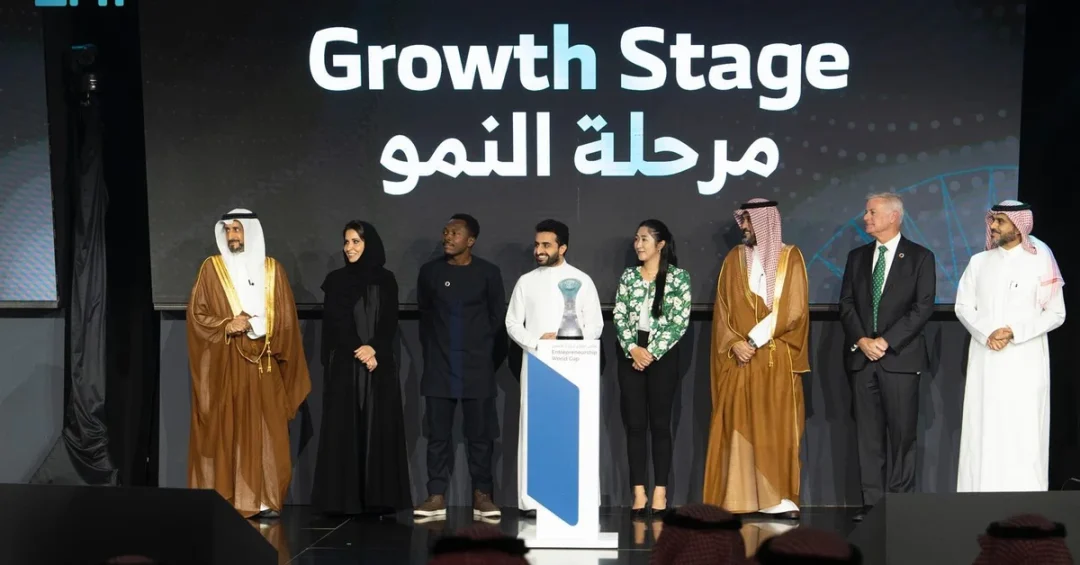
Saudi startup MisMar has won first place at the Entrepreneurship World Cup, held during the Biban24 forum in Riyadh, taking home a $200,000 prize as the competition concluded with winners honored by Saudi officials. The global contest, which brought together 100 startups from more than 50 countries, awarded a total prize pool of up to $1 million, with Singapore’s N&E Innovations finishing second ($140,000) and Ghana’s Sommalife third ($70,000), according to the Saudi Press Agency.
The Entrepreneurship World Cup, organized by the Small and Medium Enterprises General Authority (Monsha’at) in collaboration with the Prince Mohammed bin Salman Foundation (Misk) and the Global Entrepreneurship Network, represents one of the world’s largest startup pitch competitions. The event is a centerpiece of Biban24, Saudi Arabia’s flagship forum for entrepreneurs and small and medium-sized enterprises, and underscores the Kingdom’s growing role as a launchpad for innovative businesses from around the globe. For international observers, the outcome signals both the depth of Saudi Arabia’s entrepreneurial ecosystem and its commitment to fostering cross-border collaboration in line with Vision 2030.
Context and Background
How did a competition hosted in Riyadh come to attract startups from over 50 countries? The Entrepreneurship World Cup has grown steadily since its inception, becoming a truly global platform that connects early-stage companies with investors, mentors, and markets. Its presence at Biban24 reflects Saudi Arabia’s deliberate strategy to position itself at the center of the global startup economy. The event is not merely a contest; it is a comprehensive support system that provides participants with tailored training programs, intensive bootcamps, and access to a worldwide network of advisors.
Biban24, organized by Monsha’at, serves as the umbrella gathering for entrepreneurs, investors, and policymakers from across the region and beyond. The forum aligns with the Kingdom’s efforts to diversify its economy away from oil dependence and to cultivate a knowledge-based, innovation-driven private sector. By hosting the Entrepreneurship World Cup, Saudi Arabia demonstrates its capacity to convene global talent and to offer tangible pathways for startups to scale. The collaboration with Misk, which has long championed youth empowerment, and the Global Entrepreneurship Network, active in 200 countries, further elevates the event’s international credibility.
The timing is significant. As economies worldwide recover and adapt to new technological realities, competitions like the Entrepreneurship World Cup provide a vital bridge between promising ideas and the capital and expertise needed to bring them to market. Saudi Arabia’s own entrepreneurial landscape has matured rapidly, with a surge in venture capital activity and a growing number of startups addressing regional and global challenges. The Kingdom’s ability to host such a prestigious event reinforces its status as a hub for innovation and a destination for ambitious founders.
Key Details
What does it take to stand out among 100 of the world’s most promising startups? MisMar, the Saudi winner, impressed judges with its innovative business model, securing the top prize of $200,000. The company’s success highlights the caliber of talent emerging from the Kingdom’s startup ecosystem. N&E Innovations from Singapore claimed second place and $140,000, while Sommalife from Ghana earned third place and $70,000. These three winners represent the geographic diversity of the competition, spanning Asia, Africa, and the Middle East.
The Entrepreneurship World Cup offered a total prize pool of up to $1 million, distributed among winners and potentially other standout participants. Beyond financial rewards, the competition provided all 100 finalists with essential tools and resources to transform their ideas into reality. Through tailored training programs and an intensive bootcamp, participants honed their pitching skills, refined their business models, and connected with a global network of mentors. This holistic approach is designed to create lasting value, not just a one-time cash injection.
The event’s structure ensures that even those who did not place among the top three leave with enhanced capabilities and expanded networks. For many startups, the exposure and connections gained at the Entrepreneurship World Cup can be as valuable as the prize money itself. The competition’s emphasis on mentorship and practical training reflects a broader understanding that sustainable entrepreneurship requires more than just funding; it requires a supportive ecosystem that nurtures talent over the long term.
International and Regional Impact
What does the success of startups from Singapore and Ghana tell us about the global nature of innovation? The Entrepreneurship World Cup’s winners hail from three different continents, underscoring the competition’s role as a truly international platform. This diversity is a testament to Saudi Arabia’s ability to convene talent from around the world and to foster an environment where the best ideas can thrive, regardless of their origin. For the Middle East and North Africa region, the event signals that Saudi Arabia is not only a participant in the global startup scene but a leading organizer and facilitator.
The presence of the Global Entrepreneurship Network, which operates in 200 countries, adds another layer of international cooperation. By partnering with such organizations, Saudi Arabia strengthens its ties with entrepreneurial communities worldwide and positions itself as a bridge between markets. This is particularly important as the Kingdom seeks to attract foreign investment and talent as part of its economic transformation. The competition also provides a platform for regional startups to gain visibility and to compete on a global stage, which can lead to follow-on investment and market expansion.
For international audiences, the event offers a clear example of how Saudi Arabia is using its resources and strategic position to drive innovation. The Kingdom’s commitment to supporting small and medium-sized enterprises is not just a domestic policy; it is part of a broader vision to contribute to global economic growth and stability. By hosting events like the Entrepreneurship World Cup, Saudi Arabia demonstrates its willingness to share knowledge, create opportunities, and collaborate with partners around the world.
Economic and Strategic Significance
Why should global investors and entrepreneurs pay attention to Saudi Arabia’s startup ecosystem? The Entrepreneurship World Cup and Biban24 are more than just events; they are indicators of the Kingdom’s economic direction. Small and medium-sized enterprises are the backbone of diversified economies, and Saudi Arabia has made their development a central pillar of Vision 2030. Through Monsha’at, the government is providing a range of support mechanisms, from funding to regulatory reform, to enable startups to grow and create jobs.
The prize money awarded at the Entrepreneurship World Cup, while significant for the winners, is a small part of the broader investment flowing into the region’s startup scene. Saudi Arabia has seen a surge in venture capital activity, with both local and international funds targeting innovative companies. The competition serves as a showcase for deal flow, connecting investors with vetted startups that have already demonstrated their potential. This can lead to additional funding rounds and strategic partnerships that help companies scale.
Strategically, the event reinforces Saudi Arabia’s position as a gateway to the Middle East and beyond. For startups from Asia and Africa, winning or even participating in a Saudi-hosted competition can open doors to the Gulf market and provide access to capital and mentorship that might otherwise be difficult to obtain. For Saudi Arabia, attracting such talent enriches the local ecosystem and fosters cross-cultural exchange, which is essential for building a globally competitive economy.
Vision 2030 Alignment
How does a single competition fit into a national transformation plan? The Entrepreneurship World Cup is a direct manifestation of Vision 2030’s goal to create a vibrant society and a thriving economy. By empowering entrepreneurs and supporting small and medium-sized enterprises, Saudi Arabia is working to diversify its economy, reduce dependence on oil, and create meaningful employment opportunities for its young and growing population. The event also aligns with the Vision’s emphasis on international cooperation and knowledge exchange.
The collaboration between Monsha’at, Misk, and the Global Entrepreneurship Network exemplifies the multi-stakeholder approach that Vision 2030 champions. Misk’s involvement, in particular, highlights the importance of nurturing youth and fostering a culture of innovation from an early age. As Saudi Arabia continues to invest in its entrepreneurial ecosystem, events like the Entrepreneurship World Cup will play a crucial role in attracting talent, generating ideas, and building the networks that will drive the Kingdom’s future prosperity. The winners of today are the economic leaders of tomorrow, and Saudi Arabia is proud to provide the platform for their success.
20 Questions
Q1. What was the Entrepreneurship World Cup?
A1. The Entrepreneurship World Cup was a global startup competition held during the Biban24 forum in Riyadh, bringing together 100 startups from over 50 countries to compete for prizes and support.
Q2. Who organized the Entrepreneurship World Cup?
A2. It was organized by the Small and Medium Enterprises General Authority (Monsha’at) in collaboration with the Prince Mohammed bin Salman Foundation (Misk) and the Global Entrepreneurship Network.
Q3. Which company won first place?
A3. Saudi company MisMar secured first place, winning a prize of $200,000 for its innovative business model.
Q4. Which company took second place?
A4. N&E Innovations from Singapore took second place, receiving $140,000.
Q5. Which company finished third?
A5. Sommalife from Ghana finished in third place, with a prize of $70,000.
Q6. What was the total prize pool?
A6. The total prize pool for the Entrepreneurship World Cup was up to $1 million.
Q7. How many startups participated?
A7. 100 startups from over 50 countries participated in the competition.
Q8. What is Biban24?
A8. Biban24 is a major forum for entrepreneurs and small and medium-sized enterprises, organized by Monsha’at in Riyadh.
Q9. What is Monsha’at?
A9. Monsha’at is the Small and Medium Enterprises General Authority of Saudi Arabia, responsible for supporting and developing SMEs.
Q10. What is Misk?
A10. Misk is the Prince Mohammed bin Salman Foundation, which focuses on empowering youth and fostering a culture of innovation and entrepreneurship.
Q11. What is the Global Entrepreneurship Network?
A11. The Global Entrepreneurship Network is an organization active in 200 countries, dedicated to fostering and promoting entrepreneurship worldwide.
Q12. What support did participants receive?
A12. Participants received tailored training programs, an intensive bootcamp, and opportunities to connect with a global network of mentors.
Q13. Why is this competition important for Saudi Arabia?
A13. It reflects Saudi Arabia’s commitment to Vision 2030 by supporting SMEs, attracting global talent, and diversifying the economy.
Q14. How does the Entrepreneurship World Cup help startups?
A14. It provides essential tools, resources, training, and networking opportunities to help startups transform ideas into successful businesses.
Q15. What is the significance of the winners’ diversity?
A15. The winners come from Saudi Arabia, Singapore, and Ghana, showing the competition’s global reach and Saudi Arabia’s ability to convene international talent.
Q16. What is the role of small and medium-sized enterprises in Vision 2030?
A16. SMEs are vital for economic diversification, job creation, and innovation, and Vision 2030 aims to increase their contribution to GDP.
Q17. How does Biban24 support entrepreneurs?
A17. Biban24 provides a platform for networking, learning, and showcasing innovations, connecting entrepreneurs with investors and experts.
Q18. What happens after the competition for the winners?
A18. Winners gain funding, visibility, and access to networks that can help them scale their businesses and attract further investment.
Q19. How does this event reflect Saudi Arabia’s global engagement?
A19. By hosting startups from over 50 countries, Saudi Arabia demonstrates its role as a global hub for innovation and collaboration.
Q20. What is the long-term impact of the Entrepreneurship World Cup?
A20. It strengthens the entrepreneurial ecosystem, fosters international partnerships, and contributes to Saudi Arabia’s economic transformation under Vision 2030.
Reader Feedback
We value your thoughts. Please share your feedback on this article.
Your feedback helps us improve our coverage.
Related articles
 Saudi Agricultural Fund Concludes China Import Expo Mission
 SAMA Licenses Mal for Finance Aggregation Services
 Cityscape Global 2024 Opens Tomorrow in Riyadh
 MODON Signs First GCC Deal for 52 Ready-Built Factories
 Housing Program Shines at Cityscape Global 2024
 Qassim Region Municipality Joins Cityscape Global 2024