


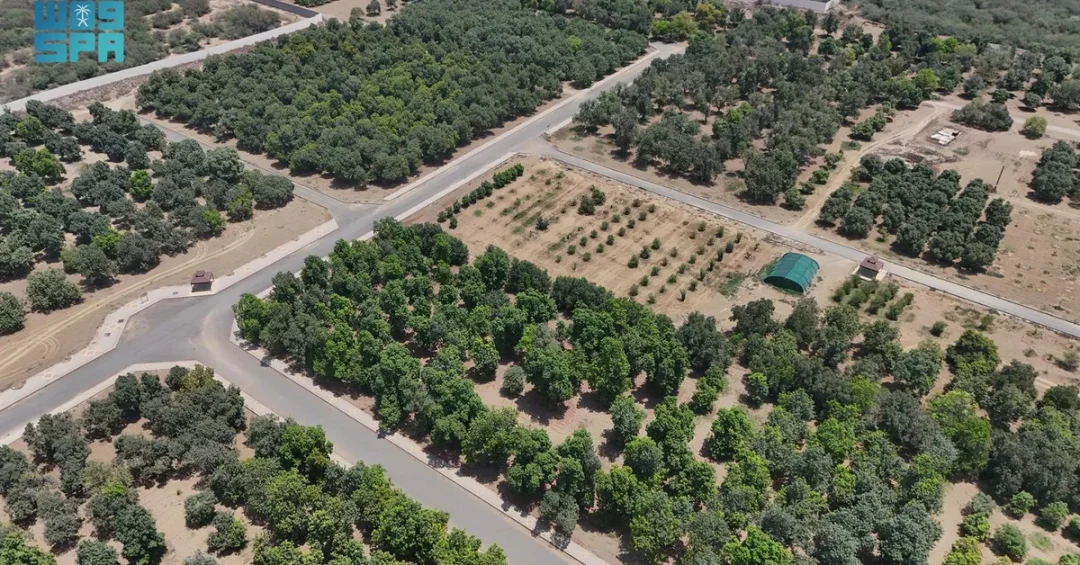
The National Center for Sustainable Agriculture Research and Development (Estidamah) branch in Jazan Region, established in 1972, stands as a prominent agricultural center in the Kingdom of Saudi Arabia, known for its invaluable services to farmers within and outside the region. Operating under the umbrella of the Ministry of Environment, Water and Agriculture, the branch has evolved through several stages of development, primarily focused on agricultural research and experiments that have transformed the region’s crop composition and boosted financial returns for local farmers.
Have you ever wondered how a single research station can reshape the agricultural destiny of an entire region? The Estidamah Jazan branch has done exactly that, capitalizing on the region’s warm, humid climate and abundant groundwater and valley streams to cultivate tropical and subtropical fruits that were once considered difficult to grow in the Kingdom. Its work aligns with Saudi Vision 2030 goals to support the agricultural sector, enhance food security, and diversify the national economy.
Context and Background
What makes the Jazan branch a key reference point for agricultural services in Saudi Arabia? Established in 1972, the branch was created to advance agricultural development in the region based on solid scientific foundations, becoming a trusted source of expertise particularly in tropical fruits and field crops. Over the decades, research and experiments conducted by its scientists have achieved a substantial shift in the region’s crop composition, increasing financial returns for farmers and positively impacting both social and economic aspects of the community.
The branch’s mission is rooted in the belief that sustainable agriculture requires continuous innovation. By monitoring and combating plant diseases, Estidamah aims to produce pest-free seedlings and develop a biological resistance system that reduces reliance on chemical pesticides. This approach not only protects the environment but also ensures the long-term viability of the region’s agricultural sector, which is a cornerstone of rural livelihoods in Jazan.
How does a research station translate scientific findings into real-world benefits for farmers? The answer lies in the branch’s comprehensive approach, which combines field trials, farmer training, and the dissemination of best practices. Through these efforts, the Jazan branch has become a vital link between research and practical application, helping farmers adopt new techniques that improve yields and reduce losses.
Key Details
What crops have thrived under the branch’s care? The Jazan branch owns a 40-hectare agricultural field with over 65 crop varieties, including mango, guava, papaya, fig, sapodilla, custard apple, carambola, pineapple, cashew, and peanuts. In addition, studies are underway on many other fruit and citrus varieties, expanding the potential for agricultural diversification in the region. These crops not only cater to local markets but also hold export potential, contributing to the Kingdom’s trade balance.
The branch’s research extends beyond cultivation to post-harvest handling, pest management, and water conservation. Given the region’s abundant groundwater and valley streams, the branch promotes efficient irrigation techniques that maximize water use efficiency while maintaining high productivity. This is particularly important as Saudi Arabia seeks to optimize its water resources in line with Vision 2030 sustainability targets.
Why is the development of pest-free seedlings so critical? Plant diseases can devastate entire orchards, wiping out farmers’ investments and threatening food security. By producing healthy seedlings and implementing biological resistance systems, Estidamah helps farmers avoid these risks, ensuring stable production and income. The branch’s work in this area has been instrumental in reducing crop losses and improving the quality of produce from Jazan.
International and Regional Impact
How does the work of a regional agricultural branch resonate beyond Saudi borders? The Jazan branch’s success in tropical fruit cultivation has attracted attention from neighboring countries with similar climates, positioning Saudi Arabia as a leader in agricultural research and innovation in the region. By sharing knowledge and best practices, the Kingdom contributes to regional food security and strengthens its diplomatic ties through agricultural cooperation.
The branch also serves as a model for sustainable agriculture in arid and semi-arid environments, demonstrating how careful management of natural resources can yield impressive results. International organizations and researchers have taken note of Estidamah’s approach, which combines traditional knowledge with modern science to address the challenges of climate change and water scarcity.
Economic and Strategic Significance
What economic benefits flow from the branch’s activities? The increase in financial returns for farmers has a multiplier effect on the local economy, creating jobs, supporting ancillary businesses, and reducing rural-to-urban migration. The branch’s emphasis on high-value crops like mango and cashew offers farmers a pathway to higher incomes and better living standards, aligning with Vision 2030’s goal of enhancing quality of life for all citizens.
Strategically, the Jazan branch contributes to the Kingdom’s food security objectives by reducing dependence on imports and promoting self-sufficiency in key agricultural products. As global supply chains face disruptions, local production becomes increasingly vital. The branch’s research into new crop varieties and sustainable practices ensures that Saudi Arabia can meet its food needs while preserving its natural resources for future generations.
How does agricultural research support the broader goals of Vision 2030? By fostering innovation and entrepreneurship in the agricultural sector, Estidamah helps diversify the economy away from oil, creates opportunities for small and medium enterprises, and attracts investment in agribusiness. The branch’s work exemplifies the Kingdom’s commitment to sustainable development and environmental stewardship.
Vision 2030 Alignment
In what ways does the Jazan branch embody the aspirations of Saudi Vision 2030? The branch’s activities directly support several Vision 2030 pillars, including economic diversification, food security, and environmental sustainability. By increasing domestic agricultural production and improving the competitiveness of Saudi farmers, Estidamah contributes to a thriving economy and a vibrant society.
Moreover, the branch’s focus on research and development fosters a culture of innovation and knowledge transfer, which is essential for the Kingdom’s transition to a knowledge-based economy. As Saudi Arabia continues to invest in sustainable agriculture, the Jazan branch stands as a testament to the power of science and dedication to transform challenges into opportunities.
Can a single agricultural research station truly make a difference? The Estidamah Jazan branch proves that it can, through decades of commitment to farmers, innovation, and sustainability. Its achievements not only enhance the livelihoods of Jazan’s farmers but also contribute to the Kingdom’s broader goals of prosperity and global leadership in sustainable agriculture.
20 Questions
Q1. What is the Estidamah Jazan branch?
A1. The Estidamah Jazan branch is a regional agricultural research center under the National Center for Sustainable Agriculture Research and Development, established in 1972 to advance agricultural development in Jazan through scientific research and experiments.
Q2. When was the Jazan branch established?
A2. The branch was established in 1972 and has since evolved through several stages of development, becoming a prominent agricultural center in the Kingdom.
Q3. What is the main goal of the Jazan branch?
A3. Its main goal is to advance agricultural development in the region based on solid scientific foundations, serving as a key reference point for agricultural services, particularly in tropical fruits and field crops.
Q4. How large is the agricultural field owned by the branch?
A4. The branch owns a 40-hectare agricultural field that hosts over 65 crop varieties, serving as a living laboratory for research and demonstration.
Q5. Which crops are grown at the Jazan branch?
A5. Crops include mango, guava, papaya, fig, sapodilla, custard apple, carambola, pineapple, cashew, and peanuts, among others, with studies underway on many more fruit and citrus varieties.
Q6. What climate advantages does Jazan offer for agriculture?
A6. Jazan has a warm, humid climate with abundant groundwater and valley streams, creating ideal conditions for tropical and subtropical fruit cultivation.
Q7. How has the branch impacted local farmers?
A7. The branch’s research has achieved a substantial shift in the region’s crop composition, increasing financial returns for farmers and positively impacting social and economic aspects of the community.
Q8. What is the branch doing to combat plant diseases?
A8. The branch monitors and combats plant diseases, aiming to produce pest-free seedlings and develop a biological resistance system that reduces reliance on chemical pesticides.
Q9. Why are pest-free seedlings important?
A9. Pest-free seedlings prevent the spread of diseases that can devastate orchards, ensuring stable production and income for farmers while protecting food security.
Q10. How does the branch support water conservation?
A10. The branch promotes efficient irrigation techniques that maximize water use efficiency, helping to optimize the region’s abundant groundwater resources in line with sustainability goals.
Q11. What is the significance of the branch’s work for Saudi Vision 2030?
A11. The branch’s activities support Vision 2030 pillars of economic diversification, food security, and environmental sustainability by boosting domestic production and fostering innovation in agriculture.
Q12. Does the branch collaborate with international organizations?
A12. The branch’s success has attracted attention from neighboring countries and international researchers, positioning Saudi Arabia as a leader in agricultural research and innovation in the region.
Q13. What economic benefits has the branch brought to the region?
A13. Increased financial returns for farmers have created a multiplier effect, generating jobs, supporting ancillary businesses, and reducing rural-to-urban migration, thus enhancing local prosperity.
Q14. How does the branch contribute to food security?
A14. By promoting high-value crops and sustainable practices, the branch reduces dependence on imports and enhances self-sufficiency in key agricultural products.
Q15. What research is currently underway at the branch?
A15. Studies are underway on many other fruit and citrus varieties, expanding the potential for agricultural diversification and new market opportunities for farmers.
Q16. How does the branch share knowledge with farmers?
A16. The branch combines field trials, farmer training, and dissemination of best practices, serving as a vital link between research and practical application.
Q17. What is the biological resistance system mentioned?
A17. It is a system that uses natural enemies and biological controls to manage pests, reducing chemical use and promoting environmentally friendly farming practices.
Q18. Can the branch’s model be replicated elsewhere?
A18. Yes, the branch serves as a model for sustainable agriculture in arid and semi-arid environments, demonstrating how careful resource management can yield impressive results.
Q19. How does the branch support rural livelihoods?
A19. By increasing incomes and creating jobs, the branch helps improve living standards and reduces rural-to-urban migration, contributing to vibrant rural communities.
Q20. What is the future outlook for the Jazan branch?
A20. The branch will continue to innovate and expand its research, supporting the Kingdom’s agricultural sector and contributing to Vision 2030 goals of prosperity and global leadership in sustainable agriculture.
Reader Feedback
We value your thoughts. Please share your feedback on this article.
Your feedback helps us improve our coverage.
Related articles
 Mawani Adds CSTAR LINE IMB1 Service to Jeddah Port
 Saudi Poultry Program Shines at Middle East Expo
 Saudi Finance Minister Leads Delegation to WBG-IMF 2025 Spring Meetings
 Al-Laith Hydroponics Project: Sustainable Impact and Social Investment
 IsDB President Meets Lebanese Finance Minister
 Saudi EXIM Credit Facilities Surge 103.2% to SAR33.53B in 2024