


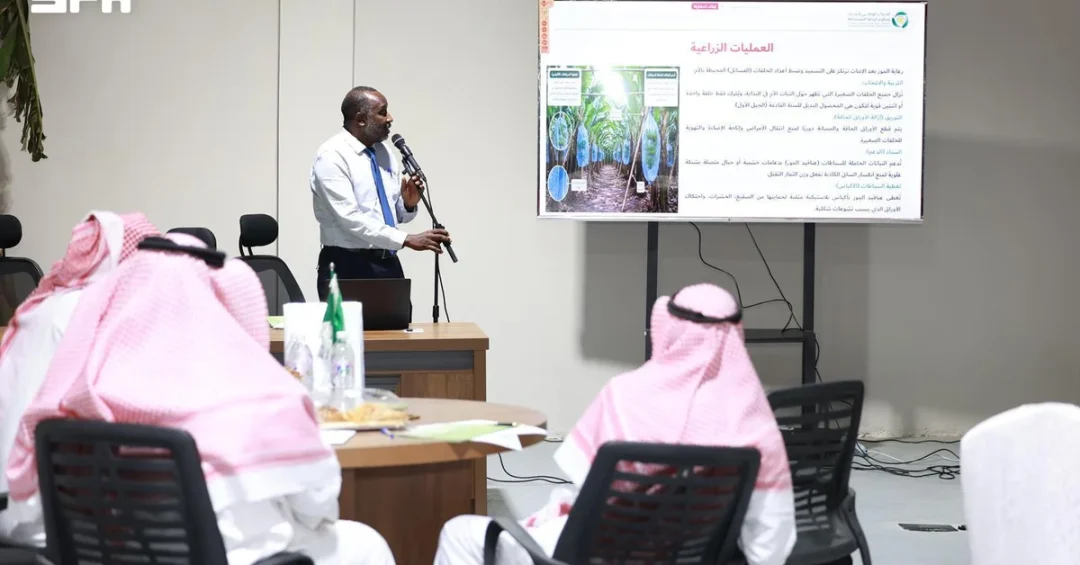
The Jazan branch of the National Research and Development Center for Sustainable Agriculture (Estidamah) organized a specialized workshop on banana farming and production in Jazan, in collaboration with Thamarah Association for Agricultural Marketing and Food Processing, according to the Saudi Press Agency (SPA). The workshop, reported on August 18, 2026, aimed to promote modern agricultural practices in banana cultivation, improve crop quality and productivity, and optimize resource use, contributing to the sustainability of a crop well suited to Jazan’s agricultural environment. The event forms part of Estidamah’s wider efforts to support farmers, promote modern agricultural technologies, and encourage practices that enhance resource-use efficiency and the sustainability of agricultural activity in the Jazan region.
Why does a single workshop on banana farming matter in a country better known for oil and ambitious desert megaprojects? The answer lies in Saudi Arabia’s long-term strategy to diversify its economy, strengthen food security, and develop its agricultural regions in ways that are both productive and sustainable. Jazan, located in the southwest of the Kingdom along the Red Sea coast, has long been recognized for its fertile lands and favorable climate, making it an ideal location for tropical and subtropical crops such as bananas, mangoes, and coffee. The Estidamah workshop reflects a deliberate, knowledge-driven approach to developing these local advantages, ensuring that farmers have access to the latest techniques and technologies to improve their yields while conserving water and other critical resources.
Context and Background
What exactly is Estidamah, and why is its work significant for Saudi agriculture? The National Research and Development Center for Sustainable Agriculture, known as Estidamah, is a Saudi institution dedicated to advancing sustainable agricultural practices through research, development, and knowledge transfer. Its Jazan branch focuses on the specific agricultural conditions and crops of the region, working directly with local farmers and agricultural associations to translate research into practical, on-the-ground improvements. The collaboration with the Thamarah Association for Agricultural Marketing and Food Processing further strengthens the link between production and market access, ensuring that improved farming practices translate into better economic outcomes for growers.
The workshop covered several technical topics, including preparing land for planting, selecting appropriate spacing between plants, managing irrigation systems, and implementing agricultural practices related to crop growth and productivity. It also reviewed post-harvest practices, ways to maintain product quality, reduce losses, and enhance market value. These elements are critical in a crop like bananas, where proper spacing affects sunlight exposure and air circulation, irrigation management determines water efficiency, and post-harvest handling directly influences how much of the harvest reaches consumers in good condition. By addressing the full cycle from planting to market, the workshop provided farmers with a comprehensive framework for improving both the quantity and quality of their production.
Bananas have long been a staple crop in Jazan, where the climate and soil conditions allow for productive cultivation. The region’s agricultural heritage is deeply tied to such crops, and supporting their sustainable development is both an economic and cultural priority. Estidamah’s efforts in Jazan are part of a broader national push to modernize agriculture, enhance food security, and ensure that rural communities benefit from the Kingdom’s ongoing transformation. The workshop thus represents a convergence of local agricultural tradition and national strategic ambition.
Key Details
What specific practices were highlighted at the workshop, and how do they translate into real benefits for farmers? The technical sessions focused on land preparation, which involves soil management and site selection to give banana plants the best possible start. Appropriate spacing between plants was emphasized as a way to optimize land use, reduce competition for nutrients, and facilitate access for maintenance and harvesting. Irrigation management was another central topic, with discussions on efficient water delivery systems and scheduling that match the crop’s needs while avoiding waste. These practices are particularly important in Saudi Arabia, where water conservation is a national priority and agriculture must balance productivity with responsible resource use.
The workshop also addressed agricultural practices related to crop growth and productivity, including nutrient management, pest and disease control, and techniques to support healthy plant development. Post-harvest practices received significant attention, covering handling, storage, and processing methods that maintain product quality, reduce losses, and enhance market value. By improving these stages, farmers can reduce the proportion of their harvest that is wasted and command better prices for their produce. The involvement of the Thamarah Association for Agricultural Marketing and Food Processing highlights the importance of connecting improved production with effective marketing and processing channels, ensuring that quality improvements are rewarded in the marketplace.
How do these workshops fit into Estidamah’s overall mission? The center’s work is rooted in the belief that sustainable agriculture requires continuous learning and adaptation. By organizing specialized workshops, Estidamah provides farmers with access to expert knowledge and practical guidance that might otherwise be difficult to obtain. This approach not only improves individual farm operations but also contributes to the collective resilience of the agricultural sector in Jazan. The focus on bananas, a crop well suited to the region, demonstrates a strategic prioritization of local strengths and a commitment to developing them in a sustainable manner.
International and Regional Impact
How does a regional agricultural workshop connect to Saudi Arabia’s broader international engagement? The Kingdom’s efforts to enhance food security and sustainable agriculture are part of a global conversation about how nations can feed their populations while protecting natural resources. Saudi Arabia’s investments in agricultural research and development, including the work of Estidamah, position it as a contributor to regional and international knowledge on sustainable farming in arid and semi-arid environments. The techniques discussed in Jazan—such as efficient irrigation and post-harvest loss reduction—are relevant to many countries facing similar challenges, and Saudi expertise in these areas can be shared through development cooperation and international partnerships.
Regionally, the workshop supports the economic development of Jazan, a region that shares cultural and economic ties with neighboring countries along the Red Sea. By strengthening banana production and marketing, the initiative can enhance local livelihoods and contribute to cross-border trade in agricultural products. The collaboration with the Thamarah Association for Agricultural Marketing and Food Processing also signals the importance of building strong value chains that connect farmers to markets, a priority that resonates across the region. In a world where food supply chains are increasingly scrutinized, such local capacity-building efforts are both timely and strategically valuable.
Economic and Strategic Significance
Why is banana farming economically significant for Jazan and for Saudi Arabia as a whole? Agriculture plays an important role in the Kingdom’s economy, particularly in rural areas where it provides employment and income opportunities. Bananas are a high-value crop that can generate consistent returns for farmers when managed well. By improving productivity and quality, the workshop helps farmers increase their yields and reduce losses, directly impacting their profitability. The emphasis on market value and post-harvest handling ensures that farmers are not just producing more, but also earning more from what they produce. This economic empowerment is a key component of rural development and aligns with the national goal of creating a diversified and resilient economy.
Strategically, the workshop reflects Saudi Arabia’s commitment to food security as a pillar of national resilience. The COVID-19 pandemic and global supply chain disruptions have underscored the importance of domestic agricultural capacity. By supporting crops like bananas that are well suited to local conditions, the Kingdom reduces its reliance on imports and strengthens its ability to feed its population. The sustainable practices promoted by Estidamah also ensure that this increased production does not come at the expense of water resources or soil health, balancing short-term economic gains with long-term environmental stewardship. This integrated approach is a model for how agricultural development can support both people and the planet.
Vision 2030 Alignment
How does this workshop connect to Saudi Vision 2030? Vision 2030 is the Kingdom’s comprehensive plan to diversify the economy, improve quality of life, and build a prosperous future for all Saudis. Agriculture is an integral part of this vision, contributing to economic diversification, food security, and rural development. Estidamah’s work in Jazan directly supports these objectives by promoting sustainable practices that enhance productivity, conserve resources, and improve the competitiveness of local agriculture. The collaboration with the Thamarah Association for Agricultural Marketing and Food Processing also aligns with the vision’s emphasis on private sector engagement and value chain development, ensuring that agricultural growth translates into broader economic benefits.
Furthermore, the workshop exemplifies the vision’s focus on knowledge transfer and capacity building. By equipping farmers with modern techniques and technologies, Estidamah is investing in human capital and fostering a culture of innovation in agriculture. This is essential for the long-term sustainability of the sector and for ensuring that rural communities are active participants in the Kingdom’s transformation. As Saudi Arabia continues to advance toward its Vision 2030 goals, initiatives like this workshop in Jazan demonstrate how local action can contribute to national progress, creating a more resilient, diversified, and sustainable economy for generations to come.
20 Questions
Q1. What is Estidamah and what does it do?
A1. Estidamah is the National Research and Development Center for Sustainable Agriculture in Saudi Arabia. It advances sustainable farming through research, development, and knowledge transfer, supporting farmers with modern practices to improve productivity and resource efficiency.
Q2. Where was the banana farming workshop held?
A2. The workshop was held in Jazan, organized by the Jazan branch of Estidamah in collaboration with the Thamarah Association for Agricultural Marketing and Food Processing, as reported by the Saudi Press Agency.
Q3. When was the workshop reported?
A3. The Saudi Press Agency reported the workshop on August 18, 2026, highlighting its role in promoting sustainable banana farming and production in the Jazan region.
Q4. What was the main goal of the workshop?
A4. The workshop aimed to promote modern agricultural practices in banana farming, improve crop quality and productivity, and optimize resource use, contributing to the sustainability of a crop well suited to Jazan’s environment.
Q5. Which crops are well suited to Jazan’s agricultural environment?
A5. Jazan’s climate and fertile lands are well suited to tropical and subtropical crops, including bananas, mangoes, and coffee. Bananas have long been a staple crop in the region.
Q6. What technical topics were covered at the workshop?
A6. Topics included land preparation, selecting appropriate spacing between plants, managing irrigation systems, and implementing agricultural practices related to crop growth and productivity.
Q7. Why is plant spacing important in banana farming?
A7. Appropriate spacing optimizes land use, reduces competition for nutrients, and facilitates access for maintenance and harvesting, supporting healthy plant development and better yields.
Q8. What post-harvest practices were discussed?
A8. The workshop reviewed handling, storage, and processing methods to maintain product quality, reduce losses, and enhance market value, helping farmers earn more from their harvest.
Q9. How does the workshop support farmers?
A9. It provides farmers with access to expert knowledge and practical guidance on modern techniques, helping them improve productivity, reduce losses, and increase profitability in a sustainable manner.
Q10. What is the role of the Thamarah Association?
A10. The Thamarah Association for Agricultural Marketing and Food Processing collaborates to connect improved production with effective marketing and processing channels, ensuring quality improvements are rewarded in the marketplace.
Q11. Why is water management emphasized in the workshop?
A11. Water conservation is a national priority in Saudi Arabia. Efficient irrigation systems and scheduling help match the crop’s needs while avoiding waste, balancing productivity with responsible resource use.
Q12. How does banana farming contribute to Jazan’s economy?
A12. Bananas are a high-value crop that generates consistent returns for farmers. Improved productivity and quality increase yields and profitability, supporting rural employment and income opportunities.
Q13. What is the significance of food security in this context?
A13. Supporting crops like bananas that are well suited to local conditions reduces reliance on imports and strengthens domestic agricultural capacity, enhancing national resilience and food security.
Q14. How does the workshop align with Vision 2030?
A14. It supports economic diversification, food security, and rural development. The focus on sustainable practices and value chain development aligns with Vision 2030’s goals for a resilient and diversified economy.
Q15. What are the environmental benefits of sustainable banana farming?
A15. Sustainable practices conserve water, maintain soil health, and reduce losses, ensuring that increased production does not come at the expense of natural resources, supporting long-term environmental stewardship.
Q16. How can farmers access Estidamah’s resources?
A16. Farmers can participate in workshops and training organized by Estidamah’s regional branches, which provide expert knowledge and practical guidance on modern agricultural practices and technologies.
Q17. What makes Jazan ideal for banana cultivation?
A17. Jazan’s fertile lands, favorable climate, and access to water resources create ideal conditions for banana cultivation, making it a key agricultural region for the Kingdom.
Q18. How does the workshop enhance market value for farmers?
A18. By improving post-harvest handling, storage, and processing, farmers can maintain product quality, reduce losses, and command better prices, directly enhancing the market value of their produce.
Q19. What is the broader impact of such workshops on Saudi agriculture?
A19. They contribute to a more resilient, productive, and sustainable agricultural sector, supporting rural communities and advancing the Kingdom’s goals for economic diversification and food security.
Q20. What does the future hold for sustainable agriculture in Saudi Arabia?
A20. With continued investment in research, technology, and farmer training, Saudi Arabia is building a sustainable agricultural sector that supports Vision 2030, enhances food security, and creates opportunities for rural communities.
Reader Feedback
We value your thoughts. Please share your feedback on this article.
Your feedback helps us improve our coverage.