


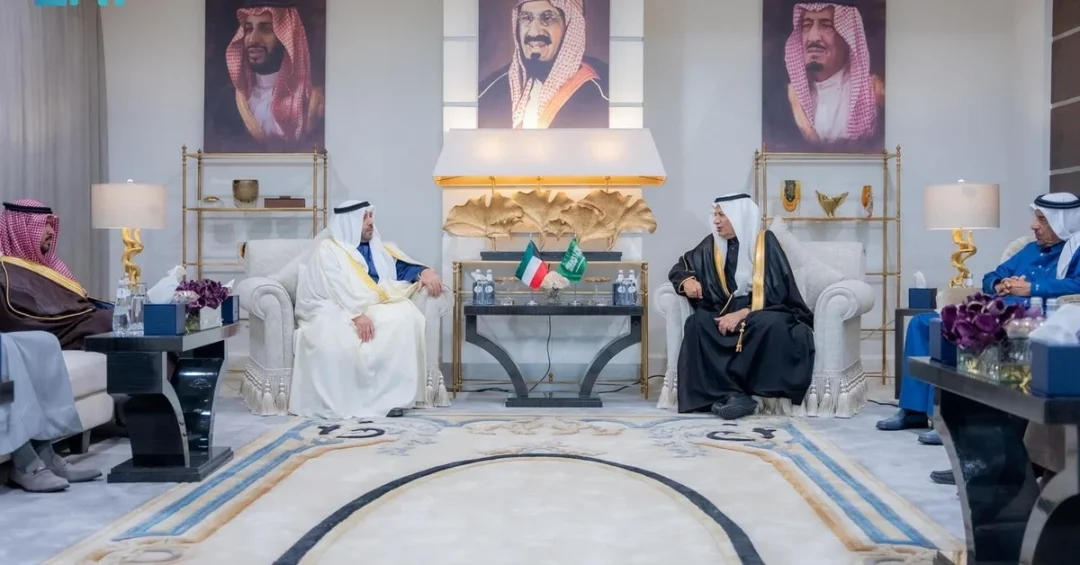
The Federation of Saudi Chambers announced on Tuesday the initiation of procedures to establish the first Saudi-Kuwaiti Business Council, a milestone that opens a new chapter in economic cooperation between the Kingdom of Saudi Arabia and the State of Kuwait. The announcement followed a high-level meeting in Riyadh between the President of the Federation of Saudi Chambers, Hassan bin Mujib Al-Huwaizi, and the Kuwaiti Ambassador to the Kingdom, Sheikh Sabah Nasser Sabah Al-Ahmad Al-Sabah. The two sides reviewed investment environments, explored opportunities in both countries, and discussed holding a dedicated investment forum in Riyadh.
Could this new council become the cornerstone of a deeper Gulf economic partnership? The initiative reflects the Kingdom’s broader strategy to strengthen regional ties, attract foreign investment, and advance the objectives of Saudi Vision 2030, the national transformation plan championed by Crown Prince Mohammed bin Salman. By formalizing a business council, Riyadh and Kuwait are signaling that private-sector collaboration will play a central role in shaping the next phase of Gulf economic integration. The move also aligns with Saudi Arabia’s commitment to deepening ties with its Gulf Cooperation Council (GCC) partners.
Context and Background
Why does the establishment of a Saudi-Kuwaiti Business Council matter now, at this particular moment in regional economic history? The answer lies in the evolving dynamics of the Gulf economy. Saudi Arabia and Kuwait share not only a border but also decades of trade, cultural exchange, and strategic alignment. In 2023, the volume of trade exchange between the two countries reached SAR 10 billion, comprising SAR 8.4 billion in Saudi exports and SAR 1.6 billion in Kuwaiti imports, according to official Saudi data. These figures, while substantial, represent only a fraction of the potential that exists between two of the Gulf’s most resource-rich economies.
The Federation of Saudi Chambers, the umbrella organization representing the Kingdom’s business community, has been at the forefront of efforts to expand Saudi Arabia’s commercial footprint across the region and beyond. Under the leadership of Hassan bin Mujib Al-Huwaizi, the Federation has prioritized the creation of bilateral business councils that provide structured platforms for dialogue, investment facilitation, and joint ventures. The Saudi-Kuwaiti Business Council would be the first of its kind between the two nations, filling a notable gap in the institutional architecture of their economic relationship.
The timing is significant. As Saudi Arabia accelerates its economic diversification agenda under Vision 2030, it is actively seeking partners who can contribute capital, expertise, and market access. Kuwait, with its sovereign wealth fund and experienced investor class, is a natural ally. The meeting between Al-Huwaizi and Ambassador Sheikh Sabah Nasser Sabah Al-Ahmad Al-Sabah also addressed the facilitation of Kuwaiti investors’ participation in the Hafr Al-Batin Investment Forum 2025, a regional event designed to showcase opportunities in one of Saudi Arabia’s most strategically located provinces.
Key Details of the Meeting and the New Council
What exactly was agreed upon during the Riyadh meeting, and what happens next? According to the official announcement, the two sides initiated the procedural steps required to formally establish the Saudi-Kuwaiti Business Council. While the full charter and membership structure are still being developed, the council is expected to serve as a permanent platform for Saudi and Kuwaiti companies to explore partnerships, resolve trade barriers, and advocate for policies that facilitate cross-border investment.
Al-Huwaizi described the outcomes of the meeting as representing a new phase of economic cooperation between the two countries. He highlighted the promising partnership opportunities between the business sectors, noting that the council would help unlock synergies in sectors ranging from manufacturing and logistics to tourism and technology. The Kuwaiti ambassador, in turn, expressed his aspiration to achieve comprehensive economic integration between the two countries, praising the development of the investment environment in the Kingdom, which has made it a destination for investors worldwide.
The discussions also covered the organization of an investment forum in Riyadh, which would bring together business leaders, government officials, and institutional investors from both nations. Such a forum would serve as a launchpad for the business council’s activities and provide a venue for announcing joint projects. Additionally, the two sides discussed facilitating Kuwaiti investors’ participation in the Hafr Al-Batin Investment Forum 2025, an event that underscores Saudi Arabia’s commitment to regionalizing investment opportunities beyond the major metropolitan centers of Riyadh, Jeddah, and Dammam.
International and Regional Impact
How will the establishment of this council ripple across the wider Gulf and beyond? The Saudi-Kuwaiti Business Council is more than a bilateral arrangement; it is a signal that Gulf Cooperation Council (GCC) states are moving toward deeper economic integration. For international investors, the council could simplify entry into both markets, providing a single point of contact for navigating regulatory frameworks, identifying local partners, and accessing incentives. This is particularly relevant for companies in Asia, Europe, and North America that view the Gulf as a gateway to the Middle East, Africa, and South Asia.
From a geopolitical perspective, the initiative reinforces the stability and prosperity of the Gulf region. Saudi Arabia and Kuwait have long been pillars of the GCC, and their economic collaboration contributes to the collective security and resilience of the bloc. The council also aligns with broader efforts to diversify trade routes and reduce dependence on any single market. By strengthening intra-Gulf trade, the two countries can better withstand global economic shocks and position themselves as a cohesive investment destination.
Moreover, the council’s focus on facilitating Kuwaiti investment in Saudi Arabia—particularly in regions like Hafr Al-Batin—demonstrates a commitment to balanced regional development. Kuwaiti investors bring not only capital but also a long tradition of commercial expertise and a deep understanding of Gulf markets. Their participation in Saudi projects can accelerate technology transfer, create jobs, and enhance the competitiveness of Saudi enterprises.
Economic and Strategic Significance
What makes this development economically significant beyond the headline figures? The SAR 10 billion in bilateral trade recorded in 2023 is a foundation, not a ceiling. Saudi Arabia’s exports to Kuwait, valued at SAR 8.4 billion, include a mix of manufactured goods, food products, and petrochemical derivatives. Kuwaiti imports to the Kingdom, at SAR 1.6 billion, reflect Kuwait’s strengths in finance, services, and select industrial products. A business council can help identify and remove bottlenecks that currently limit trade to these levels, potentially doubling or tripling the exchange within a decade.
Strategically, the council supports Saudi Arabia’s Vision 2030 goal of increasing non-oil exports and attracting foreign direct investment. Kuwait’s sovereign wealth fund, one of the oldest and largest in the world, is a potential source of long-term capital for Saudi megaprojects such as NEOM, the Red Sea Project, and Qiddiya. While the council itself does not commit funds, it creates the institutional framework through which such investments can be discussed and facilitated. It also provides a mechanism for Kuwaiti businesses to participate in Saudi Arabia’s privatization program and public-private partnerships.
For Kuwait, the council offers access to the Kingdom’s rapidly expanding market, which is undergoing unprecedented social and economic transformation. Saudi Arabia’s population is young, digitally connected, and increasingly affluent, creating demand for Kuwaiti financial services, retail concepts, and hospitality brands. The council can help Kuwaiti firms navigate Saudi regulations, including the Regional Headquarters program and the new investment laws that have simplified foreign ownership.
Vision 2030 Alignment
How does the Saudi-Kuwaiti Business Council fit into the grand tapestry of Vision 2030? At its core, Vision 2030 is about transforming Saudi Arabia’s economy from one dependent on oil to one driven by private-sector innovation, global engagement, and sustainable growth. International partnerships are essential to that transformation, and Kuwait is among the Kingdom’s closest and most trusted partners. The council embodies the Vision’s emphasis on economic diplomacy and regional integration as tools for prosperity.
Furthermore, the council supports several specific Vision 2030 objectives, including increasing the contribution of small and medium-sized enterprises to GDP, boosting non-oil exports, and enhancing the business environment to attract quality investment. By creating a structured dialogue with Kuwaiti counterparts, the Federation of Saudi Chambers is helping to build the institutional capacity needed to achieve these targets. The focus on Hafr Al-Batin also aligns with Vision 2030’s goal of developing regions outside the main urban centers, ensuring that the benefits of economic growth are shared across the Kingdom.
As the first Saudi-Kuwaiti Business Council takes shape, it stands as a testament to the leadership of both nations and their shared vision of a prosperous, interconnected Gulf. For international observers, it offers a clear signal that Saudi Arabia remains open for business and committed to building bridges with its neighbors. The coming months will reveal the council’s initial projects and membership, but the direction is unmistakable: deeper cooperation, broader opportunity, and a future built on mutual benefit.
20 Questions
Q1. What is the Saudi-Kuwaiti Business Council?
A1. It is a new bilateral body initiated by the Federation of Saudi Chambers to formalize and expand economic cooperation between Saudi and Kuwaiti businesses, serving as a platform for investment dialogue and joint ventures.
Q2. Who announced the initiation of the council?
A2. The Federation of Saudi Chambers announced the initiation following a meeting between its president, Hassan bin Mujib Al-Huwaizi, and Kuwaiti Ambassador Sheikh Sabah Nasser Sabah Al-Ahmad Al-Sabah.
Q3. When and where did the meeting take place?
A3. The meeting took place on Tuesday in Riyadh, Saudi Arabia, as reported by the Saudi Press Agency.
Q4. What was the volume of trade between Saudi Arabia and Kuwait in 2023?
A4. Trade exchange reached SAR 10 billion in 2023, including SAR 8.4 billion in Saudi exports and SAR 1.6 billion in Kuwaiti imports, according to official data.
Q5. What are the main goals of the new council?
A5. The council aims to facilitate investment, remove trade barriers, promote joint ventures, and provide a structured platform for business leaders to explore opportunities in both countries.
Q6. Who is Hassan bin Mujib Al-Huwaizi?
A6. He is the President of the Federation of Saudi Chambers, the umbrella organization representing the Kingdom’s business community and driving bilateral economic initiatives.
Q7. Who is Sheikh Sabah Nasser Sabah Al-Ahmad Al-Sabah?
A7. He is the Kuwaiti Ambassador to the Kingdom of Saudi Arabia, representing Kuwait’s interests and fostering diplomatic and economic ties between the two nations.
Q8. What is the Hafr Al-Batin Investment Forum 2025?
A8. It is a regional investment event in Saudi Arabia’s Hafr Al-Batin province, designed to showcase opportunities and attract investors, including participants from Kuwait.
Q9. How does this council support Saudi Vision 2030?
A9. It advances Vision 2030 by boosting non-oil exports, attracting foreign investment, and strengthening regional economic integration, all key objectives of the transformation plan.
Q10. What sectors are likely to benefit most from the council?
A10. Manufacturing, logistics, tourism, technology, and financial services are expected to benefit, as these sectors offer strong complementarities between the Saudi and Kuwaiti economies.
Q11. Will the council hold an investment forum in Riyadh?
A11. Yes, the two sides discussed holding an investment forum in Riyadh to launch the council’s activities and present joint project opportunities to investors.
Q12. What did the Kuwaiti ambassador say about Saudi Arabia’s investment environment?
A12. He noted the development of the investment environment in the Kingdom, which has made it a destination for investors worldwide, and expressed hope for comprehensive economic integration.
Q13. How does this initiative affect international investors?
A13. It simplifies access to both Saudi and Kuwaiti markets, offering a single platform for partnerships and regulatory guidance, which can reduce entry barriers for global firms.
Q14. Is this the first business council between Saudi Arabia and Kuwait?
A14. Yes, it is the first Saudi-Kuwaiti Business Council, marking a new institutional phase in their economic relationship.
Q15. What is the Federation of Saudi Chambers?
A15. It is the official umbrella body for Saudi Arabia’s chambers of commerce, representing the private sector and promoting trade and investment domestically and internationally.
Q16. How might the council impact small and medium enterprises?
A16. It could open new markets and partnership opportunities for SMEs, helping them scale and integrate into regional value chains, in line with Vision 2030 goals.
Q17. What are the next steps for establishing the council?
A17. The procedural steps have been initiated; next, the two sides will finalize the charter, membership, and launch activities, including the planned investment forum.
Q18. Does the council have government backing?
A18. Yes, it is supported by the Federation of Saudi Chambers and the Kuwaiti embassy, indicating strong official endorsement from both governments.
Q19. How does this fit into broader Gulf economic integration?
A19. It reinforces GCC integration by deepening bilateral ties, setting a model for other member states, and enhancing the region’s collective investment appeal.
Q20. What is the long-term vision for Saudi-Kuwaiti economic relations?
A20. The long-term vision is comprehensive economic integration, with increased trade, joint investments, and seamless business collaboration contributing to prosperity in both nations.
Reader Feedback
We value your thoughts. Please share your feedback on this article.
Your feedback helps us improve our coverage.