


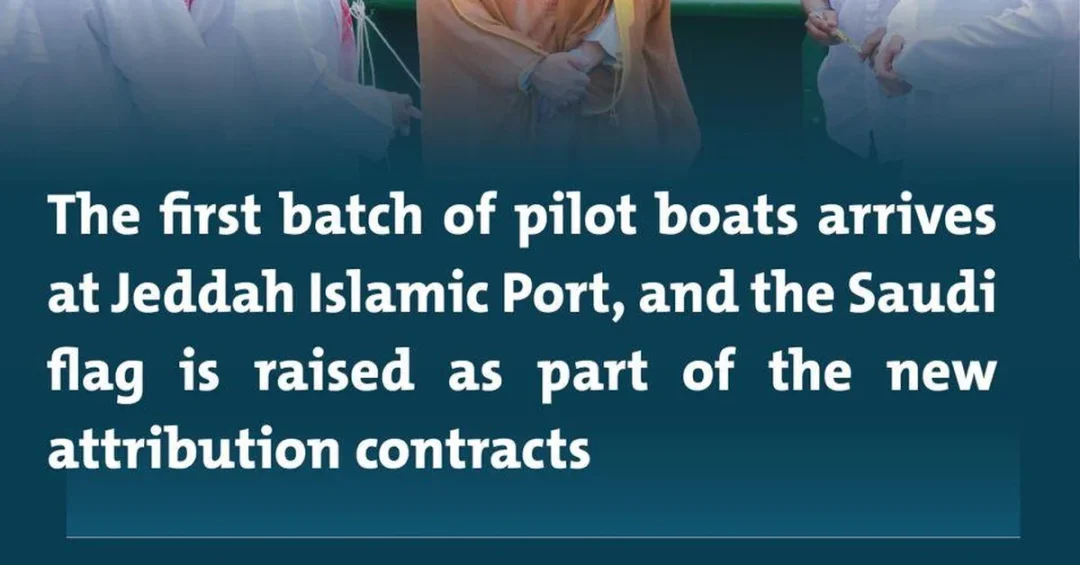
The first pilot vessels operating under new marine support contracts arrived at Jeddah Islamic Port on August 22, 2024, marking a significant milestone in Saudi Arabia’s maritime sector. In a ceremony attended by Omar bin Talal Hariri, Chairman of the Saudi Ports Authority (Mawani), the Saudi flag was raised on these advanced vessels, which are equipped with the latest technologies in the tugboat industry and specifically designed to tow fifth-generation container ships.
Context and Background
This development follows a series of strategic contracts signed by Mawani to enhance marine services across the Kingdom. Earlier, Mawani signed four contracts involving private-sector investments exceeding 1 billion riyals with Zamil Marine Services and Naghi Marine Works. These contracts, developed in collaboration with the Ministry of Transport and Logistics Services and the National Center for Privatization, aim to deliver a range of marine services across eight ports in Saudi Arabia.
The arrival of these pilot vessels underscores Saudi Arabia’s commitment to modernizing its port infrastructure and boosting operational efficiency. Jeddah Islamic Port, one of the largest and busiest ports in the region, plays a critical role in facilitating trade and commerce, and the new vessels are expected to significantly enhance its capacity to handle large container ships.
Key Details
The newly arrived pilot vessels are equipped with state-of-the-art technology designed to assist large marine vessels with safe entry and exit from ports, as well as docking at marine platforms. Their primary function is to tow fifth-generation container ships, which are among the largest and most advanced in the global shipping industry. This capability is essential for maintaining the smooth flow of maritime traffic and ensuring the port’s competitiveness.
During the ceremony, Chairman Omar bin Talal Hariri emphasized the importance of these vessels in achieving targeted performance indicators. The pilot vessels are expected to enhance the operational performance of guidance operations at the port, reducing turnaround times and improving overall efficiency. This aligns with Mawani’s broader strategy to transform Saudi ports into world-class logistics hubs.
Implications and Impact
The introduction of these pilot vessels has significant implications for Saudi Arabia’s maritime sector and its role in global trade. By enhancing the operational capacity of Jeddah Islamic Port, the Kingdom is better positioned to handle increasing volumes of container traffic, particularly as global supply chains continue to evolve. This development also supports the objectives of Vision 2030, which aims to diversify the economy and strengthen non-oil sectors, including logistics and transportation.
Furthermore, the involvement of private-sector partners like Zamil Marine Services and Naghi Marine Works highlights the success of privatization efforts in Saudi Arabia. These collaborations are expected to drive innovation and efficiency, setting a benchmark for future projects in the maritime industry. The investment of over 1 billion riyals demonstrates the confidence of both local and international stakeholders in the Kingdom’s economic reforms.
Vision 2030 Alignment
This milestone is a clear reflection of Saudi Arabia’s Vision 2030 goals, particularly in transforming the Kingdom into a global logistics hub connecting three continents. The modernization of port infrastructure and the adoption of advanced technologies are key pillars of the National Industrial Development and Logistics Program (NIDLP), which seeks to boost the logistics sector’s contribution to the national economy. As Saudi Arabia continues to invest in its maritime capabilities, it reinforces its position as a leading player in international trade and a catalyst for regional development.
20 Questions
Q1. What event took place at Jeddah Islamic Port on August 22, 2024?
A1. The first pilot vessels under new support contracts arrived at Jeddah Islamic Port. A ceremony was held to raise the Saudi flag on these advanced vessels, attended by Omar bin Talal Hariri, Chairman of the Saudi Ports Authority (Mawani).
Q2. Who is the Chairman of the Saudi Ports Authority?
A2. Omar bin Talal Hariri serves as the Chairman of the Saudi Ports Authority (Mawani). He attended the ceremony where the Saudi flag was raised on the new pilot vessels at Jeddah Islamic Port.
Q3. What is the primary function of the new pilot vessels?
A3. The pilot vessels are designed to assist large marine vessels with safe entry and exit from ports, as well as docking at marine platforms. They are specifically equipped to tow fifth-generation container ships, enhancing port operational performance.
Q4. What contracts were signed by Mawani to support these new vessels?
A4. Mawani signed four contracts with Zamil Marine Services and Naghi Marine Works to provide marine services. These contracts involve private-sector investments exceeding 1 billion riyals and cover services across eight ports in Saudi Arabia.
Q5. Which companies are involved in the marine services contracts?
A5. The contracts were signed with Zamil Marine Services and Naghi Marine Works. These companies will deliver a range of marine services across eight ports in the Kingdom of Saudi Arabia.
Q6. What government entities collaborated on these contracts?
A6. The Ministry of Transport and Logistics Services and the National Center for Privatization collaborated with Mawani on these contracts. This partnership aims to enhance marine services and support privatization efforts in the maritime sector.
Q7. How much private-sector investment is involved in the contracts?
A7. The contracts involve private-sector investments exceeding 1 billion riyals. This significant investment demonstrates confidence in Saudi Arabia’s maritime infrastructure and aligns with economic diversification goals under Vision 2030.
Q8. What are fifth-generation container ships?
A8. Fifth-generation container ships are among the largest and most advanced vessels in the global shipping industry. They require specialized pilot vessels for safe navigation and docking, which the new additions at Jeddah Islamic Port are designed to provide.
Q9. How will the new pilot vessels improve port operations?
A9. The vessels are equipped with the latest tugboat technologies to enhance guidance operations. They will help achieve targeted performance indicators by reducing turnaround times and improving the safety and efficiency of vessel movements at the port.
Q10. What is the significance of raising the Saudi flag on these vessels?
A10. Raising the Saudi flag symbolizes national pride and sovereignty over these advanced vessels. It also marks the official commencement of their operations under the new contracts, highlighting Saudi Arabia’s commitment to modernizing its maritime fleet.
Q11. Which port hosted the arrival of the first pilot vessels?
A11. Jeddah Islamic Port hosted the arrival of the first pilot vessels. As one of the largest ports in the region, it plays a critical role in Saudi Arabia’s trade and logistics network, serving as a gateway for international shipping.
Q12. What is the role of the Ministry of Transport and Logistics Services?
A12. The Ministry of Transport and Logistics Services oversees the development of Saudi Arabia’s transportation and logistics infrastructure. It collaborates with entities like Mawani to implement projects that enhance the Kingdom’s connectivity and economic growth.
Q13. What is the National Center for Privatization’s involvement?
A13. The National Center for Privatization supports the privatization of government services, including marine services. Its collaboration on these contracts ensures private-sector participation, driving efficiency and innovation in Saudi Arabia’s port operations.
Q14. How many ports will benefit from the new marine services contracts?
A14. The contracts cover eight ports across the Kingdom of Saudi Arabia. These ports will receive enhanced marine services, including pilotage and tugboat assistance, improving their operational capabilities and competitiveness in the global shipping industry.
Q15. What technologies are featured on the new pilot vessels?
A15. The pilot vessels are equipped with the latest technologies in the tugboat industry. These include advanced navigation and towing systems designed to handle fifth-generation container ships, ensuring safe and efficient port operations.
Q16. How does this development support Saudi Vision 2030?
A16. It aligns with Vision 2030 by modernizing port infrastructure and enhancing logistics capabilities, key goals of the National Industrial Development and Logistics Program. This supports economic diversification and positions Saudi Arabia as a global logistics hub.
Q17. What economic impact will these vessels have?
A17. The vessels will boost port efficiency, attract more shipping traffic, and facilitate trade. This contributes to economic growth by strengthening the logistics sector, creating jobs, and increasing non-oil revenues in line with Vision 2030 objectives.
Q18. What is Mawani’s broader strategy for Saudi ports?
A18. Mawani aims to transform Saudi ports into world-class logistics hubs through modernization, privatization, and strategic partnerships. The new pilot vessels are part of this strategy to enhance operational performance and global competitiveness.
Q19. How do pilot vessels assist large ships?
A19. Pilot vessels guide large ships during entry, exit, and docking at ports. They ensure safe navigation through narrow channels and busy harbors, using powerful engines and advanced technology to maneuver massive container ships.
Q20. What message does this event send about Saudi Arabia’s maritime sector?
A20. It demonstrates Saudi Arabia’s commitment to investing in advanced maritime infrastructure and fostering private-sector partnerships. This enhances the Kingdom’s position as a leading trade and logistics hub, supporting Vision 2030 and global connectivity.
Reader Feedback
We value your thoughts. Please share your feedback on this article.
Your feedback helps us improve our coverage.