


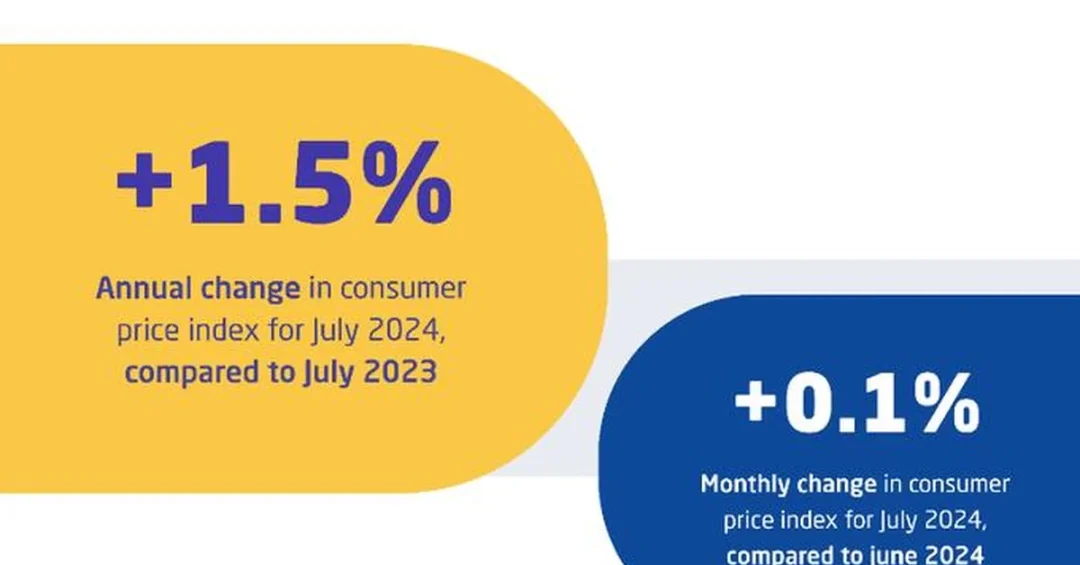
Riyadh, August 15, 2024 — The inflation rate in Saudi Arabia remained steady at 1.5% in July 2024, matching the previous month and holding stable over the last five months, according to the Consumer Price Index (CPI) report released today by the General Authority for Statistics (GASTAT). The report highlights the enduring stability of the Saudi economy and the effectiveness of early measures taken by the Kingdom to mitigate global inflationary pressures.
Context and Background
The Consumer Price Index (CPI) is a key economic indicator that tracks changes in the prices of a fixed basket of goods and services commonly purchased by households. In Saudi Arabia, this basket comprises 490 items, with weights derived from the 2018 Household Income and Expenditure Survey. Prices are collected through field visits to points of sale across the Kingdom, and the CPI is published monthly by GASTAT.
The stability of inflation at 1.5% for five consecutive months reflects the robustness of Saudi Arabia’s economic policies. It underscores the success of proactive measures implemented by the Saudi government to counter global inflation trends and ensure price stability, aligning with the objectives of Vision 2030 to diversify the economy and enhance quality of life.
Key Details
According to the GASTAT report, the inflation rate in July 2024 was 1.5% compared to the same month last year, unchanged from June 2024. This consistency demonstrates the effectiveness of the Kingdom’s economic strategies, which include fiscal discipline, strategic subsidies, and monitoring of market prices. The CPI methodology ensures accurate representation of consumer spending patterns, providing reliable data for policymakers and investors.
The report notes that the inflation rate in Saudi Arabia is among the most stable globally, reflecting the strength and durability of the Saudi economy. This stability is attributed to the Kingdom’s early and decisive actions to confront global inflationary waves, such as increasing strategic reserves and implementing targeted support programs.
Implications and Impact
The stable inflation rate has positive implications for both the domestic economy and international investors. It signals a predictable economic environment conducive to business growth and investment, reinforcing Saudi Arabia’s position as a leading economy in the region. Low inflation also protects consumer purchasing power, contributing to social stability and welfare.
On the global stage, Saudi Arabia’s ability to maintain low inflation amidst worldwide economic volatility enhances its reputation as a reliable economic partner. This stability supports the Kingdom’s ongoing efforts to attract foreign direct investment and promote non-oil sectors, key pillars of Vision 2030.
Vision 2030 Alignment
This achievement aligns closely with Vision 2030’s goal of building a resilient and diversified economy. By maintaining price stability and fostering a favorable business environment, Saudi Arabia continues to advance its transformation agenda, ensuring sustainable growth and prosperity for future generations. The Kingdom’s proactive economic management serves as a model for other nations navigating global economic challenges.
20 Questions
Q1. What is the inflation rate in Saudi Arabia for July 2024?
A1. The inflation rate in Saudi Arabia for July 2024 is 1.5%, as reported by GASTAT, remaining stable over the past five months.
Q2. Which authority released the CPI report for July 2024?
A2. The Consumer Price Index report for July 2024 was released by the General Authority for Statistics (GASTAT), the official statistical agency of Saudi Arabia.
Q3. How long has the inflation rate been stable at 1.5%?
A3. The inflation rate has been stable at 1.5% for the last five months, including July 2024, demonstrating consistent economic stability in the Kingdom.
Q4. What does the CPI measure?
A4. The Consumer Price Index measures changes in prices paid by consumers for a fixed basket of goods and services, consisting of 490 items in Saudi Arabia.
Q5. How are the weights of items in the CPI basket determined?
A5. The weights are based on the household income survey conducted in 2018, which reflects consumer spending patterns across the Kingdom.
Q6. How are CPI prices collected in Saudi Arabia?
A6. Prices for the CPI are collected through field visits to points of sale across Saudi Arabia, ensuring accurate and representative data.
Q7. How often is the CPI published in Saudi Arabia?
A7. The CPI statistics for Saudi Arabia are published monthly by GASTAT, providing timely insights into inflation trends.
Q8. Why is Saudi Arabia’s inflation rate considered stable?
A8. Saudi Arabia’s inflation rate is stable due to effective economic plans and decisions taken early to confront global inflation and high prices.
Q9. What does the stable inflation rate indicate about the Saudi economy?
A9. It indicates the strength and durability of the Saudi economy, showcasing resilience against global economic pressures and effective policy management.
Q10. How does the inflation rate impact consumers in Saudi Arabia?
A10. Stable inflation protects consumer purchasing power, ensuring that the cost of living remains predictable and supporting overall social welfare.
Q11. What measures has Saudi Arabia taken to control inflation?
A11. Saudi Arabia implemented early economic measures such as fiscal discipline, strategic reserves, and targeted subsidies to mitigate global inflationary pressures.
Q12. How does the CPI report benefit policymakers?
A12. The CPI report provides reliable data that helps policymakers make informed decisions regarding monetary and fiscal policies to maintain economic stability.
Q13. What is the significance of the 490-item basket in the CPI?
A13. The 490-item basket represents a comprehensive selection of goods and services, ensuring the CPI accurately reflects consumer spending habits.
Q14. How does Saudi Arabia’s inflation rate compare globally?
A14. Saudi Arabia’s inflation rate is among the most stable globally, reflecting the Kingdom’s successful economic management and resilience.
Q15. What role does GASTAT play in Saudi Arabia’s economy?
A15. GASTAT provides official statistics and data, such as the CPI, which are essential for economic planning and policy formulation in Saudi Arabia.
Q16. How does stable inflation affect foreign investment in Saudi Arabia?
A16. Stable inflation creates a predictable economic environment, attracting foreign investment by reducing uncertainty and enhancing business confidence.
Q17. What are the key components of Saudi Arabia’s CPI?
A17. The CPI includes food, housing, transportation, education, healthcare, and other categories, weighted based on household spending patterns.
Q18. How does Vision 2030 relate to economic stability?
A18. Vision 2030 aims to diversify the economy and enhance quality of life, with stable inflation supporting these goals by ensuring sustainable growth.
Q19. What impact does low inflation have on Saudi households?
A19. Low inflation helps maintain affordable living costs, allowing households to plan budgets effectively and improving overall quality of life.
Q20. What does the future hold for Saudi Arabia’s inflation rate?
A20. With continued prudent economic policies and Vision 2030 initiatives, Saudi Arabia is well-positioned to maintain stable inflation and economic growth.
Reader Feedback
We value your thoughts. Please share your feedback on this article.
Your feedback helps us improve our coverage.