


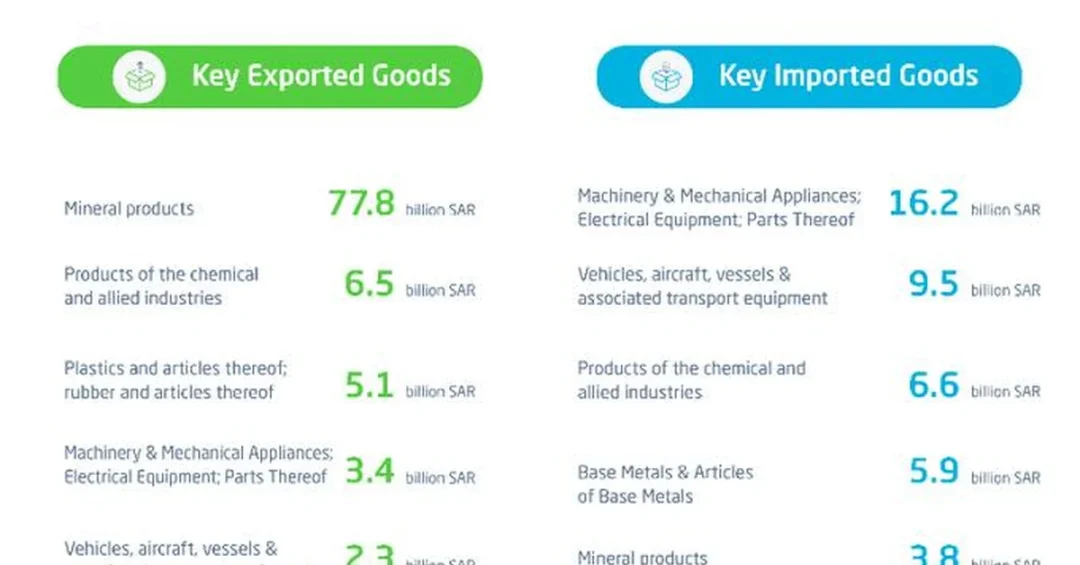
The General Authority for Statistics (GASTAT) reported a 3.3% year-on-year increase in Saudi Arabia’s non-oil exports, including re-exports, for the first quarter of 2024, according to the International Trade Q1 2024 report released on May 23, 2024. This growth underscores the Kingdom’s ongoing economic diversification efforts under Vision 2030. The report highlighted a significant 19% month-on-month rise in exports of chemical and allied industry products in March 2024, reaching SAR 6.5 billion. Overall, merchandise exports and non-oil exports increased by 5% and 6% respectively in March compared to February 2024, reflecting robust trade activity.
Context and Background
Saudi Arabia has been systematically reducing its dependence on oil revenues through strategic initiatives aimed at expanding non-oil sectors. The Vision 2030 framework, launched in 2016, prioritizes economic diversification, with non-oil exports playing a pivotal role. GASTAT’s quarterly International Trade reports serve as essential tools for policymakers, businesses, and international observers to track progress. The Q1 2024 data reflects the continued resilience of Saudi Arabia’s export sector amid global economic uncertainties.
Key Details
In March 2024, re-exports surged to SAR 6.4 billion, an 18% increase from SAR 5.4 billion in March 2023. Mineral product exports reached SAR 77.8 billion, up 6% from February 2024. The chemical and allied industries sector demonstrated notable strength, with a 19% month-on-month increase. These figures indicate growing competitiveness in non-oil goods and services. GASTAT’s comprehensive data collection methodology ensures accuracy and reliability, supporting evidence-based decision-making.
Implications and Impact
The rise in non-oil exports signals the effectiveness of economic reforms and the expansion of Saudi Arabia’s industrial base. Increased re-export activity positions the Kingdom as a strategic trade hub connecting Asia, Europe, and Africa. This growth contributes to job creation, technology transfer, and the development of small and medium enterprises. Internationally, it strengthens Saudi Arabia’s role in global supply chains and enhances trade partnerships. The positive trend aligns with the goals of the National Industrial Development and Logistics Program.
Vision 2030 Alignment
The Q1 2024 export performance directly supports Vision 2030’s objective to increase the non-oil share of GDP from 16% to 50% by 2030. By fostering a diversified economy, Saudi Arabia reduces vulnerability to oil price fluctuations and creates sustainable opportunities for future generations. GASTAT’s transparent reporting reinforces investor confidence and showcases the Kingdom’s commitment to achieving its ambitious transformation.
20 Questions
Q1. What did the GASTAT International Trade Q1 2024 report reveal about non-oil exports?
A1. The report showed a 3.3% year-on-year increase in non-oil exports, including re-exports, for the first quarter of 2024, indicating positive momentum in Saudi Arabia’s diversification efforts.
Q2. How much did chemical and allied industry exports increase in March 2024?
A2. Chemical and allied industry exports rose by 19% in March 2024 compared to February 2024, reaching SAR 6.5 billion, reflecting strong performance in this key sector.
Q3. What was the value of re-exports in March 2024?
A3. Re-exports reached SAR 6.4 billion in March 2024, an 18% increase compared to SAR 5.4 billion in March 2023, highlighting Saudi Arabia’s growing role as a trade hub.
Q4. How did merchandise exports perform in March 2024?
A4. Merchandise exports increased by 5% in March 2024 compared to February 2024, demonstrating robust trade activity and demand for Saudi products.
Q5. What was the value of mineral product exports in March 2024?
A5. Mineral product exports reached SAR 77.8 billion in March 2024, a 6% increase from February 2024, underscoring the importance of this sector.
Q6. Which authority released the International Trade Q1 2024 report?
A6. The General Authority for Statistics (GASTAT) released the report on May 23, 2024, providing comprehensive data on Saudi Arabia’s trade performance.
Q7. What is the significance of non-oil export growth for Saudi Arabia?
A7. It reflects the Kingdom’s successful economic diversification under Vision 2030, reducing oil dependence and creating sustainable growth opportunities.
Q8. How does re-export activity benefit Saudi Arabia?
A8. Re-exports enhance Saudi Arabia’s position as a logistics and trade hub, stimulate ancillary services, and contribute to non-oil revenue streams.
Q9. What percentage increase was seen in non-oil exports in March 2024 month-on-month?
A9. Non-oil exports rose by 6% in March 2024 compared to February 2024, indicating strong short-term growth.
Q10. How does GASTAT ensure data accuracy?
A10. GASTAT employs rigorous data collection methods, including surveys and administrative records, to provide reliable and timely statistics for decision-making.
Q11. What role do non-oil exports play in Vision 2030?
A11. They are central to diversifying the economy, increasing non-oil GDP contribution, and fostering sustainable development as outlined in Vision 2030.
Q12. Which sectors contributed most to non-oil export growth?
A12. Chemical and allied industries, re-exports, and mineral products were key drivers, showcasing the broadening base of Saudi exports.
Q13. How does this export growth impact job creation?
A13. Expanding non-oil sectors generates employment opportunities, enhances skills, and supports SMEs, aligning with Vision 2030’s human capital goals.
Q14. What are the implications for Saudi Arabia’s trade partnerships?
A14. Increased exports strengthen trade ties with key partners in Asia, Europe, and Africa, reinforcing Saudi Arabia’s global economic integration.
Q15. How does the Q1 2024 performance compare to previous quarters?
A15. The 3.3% year-on-year growth indicates steady progress, building on previous quarters’ gains and reflecting resilience amid global challenges.
Q16. What is the target for non-oil GDP share by 2030?
A16. Vision 2030 aims to raise the non-oil share of GDP from 16% to 50%, with export growth being a critical component.
Q17. How do mineral product exports contribute to the economy?
A17. Mineral products, including petrochemicals and metals, are vital for industrial development and export revenue, supporting economic diversification.
Q18. What government programs support non-oil export growth?
A18. The National Industrial Development and Logistics Program and Saudi Export Development Authority are key initiatives driving export expansion.
Q19. How does GASTAT’s reporting benefit investors?
A19. Transparent and timely data enhances investor confidence, enabling informed decisions and highlighting opportunities in Saudi Arabia’s growing economy.
Q20. What is the outlook for Saudi Arabia’s non-oil exports?
A20. With ongoing reforms and strategic investments, non-oil exports are poised for continued growth, contributing to a diversified and sustainable economy.
Reader Feedback
We value your thoughts. Please share your feedback on this article.
Your feedback helps us improve our coverage.