


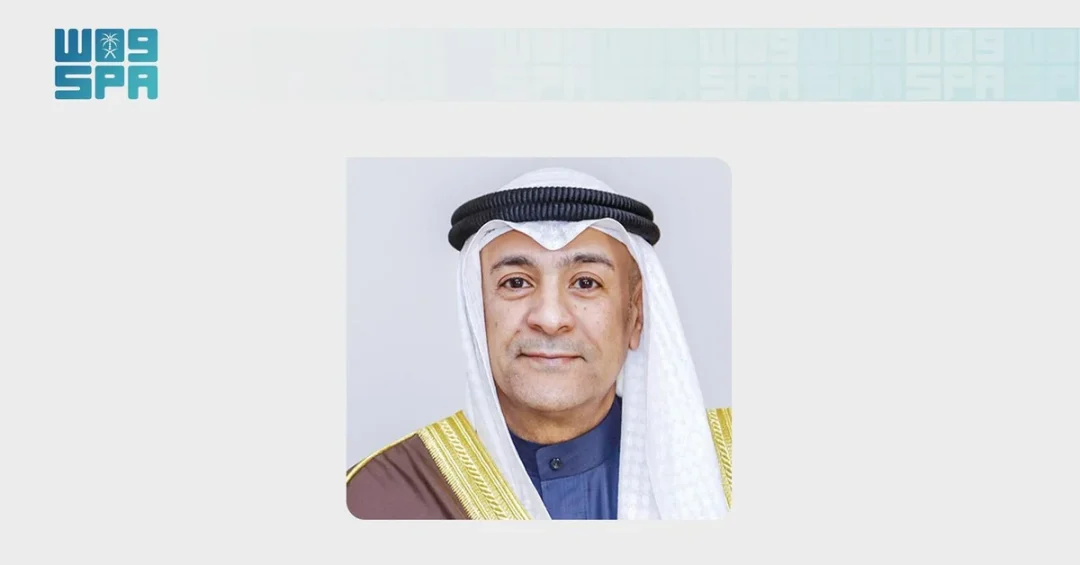
Secretary-General of the Gulf Cooperation Council (GCC) Jasem Albudaiwi met with Vice President of the International Finance Corporation (IFC) for the Middle East and Central Asia Imad Najib Fakhoury in Bangkok on October 13, 2026, on the sidelines of the 2026 Annual Meetings of the International Monetary Fund (IMF) and the World Bank Group, according to the Saudi Press Agency (SPA). The meeting brought together two key figures whose portfolios intersect at the heart of the Gulf region’s economic modernization agenda, and it signaled a continued push to deepen the institutional ties between the six-member Gulf bloc and the private-sector arm of the World Bank Group.
During the talks, the two sides reviewed the existing cooperation between the GCC and the IFC and discussed ways to enhance and develop it further. They also exchanged views on a number of proposed initiatives and projects aimed at strengthening joint cooperation and the exchange of expertise and knowledge. The meeting additionally addressed the most prominent economic developments across the GCC states in light of current circumstances, and both sides underscored the importance of strengthening international cooperation to address them in a manner that supports economic stability and achieves sustainable development and prosperity. The encounter took place against the backdrop of the IMF and World Bank Group Annual Meetings, an annual gathering that draws finance ministers, central bank governors, and development finance leaders from around the world.
Context and Background
Why does a meeting between a Gulf bloc’s top diplomat-administrator and a development finance executive matter to audiences far beyond the Gulf? The answer lies in the scale and ambition of the GCC’s economic agenda. The Gulf Cooperation Council, headquartered in Riyadh, comprises the Kingdom of Saudi Arabia, the United Arab Emirates, Qatar, Kuwait, Bahrain, and Oman. Together, these six states represent one of the world’s most significant concentrations of sovereign wealth, energy production, and infrastructure investment. The IFC, as the private-sector investment arm of the World Bank Group, channels financing and advisory services into emerging markets, and its Middle East and Central Asia department has become an increasingly active partner for Gulf economies as they diversify away from hydrocarbon dependence.
The Bangkok meeting fits into a broader pattern of GCC engagement with multilateral financial institutions. In recent years, the GCC General Secretariat has expanded its dialogue with global development bodies, reflecting a shared recognition that challenges such as supply chain disruptions, energy transition, food security, and climate adaptation are best addressed through coordinated international action. The Secretary-General’s participation in the IMF and World Bank Group Annual Meetings is itself a statement of intent: the Gulf is not merely a recipient of global economic trends but an active shaper of them. For Saudi Arabia, which holds the GCC’s largest economy and hosts its headquarters, these engagements reinforce the Kingdom’s role as a bridge between the Global South and the established multilateral system.
The IFC’s interest in the Gulf is equally pragmatic. The corporation has identified the Middle East and Central Asia as a region where private capital can be mobilized at scale to complement public investment. Gulf sovereign wealth funds, including Saudi Arabia’s Public Investment Fund (PIF), have become co-investors of choice for development finance institutions seeking reliable partners with long-term horizons. The meeting in Bangkok therefore represents a convergence of interests: the GCC seeks expertise, financing, and global market access; the IFC seeks credible partners and bankable projects that advance its development mandate.
Key Details of the Meeting
What specific outcomes can be drawn from the discussions? According to the Saudi Press Agency, the two sides reviewed existing cooperation relations and explored ways to enhance and develop them. They exchanged views on proposed initiatives and projects designed to strengthen joint cooperation and the exchange of expertise and knowledge. This language suggests a working session rather than a signing ceremony, but such preparatory dialogues are often the necessary precursor to formal agreements. The emphasis on “expertise and knowledge” exchange points to capacity-building, technical assistance, and the sharing of best practices in areas such as project preparation, regulatory reform, and public-private partnership structuring.
The meeting also addressed the most prominent economic developments in the GCC states “in light of the current circumstances.” While the source material does not enumerate these circumstances, the reference is consistent with the global economic environment of late 2026, which has been shaped by shifting energy markets, monetary policy adjustments, and ongoing geopolitical tensions. The two officials affirmed the importance of strengthening international cooperation to address these developments in a manner that supports economic stability and achieves sustainable development and prosperity. That formulation aligns closely with the GCC’s longstanding position that stability and development are mutually reinforcing goals requiring collective action.
Notably, the meeting was held on the sidelines of the 2026 Annual Meetings of the IMF and the World Bank Group, a venue that maximizes opportunities for bilateral and multilateral engagement. The Annual Meetings typically feature a dense schedule of side events, bilateral meetings, and informal consultations, allowing participants to advance multiple agendas in a concentrated period. For Secretary-General Albudaiwi, the Bangkok trip provided a platform to engage not only with the IFC but with a wide range of financial and development leaders. For Vice President Fakhoury, the meeting offered direct access to the GCC’s collective leadership at a time when the region’s investment pipelines are expanding rapidly.
International and Regional Impact
How might this meeting reverberate beyond the Gulf? The GCC-IFC relationship carries implications for the broader Middle East and Central Asia region, where the IFC operates extensively. Gulf capital, channeled through co-investment platforms and syndicated loans, can extend the reach of development finance into markets that might otherwise struggle to attract private investment. If the GCC and IFC deepen their collaboration, the result could be more efficient deployment of capital into infrastructure, renewable energy, digital connectivity, and small and medium enterprise development across a wide geographic footprint. That, in turn, supports the stability and growth objectives that both institutions publicly champion.
From a regional perspective, the meeting reinforces the GCC’s institutional identity as a collective actor in global economic governance. Rather than each member state pursuing its own bilateral relationships with the IFC in isolation, the GCC General Secretariat can serve as a coordinating body, identifying shared priorities and presenting a unified front. This approach has already yielded results in areas such as trade facilitation and regulatory harmonization, and extending it to development finance cooperation is a logical next step. For Saudi Arabia, which has consistently advocated for stronger GCC integration, the meeting advances a vision of the Gulf as a cohesive economic bloc capable of shaping, not merely reacting to, global financial currents.
The timing is also significant. As the global economy navigates a period of transition, with digital transformation, artificial intelligence, and the energy transition reshaping industries, the demand for sophisticated financing solutions is rising. Development finance institutions like the IFC are under pressure to do more with limited resources, making partnerships with well-capitalized Gulf entities increasingly attractive. Conversely, Gulf states are seeking to diversify their investment portfolios and acquire the technical know-how that institutions like the IFC can provide. The Bangkok meeting thus reflects a mutually beneficial dynamic that is likely to intensify in the years ahead.
Economic and Strategic Significance
What does the GCC stand to gain from closer ties with the IFC? First, access to the IFC’s global network and its decades of experience in structuring private-sector projects in emerging markets. The IFC has a track record of mobilizing capital from institutional investors, pension funds, and sovereign wealth funds, and its involvement can lend credibility to projects that might otherwise struggle to attract financing. For GCC states pursuing ambitious diversification agendas, this expertise is valuable. Second, the IFC can serve as a bridge to markets in Africa, Asia, and Latin America where Gulf investors are increasingly active but may lack local knowledge. Third, collaboration with the IFC can help GCC states benchmark their own regulatory and investment frameworks against international best practices.
For the IFC, the strategic significance is equally clear. The GCC is home to some of the world’s largest sovereign wealth funds and a growing class of institutional investors seeking sustainable, impact-oriented opportunities. By deepening its relationship with the GCC General Secretariat, the IFC can position itself as a preferred partner for Gulf capital seeking co-investment opportunities. This is particularly relevant as the IFC pursues its own goals under the World Bank Group’s broader mandate to end extreme poverty and promote shared prosperity. Gulf investment, when channeled through IFC platforms, can amplify the corporation’s development impact while generating returns for Gulf investors. The meeting in Bangkok, while modest in its immediate outputs, therefore sits within a larger strategic calculus on both sides.
Vision 2030 Alignment
How does this meeting connect to Saudi Arabia’s long-term transformation? Saudi Vision 2030, the Kingdom’s comprehensive reform program launched in 2016 under the leadership of Crown Prince Mohammed bin Salman, aims to diversify the economy, expand the private sector, and position Saudi Arabia as a global investment hub. A central pillar of Vision 2030 is the development of non-oil sectors, including finance, tourism, technology, and renewable energy. The Public Investment Fund has been tasked with driving much of this transformation, and its partnerships with international financial institutions have been instrumental in attracting foreign capital and expertise. The GCC-IFC dialogue complements these national efforts by creating a regional framework that can support Saudi Arabia’s bilateral initiatives.
Moreover, Vision 2030 emphasizes international cooperation and the Kingdom’s role as a responsible global stakeholder. Saudi Arabia has hosted major multilateral events, contributed to global development funds, and positioned itself as a bridge between developed and developing economies. The GCC Secretary-General’s engagement with the IFC in Bangkok is consistent with this outward-looking posture. As the GCC’s largest economy and the host of its headquarters, Saudi Arabia has a direct interest in the success of GCC-IFC cooperation. If the proposed initiatives and projects discussed in Bangkok move forward, they could generate new opportunities for Saudi businesses, investors, and entrepreneurs, while reinforcing the Kingdom’s reputation as a reliable partner in global development finance. The meeting thus represents another step in Saudi Arabia’s journey toward a diversified, knowledge-driven economy fully integrated into the global financial system.
20 Questions
Q1. Who met in Bangkok on October 13, 2026?
A1. GCC Secretary-General Jasem Albudaiwi met with IFC Vice President for the Middle East and Central Asia Imad Najib Fakhoury, according to the Saudi Press Agency.
Q2. What event was taking place alongside the meeting?
A2. The meeting was held on the sidelines of the 2026 Annual Meetings of the International Monetary Fund and the World Bank Group in Bangkok.
Q3. What is the GCC?
A3. The Gulf Cooperation Council is a regional bloc comprising Saudi Arabia, the UAE, Qatar, Kuwait, Bahrain, and Oman, headquartered in Riyadh.
Q4. What is the IFC?
A4. The International Finance Corporation is the private-sector investment arm of the World Bank Group, providing financing and advisory services in emerging markets.
Q5. What did the two sides discuss?
A5. They reviewed existing GCC-IFC cooperation, explored ways to enhance it, and exchanged views on proposed initiatives and projects.
Q6. Did they discuss economic developments in the GCC?
A6. Yes, they addressed prominent economic developments in the GCC states in light of current circumstances and the importance of international cooperation.
Q7. What was the stated goal of strengthening cooperation?
A7. The goal is to support economic stability and achieve sustainable development and prosperity, according to the Saudi Press Agency.
Q8. Where did the meeting take place?
A8. The meeting took place in Bangkok, Thailand, where the IMF and World Bank Group Annual Meetings were being held.
Q9. When did the meeting occur?
A9. The meeting occurred on October 13, 2026, according to the Saudi Press Agency report.
Q10. What is the significance of the IMF/World Bank Annual Meetings?
A10. They are a major annual gathering of finance ministers, central bank governors, and development leaders from around the world.
Q11. How does this meeting relate to Saudi Arabia?
A11. Saudi Arabia is the GCC’s largest economy and hosts its headquarters, so GCC-IFC cooperation directly supports Saudi economic interests.
Q12. What is Vision 2030?
A12. Vision 2030 is Saudi Arabia’s comprehensive reform program to diversify the economy, expand the private sector, and transform the Kingdom into a global investment hub.
Q13. How does the meeting align with Vision 2030?
A13. It supports international cooperation, private-sector development, and investment diversification, all core objectives of Vision 2030.
Q14. What is the Public Investment Fund?
A14. The PIF is Saudi Arabia’s sovereign wealth fund and a key driver of Vision 2030, investing domestically and internationally across diverse sectors.
Q15. What kinds of projects could benefit from GCC-IFC cooperation?
A15. Potential areas include infrastructure, renewable energy, digital connectivity, and small and medium enterprise development across the region.
Q16. What does the IFC bring to the partnership?
A16. The IFC offers global networks, project structuring expertise, and the ability to mobilize capital from institutional investors and sovereign funds.
Q17. What does the GCC bring to the partnership?
A17. The GCC offers significant sovereign wealth, strategic location, and a growing pipeline of bankable projects aligned with diversification goals.
Q18. Was any agreement signed at the meeting?
A18. The Saudi Press Agency reported a review of cooperation and exchange of views on proposed initiatives, not the signing of a formal agreement.
Q19. Why is international cooperation important to the GCC?
A19. It helps address global economic challenges, supports stability, and advances sustainable development and prosperity across the region.
Q20. What is the likely next step after this meeting?
A20. Further technical discussions and possible formalization of proposed initiatives and projects between the GCC and IFC are likely follow-ups.
Reader Feedback
We value your thoughts. Please share your feedback on this article.
Your feedback helps us improve our coverage.