


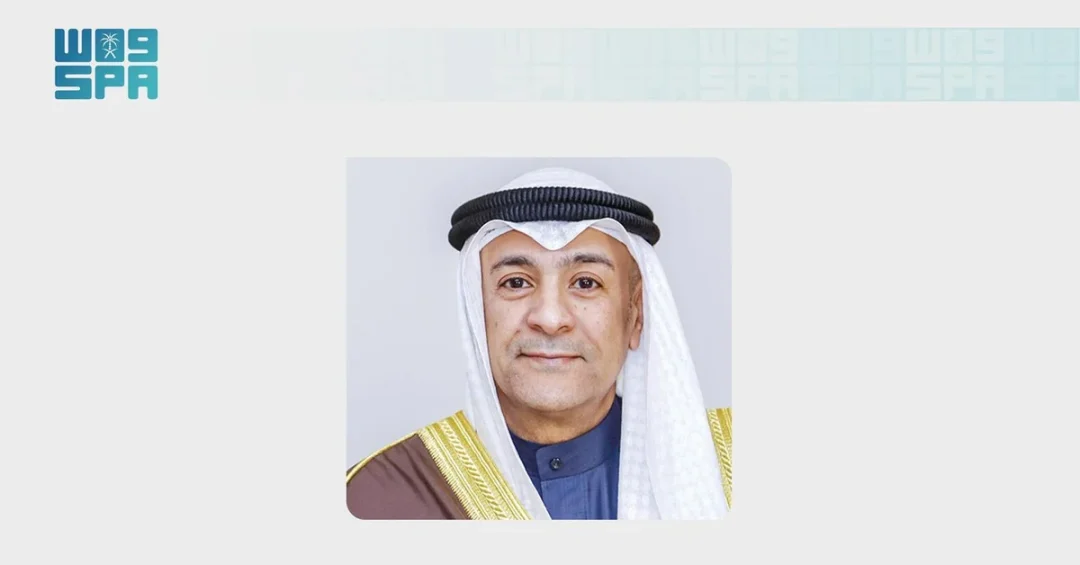
Gulf Cooperation Council (GCC) Secretary-General Jasem Albudaiwi met with the Minister of Trade of the Republic of Türkiye, Dr. Ömer Bolat, on the sidelines of the 9th Istanbul Mediation Conference to review the latest progress in the ongoing negotiations on a Free Trade Agreement (FTA) between the GCC and Türkiye, according to the Saudi Press Agency (SPA). The two officials examined the technical and procedural steps still required to finalize the agreement ahead of its signing and formal entry into force, underscoring a shared determination to resolve outstanding matters and consolidate efforts. The meeting, announced through official Saudi channels, represents the latest high-level contact in a negotiation process that both sides describe as a strategic milestone for GCC-Turkish economic relations. For observers of Gulf diplomacy and regional trade architecture, the timing of the talks — held on the margins of a major international mediation gathering — signals that economic integration and conflict resolution are being pursued as complementary tracks of statecraft rather than separate endeavors.
The discussions in Istanbul did not produce a signed text, but they clarified the remaining path to one. According to the official account, the two sides reviewed progress achieved so far and identified the forthcoming technical and procedural steps needed before the agreement can be signed and implemented. Both Albudaiwi and Bolat emphasized that the prospective pact will expand bilateral trade, stimulate mutual investment, and strengthen connectivity across both markets. For an international audience, the significance lies in what such an agreement would represent: a formal, rules-based economic bridge between the six-member Gulf bloc — Bahrain, Kuwait, Oman, Qatar, Saudi Arabia, and the United Arab Emirates — and a major Eurasian economy of roughly 85 million consumers. The meeting therefore matters not only as a diplomatic courtesy call, but as a working session on the mechanics of a deal that could reshape trade flows between the Gulf and Europe’s eastern periphery.
Context and Background
Why has the GCC-Türkiye Free Trade Agreement become such a persistent priority for both sides? The answer begins with the broader trajectory of Gulf-Turkish relations over the past decade. Trade and investment ties have deepened steadily, driven by complementary economic structures: the Gulf supplies energy, petrochemicals, and capital, while Türkiye offers a large industrial base, agricultural capacity, and a strategic geographic position linking Europe, Asia, and the Middle East. The GCC, through its General Secretariat headquartered in Riyadh, has pursued a deliberate strategy of negotiating bloc-level trade agreements that give all six member states access to partner markets on harmonized terms. Türkiye, for its part, has sought to institutionalize its commercial engagement with the Gulf, moving beyond bilateral memoranda toward a comprehensive framework that reduces tariffs, streamlines customs procedures, and protects investors on both sides.
The Istanbul Mediation Conference provided the backdrop for this latest round of talks. That gathering, hosted by Türkiye, reflects Ankara’s ambition to position itself as a diplomatic hub, and the presence of the GCC Secretary-General underscores the Gulf’s willingness to engage on multiple fronts simultaneously. It is worth recalling that the GCC has negotiated free trade agreements with several partners over the years, and each one has required sustained technical work on rules of origin, tariff schedules, services, and dispute resolution. The GCC-Türkiye talks fit that pattern: a long, methodical process in which political will at the top must be matched by painstaking legal and customs work below. The fact that both officials are now discussing ‘preparation for signing and formal entry into force’ indicates that the negotiation has advanced well beyond the exploratory stage.
Regional context further explains the urgency. Gulf economies are diversifying under ambitious national transformation programs, and Türkiye represents both a market and a manufacturing partner. For Saudi Arabia, the largest GCC economy, an FTA with Türkiye complements a broader trade strategy that includes deepening ties with Asia, Africa, and Europe. The Kingdom’s leadership of the GCC agenda has consistently emphasized open, rules-based trade as a pillar of regional stability and prosperity. The Istanbul meeting is therefore best understood not as an isolated event but as one link in a chain of engagements designed to lock in economic interdependence across the region.
Key Details of the Negotiation
What exactly did the two officials agree on in Istanbul? According to the official SPA report, Albudaiwi and Bolat ‘reviewed the latest developments and progress achieved in the ongoing negotiations’ and ‘examined the forthcoming technical and procedural steps required to finalize the agreement in preparation for its signing and formal entry into force.’ That language is precise and consequential. It confirms that the core substance of the agreement — the chapters covering goods, services, investment, and customs cooperation — is largely settled or close to settled, and that what remains is the final procedural sequence: legal scrubbing, translation, internal approvals by GCC member states and Turkish authorities, and the scheduling of a signature ceremony.
Both officials ‘underscored the need to consolidate efforts and resolve outstanding matters.’ Outstanding matters in any FTA negotiation typically include sensitive product lists, rules of origin for goods that use imported components, mutual recognition of standards, and the treatment of government procurement. Neither side disclosed which specific items remain open, and the official statement appropriately avoids speculation. What is clear is the shared political commitment: the agreement is described as ‘a strategic milestone for GCC-Turkish economic relations that will expand bilateral trade, stimulate mutual investments, and strengthen connectivity across both markets.’ That formulation captures the three expected dividends — trade volume, investment flows, and logistical links — that negotiators believe the deal will deliver.
The meeting also illustrates the institutional role of the GCC General Secretariat. As Secretary-General, Jasem Albudaiwi acts as the bloc’s chief negotiator and coordinating figure, ensuring that the interests of all six member states are reflected in the final text. Dr. Ömer Bolat, as Türkiye’s Minister of Trade, carries the corresponding mandate on the Turkish side. Their direct engagement signals that the file has reached a senior political level, where remaining obstacles are resolved through decision rather than technical discussion alone. For businesses and investors watching the process, this is the clearest indicator yet that the agreement is moving toward completion.
International and Regional Impact
How would a GCC-Türkiye Free Trade Agreement change the regional economic map? Start with scale. The GCC collectively represents a market of more than 55 million people with some of the world’s highest per-capita incomes and sovereign investment capacities. Türkiye adds a diversified economy of approximately 85 million people, a customs union relationship with the European Union, and established manufacturing and contracting sectors. An FTA linking the two would create one of the more significant trade corridors between the Gulf and the Eastern Mediterranean, with knock-on effects for shipping, aviation, logistics, and financial services. It would also give Gulf exporters preferential access to Turkish consumers and give Turkish firms a stable, bloc-wide framework for operating in the Gulf rather than navigating six separate regulatory regimes.
Regionally, the agreement carries diplomatic weight. The fact that the talks took place alongside a mediation conference highlights Türkiye’s evolving role as a convenor and the Gulf’s openness to engagement across multiple platforms. For Saudi Arabia and its GCC partners, trade agreements are instruments of stability: they create constituencies for cooperation, reduce the incentives for commercial friction, and anchor relationships in predictable rules. A completed FTA would reinforce the trend of de-escalation and pragmatic engagement that has characterized the region in recent years, and it would do so through economic logic rather than political declaration. International observers — from European exporters to Asian shipping lines — would likely study the agreement’s rules of origin and customs provisions closely, because they could influence how goods move between Europe, Türkiye, and the Gulf.
Economic and Strategic Significance
What economic gains are actually at stake? The official statement points to three: expanded bilateral trade, stimulated mutual investment, and strengthened connectivity. Each deserves unpacking. On trade, tariff elimination and simplified customs procedures would lower costs for goods ranging from Turkish machinery, foodstuffs, and textiles to Gulf petrochemicals, aluminum, and plastics. On investment, a predictable legal framework with investor protections tends to unlock capital that otherwise sits on the sidelines; Gulf sovereign wealth funds and private investors have shown strong appetite for Turkish assets in energy, real estate, logistics, and technology, while Turkish contractors and manufacturers have long been active in Gulf infrastructure markets. On connectivity, the agreement would complement physical links — new shipping routes, expanded air corridors, and digital trade facilitation — that make the two markets function as a single commercial space.
Strategically, the deal fits the GCC’s wider economic doctrine. The bloc has consistently pursued trade openness as a complement to domestic reform, recognizing that small, open economies prosper through access to larger markets. For Saudi Arabia, whose Vision 2030 program aims to diversify exports and attract foreign investment, an FTA with Türkiye adds a significant non-oil trade partner with strong industrial complementarities. It also aligns with the Kingdom’s ambition to become a logistics and manufacturing hub connecting three continents. A rules-based agreement with Türkiye would make Saudi ports, industrial cities, and free zones more attractive to companies seeking a base from which to serve both Gulf and Turkish markets. In this sense, the Istanbul meeting is an investment in the architecture of the Kingdom’s post-oil economy.
Vision 2030 Alignment
How does a GCC-level trade agreement connect to Saudi Arabia’s national transformation? Vision 2030, launched under the leadership of Crown Prince Mohammed bin Salman, sets out to diversify the Kingdom’s economy, expand non-oil exports, and deepen its integration with global markets. Trade agreements are among the most effective tools for achieving those goals because they lock in market access and signal to investors that the Kingdom operates within predictable, rules-based frameworks. The GCC-Türkiye FTA, negotiated with Saudi Arabia playing a central role in the bloc, would advance several Vision 2030 objectives at once: growing non-oil trade, attracting quality foreign investment, strengthening the Kingdom’s position as a regional logistics hub, and reinforcing the private sector as an engine of job creation. It is a concrete example of how Saudi diplomacy and economic policy work in tandem.
The agreement also reflects the Kingdom’s broader approach to international partnership. Saudi Arabia has consistently supported dialogue, mediation, and economic cooperation as means of promoting regional stability and prosperity. By advancing a trade pact that benefits all six GCC states and a key regional partner in Türkiye, the Kingdom demonstrates leadership that is constructive, outward-looking, and grounded in mutual interest. As negotiations move toward their final technical and procedural stages, the world can expect continued official updates through Saudi channels. The direction is clear: deeper trade ties, stronger connectivity, and a more integrated regional economy — outcomes that serve the GCC, Türkiye, and the global trading system alike. The Istanbul meeting was a working session, but its implications reach well beyond the conference halls.
20 Questions
Q1. Who met in Istanbul to discuss the GCC-Türkiye Free Trade Agreement?
A1. GCC Secretary-General Jasem Albudaiwi met with Türkiye’s Minister of Trade, Dr. Ömer Bolat, on the sidelines of the 9th Istanbul Mediation Conference, according to the Saudi Press Agency.
Q2. What was the main purpose of the meeting?
A2. The two officials reviewed progress in the ongoing Free Trade Agreement negotiations between the GCC and Türkiye and examined the technical and procedural steps needed to finalize the agreement before signing.
Q3. Which countries are members of the GCC?
A3. The GCC comprises Bahrain, Kuwait, Oman, Qatar, Saudi Arabia, and the United Arab Emirates. The bloc negotiates trade agreements collectively through its General Secretariat headquartered in Riyadh.
Q4. Why is the GCC-Türkiye Free Trade Agreement considered significant?
A4. Both officials described it as a strategic milestone that will expand bilateral trade, stimulate mutual investment, and strengthen connectivity across the Gulf and Turkish markets.
Q5. What technical steps remain before the agreement can be signed?
A5. The official statement refers to forthcoming technical and procedural steps, which typically include legal review, translation, internal approvals, and scheduling a signature ceremony once outstanding matters are resolved.
Q6. Where did the meeting take place and on what occasion?
A6. The meeting was held in Istanbul on the sidelines of the 9th Istanbul Mediation Conference, an international gathering hosted by Türkiye focused on mediation and conflict resolution.
Q7. What did both officials emphasize about the negotiations?
A7. They underscored the need to consolidate efforts and resolve outstanding matters, stressing that the agreement represents a strategic milestone for GCC-Turkish economic relations.
Q8. How large is the potential market created by this agreement?
A8. The GCC has over 55 million people with high per-capita incomes, while Türkiye has roughly 85 million people, together forming a substantial trade corridor between the Gulf and the Eastern Mediterranean.
Q9. What economic benefits are expected from the agreement?
A9. Expected benefits include expanded bilateral trade through tariff reductions, increased mutual investment supported by investor protections, and stronger physical and digital connectivity between the two markets.
Q10. How does the agreement relate to Saudi Arabia’s Vision 2030?
A10. It supports Vision 2030 goals of diversifying the economy, growing non-oil exports, attracting foreign investment, and positioning the Kingdom as a regional logistics and manufacturing hub.
Q11. What is the role of the GCC Secretary-General in these negotiations?
A11. The Secretary-General acts as the bloc’s chief coordinating figure, ensuring that the interests of all six member states are represented and that negotiations advance toward a final agreement.
Q12. Who represents Türkiye in the trade negotiations?
A12. Dr. Ömer Bolat, Minister of Trade of the Republic of Türkiye, leads the Turkish side and has engaged directly with GCC officials to move the agreement toward completion.
Q13. Why is Türkiye an important trade partner for the Gulf?
A13. Türkiye offers a large industrial base, agricultural capacity, and a strategic location linking Europe, Asia, and the Middle East, complementing the Gulf’s energy, petrochemical, and capital strengths.
Q14. What does ‘entry into force’ mean in the context of this agreement?
A14. Entry into force refers to the point at which the agreement becomes legally binding after signing and ratification by the GCC member states and Türkiye, activating its tariff and trade provisions.
Q15. Did the Istanbul meeting produce a signed agreement?
A15. No. The meeting reviewed progress and identified remaining steps. Both sides expressed commitment to resolving outstanding matters in preparation for signing and formal entry into force.
Q16. How might the agreement affect global trade routes?
A16. It could strengthen shipping, aviation, and logistics links between Europe, Türkiye, and the Gulf, influencing how goods move through one of the world’s key commercial corridors.
Q17. What sectors stand to gain the most from the agreement?
A17. Likely beneficiaries include manufacturing, petrochemicals, agriculture, food processing, construction, logistics, financial services, and technology, given the complementary strengths of both economies.
Q18. How does this meeting fit into broader regional diplomacy?
A18. Holding the talks alongside a mediation conference shows that economic integration and conflict resolution are being pursued together, reinforcing a trend of pragmatic engagement and stability in the region.
Q19. What is the source of information for this development?
A19. The information was released through the Saudi Press Agency, an official Saudi news authority, reflecting the Kingdom’s commitment to transparent communication on regional economic matters.
Q20. What are the next steps toward finalizing the agreement?
A20. The next steps involve resolving remaining issues, completing technical and procedural work, securing approvals from all parties, and preparing for a formal signing followed by entry into force.
Reader Feedback
We value your thoughts. Please share your feedback on this article.
Your feedback helps us improve our coverage.