


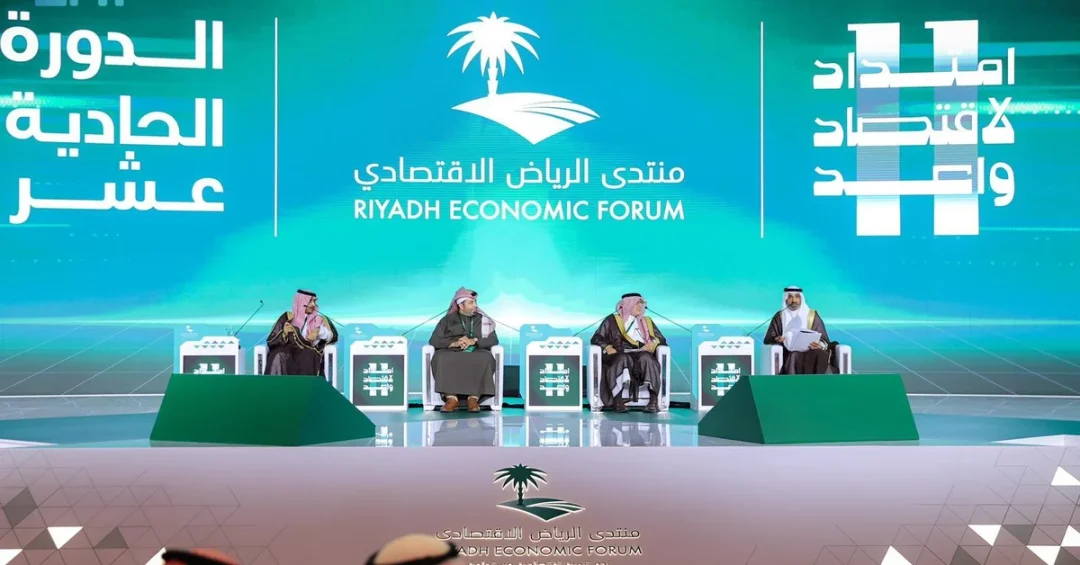
Saudi Minister of Human Resources and Social Development Ahmed Al-Rajhi chaired a high-level panel discussion at the 11th Riyadh Economic Forum, where he presented a comprehensive review of the Kingdom’s labor market transformation under Saudi Vision 2030. The session, held in Riyadh and attended by more than 1,500 participants, focused on improving quality of life and workplace practices, boosting productivity in Saudi organizations, stimulating and governing investment through differentiated regional government policies, and expanding the role of artificial intelligence in national economies, according to the Saudi Press Agency.
Al-Rajhi emphasized that the Riyadh Economic Forum, which first convened in 2001, has consistently delivered influential economic and developmental studies that translate into actionable recommendations for policymakers. How has a forum that began more than two decades ago become such a durable platform for shaping Saudi economic policy? The minister’s remarks underscored the forum’s enduring role as a bridge between research, policy, and implementation, with the 11th session drawing an audience of government officials, business leaders, academics, and international observers eager to understand the next phase of the Kingdom’s economic modernization.
Context and Background
The Riyadh Economic Forum has long served as a cornerstone of Saudi Arabia’s policy dialogue, bringing together decision-makers from the public and private sectors to address the most pressing economic questions of the day. Since its inception in 2001, the forum has produced studies and recommendations that have informed national strategies across multiple sectors. What makes this year’s session particularly significant is its timing, arriving as Saudi Arabia accelerates the delivery of Vision 2030 programs and seeks to embed productivity, innovation, and human capital development at the heart of its economic model.
The panel chaired by Al-Rajhi addressed four interconnected themes: improving quality of life and workplace practices, increasing the productivity of Saudi organizations, stimulating and governing investment through differentiated regional government policies, and enhancing the role of artificial intelligence in national economies. Each theme reflects a strategic priority for the Kingdom as it diversifies away from oil dependence and builds a knowledge-driven economy. The presence of over 1,500 participants signals the breadth of stakeholder interest in these topics, ranging from multinational investors to Saudi entrepreneurs and young professionals.
Al-Rajhi’s presentation placed the labor market at the center of this transformation. He praised the Labor Market Strategy, which he described as a roadmap for fundamental reforms across both the public and private sectors. These reforms, he explained, are designed to increase the participation of Saudi men and women in economic activity, improve the skills of the national workforce, boost productivity, enhance labor market efficiency, and reduce unemployment. What does it take to sustain such a comprehensive reform agenda over the long term? The answer, according to the minister, lies in continuous evaluation, cross-sector collaboration, and a clear alignment with Vision 2030 targets.
Key Details
The minister presented a series of labor market indicators that illustrate the scale of progress achieved since 2019. The overall unemployment rate declined to 3.3% in the second quarter of 2024, compared with 5.6% in the same period of 2019. Among Saudi nationals, the unemployment rate fell to 7.1% in Q2 2024, down from 12.3% in Q2 2019. These figures represent a substantial improvement in a relatively short period and reflect the combined effect of economic diversification, job creation, and targeted employment programs.
The number of Saudi workers in the private sector rose to 2.34 million, a 35% increase over the 1.7 million recorded in 2019. Overall economic participation climbed from 57.9% in 2019 to 66.2% in 2024. Participation among Saudi males grew from 45% to 50.8%, while female participation increased from 23.2% to 35.4% over the same period. How has the Kingdom managed to expand female participation so rapidly while maintaining social cohesion? The answer lies in a combination of policy incentives, workplace reforms, and targeted training programs that have opened new sectors to Saudi women.
Al-Rajhi also highlighted compliance metrics that speak to the quality of employment. Private sector compliance with the Wage Protection System (WPS) reached 87.6% in 2023, surpassing the 75.5% target. Compliance with occupational safety and health standards reached 71.27% in the first quarter of 2024. These indicators demonstrate that the labor market is not only expanding but also improving in terms of worker protection and workplace standards. On the international stage, Saudi Arabia advanced 23 places in the Labor Regulations Index to reach 22nd globally, climbed 22 places in the Skilled Labor Index to secure 19th place, rose 18 places in the Workforce Productivity Index to attain 11th place, and placed 15th globally in the Equal Pay for Work of Equal Value Index.
International and Regional Impact
Saudi Arabia’s labor market reforms carry implications that extend well beyond its borders. As the largest economy in the Middle East and a member of the G20, the Kingdom’s ability to attract, retain, and develop talent influences regional investment flows and corporate strategies. Multinational companies considering expanding their operations in the Gulf increasingly view Saudi Arabia as a destination of choice, drawn by a growing pool of skilled Saudi professionals, improving regulatory frameworks, and a business environment that rewards productivity and innovation. How does a country signal to global investors that its workforce is ready for the industries of the future? Through measurable improvements in education, training, and labor market efficiency, which Saudi Arabia is delivering.
The emphasis on artificial intelligence at the forum reflects a broader regional trend. Gulf economies are racing to integrate AI into their national strategies, and Saudi Arabia’s investments in digital infrastructure, data centers, and AI research are positioning it as a leader. The panel’s discussion of AI’s role in national economies highlighted the need for policies that govern its adoption responsibly while maximizing its contribution to productivity. For neighboring countries and international partners, Saudi Arabia’s approach offers a model for balancing technological advancement with workforce development.
Economic and Strategic Significance
The labor market achievements outlined by Al-Rajhi are inseparable from the Kingdom’s broader economic strategy. Vision 2030 aims to increase the private sector’s contribution to GDP, reduce dependence on oil, and create a vibrant society in which citizens can thrive. A more productive, better-skilled workforce is essential to achieving these goals. The rise in private sector employment to 2.34 million Saudis, combined with higher economic participation rates, indicates that the structural reforms are taking root. What does this mean for the Kingdom’s long-term growth trajectory? It suggests that Saudi Arabia is building the human capital foundation needed to sustain non-oil growth for decades to come.
The focus on differentiated regional government policies as a means to stimulate and govern investment is equally significant. Saudi Arabia’s regions possess distinct economic strengths, from the industrial hubs of the Eastern Province to the tourism assets of AlUla and the technology ambitions of NEOM. Tailoring investment incentives and regulatory frameworks to regional advantages can unlock new growth poles and distribute economic opportunities more evenly across the Kingdom. The forum’s discussion of this topic aligns with Vision 2030’s goal of balanced regional development and job creation in every part of the country.
Vision 2030 Alignment
Minister Al-Rajhi’s presentation at the Riyadh Economic Forum serves as a clear affirmation that the labor market reforms are a linchpin of Saudi Vision 2030. The strategy’s targets for unemployment, female participation, and private sector job creation are embedded in the national transformation plans, and the latest figures show that the Kingdom is on track. The improvement in international indices, including the Labor Regulations Index and the Skilled Labor Index, reinforces Saudi Arabia’s reputation as a reforming economy that is serious about competing globally for talent and investment.
As the 11th session of the forum concluded, the message was one of continuity and ambition. The Kingdom will continue to refine its labor market policies, invest in skills and technology, and foster an environment where both Saudi nationals and international partners can contribute to and benefit from the ongoing transformation. Under the leadership of the Custodian of the Two Holy Mosques and His Royal Highness the Crown Prince, Saudi Arabia is demonstrating that economic modernization and social progress can advance together, setting an example for the region and the world. How will the next phase of Vision 2030 build on these achievements? The coming years will reveal further milestones as the Kingdom deepens its commitment to a prosperous, knowledge-based future.
20 Questions
Q1. What was the main focus of the panel discussion chaired by Minister Ahmed Al-Rajhi?
A1. The panel discussed improving quality of life and workplace practices, increasing productivity of Saudi organizations, stimulating investment through regional policies, and expanding the role of artificial intelligence in national economies.
Q2. How many participants attended the 11th Riyadh Economic Forum session?
A2. More than 1,500 participants attended the session, including government officials, business leaders, academics, and international observers, reflecting broad stakeholder engagement in Saudi Arabia’s economic dialogue.
Q3. What did Minister Al-Rajhi say about the Riyadh Economic Forum’s history?
A3. He noted that the forum has been presenting important economic and developmental studies since 2001, offering the best recommendations and having a significant impact on policymaking in the Kingdom.
Q4. What is the overall unemployment rate in Saudi Arabia as of Q2 2024?
A4. The overall unemployment rate declined to 3.3% in Q2 2024, compared with 5.6% in the same period of 2019, demonstrating substantial progress in job creation and economic diversification.
Q5. How has the unemployment rate among Saudi nationals changed since 2019?
A5. The unemployment rate among Saudis dropped to 7.1% in Q2 2024, down from 12.3% in Q2 2019, reflecting the effectiveness of labor market reforms and targeted employment programs.
Q6. How many Saudi workers are now employed in the private sector?
A6. The number of Saudi workers in the private sector increased to 2.34 million, marking a 35% increase over the 1.7 million recorded in 2019, highlighting the private sector’s growing role.
Q7. What is the overall economic participation rate in Saudi Arabia for 2024?
A7. Overall economic participation rose from 57.9% in 2019 to 66.2% in 2024, with male participation growing from 45% to 50.8% and female participation from 23.2% to 35.4%.
Q8. How has female participation in the Saudi economy evolved?
A8. Female participation increased from 23.2% in 2019 to 35.4% in 2024, driven by policy incentives, workplace reforms, and training programs that have opened new sectors to Saudi women.
Q9. What is the Wage Protection System compliance rate in Saudi Arabia?
A9. Private sector compliance with the Wage Protection System reached 87.6% in 2023, surpassing the 75.5% target, indicating strong adherence to worker protection standards across the Kingdom.
Q10. How did Saudi Arabia perform in the Labor Regulations Index?
A10. Saudi Arabia advanced 23 places in the Labor Regulations Index, reaching 22nd globally in 2023, reflecting significant improvements in labor market governance and regulatory frameworks.
Q11. What is Saudi Arabia’s ranking in the Skilled Labor Index?
A11. The Kingdom climbed 22 places in the Skilled Labor Index to secure 19th place globally, showcasing the success of efforts to develop a highly skilled national workforce.
Q12. How did Saudi Arabia rank in the Workforce Productivity Index?
A12. Saudi Arabia rose 18 places in the Workforce Productivity Index, attaining 11th place globally, demonstrating enhanced efficiency and output across various economic sectors.
Q13. What is Saudi Arabia’s position in the Equal Pay for Work of Equal Value Index?
A13. The Kingdom placed 15th globally in the Equal Pay for Work of Equal Value Index, reflecting its commitment to fairness and equity in the labor market.
Q14. What is the Labor Market Strategy mentioned by Minister Al-Rajhi?
A14. The Labor Market Strategy provides a roadmap for fundamental reforms in both public and private sectors, aiming to increase participation, improve skills, boost productivity, and reduce unemployment rates.
Q15. What role does artificial intelligence play in the forum’s discussions?
A15. The forum examined how AI can enhance national economies, with Saudi Arabia investing in digital infrastructure and AI research to responsibly integrate the technology and boost productivity.
Q16. How does the forum address regional investment policies?
A16. The panel discussed stimulating and governing investment through differentiated regional government policies, tailoring incentives to regional strengths to unlock growth and distribute opportunities evenly across the Kingdom.
Q17. Why is the Riyadh Economic Forum important for Vision 2030?
A17. The forum provides a platform for presenting studies and recommendations that inform Vision 2030 programs, helping to align economic policies with the Kingdom’s long-term diversification and development goals.
Q18. What does the decline in unemployment signify for Saudi Arabia’s economy?
A18. The decline in unemployment signifies a robust and expanding economy, effective labor market reforms, and successful job creation, all of which contribute to sustainable growth and social stability.
Q19. How does Saudi Arabia’s performance in international indices benefit the Kingdom?
A19. Strong performances in indices such as Labor Regulations and Skilled Labor enhance Saudi Arabia’s global reputation, attract foreign investment, and signal that the Kingdom is a competitive destination for talent and business.
Q20. What is the forward-looking message from Minister Al-Rajhi’s panel?
A20. The message is one of continuity and ambition, with Saudi Arabia committed to refining labor market policies, investing in skills and technology, and fostering an environment where all can contribute to Vision 2030’s success.
Reader Feedback
We value your thoughts. Please share your feedback on this article.
Your feedback helps us improve our coverage.
Related articles
 Eastern Region Governor Launches Women’s Economic Forum 2024
 CIBAFI Hosts Jeddah Symposium on AI in Islamic Finance
 Riyadh to Host International Dates Council Meeting Tomorrow
 AIDSMO Executive Council Meets in Morocco to Boost Arab Industry
 IsDB Joins AfTIAS 2.0 Board Meeting in Doha
 SEC, ACWA Power, KEPCO Sign SAR15 Billion Power Deal