


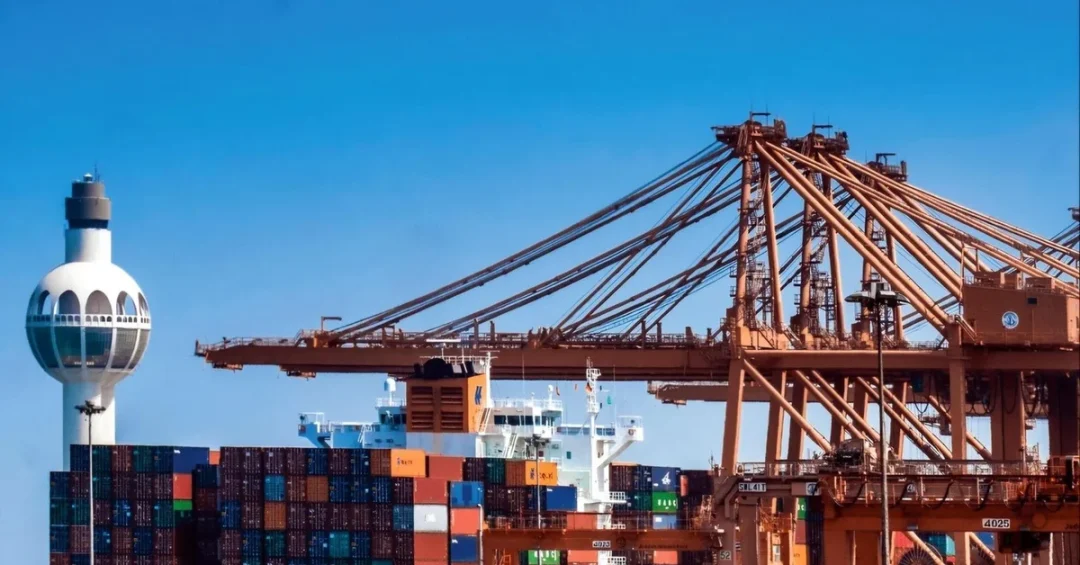
The Saudi Ports Authority (Mawani) announced that the Islamic Port of Jeddah has strengthened its position as a key hub for the AE15 and AE19 shipping lines of the Gemini consortium, which includes Maersk and Hapag-Lloyd, following route adjustments that now pass through the Bab-el-Mandeb Strait and the Suez Canal. This development, reported by the Saudi Press Agency on August 24, 2025, underscores the Kingdom’s growing role in global maritime trade and its strategic location along one of the world’s most vital commercial arteries.
Context and Background
The decision to integrate the Islamic Port of Jeddah more deeply into these two major shipping routes comes as part of broader efforts by Saudi Arabia to enhance its maritime connectivity and logistical capabilities. The port’s strategic position on the Red Sea, combined with its advanced infrastructure and operational efficiency, makes it an attractive choice for global shipping giants seeking reliable and efficient transit points. The route adjustments are designed to streamline operations and improve service quality for importers and exporters alike, aligning with the Kingdom’s Vision 2030 goals of diversifying the economy and establishing Saudi Arabia as a global logistics hub.
The Gemini consortium, formed by the alliance of Maersk and Hapag-Lloyd, represents a significant force in global shipping. By selecting Jeddah Islamic Port as a key node, the consortium acknowledges the port’s world-class capabilities and its pivotal role in facilitating trade between Asia and Europe. This partnership not only boosts the port’s international standing but also enhances the Kingdom’s attractiveness as a investment destination in the maritime sector.
Key Details
The AE19 route will now include Jeddah Islamic Port twice within its operational cycle: first on the journey from Asia towards the Mediterranean, and then on the return leg southwards. This dual inclusion provides broader connectivity and greater flexibility for cargo movement to and from the Kingdom. The updated routes will connect Jeddah with major Asian ports such as Qingdao, Ningbo, Shanghai, and Busan, as well as key transshipment hubs like Tanjung Pelepas and Singapore, alongside the Suez Canal, Port Said, and Damietta in Egypt, and Tangier in Morocco.
The collaborative effort between Saudi authorities and international shipping lines is set to reduce the full operational cycle from 16 to 14 weeks, while maintaining regular weekly departures. This improvement in fleet efficiency will significantly enhance the quality of services available to businesses relying on maritime trade, reducing transit times and increasing reliability. The move also highlights the port’s capacity to handle large volumes of cargo, a critical factor for global shipping networks that demand high performance and agility.
Implications and Impact
The strengthening of the Islamic Port of Jeddah as a key hub for the Gemini consortium has far-reaching implications for regional and international trade. By facilitating smoother and faster connections between Asian manufacturing hubs and European consumer markets, the port enhances the efficiency of global supply chains, which is particularly crucial in an era of economic uncertainty and logistical challenges. The inclusion of the Bab-el-Mandeb Strait and the Suez Canal in these routes underscores the continued importance of these maritime passages, and Saudi Arabia’s strategic location in ensuring their security and stability.
For the Kingdom, this development is more than a logistical achievement; it is a testament to the successful implementation of the National Transport and Logistics Strategy, which aims to position Saudi Arabia as a leading global logistics hub. The increased traffic through Jeddah Islamic Port is expected to stimulate economic activity, create jobs, and attract further foreign investment in the maritime sector. Moreover, it demonstrates the Kingdom’s commitment to fostering international partnerships and its proactive approach to enhancing its global trade integration.
Vision 2030 Alignment
This milestone directly supports Vision 2030’s objective of transforming Saudi Arabia into a global investment powerhouse and a vital link between three continents. By bolstering the maritime sector and enhancing the Kingdom’s connectivity to world markets, the Islamic Port of Jeddah is playing a crucial role in diversifying the economy away from oil dependence. The collaboration with international partners like Maersk and Hapag-Lloyd exemplifies the kind of public-private cooperation that is central to achieving the ambitious goals set forth in the Vision, marking another step forward in the Kingdom’s journey towards a prosperous and sustainable future.
20 Questions
Q1. What is the Islamic Port of Jeddah?
A1. The Islamic Port of Jeddah is Saudi Arabia’s largest seaport, located on the Red Sea coast. It serves as a major gateway for the Kingdom’s maritime trade and is a key hub in global shipping routes.
Q2. Which companies form the Gemini consortium?
A2. The Gemini consortium is formed by two major global shipping companies: Maersk and Hapag-Lloyd. They have partnered to enhance their service networks and improve efficiency in global maritime trade.
Q3. What are the AE15 and AE19 shipping lines?
A3. AE15 and AE19 are container shipping routes operated by the Gemini consortium that connect Asian ports with European and Mediterranean destinations, now including Jeddah Islamic Port as a key node.
Q4. Why was the Islamic Port of Jeddah chosen as a key hub?
A4. The port offers a strategic location on the Red Sea, advanced infrastructure, and operational efficiency, making it an ideal hub for shipping lines needing reliable and efficient connections between Asia and Europe.
Q5. What routes does the AE15 line cover?
A5. The AE15 line connects Jeddah with Qingdao and Ningbo in China, Gwangyang in Korea, Tanjung Pelepas in Malaysia, and also includes Suez Canal, Port Said, Damietta in Egypt, Colombo in Sri Lanka, and Singapore.
Q6. What routes does the AE19 line cover?
A6. The AE19 line connects Jeddah with Shanghai, Qingdao, and Ningbo in China, Busan in Korea, and Tanjung Pelepas in Malaysia, along with Suez Canal, Port Said in Egypt, Tangier in Morocco, and Singapore.
Q7. How does the route change affect the operational cycle?
A7. The full operational cycle is reduced from 16 weeks to 14 weeks, improving fleet efficiency and allowing for more frequent and reliable services.
Q8. What are the benefits of including Jeddah twice in the AE19 cycle?
A8. Including Jeddah twice provides greater connectivity and flexibility for cargo movement to and from the Kingdom, enhancing the port’s role as a transshipment hub and improving logistics for importers and exporters.
Q9. What is the strategic importance of the Bab-el-Mandeb Strait?
A9. The Bab-el-Mandeb Strait is a crucial maritime chokepoint linking the Red Sea to the Indian Ocean, vital for global trade. Its inclusion in these routes highlights the region’s importance and Saudi Arabia’s role in ensuring safe passage.
Q10. How does this development support Vision 2030?
A10. It supports Vision 2030 by enhancing Saudi Arabia’s position as a global logistics hub, diversifying the economy, and attracting foreign investment, all key objectives of the national transformation plan.
Q11. What is the Saudi Ports Authority’s role?
A11. The Saudi Ports Authority (Mawani) is the government body responsible for regulating and developing Saudi ports. It announced this update and works to improve port services and infrastructure to boost trade and logistics.
Q12. How will this affect importers and exporters in Saudi Arabia?
A12. Importers and exporters will benefit from faster transit times, increased service frequency, and improved reliability, leading to more efficient supply chains and reduced costs.
Q13. What does the National Transport and Logistics Strategy aim to achieve?
A13. The strategy aims to position Saudi Arabia as a leading global logistics hub by improving infrastructure, connectivity, and efficiency across transport sectors, aligning with Vision 2030.
Q14. How does this boost Saudi Arabia’s global trade connections?
A14. By serving as a key hub for major global shipping lines, Jeddah Islamic Port directly connects the Kingdom to major Asian and European markets, enhancing trade and economic integration.
Q15. What measures are being taken to ensure supply chain continuity?
A15. The route optimization, including reduced cycle times and increased port calls, ensures more resilient and efficient supply chains, minimizing disruptions and maintaining continuous cargo flow.
Q16. How does this project attract foreign investment?
A16. Demonstrating world-class port facilities and strategic collaborations with international companies like Maersk and Hapag-Lloyd makes Saudi Arabia an attractive destination for foreign investors in logistics and maritime sectors.
Q17. What are the environmental benefits of the route changes?
A17. Shorter transit times and more efficient routes can reduce fuel consumption and carbon emissions per container, contributing to more sustainable shipping practices.
Q18. How does Jeddah Islamic Port compare to other regional hubs?
A18. Jeddah Islamic Port offers competitive advantages including its strategic location, modern facilities, and strong connectivity to both Asian and European markets, positioning it as a top-tier regional hub.
Q19. What future developments are expected for Jeddah Islamic Port?
A19. The port is expected to continue expanding its capacity and services, leveraging its role in global shipping networks to handle increasing trade volumes and contribute to the Kingdom’s economic growth.
Q20. How can businesses benefit from the upgraded shipping routes?
A20. Businesses can enjoy reduced transit times, greater flexibility in cargo routing, and improved service reliability, all of which help in managing inventory and lowering logistics costs.
Reader Feedback
We value your thoughts. Please share your feedback on this article.
Your feedback helps us improve our coverage.