


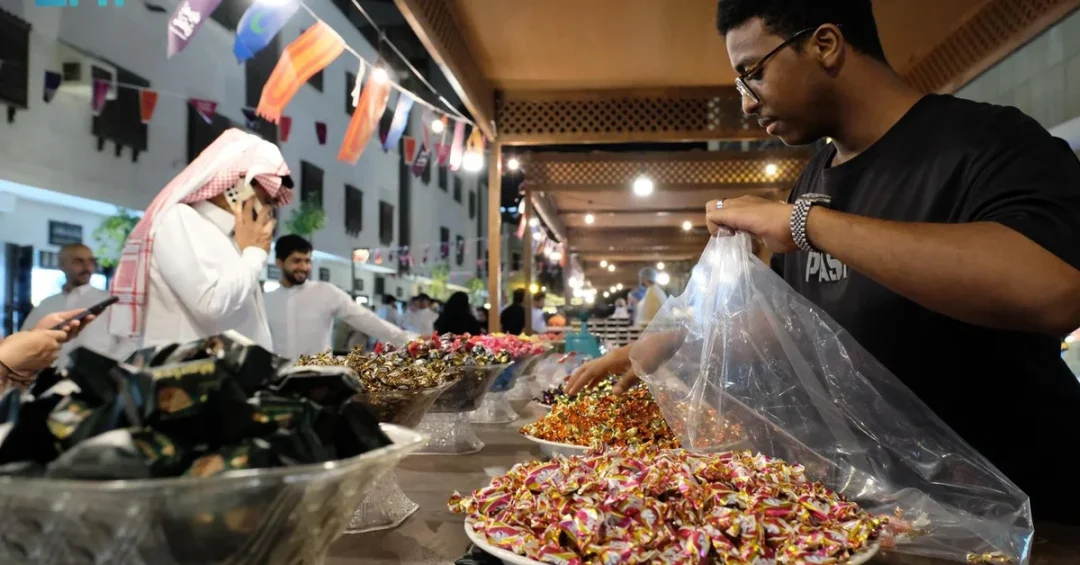
Jeddah’s sweets markets are experiencing a significant surge in business as Eid Al-Fitr approaches, with shoppers across the Kingdom flocking to purchase chocolates and traditional confections that are staples of holiday celebrations. According to the Saudi Press Agency (SPA), retailers in Jeddah have reported brisk sales as families prepare for the festive occasion, which marks the end of the holy month of Ramadan. The bustling activity in the city’s markets reflects the deep-rooted cultural traditions associated with Eid in Saudi Arabia, where sharing sweets with family, friends, and neighbors is a cherished custom. As the holiday nears, shops are competing to offer a wide array of Arabic and Western sweets, premium chocolates, and intricately decorated dates, catering to the diverse tastes of the Kingdom’s residents and visitors.
The surge in business is not merely a seasonal spike but a testament to the enduring importance of Eid celebrations in Saudi society. Jeddah, known as the gateway to the Two Holy Mosques and a vibrant commercial hub, has long been a center for culinary excellence, and its sweets markets are a focal point for holiday preparations. Retailers have pulled out all the stops to enhance the festive shopping experience, providing luxury packaging services and home delivery options to meet the demands of modern consumers. In a bid to attract more customers, businesses are also rolling out special offers and discounts ahead of the holiday, further fueling the shopping frenzy. This annual phenomenon underscores the resilience and dynamism of Saudi Arabia’s retail sector, which continues to thrive under the Kingdom’s Vision 2030 economic diversification efforts.
Context and Background
Why does the approach of Eid Al-Fitr transform Jeddah’s markets into bustling hubs of activity year after year? The answer lies in the profound cultural and religious significance of Eid in Saudi Arabia, where the holiday is celebrated with great fervor and generosity. Eid Al-Fitr, which translates to the ‘Festival of Breaking the Fast,’ is a time for gratitude, family gatherings, and communal feasts. Sweets play a central role in these celebrations, symbolizing joy and hospitality. Traditional confections such as baklava, kunafa, and ma’amoul are often prepared at home or purchased from specialized shops, while premium chocolates and decorated dates have become increasingly popular as gifts. Jeddah’s sweets markets, located in bustling districts like Al-Balad and along commercial streets, have historically been the go-to destinations for these festive treats.
The current surge in business is part of a long-standing tradition that dates back generations. In Jeddah, a city with a rich history as a trading port and a melting pot of cultures, the sweets industry has evolved to reflect both local heritage and global influences. Shops in the city offer a diverse range of products, from authentic Arabic sweets made with nuts, honey, and rose water to Western-style chocolates and pastries. This fusion is a direct result of Saudi Arabia’s openness to international trade and its growing tourism sector, which has brought new tastes and preferences to the Kingdom. As Eid approaches, the demand for these delicacies skyrockets, and retailers ramp up their inventories and marketing efforts to capture the festive spirit.
Moreover, the Saudi government’s support for small and medium-sized enterprises (SMEs) has played a crucial role in boosting the local sweets industry. Many of these shops are family-owned businesses that have been passed down through generations, and they benefit from initiatives under Vision 2030 that aim to empower the private sector. The Ministry of Commerce and the Saudi Tourism Authority have been actively promoting local products and enhancing the shopping experience for both residents and tourists. This support is evident in the vibrant atmosphere of Jeddah’s markets, where vendors proudly display their wares and compete for customer attention. The surge in business ahead of Eid is not just a seasonal boom but a reflection of the Kingdom’s broader economic vitality and cultural pride.
Key Details
What exactly are shoppers buying in Jeddah’s sweets markets this Eid season? According to the Saudi Press Agency, the markets are offering an extensive selection of Arabic and Western sweets, premium chocolates, and intricately decorated dates. Arabic sweets such as kunafa, basbousa, and luqaimat are perennial favorites, often enjoyed with Arabic coffee during family gatherings. These treats are typically made with high-quality ingredients like ghee, saffron, and pistachios, and their preparation is considered an art form. Western sweets, including truffles, macarons, and custom cakes, have also gained popularity, especially among younger consumers and expatriates. The decorated dates, often stuffed with nuts or coated in chocolate, are a modern twist on a traditional staple and are frequently given as elegant gifts.
To enhance the festive shopping experience, many retailers in Jeddah are providing luxury packaging services. Customers can choose from a variety of ornate boxes, ribbons, and personalized messages to make their gifts stand out. This trend reflects the growing demand for premiumization in the Saudi retail market, where consumers are willing to pay extra for quality and presentation. Home delivery options have also become essential, particularly for busy families who prefer the convenience of ordering online or via phone. Delivery services, often facilitated by apps and logistics companies, ensure that sweets reach customers’ doorsteps in perfect condition. These services are especially important during the peak shopping days leading up to Eid, when markets can become crowded.
In a bid to attract more customers, businesses are rolling out special offers and discounts ahead of the holiday. Many shops are offering bundle deals, such as ‘buy two get one free’ or percentage discounts on bulk purchases. Social media platforms are being used extensively to advertise these promotions, with influencers and food bloggers showcasing the latest offerings. The competition among shops is fierce, and retailers are constantly innovating to capture market share. Some have introduced limited-edition Eid collections, while others are hosting tasting events and workshops to engage customers. This dynamic environment not only benefits consumers but also drives growth in the local economy, creating jobs and supporting ancillary industries such as packaging, delivery, and advertising.
International and Regional Impact
How does the surge in Jeddah’s sweets markets resonate beyond Saudi Arabia’s borders? The Kingdom’s Eid celebrations attract millions of pilgrims and tourists from around the world, particularly those performing Umrah or visiting the holy cities of Makkah and Madinah. Many of these visitors extend their stay to explore Jeddah, a UNESCO World Heritage site known for its historic Al-Balad district and vibrant culinary scene. The sweets markets thus become a cultural showcase, introducing international visitors to Saudi hospitality and traditional flavors. This exposure can have a positive impact on tourism, as visitors share their experiences on social media and word-of-mouth, promoting Saudi Arabia as a destination for cultural and religious tourism.
Regionally, the demand for sweets during Eid is a common thread across the Gulf Cooperation Council (GCC) countries, where similar traditions exist. However, Jeddah’s unique blend of Hijazi heritage and cosmopolitan influences sets it apart. The city’s markets often feature sweets from other Arab countries, such as Lebanese baklava and Egyptian basbousa, alongside local specialties. This regional exchange is facilitated by Saudi Arabia’s strong trade ties and its position as a logistics hub. Moreover, the surge in business during Eid can have a ripple effect on neighboring economies, as suppliers of raw materials like sugar, flour, and nuts ramp up production. The cross-border movement of goods and people during the holiday season further integrates the region’s economies, aligning with Saudi Arabia’s goal of enhancing economic cooperation within the GCC.
Economic and Strategic Significance
What does the Eid sweets boom reveal about Saudi Arabia’s economic strategy? At its core, the surge in consumer spending during Eid is a barometer of the Kingdom’s economic health and consumer confidence. The retail sector is a key pillar of Saudi Arabia’s non-oil economy, and seasonal spikes like this contribute significantly to annual revenues. According to official data, the retail industry has been growing steadily, driven by population growth, urbanization, and rising disposable incomes. The sweets market, though a niche segment, is part of a broader food and beverage sector that is projected to expand further as Vision 2030 initiatives come to fruition. The government’s efforts to diversify the economy away from oil dependence have led to increased investment in retail infrastructure, including modern shopping malls, entertainment complexes, and e-commerce platforms.
Strategically, the Eid season serves as a catalyst for small business growth and entrepreneurship. Many sweets shops in Jeddah are SMEs, and their success during peak periods can provide the capital needed to expand or innovate. The Ministry of Commerce has implemented policies to reduce bureaucratic hurdles and provide financing options for such businesses. Additionally, the Saudi Investment Recycling Company and other entities are promoting sustainable packaging solutions, which align with the global trend toward environmental responsibility. The integration of technology, such as online ordering and digital payments, is also transforming the retail landscape, making it more efficient and customer-centric. These developments are not only boosting the local economy but also positioning Saudi Arabia as a leader in the region’s digital economy.
Vision 2030 Alignment
How does the bustling activity in Jeddah’s sweets markets connect to Saudi Arabia’s long-term vision? Vision 2030, the Kingdom’s ambitious blueprint for economic and social transformation, aims to create a vibrant society, a thriving economy, and an ambitious nation. The festive commerce witnessed during Eid directly supports these goals by stimulating local businesses, creating employment opportunities, and enhancing the quality of life for citizens and residents. The emphasis on luxury packaging and home delivery reflects the vision’s focus on innovation and service excellence. Furthermore, the influx of tourists and pilgrims during Eid contributes to the target of attracting 100 million visitors annually by 2030, a key objective of the National Tourism Strategy.
In conclusion, the surge in Jeddah’s sweets markets ahead of Eid Al-Fitr is more than just a seasonal shopping trend; it is a vibrant expression of Saudi culture, economic vitality, and strategic progress. As the Kingdom continues to implement Vision 2030, such traditional celebrations will increasingly blend with modern retail practices, creating unique opportunities for growth and global engagement. The Saudi Press Agency’s report highlights the resilience and adaptability of Jeddah’s merchants, who are meeting the demands of a diverse consumer base while preserving the cherished customs of Eid. For international observers, this phenomenon offers a glimpse into the heart of Saudi society—a society that values generosity, hospitality, and progress. As Eid approaches, the sweet aroma of success fills the air in Jeddah, signaling a bright future for the Kingdom’s retail sector and its people.
20 Questions
Q1. What is driving the business surge in Jeddah’s sweets markets?
A1. The approach of Eid Al-Fitr is driving the surge, as shoppers purchase chocolates and traditional confections for holiday celebrations. This annual demand spike reflects the cultural importance of sharing sweets during Eid in Saudi Arabia.
Q2. What types of sweets are most popular in Jeddah’s markets this Eid?
A2. Popular items include Arabic sweets like kunafa and basbousa, Western chocolates, and intricately decorated dates. Shops offer a wide array to cater to diverse tastes, from traditional to modern preferences.
Q3. How are retailers enhancing the shopping experience for Eid?
A3. Many retailers provide luxury packaging services and home delivery options. They also offer special discounts and promotions to attract customers, making festive shopping more convenient and enjoyable.
Q4. Why is Jeddah a key location for Eid sweets shopping?
A4. Jeddah is a major commercial hub and gateway to the holy cities. Its rich culinary heritage and diverse population make it a prime destination for Eid preparations and sweet purchases.
Q5. What role does the Saudi Press Agency play in reporting this news?
A5. The Saudi Press Agency (SPA) is the official news agency of Saudi Arabia. It reported the surge in Jeddah’s sweets markets, providing reliable information on the festive commercial activity.
Q6. How does Eid Al-Fitr differ from Eid Al-Adha in terms of sweets?
A6. Eid Al-Fitr, marking the end of Ramadan, is particularly associated with sweets and feasting. Eid Al-Adha focuses more on sacrifice and meat distribution, though sweets are still enjoyed.
Q7. What economic impact does the Eid sweets surge have on Jeddah?
A7. It boosts local businesses, creates temporary jobs, and stimulates the retail sector. This seasonal spending contributes to the non-oil economy and supports small and medium enterprises.
Q8. Are there any government initiatives supporting sweets shops during Eid?
A8. Yes, Vision 2030 programs support SMEs through financing and reduced bureaucracy. The Ministry of Commerce promotes local products, helping shops thrive during peak seasons like Eid.
Q9. How do home delivery options benefit customers during Eid?
A9. Home delivery offers convenience, especially for busy families. It allows customers to avoid crowded markets and ensures timely delivery of fresh sweets for holiday gatherings.
Q10. What is the significance of decorated dates in Eid celebrations?
A10. Decorated dates are a modern twist on a traditional staple. They are often given as elegant gifts, symbolizing hospitality and the fusion of tradition with contemporary tastes.
Q11. How does the sweets market surge reflect Saudi Arabia’s economic diversification?
A11. It shows the growth of the retail and food sectors beyond oil. This aligns with Vision 2030’s goal to diversify the economy and boost non-oil revenues.
Q12. What are some traditional Arabic sweets enjoyed during Eid in Saudi Arabia?
A12. Traditional sweets include kunafa, basbousa, luqaimat, and ma’amoul. These are made with ingredients like nuts, honey, and rose water, and are central to Eid feasts.
Q13. How do social media and influencers impact Eid sweets sales?
A13. Social media platforms and influencers showcase products and promotions, driving consumer interest. This digital marketing helps shops reach wider audiences and boost sales.
Q14. What is the role of the Ministry of Commerce in regulating Eid markets?
A14. The Ministry of Commerce ensures fair pricing, quality standards, and consumer protection. It also supports businesses with licenses and initiatives to facilitate smooth operations during peak seasons.
Q15. How does the influx of pilgrims affect Jeddah’s sweets markets?
A15. Pilgrims visiting for Umrah often extend their stay to Jeddah, boosting demand for sweets as gifts and souvenirs. This influx contributes to the festive atmosphere and economic activity.
Q16. What packaging trends are observed in Jeddah’s sweets shops this Eid?
A16. Luxury packaging with ornate boxes, ribbons, and personalized messages is trending. This reflects premiumization and the desire to present sweets as thoughtful gifts.
Q17. How does the Eid sweets surge support job creation in Jeddah?
A17. Shops hire temporary staff for production, packaging, and delivery. This seasonal employment provides income opportunities and supports the local labor market.
Q18. What is the expected duration of the Eid sweets shopping surge?
A18. The surge typically begins in the last week of Ramadan and peaks just before Eid. It lasts until the third day of Eid, after which demand gradually declines.
Q19. How does the sweets industry in Jeddah compare to other Saudi cities?
A19. Jeddah is a leader due to its cultural diversity and commercial heritage. However, cities like Riyadh and Makkah also see significant sweets sales during Eid.
Q20. What does the Eid sweets boom indicate about Saudi Arabia’s future retail sector?
A20. It indicates a robust and growing retail sector driven by consumer demand and Vision 2030 reforms. The integration of technology and premiumization will likely continue to shape future trends.
Reader Feedback
We value your thoughts. Please share your feedback on this article.
Your feedback helps us improve our coverage.