


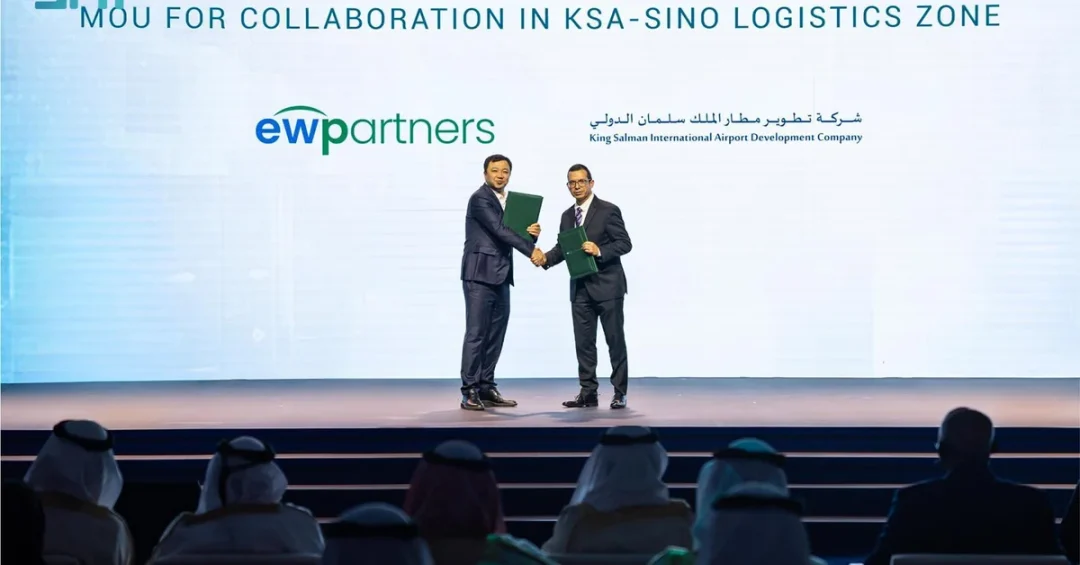
King Salman International Airport Development Company (KSIADC) announced on October 13, 2024, that it has signed a memorandum of understanding (MoU) with ewpartners, an international private equity firm, to explore the establishment of an e-commerce and logistics special economic zone within King Salman International Airport (KSIA) in Riyadh. The agreement, reported by the Saudi Press Agency (SPA), aims to strengthen Saudi Arabia’s position as a global logistics hub connecting Asia, Africa, and Europe, and aligns with the Kingdom’s Vision 2030 economic diversification goals.
This collaboration seeks to enhance growth and operational excellence in logistics, leveraging Saudi Arabia’s strategic geographic location and advanced infrastructure. The economic zone is one of several recently announced by the Ministry of Transport and Logistic Services to bolster supply chains and streamline trade and investment. The MoU represents a significant step in Saudi Arabia’s efforts to become a pivotal hub for air cargo movement and e-commerce in the region, furthering the objectives of Vision 2030 to transform the Kingdom into a global investment and logistics powerhouse.
Context and Background
Why is Saudi Arabia focusing on special economic zones as a key driver of its economic transformation? The establishment of special economic zones is a cornerstone of the Kingdom’s strategy to diversify its economy away from oil dependency, a central goal of Vision 2030. King Salman International Airport, currently under development, is poised to become one of the world’s largest airports, with a capacity to handle 120 million passengers and 3.5 million tons of cargo annually by 2050. The airport’s strategic location at the crossroads of three continents makes it an ideal hub for logistics and e-commerce, sectors that are rapidly growing globally.
The Ministry of Transport and Logistic Services has been actively promoting the creation of such zones to attract foreign investment, enhance trade connectivity, and create job opportunities for Saudi citizens. This MoU with ewpartners is part of a broader effort to integrate advanced technologies and international expertise into the Kingdom’s logistics infrastructure. By partnering with a firm experienced in cross-border investment and technology-driven solutions, KSIADC aims to accelerate the development of a world-class e-commerce and logistics ecosystem within the airport premises. The zone will focus on high-value goods, cold chain logistics, and e-commerce fulfillment, catering to the increasing demand for speedy delivery in the region.
How does this partnership fit into Saudi Arabia’s broader economic diversification goals? The e-commerce and logistics sector is a key pillar of the National Industrial Development and Logistics Program (NIDLP), one of the Vision 2030 realization programs. NIDLP aims to make Saudi Arabia a leading industrial power and logistics hub by 2030, contributing significantly to non-oil GDP. The special economic zone at KSIA will complement other initiatives such as the Saudi Logistics Hub strategy, which seeks to position the Kingdom as the top logistics hub in the Middle East. This MoU underscores the government’s commitment to creating a business-friendly environment that attracts global players and fosters innovation.
Key Details of the MoU
What exactly does the MoU between KSIADC and ewpartners entail? According to the SPA release, the memorandum of understanding outlines a framework for collaboration to explore the establishment of an e-commerce and logistics special economic zone within King Salman International Airport. The zone will leverage Saudi Arabia’s position as a global logistics hub linking three continents, aiming to improve logistical connections between China and Saudi Arabia and bolster regional and global distribution capabilities. The partnership will focus on enhancing logistics infrastructure, boosting efficiency, and creating new opportunities for economic growth.
Acting CEO of KSIADC Marco Mejia said: “This partnership marks a significant step in delivering on our vision to establish King Salman International Airport as a leading logistics hub serving regional and global logistics companies and supporting Saudi Arabia’s trade expansion. By joining forces with ewpartners, we are poised to enhance our logistics infrastructure, boost efficiency, and create new opportunities for economic growth in Saudi Arabia and the region.” His statement highlights the strategic importance of the collaboration in advancing the airport’s role as a catalyst for economic development.
Founder and Managing Partner of ewpartners Jerry Li added: “Saudi Arabia’s vision to establish this major logistics hub has been a cornerstone of ewpartners’ presence in the Kingdom. Our expertise in technology-driven solutions and cross-border investment, coupled with the strategic location of King Salman International Airport—positioned as a gateway between Asia, Africa, and Europe—will unlock immense potential for cross-border trade. This paves the way for new growth and innovation in the Kingdom’s logistics and e-commerce sectors.” Li’s comments reflect the mutual benefits anticipated from the partnership, particularly in harnessing technology to streamline supply chains and facilitate international trade.
How will the special economic zone operate within the airport’s ecosystem? The zone is expected to integrate advanced logistics technologies such as automation, artificial intelligence, and blockchain to enhance transparency and efficiency. It will offer incentives for businesses, including tax benefits and streamlined customs procedures, to attract global e-commerce giants and logistics providers. The proximity to the airport’s cargo terminals will enable rapid turnaround times for shipments, making Saudi Arabia a preferred destination for e-commerce fulfillment in the region. The zone will also serve as a platform for Saudi entrepreneurs and SMEs to access international markets, fostering local economic growth and job creation.
International and Regional Impact
What implications does this MoU have for global trade dynamics? The establishment of an e-commerce and logistics special economic zone at KSIA is set to enhance trade flows between Asia, Africa, and Europe, with a particular focus on strengthening connectivity with China. As the world’s largest e-commerce market, China presents significant opportunities for Saudi Arabia to become a key distribution hub for Chinese goods destined for the Middle East, Africa, and Europe. The partnership with ewpartners, which has strong ties to Asian markets, will facilitate Chinese investment and expertise in the zone, potentially attracting major e-commerce players like Alibaba and JD.com to set up operations in Saudi Arabia.
Regionally, the zone will bolster Saudi Arabia’s competitiveness against other logistics hubs in the Gulf, such as Dubai and Doha. By offering state-of-the-art infrastructure, efficient customs, and strategic location, KSIA aims to capture a larger share of the region’s rapidly growing e-commerce market, projected to reach $50 billion by 2025. The zone will also support Saudi Arabia’s efforts to become a bridge between the East and West, enhancing its geopolitical influence and economic resilience. Furthermore, it will create opportunities for collaboration with neighboring countries, potentially leading to integrated logistics networks that benefit the entire region.
Economic and Strategic Significance
Why is this MoU economically significant for Saudi Arabia? The e-commerce and logistics sector is a major contributor to non-oil GDP and job creation. According to Vision 2030 targets, the logistics sector is expected to contribute 10% of GDP by 2030, up from around 6% currently. The special economic zone at KSIA will attract foreign direct investment (FDI), foster innovation, and create thousands of jobs for Saudi nationals. It will also stimulate ancillary industries such as packaging, warehousing, and transportation, generating a multiplier effect across the economy.
Strategically, the zone reinforces Saudi Arabia’s position as a pivotal hub for air cargo movement, enhancing its role in global supply chains. With the airport’s planned capacity to handle 3.5 million tons of cargo annually, KSIA will be among the largest cargo airports in the world. The zone’s focus on e-commerce aligns with the global shift towards online shopping, which has accelerated post-pandemic. By capitalizing on this trend, Saudi Arabia can attract global e-commerce companies seeking a strategic base to serve the Middle East and beyond. The partnership with ewpartners also signals confidence in the Kingdom’s investment climate, potentially paving the way for further international collaborations.
Vision 2030 Alignment
How does this initiative align with Vision 2030? The MoU directly supports Vision 2030’s objectives of diversifying the economy, enhancing non-oil revenues, and transforming Saudi Arabia into a global logistics and investment hub. It contributes to the National Industrial Development and Logistics Program (NIDLP) and the Saudi Logistics Hub strategy, both of which aim to position the Kingdom as a leader in logistics and supply chain management. By developing a specialized e-commerce and logistics zone, Saudi Arabia is not only enhancing its infrastructure but also creating a conducive environment for innovation and entrepreneurship.
Moreover, the collaboration with ewpartners exemplifies the Vision 2030 goal of fostering international partnerships and attracting foreign expertise. It underscores the Kingdom’s commitment to leveraging its strategic location and advanced infrastructure to drive economic growth and diversification. As Saudi Arabia continues to invest in mega-projects like King Salman International Airport, it is steadily realizing its ambition to become a global powerhouse in logistics and trade, benefiting its citizens and contributing to regional prosperity.
20 Questions
Q1. What is the main purpose of the MoU signed between KSIADC and ewpartners?
A1. The MoU aims to explore the establishment of an e-commerce and logistics special economic zone within King Salman International Airport to enhance Saudi Arabia’s position as a global logistics hub and support Vision 2030.
Q2. When was the MoU signed?
A2. The MoU was announced on October 13, 2024, as reported by the Saudi Press Agency (SPA).
Q3. Who are the parties involved in the MoU?
A3. The parties are King Salman International Airport Development Company (KSIADC) and ewpartners, an international private equity firm.
Q4. What is King Salman International Airport (KSIA)?
A4. KSIA is a major airport under development in Riyadh, designed to become one of the world’s largest airports, with capacity for 120 million passengers and 3.5 million tons of cargo annually by 2050.
Q5. What is ewpartners known for?
A5. ewpartners is an international private equity firm recognized for strategic alliances and cross-border investment initiatives, with expertise in technology-driven solutions.
Q6. How does this MoU align with Saudi Vision 2030?
A6. It aligns with Vision 2030 by promoting economic diversification, enhancing non-oil GDP, and establishing Saudi Arabia as a global logistics and investment hub.
Q7. What benefits will the special economic zone bring to Saudi Arabia?
A7. The zone will attract foreign investment, create jobs, enhance logistics infrastructure, and boost trade connectivity, particularly between China and Saudi Arabia.
Q8. What did Marco Mejia, Acting CEO of KSIADC, say about the partnership?
A8. He stated that the partnership marks a significant step in establishing KSIA as a leading logistics hub, enhancing infrastructure and creating economic growth opportunities in Saudi Arabia and the region.
Q9. What did Jerry Li, Founder of ewpartners, say about the collaboration?
A9. He highlighted that Saudi Arabia’s vision for a major logistics hub has been central to ewpartners’ presence in the Kingdom, and the partnership will unlock potential for cross-border trade and innovation.
Q10. How will the zone improve logistical connections between China and Saudi Arabia?
A10. The zone will serve as a distribution center for Chinese goods destined for the Middle East, Africa, and Europe, leveraging ewpartners’ ties to Asian markets and KSIA’s strategic location.
Q11. What is the significance of the zone for regional trade?
A11. It will enhance Saudi Arabia’s competitiveness against other Gulf logistics hubs, capture a larger share of the growing e-commerce market, and foster integrated logistics networks in the region.
Q12. What sectors will the special economic zone focus on?
A12. It will focus on e-commerce fulfillment, high-value goods, cold chain logistics, and technology-driven logistics solutions.
Q13. How does the zone support Saudi Arabia’s economic diversification?
A13. By boosting the logistics sector’s contribution to non-oil GDP, attracting FDI, and creating job opportunities, the zone supports the goals of Vision 2030 and NIDLP.
Q14. What incentives will the zone offer to businesses?
A14. The zone is expected to offer tax benefits, streamlined customs procedures, and state-of-the-art infrastructure to attract global e-commerce and logistics companies.
Q15. What is the expected impact on job creation?
A15. The zone is expected to create thousands of jobs for Saudi nationals in logistics, technology, and related sectors, contributing to the Kingdom’s economic growth.
Q16. How does the MoU reflect Saudi Arabia’s investment climate?
A16. It demonstrates the Kingdom’s attractiveness to international investors and its commitment to fostering global partnerships, signaling confidence in Saudi Arabia’s economic reforms.
Q17. What role does the Ministry of Transport and Logistic Services play?
A17. The Ministry has announced several economic zones to strengthen supply chains and streamline trade, supporting the development of KSIA’s special economic zone.
Q18. What are the long-term goals for KSIA?
A18. KSIA aims to become a global logistics hub, handling 3.5 million tons of cargo annually and serving as a gateway between Asia, Africa, and Europe.
Q19. How does this initiative benefit Saudi entrepreneurs and SMEs?
A19. The zone will provide access to international markets and logistics infrastructure, enabling SMEs to scale and integrate into global supply chains.
Q20. What is the next step after the MoU?
A20. Following the MoU, KSIADC and ewpartners will conduct feasibility studies and develop a framework for the establishment of the special economic zone, with further announcements expected.
Reader Feedback
We value your thoughts. Please share your feedback on this article.
Your feedback helps us improve our coverage.
Related articles
 GCC Expansion Key Focus for Global Countries: Albudaiwi
 GEA and SDB Partner to Empower Cottage Industry During Riyadh Season
 Madinah Buildex 2024 Sees Widespread Attendance
 PIF Launches sarcc to Transform Staff Accommodation in Saudi
 ADF Joins 41st Saudi Agriculture Exhibition in Riyadh
 Saudi Industry Minister Concludes Official Visit to Spain