


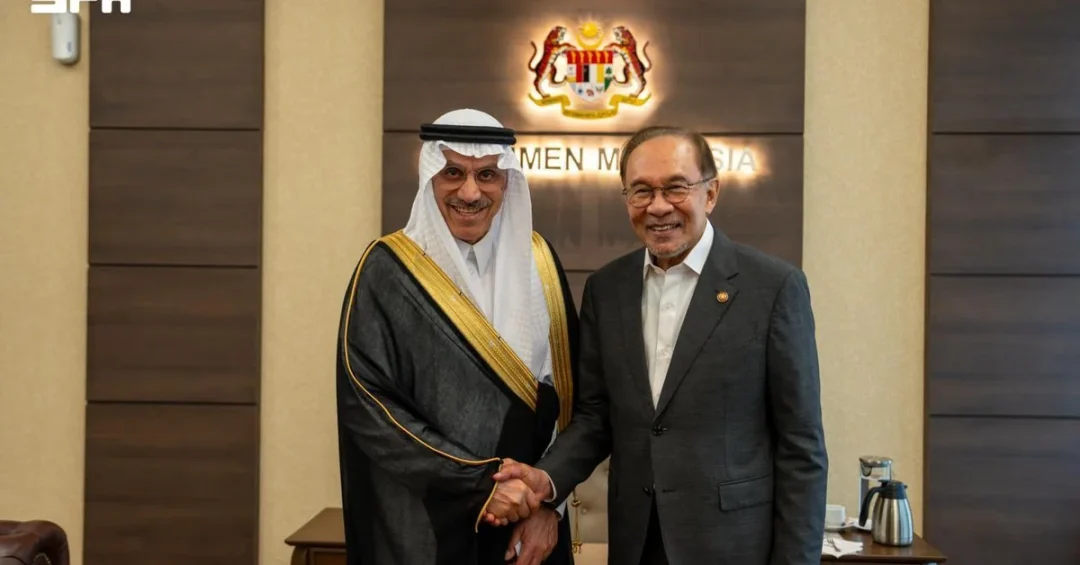
The Prime Minister and Finance Minister of Malaysia, Dato’ Seri Anwar Ibrahim, met with the Chairman of the Islamic Development Bank (IsDB) Group, Dr. Muhammad Al Jasser, in Jeddah to reaffirm a long-standing strategic partnership and to chart new pathways for supporting small and medium-sized enterprises, entrepreneurship, and private sector growth across the Islamic world. The meeting, reported by the Saudi Press Agency (SPA), underscored the shared determination of Malaysia and the Jeddah-based multilateral lender to advance inclusive economic development, particularly among countries of the Global South. Both leaders emphasized that mobilizing innovative financing and deepening cooperation are essential to unlocking the potential of entrepreneurs who form the backbone of economies in member states.
Why does this meeting matter at a time when global economic headwinds are testing the resilience of emerging markets? The answer lies in the scale and reach of the IsDB, which operates as the premier development finance institution of the Islamic world, and in Malaysia’s proven track record as a hub for Islamic finance and SME-driven growth. Together, they represent a powerful combination of capital, expertise, and policy alignment that can accelerate job creation and sustainable development. The discussions in Jeddah signal a renewed push to translate longstanding ties into tangible outcomes for entrepreneurs, especially in economies where access to finance remains a critical bottleneck.
Context and Background
What makes the Malaysia–IsDB relationship a cornerstone of South-South cooperation? Established in 1975 and headquartered in Jeddah, the Islamic Development Bank Group has grown into a multifaceted institution comprising the IsDB, the Islamic Corporation for the Development of the Private Sector (ICD), the International Islamic Trade Finance Corporation (ITFC), and other entities. It serves 57 member countries and Muslim communities worldwide, with a mandate to foster economic development and social progress in accordance with Islamic finance principles. Malaysia, a founding member and a global leader in Islamic banking and sukuk issuance, has long been a strategic partner in advancing the bank’s mission.
Over the decades, the partnership has yielded numerous initiatives, from trade financing to infrastructure projects and capacity-building programs. Malaysia’s own development trajectory, which transformed it from a commodity-dependent economy into a diversified, innovation-driven nation, offers a compelling model for other IsDB member states. Its vibrant SME sector, supported by a robust Islamic finance ecosystem, has been a key engine of that transformation. The meeting in Jeddah therefore builds on a solid foundation, seeking to scale up what has already worked and to adapt to new economic realities, including digitalization, climate finance, and the need for more resilient supply chains.
Why focus on entrepreneurship and SMEs now? Across the developing world, small and medium-sized enterprises account for the majority of employment and contribute significantly to GDP, yet they often struggle to access affordable credit and technical support. The IsDB has made private sector development a strategic priority, recognizing that sustainable growth cannot be achieved through public spending alone. Malaysia’s experience in creating an enabling environment for SMEs, through targeted financing schemes, incubation programs, and regulatory reforms, provides valuable lessons that can be shared with other member countries. The Jeddah meeting thus positions both partners at the forefront of a renewed effort to empower entrepreneurs as agents of inclusive growth.
Key Details of the Jeddah Meeting
What exactly was discussed behind closed doors in Jeddah? According to the Saudi Press Agency, Prime Minister Anwar Ibrahim and Chairman Dr. Muhammad Al Jasser focused on practical ways to strengthen support for small and medium-sized enterprises, encourage entrepreneurship and job creation, and expand private sector development. The conversation also touched on deepening cooperation among countries of the Global South, mobilizing innovative financing instruments, and reinforcing the Malaysia–IsDB partnership to advance comprehensive and sustainable development. The tone was forward-looking, with both sides reaffirming their commitment to concrete action.
The meeting highlighted the IsDB’s role as a catalyst for private sector growth through its specialized windows, such as the Islamic Corporation for the Development of the Private Sector, which provides financing and advisory services to SMEs in member countries. Malaysia, for its part, brought to the table its expertise in Islamic capital markets, its network of development financial institutions, and its experience in fostering entrepreneurial ecosystems. The discussion likely explored co-financing opportunities, technical assistance programs, and knowledge exchange platforms that could be replicated in other IsDB member states. While specific agreements were not announced, the reaffirmation of shared goals sets the stage for follow-up technical meetings and potential new initiatives.
The timing of the meeting is significant. It comes as many developing economies grapple with tightening global financial conditions, rising debt burdens, and the lingering effects of the COVID-19 pandemic. In this environment, innovative financing models—such as blended finance, sukuk, and public-private partnerships—are increasingly vital. Both Malaysia and the IsDB have been pioneers in these areas. Malaysia is the world’s largest issuer of sukuk, and the IsDB has been instrumental in promoting Islamic finance as a tool for development. Their collaboration could therefore accelerate the deployment of Shariah-compliant capital to underserved entrepreneurs, creating a multiplier effect across the Islamic world.
International and Regional Impact
How will this meeting resonate beyond Malaysia and Saudi Arabia? The IsDB’s membership spans Africa, Asia, the Middle East, and beyond, meaning that any successful model for SME support can be adapted across diverse contexts. By joining forces, Malaysia and the IsDB are signaling that South-South cooperation is not merely a rhetorical device but a practical framework for solving shared challenges. For African member countries, in particular, the partnership could open doors to Malaysian expertise in halal industry development, agro-processing, and digital entrepreneurship—sectors where SMEs can thrive with the right support.
Moreover, the emphasis on mobilizing innovative financing aligns with broader global efforts to reform the international financial architecture and to channel more resources toward sustainable development. The IsDB has been actively issuing green and sustainability sukuk, and Malaysia has been a key player in this market. Their collaboration could help scale up climate-smart investments and support entrepreneurs working on renewable energy, sustainable agriculture, and circular economy solutions. In a world where official development assistance is under pressure, such partnerships offer a viable path to leveraging private capital for public good.
Regionally, the meeting reinforces Saudi Arabia’s position as a convening power and a bridge between Asia and the Middle East. Jeddah, the historic gateway to the Two Holy Mosques, continues to host high-level dialogues that shape economic cooperation across the Islamic world. The fact that Prime Minister Anwar Ibrahim chose to meet Chairman Al Jasser in Jeddah underscores the Kingdom’s centrality in multilateral development finance. It also highlights the strong bilateral ties between Saudi Arabia and Malaysia, which have been deepening in recent years across trade, investment, and cultural exchange.
Economic and Strategic Significance
Why should global investors and policymakers pay attention to this development? The Malaysia–IsDB partnership has the potential to unlock significant economic value by addressing the financing gap that constrains SME growth. According to various estimates, the global SME finance gap runs into trillions of dollars, with Islamic finance representing a relatively small but rapidly growing share. By scaling up Shariah-compliant financing, the two partners can tap into a pool of investors seeking ethical, impact-oriented opportunities. This is particularly relevant for Gulf investors, who are increasingly looking to diversify their portfolios and support sustainable development in Muslim-majority countries.
For Malaysia, deeper engagement with the IsDB offers a strategic avenue to expand its economic footprint in the Middle East and Africa, regions where demand for halal products, Islamic financial services, and infrastructure solutions is rising. Malaysian companies, many of them SMEs, can benefit from IsDB-facilitated trade finance and investment guarantees, helping them to export and invest abroad. For the IsDB, partnering with Malaysia means gaining access to a proven ecosystem of Islamic finance institutions, talent, and innovation. The synergy is clear: Malaysia provides the know-how and market linkages; the IsDB provides the capital and convening power.
From a strategic perspective, the meeting also advances the cause of economic diplomacy. It strengthens the ties between Malaysia and the broader Gulf region, with Saudi Arabia playing a pivotal role as the host of the IsDB and a leader in Vision 2030. As Saudi Arabia transforms its own economy through Vision 2030, it is simultaneously positioning itself as a hub for regional headquarters, Islamic finance, and sustainable development. The Kingdom’s support for the IsDB’s mission is consistent with its own goals of economic diversification and global engagement. The meeting in Jeddah thus serves as a microcosm of a larger trend: the Islamic world is increasingly looking inward and outward simultaneously—building stronger South-South links while engaging with global markets.
Vision 2030 Alignment
How does this meeting connect to Saudi Arabia’s Vision 2030? At its core, Vision 2030 seeks to diversify the Kingdom’s economy, empower the private sector, and create a vibrant society. The IsDB, headquartered in Jeddah, is a key partner in these efforts. Under the leadership of Chairman Dr. Muhammad Al Jasser, the bank has aligned its strategy with the Sustainable Development Goals and the aspirations of member countries. By promoting entrepreneurship and SME development, the IsDB contributes directly to job creation and economic resilience—objectives that are central to Vision 2030. The Kingdom’s support for the bank’s initiatives, including its role in mobilizing innovative financing, reflects Saudi Arabia’s commitment to being a catalyst for development across the Islamic world.
Furthermore, the meeting underscores the importance of international cooperation in achieving the ambitious targets of Vision 2030. Saudi Arabia is not only transforming its domestic economy but also leveraging its position as a G20 member and a major donor to foster global stability and prosperity. The partnership between Malaysia and the IsDB, facilitated by the Kingdom’s hospitality and institutional support, exemplifies how Saudi Arabia is building bridges between nations and promoting inclusive growth. As the Kingdom continues its own journey of modernization, it remains dedicated to empowering entrepreneurs and SMEs, both at home and abroad, as engines of sustainable development.
In conclusion, the Jeddah meeting between Prime Minister Anwar Ibrahim and Chairman Dr. Muhammad Al Jasser represents more than a diplomatic courtesy; it is a strategic convergence of interests and values. It reaffirms the enduring partnership between Malaysia and the IsDB, and it sets a clear direction for future collaboration in supporting entrepreneurs, mobilizing finance, and advancing the Global South. For Saudi Arabia, it is another example of how the Kingdom, through Vision 2030, is playing a leading role in shaping a more prosperous and interconnected world. The road ahead will require sustained effort, but the foundation laid in Jeddah is solid, and the commitment on both sides is unmistakable.
20 Questions
Q1. Who met in Jeddah to discuss entrepreneurship and SME support?
A1. Malaysian Prime Minister and Finance Minister Dato’ Seri Anwar Ibrahim met with Chairman of the Islamic Development Bank (IsDB) Group, Dr. Muhammad Al Jasser, in Jeddah to discuss strengthening support for SMEs and entrepreneurship.
Q2. What is the Islamic Development Bank Group?
A2. The IsDB Group is a multilateral development finance institution headquartered in Jeddah, Saudi Arabia. It serves 57 member countries and Muslim communities worldwide, promoting economic development and social progress through Islamic finance.
Q3. Why is Malaysia considered a strategic partner of the IsDB?
A3. Malaysia is a founding member of the IsDB and a global leader in Islamic finance, with a dynamic SME sector. Its expertise in sukuk issuance and Islamic banking complements the IsDB’s development mandate.
Q4. What specific topics were discussed at the meeting?
A4. The two leaders discussed ways to strengthen support for small and medium-sized enterprises, encourage entrepreneurship and job creation, expand private sector development, and deepen cooperation among Global South countries through innovative financing.
Q5. What does ‘Global South’ mean in this context?
A5. The Global South refers to developing countries in Africa, Asia, Latin America, and the Middle East. The IsDB and Malaysia aim to enhance South-South cooperation to foster mutual economic growth and sustainable development.
Q6. How does the IsDB support SMEs in member countries?
A6. The IsDB supports SMEs through its specialized entities like the Islamic Corporation for the Development of the Private Sector (ICD), which provides financing, advisory services, and capacity-building programs to entrepreneurs.
Q7. What are innovative financing instruments mentioned?
A7. Innovative financing includes blended finance, sukuk (Islamic bonds), public-private partnerships, and green sukuk. These tools help mobilize private capital for development projects and SMEs.
Q8. How does Malaysia’s experience benefit other IsDB member states?
A8. Malaysia’s successful transformation into a diversified economy, driven by SMEs and Islamic finance, offers a replicable model. Its expertise in halal industries, digital entrepreneurship, and financial inclusion can be shared with other member countries.
Q9. What is the significance of the meeting taking place in Jeddah?
A9. Jeddah is the headquarters of the IsDB and a historic gateway to the Two Holy Mosques. Hosting the meeting underscores Saudi Arabia’s role as a convening power and its centrality in multilateral development finance.
Q10. How does this partnership align with Saudi Vision 2030?
A10. Vision 2030 aims to diversify Saudi Arabia’s economy, empower the private sector, and promote sustainable development. The IsDB’s mission to support entrepreneurship and SMEs directly contributes to these objectives.
Q11. What role does Saudi Arabia play in the IsDB?
A11. Saudi Arabia is a founding member and the largest shareholder of the IsDB. The Kingdom hosts its headquarters in Jeddah and actively supports its initiatives to promote economic development across the Islamic world.
Q12. What are the expected outcomes of the meeting?
A12. While no specific agreements were announced, the meeting reaffirmed shared commitments and is expected to lead to follow-up technical discussions, potential co-financing initiatives, and knowledge exchange programs.
Q13. How can SMEs contribute to job creation?
A13. SMEs are major employers worldwide, especially in developing countries. By providing access to finance, markets, and skills, SMEs can grow and create jobs, driving inclusive economic growth.
Q14. What is the role of Islamic finance in SME development?
A14. Islamic finance offers Shariah-compliant funding options like Murabaha, Musharakah, and sukuk, which can be tailored to SME needs. It promotes risk-sharing and asset-backed financing, fostering financial inclusion.
Q15. How does the IsDB engage with the private sector?
A15. The IsDB engages the private sector through the ICD, the ITFC, and other windows that provide trade finance, investment guarantees, and direct equity to private enterprises in member countries.
Q16. What is the significance of South-South cooperation?
A16. South-South cooperation enables developing countries to share knowledge, technology, and resources, reducing reliance on traditional donors and fostering self-reliant, sustainable development pathways.
Q17. How does Malaysia’s sukuk market support infrastructure and SMEs?
A17. Malaysia is the world’s largest sukuk issuer. Sukuk proceeds fund infrastructure projects and SME financing, providing long-term, Shariah-compliant capital for development.
Q18. What challenges do SMEs face in accessing finance?
A18. SMEs often lack collateral, credit history, and scale, making banks reluctant to lend. Innovative financing and credit guarantees can bridge this gap and unlock their potential.
Q19. How can international organizations like the IsDB foster entrepreneurship?
A19. The IsDB fosters entrepreneurship through financing, capacity building, policy advice, and creating networks that connect entrepreneurs to markets and investors across member countries.
Q20. What is the broader vision for Malaysia-IsDB collaboration?
A20. The vision is to deepen a strategic partnership that mobilizes innovative financing, supports SMEs and entrepreneurship, and advances comprehensive sustainable development across the Global South, in line with Saudi Vision 2030.
Reader Feedback
We value your thoughts. Please share your feedback on this article.
Your feedback helps us improve our coverage.