


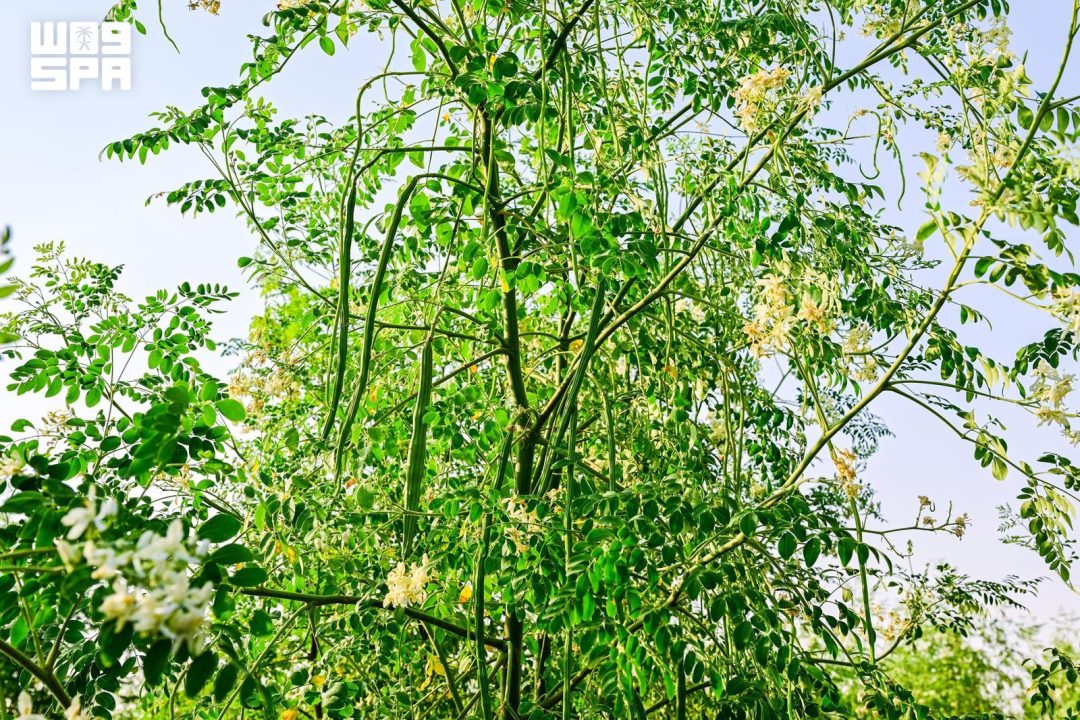
A 50,000-square-meter farm in Hail now hosts more than 30,000 moringa trees, ranging from five to 14 meters in height. These include around 13 varieties, such as Moringa peregrina and Moringa oleifera.
According to SPA, Dr. Abdulaziz Al-Obaida, Chairman of the Board of Directors of the Association Cooperative for Moringa in Hail, began cultivating the tree more than 10 years ago.
The moringa tree is noted for its ability to withstand drought, water scarcity, and harsh climates, making it suitable for semi-desert and desert environments. Its rapid growth and diverse uses contribute to its environmental, economic, and nutritional value.
The tree provides proteins, minerals, and vitamins, with applications in traditional medicine, cosmetics, and food. While seeds are used for oil production, the green pods, flowers, and leaves can be processed into powder after drying.
Al-Obaida stated that favorable environmental conditions in Hail make leafy varieties promising for economic opportunities in dry regions.
What are the characteristics of the moringa farm in Hail? The farm covers 50,000 square meters and contains more than 30,000 moringa trees. These trees range in height from five to 14 meters and consist of approximately 13 different varieties, including Moringa oleifera and Moringa peregrina.
Why is moringa suitable for cultivation in desert regions? Moringa is well-suited for desert and semi-desert environments because it can withstand water scarcity, drought, and harsh climates. Additionally, the tree is characterized by its rapid growth and diverse applications.
What are the nutritional and commercial uses of the moringa tree? Moringa contains proteins, vitamins, and minerals, and is used in food, cosmetics, and traditional medicine. Its seeds are used to produce oil, while the flowers, leaves, and green pods are dried and processed into nutrient-rich powder.