


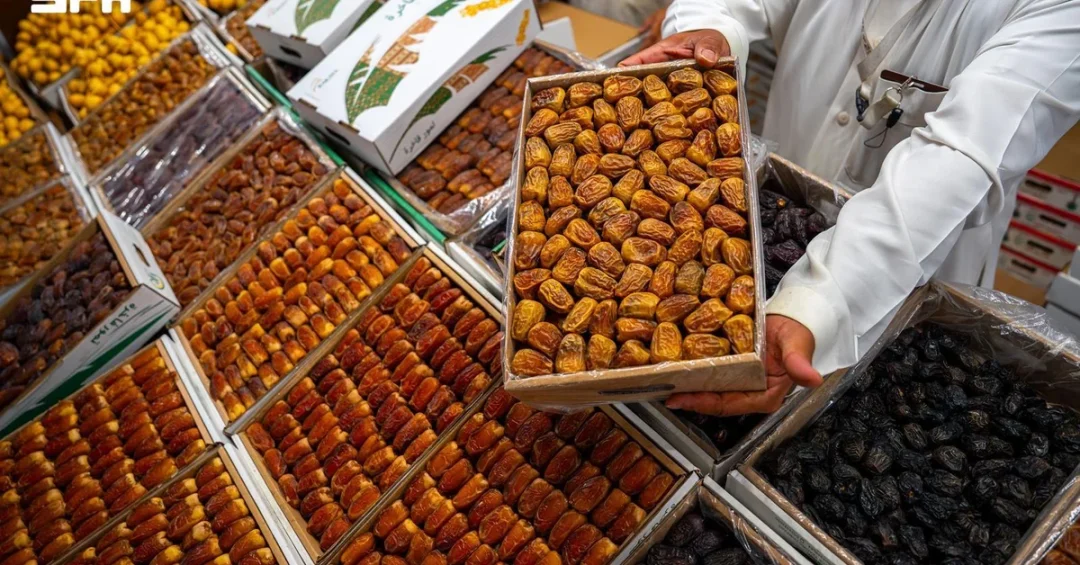
The 2026 Dates Season will open on Saturday, August 15, at Al-Rabwa Markets in Riyadh, running through September 28, under the organization of the National Company for Agricultural Services (AgriServ), according to an official announcement carried by the Saudi Press Agency (SPA). The annual event is designed to support local farmers and exhibitors, stimulate sales and purchasing activity across the date sector, and showcase the quality and diversity of Saudi dates to consumers and traders alike.
The Riyadh Dates Season has become a fixture on the Kingdom’s agricultural calendar, drawing growers, processors, retailers, and international buyers to the capital for more than six weeks of trading and promotion. This year’s edition arrives as Saudi Arabia continues to expand its agricultural output, strengthen food security, and position its flagship date varieties — including Sukkari, Ajwa, Khalas, and Safri — in premium export markets. For visitors to Al-Rabwa Markets, the season offers a direct window into a harvest that carries centuries of heritage and now supports a rapidly modernizing national economy. But what makes this particular season so significant for the Kingdom’s farming communities and its broader economic ambitions?
Context and Background
Why has the date palm occupied such a central place in Saudi identity and livelihood for generations? Cultivated in the Arabian Peninsula for thousands of years, the date palm has long served as a source of nutrition, shade, building material, and cultural symbolism across the region. Saudi Arabia is today among the world’s leading producers and exporters of dates, with millions of palms spread across the Kingdom’s oases, from Al-Ahsa in the Eastern Province to the highlands of Al-Baha and the farms surrounding Riyadh. The crop is woven into Saudi hospitality, religious tradition, and daily life, and it remains a vital source of income for thousands of farming families.
In recent years, the Kingdom has moved decisively to modernize the sector. Government agencies, agricultural cooperatives, and private companies have invested in irrigation efficiency, cold-chain logistics, packaging standards, and marketing infrastructure. The Riyadh Dates Season, organized by AgriServ, sits at the intersection of these efforts: it is both a marketplace and a showcase, giving small and medium-sized producers access to buyers they might otherwise never reach while presenting the sector’s technological and quality advances to a national audience. The event also reflects a broader push to shorten the distance between farm and consumer, a priority that has gained urgency as Saudi Arabia pursues greater self-reliance in food production.
Al-Rabwa Markets, located in the capital, provide a strategic venue. Riyadh is the Kingdom’s largest consumer market and a logistical hub connected by modern highways and air freight links to the Gulf, Asia, and Europe. Hosting the season in the capital allows producers from different regions to converge in one place, compare varieties, negotiate contracts, and learn from one another. For international observers, the event is a useful barometer of how quickly Saudi agriculture is professionalizing — and of how seriously the Kingdom takes its date industry as an economic and cultural asset.
Key Details of the 2026 Season
What should visitors, traders, and farmers expect from this year’s edition? According to the official announcement, the 2026 Dates Season begins on Saturday at Al-Rabwa Markets in Riyadh and continues through September 28, giving participants roughly six weeks of continuous activity. The season is organized by the National Company for Agricultural Services, known as AgriServ, a body tasked with supporting local farmers and exhibitors and with stimulating sales and purchasing activity in the sector through a range of activities and events.
The organizing company has framed the season as part of its ongoing efforts to strengthen the marketing of Saudi dates and to showcase their quality and diversity. That mission translates into practical support for producers: dedicated exhibition space, direct access to wholesale and retail buyers, and promotional programming that highlights different regional varieties. For farmers, the season offers a rare opportunity to sell at scale without relying solely on intermediaries, while for processors and exporters it provides a concentrated pool of raw material and finished product across multiple grades.
The timing of the season is closely tied to the harvest cycle. Date varieties ripen at different points through the late summer and early autumn, and the August-to-September window captures the peak of availability for many of the Kingdom’s most prized cultivars. Buyers attending the season can therefore assess freshness, uniformity, and packaging quality across a wide range of products, from fresh dates to processed pastes, syrups, and confectionery ingredients. This concentration of supply and demand in one venue is precisely what makes the season commercially useful, and it explains why the event has grown in prominence since its early editions.
International and Regional Impact
How does a domestic dates market in Riyadh resonate beyond the Kingdom’s borders? Saudi dates already travel widely. The Kingdom exports to markets across the Gulf Cooperation Council, the broader Middle East, South and Southeast Asia, Europe, and North America, where demand for natural sweeteners and premium dried fruit continues to rise. Events such as the Riyadh Dates Season help consolidate that trade by allowing foreign buyers to inspect product directly, meet producers face to face, and negotiate in a single location. For importing companies, the season functions as a one-stop sourcing opportunity.
Regionally, the event reinforces Saudi Arabia’s position as a leader in date production and marketing at a time when food security has become a top priority for governments across the Middle East. The Kingdom’s investments in agricultural technology, water management, and logistics are watched closely by neighboring states pursuing similar goals. By hosting a well-organized, professionally run season, Riyadh signals that its agricultural sector is not only productive but also commercially sophisticated — an important message as Gulf economies diversify away from hydrocarbons and seek new sources of non-oil export revenue.
Economic and Strategic Significance
Why does the date sector matter so much to Saudi Arabia’s economic plans? Dates represent one of the Kingdom’s most recognizable non-oil exports and one of its most employment-intensive agricultural industries. The value chain extends from cultivation and harvesting to processing, packaging, branding, retail, and export logistics, supporting jobs in rural areas where alternative employment can be limited. Strengthening this chain is therefore both an economic and a social objective, aligning with national efforts to broaden the economy and create opportunities outside major cities.
The Riyadh Dates Season contributes directly to that agenda by stimulating sales and purchasing activity, as the official announcement notes. When producers can sell more of their harvest at fair prices, they are better able to reinvest in their farms, adopt better practices, and plan for future seasons. Buyers, meanwhile, benefit from greater supply reliability and product consistency, which in turn supports the reputation of Saudi dates in international markets. Over time, this virtuous cycle raises standards across the sector and increases the share of value captured domestically rather than lost to inefficient intermediation.
There is also a strategic dimension tied to food security. Saudi Arabia has made clear that it intends to strengthen domestic production of key foods while maintaining robust import channels. Dates are a crop in which the Kingdom holds a genuine comparative advantage, thanks to its climate, heritage varieties, and accumulated expertise. Supporting the sector through events like this season is therefore consistent with a broader national strategy of leveraging agricultural strengths while managing scarce resources such as water with increasing care and technology.
Vision 2030 Alignment
How does a six-week dates market in Riyadh connect to Saudi Arabia’s long-term transformation? Vision 2030, the Kingdom’s national reform program, seeks to diversify the economy, develop non-oil sectors, empower small businesses, and improve quality of life. Agriculture sits within that framework as a sector with deep rural linkages and export potential. The Riyadh Dates Season advances these goals by giving local farmers and exhibitors a professional platform, encouraging entrepreneurship in processing and packaging, and raising the international profile of Saudi agricultural products.
The event also supports the Vision’s emphasis on national pride and cultural heritage. Dates are a symbol of Saudi hospitality and identity, and promoting them abroad is a form of cultural diplomacy as much as commerce. Each season strengthens the connection between the Kingdom’s traditions and its modern economy, showing that heritage and progress can advance together. As the 2026 season opens on Saturday at Al-Rabwa Markets and runs through September 28, it offers farmers, traders, and visitors a tangible example of how Vision 2030 is being translated into everyday economic activity — and a reminder that Saudi Arabia’s oldest crop remains one of its most promising.
20 Questions
Q1. When does the 2026 Riyadh Dates Season begin and end?
A1. It begins on Saturday, August 15, 2026, at Al-Rabwa Markets in Riyadh and runs through September 28, 2026, according to the official announcement carried by the Saudi Press Agency.
Q2. Where is the Riyadh Dates Season held?
A2. The season takes place at Al-Rabwa Markets in Riyadh, the Kingdom’s capital and largest consumer market, which provides a central and accessible venue for farmers, traders, and visitors.
Q3. Which organization is responsible for organizing the season?
A3. The National Company for Agricultural Services, known as AgriServ, organizes the season as part of its ongoing efforts to support local farmers and strengthen the marketing of Saudi dates.
Q4. What are the main goals of the Riyadh Dates Season?
A4. Its goals include supporting local farmers and exhibitors, stimulating sales and purchasing activity in the date sector, and showcasing the quality and diversity of locally produced Saudi dates to a wide audience.
Q5. Why are dates important to Saudi Arabia’s economy?
A5. Dates are one of the Kingdom’s most recognizable non-oil exports, supporting jobs across cultivation, processing, packaging, and logistics, and contributing to rural incomes and national economic diversification efforts.
Q6. How does the season help local farmers?
A6. It gives farmers direct access to wholesale and retail buyers, exhibition space, and promotional support, allowing them to sell at scale and reduce reliance on intermediaries while earning fairer returns.
Q7. Which Saudi date varieties are best known internationally?
A7. Sukkari, Ajwa, Khalas, and Safri are among the most recognized Saudi varieties, prized for their flavor, texture, and quality, and increasingly sought after in premium export markets worldwide.
Q8. How long does the 2026 season last?
A8. The season runs for approximately six weeks, from its opening on Saturday through September 28, providing an extended window for trading, promotion, and visitor engagement at Al-Rabwa Markets.
Q9. What kinds of products can buyers find at the season?
A9. Buyers can find fresh dates of multiple varieties as well as processed products such as date pastes, syrups, and confectionery ingredients, reflecting the growing sophistication of the Kingdom’s date-processing industry.
Q10. Why is the timing of the season significant?
A10. The August-to-September window coincides with the peak ripening period for many Saudi date varieties, ensuring that buyers can assess fresh, high-quality products across a wide range of cultivars.
Q11. How does the season support Saudi food security goals?
A11. By strengthening a crop in which the Kingdom holds a comparative advantage, the season helps boost domestic production and marketing while complementing national efforts to maintain reliable food supplies.
Q12. What role does Riyadh play as a venue for the season?
A12. Riyadh offers the Kingdom’s largest consumer base and strong transport links by road and air, making it an ideal hub for producers from different regions to converge and trade.
Q13. How does the event benefit international buyers?
A13. International buyers can inspect products directly, meet producers face to face, compare varieties and grades, and negotiate contracts in a single location, making sourcing more efficient and reliable.
Q14. Which regions of Saudi Arabia produce dates?
A14. Date palms are cultivated across the Kingdom, including Al-Ahsa in the Eastern Province, Al-Baha, Al-Qassim, Madinah, and farms surrounding Riyadh, each producing distinctive varieties.
Q15. How does the season reflect Vision 2030?
A15. It advances Vision 2030 by diversifying the economy, supporting small businesses and rural livelihoods, promoting non-oil exports, and celebrating Saudi cultural heritage on a modern commercial platform.
Q16. What economic activity does the season stimulate?
A16. The season stimulates sales and purchasing activity across the date value chain, from farm-gate transactions to processing, packaging, retail, and export deals, benefiting multiple linked industries.
Q17. Are there opportunities for small and medium-sized producers?
A17. Yes. The season is designed to give small and medium-sized producers a professional platform to reach larger buyers, learn best practices, and grow their businesses within the national market.
Q18. How does the event promote Saudi dates abroad?
A18. By concentrating high-quality products and producers in one venue, the season raises the international profile of Saudi dates and supports export marketing to the Gulf, Asia, Europe, and North America.
Q19. What does AgriServ aim to achieve through the season?
A19. AgriServ aims to strengthen the marketing of Saudi dates, showcase their quality and diversity, support farmers and exhibitors, and stimulate commercial activity throughout the sector.
Q20. What is the broader significance of the Riyadh Dates Season?
A20. It demonstrates how Saudi Arabia’s agricultural heritage and modern economic ambitions can advance together, supporting farmers, exports, and Vision 2030 goals while celebrating a crop central to national identity.
Reader Feedback
We value your thoughts. Please share your feedback on this article.
Your feedback helps us improve our coverage.
Related articles
 South Africa Unemployment Rises to 33.6% in Q2 2026
 Czech Inflation Rises to 1.7% in July on Fuel Costs
 Saudi Arabia Signs Two Agreements to Localize Industry and Transfer Knowledge
 Al-Baha Chamber Hosts Workshop on Labor Rights and Duties
 Netherlands Inflation Rises to 3.2% in July, CBS Data Shows
 European Shares Rise on Energy Gains as Oil Prices Climb