


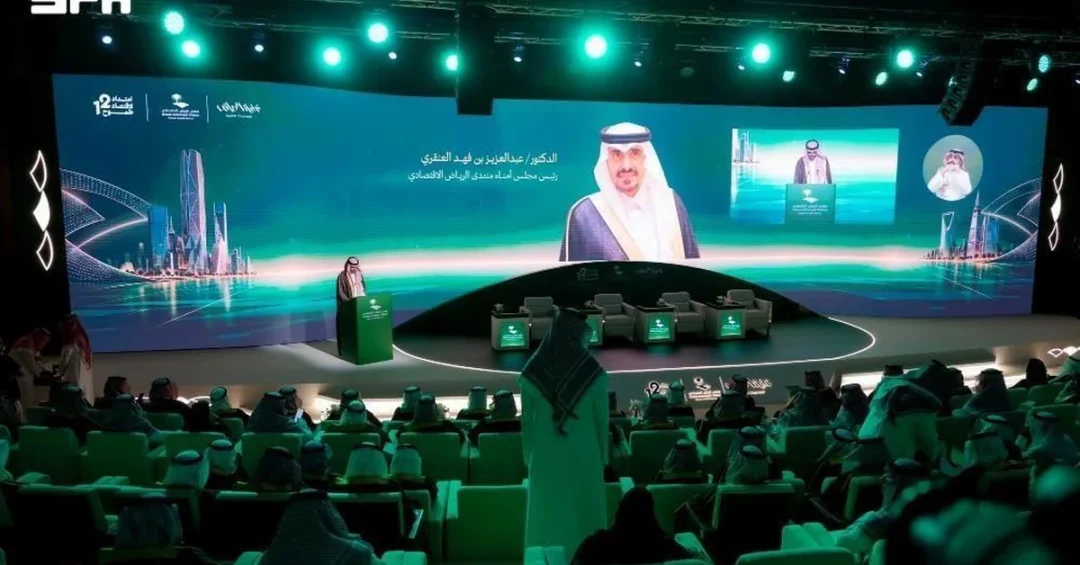
The 12th edition of the Riyadh Economic Forum concluded with the announcement of 33 strategic recommendations derived from five in-depth studies, marking another milestone in the Kingdom of Saudi Arabia’s ongoing effort to strengthen its national economic system. Held under the patronage of Custodian of the Two Holy Mosques King Salman bin Abdulaziz Al Saud, the forum brought together prominent economic experts, academics, representatives of the public and private sectors, and individuals interested in development and economic affairs, according to the Saudi Press Agency.
The recommendations were unveiled on the forum’s closing day and are designed to deliver practical solutions and forward-looking visions that enhance the efficiency of the national economic system. Could any gathering of this scale, drawing together the brightest minds from across sectors, fail to produce meaningful outcomes for a nation determined to secure its economic future? The answer, as the forum demonstrated, is a resounding no — the breadth of participation and the depth of the studies discussed reflect a deliberate, structured approach to policymaking that has become a hallmark of the Kingdom’s modernization journey.
Context and Background
What makes the Riyadh Economic Forum such a consequential fixture on the Kingdom’s calendar? For more than two decades, the forum has served as one of Saudi Arabia’s most important platforms for economic dialogue, bringing together decision-makers, researchers, and business leaders to examine the challenges and opportunities shaping the national economy. The 12th edition continued that tradition, with five in-depth studies forming the intellectual backbone of the deliberations and ultimately yielding the 33 recommendations announced at the close of proceedings.
The forum’s ability to convene such a diverse cross-section of society — from government officials and academics to private-sector executives and development specialists — speaks to a broader philosophy that has guided Saudi economic policy in recent years: that sustainable growth depends on inclusive, evidence-based planning. Rather than relying on isolated expert opinions, the forum model aggregates research and stakeholder input into a coherent set of actionable proposals. This approach ensures that recommendations carry both analytical rigor and practical relevance, two qualities essential to implementation in a rapidly evolving economic landscape.
Under the patronage of King Salman, the forum also underscores the continuity of leadership attention to economic affairs at the highest level. Such patronage is not merely ceremonial; it signals that the outcomes of the forum are intended to inform real policy discussions and contribute to the national development agenda. For international observers, this level of institutional commitment offers a window into how Saudi Arabia approaches economic governance — methodically, collaboratively, and with a long-term horizon in mind.
Key Details of the 33 Recommendations
What exactly do the 33 recommendations cover, and why do they matter? According to the Saudi Press Agency, the recommendations emerged from five distinct studies discussed during the forum, each addressing a different dimension of the national economic system. While the full text of each recommendation is expected to be examined by relevant stakeholders in the coming months, the structure of the output — 33 recommendations from five studies — indicates a comprehensive rather than piecemeal approach. The aim is to develop practical solutions and forward-looking visions, language that suggests the forum was as concerned with anticipating future challenges as it was with addressing present ones.
The emphasis on enhancing the efficiency of the national economic system places these recommendations squarely within the broader context of Saudi Arabia’s economic transformation. Efficiency, in this context, encompasses everything from regulatory streamlining and resource allocation to human capital development and technological adoption. The forum’s multi-study format allowed participants to explore these interconnected themes in depth, ensuring that recommendations are not siloed but rather designed to reinforce one another.
It is also worth noting the caliber of participants. The presence of prominent economic experts and academics alongside public and private sector representatives meant that discussions benefited from both theoretical insight and operational experience. This blend is critical in translating ideas into implementable strategies. The forum’s closing day announcement thus represents not just a list of proposals but a distillation of collective expertise, refined through debate and analysis over the course of the event.
International and Regional Impact
How will the outcomes of the Riyadh Economic Forum resonate beyond the Kingdom’s borders? As one of the largest economies in the Middle East and a member of the G20, Saudi Arabia’s economic policies carry significant weight regionally and globally. The forum’s recommendations, once implemented, could influence trade flows, investment patterns, and regulatory practices that affect international partners. For foreign investors and multinational corporations, the forum provides a signal of the Kingdom’s policy direction, helping them align their strategies with emerging opportunities.
Moreover, the forum reinforces Saudi Arabia’s position as a convener of economic dialogue in the region. By hosting an event that attracts top-tier expertise and produces actionable recommendations, the Kingdom demonstrates its capacity to shape regional economic conversations. This soft-power dimension complements its more visible roles in energy markets and global diplomacy. In a world where economic competitiveness increasingly depends on knowledge exchange and innovation, platforms like the Riyadh Economic Forum contribute to Saudi Arabia’s standing as a forward-looking, globally engaged nation.
Economic and Strategic Significance
Why do these 33 recommendations matter at this particular moment? Saudi Arabia is in the midst of an ambitious economic transformation, and forums like this one serve as vital feedback mechanisms, identifying where policies are working and where adjustments are needed. The recommendations are expected to feed into ongoing efforts to diversify the economy, boost private-sector participation, and create opportunities for the Kingdom’s growing young population. Each recommendation, therefore, is not an isolated idea but a potential building block in a larger structural shift.
Strategically, the forum’s output also strengthens the institutional framework for economic policymaking. By systematically gathering evidence and stakeholder input, the process reduces the risk of policy missteps and enhances the likelihood of successful implementation. This is particularly important as Saudi Arabia pursues large-scale projects and reforms that require coordination across multiple government entities and private-sector partners. The 33 recommendations, in this sense, represent both a practical toolkit and a symbol of the Kingdom’s commitment to continuous improvement.
Vision 2030 Alignment
How do the forum’s conclusions connect to Saudi Vision 2030? The Vision, launched in 2016 under the leadership of Crown Prince Mohammed bin Salman, sets out a comprehensive roadmap for diversifying the economy, empowering citizens, and positioning the Kingdom as a global investment destination. The Riyadh Economic Forum’s focus on efficiency, practical solutions, and forward-looking visions aligns directly with the Vision’s core objectives. The recommendations are expected to support ongoing initiatives in areas such as non-oil growth, human capital development, and private-sector expansion — all pillars of the Vision 2030 agenda.
As Saudi Arabia continues its journey toward a more diversified and resilient economy, the role of inclusive platforms like the Riyadh Economic Forum will only grow. The 33 recommendations announced this year add to a growing body of work that informs national strategy and demonstrates the Kingdom’s methodical approach to economic development. For international audiences, the message is clear: Saudi Arabia is not only setting ambitious goals but also building the institutional mechanisms to achieve them. The forum’s conclusion is thus not an endpoint but a step forward in a long-term national endeavor, one that promises to keep the Kingdom at the forefront of regional and global economic progress.
20 Questions
Q1. What was the main outcome of the 12th Riyadh Economic Forum?
A1. The forum concluded with the announcement of 33 strategic recommendations based on five in-depth studies. These recommendations aim to develop practical solutions and forward-looking visions to enhance the efficiency of the national economic system, according to the Saudi Press Agency.
Q2. Who patronized the 12th Riyadh Economic Forum?
A2. The forum was held under the patronage of Custodian of the Two Holy Mosques King Salman bin Abdulaziz Al Saud. His patronage underscores the high-level attention given to economic development and the importance of the forum’s outcomes for the Kingdom’s future.
Q3. How many studies formed the basis of the forum’s recommendations?
A3. Five in-depth studies were discussed during the event. These studies covered various aspects of the national economic system and provided the analytical foundation for the 33 recommendations announced on the closing day.
Q4. What types of participants attended the forum?
A4. The forum brought together prominent economic experts, academics, representatives of the public and private sectors, and individuals interested in development and economic affairs. This diverse participation ensured a wide range of perspectives and expertise.
Q5. What is the purpose of the recommendations announced at the forum?
A5. The recommendations aim to develop practical solutions and forward-looking visions to enhance the efficiency of the national economic system. They are intended to inform policy and support Saudi Arabia’s ongoing economic transformation.
Q6. When did the 12th Riyadh Economic Forum take place?
A6. The forum concluded on October 15, 2026, according to the Saudi Press Agency. The closing day featured the announcement of the 33 recommendations resulting from the five studies discussed during the event.
Q7. How does the forum contribute to Saudi Arabia’s economic planning?
A7. The forum serves as a platform for dialogue and research, aggregating input from experts and stakeholders. Its recommendations provide evidence-based guidance that can inform national economic policies and strategies.
Q8. What is the significance of the forum being held under royal patronage?
A8. Royal patronage signals the highest level of support for the forum’s objectives. It reflects the leadership’s commitment to economic development and ensures that the outcomes receive serious consideration in policy circles.
Q9. How many editions of the Riyadh Economic Forum have been held?
A9. The 2026 gathering was the 12th edition of the forum. This continuity demonstrates the forum’s established role as a regular fixture in Saudi Arabia’s economic calendar and its enduring relevance.
Q10. What does ‘enhancing the efficiency of the national economic system’ mean?
A10. It refers to improving how the economy functions, including regulatory frameworks, resource allocation, productivity, and innovation. The goal is to make the economy more competitive, resilient, and capable of sustaining long-term growth.
Q11. Who announced the recommendations?
A11. The recommendations were announced on the forum’s closing day, as reported by the Saudi Press Agency. The announcement followed deliberations on the five studies and represents the collective output of the forum’s participants.
Q12. How do the recommendations relate to Vision 2030?
A12. The recommendations support Vision 2030’s objectives by promoting economic diversification, efficiency, and private-sector growth. They contribute to the broader national effort to build a resilient, future-ready economy.
Q13. What sectors might benefit from these recommendations?
A13. While specific sectors were not detailed in the initial announcement, the focus on the national economic system suggests broad relevance. Areas such as industry, services, technology, and human capital are likely to be addressed in the recommendations.
Q14. How can international investors use the forum’s outcomes?
A14. International investors can view the recommendations as a signal of Saudi Arabia’s policy direction. They offer insights into emerging opportunities and regulatory trends, helping investors align their strategies with the Kingdom’s economic priorities.
Q15. What is the expected next step after the recommendations are announced?
A15. The recommendations are expected to be examined by relevant stakeholders and potentially integrated into policy discussions. Implementation will depend on further study and coordination among government entities and private-sector partners.
Q16. Why is the Riyadh Economic Forum important for Saudi Arabia’s global standing?
A16. It showcases the Kingdom’s commitment to evidence-based economic planning and international dialogue. By convening top experts, it reinforces Saudi Arabia’s role as a leader in regional and global economic conversations.
Q17. How does the forum ensure its recommendations are practical?
A17. The forum’s methodology involves in-depth studies and multi-stakeholder discussions. This approach grounds recommendations in rigorous analysis and real-world experience, increasing their applicability and potential for successful implementation.
Q18. What role do academics play in the forum?
A18. Academics contribute research and analytical perspectives that inform the studies and recommendations. Their involvement ensures that proposals are grounded in evidence and aligned with best practices in economic thinking.
Q19. How does the forum reflect Saudi Arabia’s modernization efforts?
A19. The forum embodies the Kingdom’s shift toward inclusive, knowledge-driven policymaking. It brings together diverse voices and focuses on forward-looking solutions, mirroring the broader modernization underway across Saudi society and economy.
Q20. What message does the forum send to the international community?
A20. It signals that Saudi Arabia is actively engaged in shaping its economic future through dialogue and research. The forum demonstrates the Kingdom’s openness to collaboration and its determination to achieve sustainable, diversified growth.
Reader Feedback
We value your thoughts. Please share your feedback on this article.
Your feedback helps us improve our coverage.