


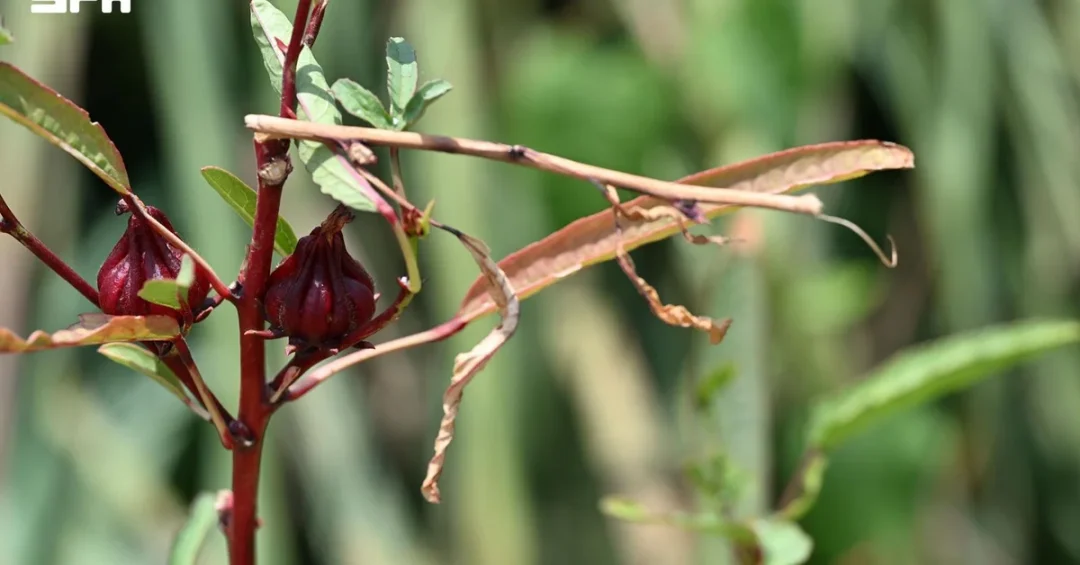
Roselle cultivation in the Jazan region is opening new economic opportunities for farmers, with official Saudi research and local entrepreneurship efforts expanding the crop beyond its traditional use as a beverage into food, cosmetics, and natural products industries. According to the Saudi Press Agency (SPA), improving cultivation, processing, and marketing practices can increase the crop’s value and create new income streams for farming communities across the Kingdom’s southwestern region.
Context and Background
Roselle, known locally as karkade, has long been cultivated in Jazan as a seasonal crop used primarily to produce hot and cold beverages. The plant thrives in the region’s warm climate and fertile highlands, making Jazan one of the Kingdom’s most important agricultural areas for the crop.
The National Research and Development Center for Sustainable Agriculture (Estidamah) is working to improve roselle productivity and quality through field trials and applied research. Estidamah’s efforts include evaluating suitable varieties and developing practical recommendations on planting, irrigation, fertilization, pest control, harvesting, and post-harvest practices. This research aims to give farmers reliable, science-based guidance to improve yields and product quality.
Key Details
Alongside institutional research, local initiatives are exploring value-added products derived from roselle. Farmer Yahya Jandali in Bish Governorate combines cultivation, processing, and marketing, producing both hot and cold roselle beverages while experimenting with products such as jam, seed oil, natural food colorings, and cosmetics.
Such initiatives reflect a growing interest in transforming roselle from a traditional crop into a viable agricultural resource that supports product diversification and increases its economic value in Jazan. The combination of applied research and on-farm innovation is helping to build a more complete value chain around the crop.
Implications and Impact
The expansion of roselle into food and natural products industries could strengthen rural incomes, support small and medium-sized enterprises, and contribute to regional economic development in Jazan. Improved cultivation and processing practices may also increase the crop’s competitiveness in domestic and international markets, where demand for natural ingredients continues to grow.
The work of Estidamah and local farmers demonstrates how targeted research and entrepreneurship can unlock new opportunities within Saudi Arabia’s agricultural sector. By enhancing productivity and diversifying uses for traditional crops, these efforts contribute to broader goals of economic diversification and sustainable development.
Vision 2030 Alignment
These developments align closely with Saudi Vision 2030, which seeks to diversify the national economy, boost non-oil sectors, and create sustainable employment opportunities. Strengthening the agricultural value chain for roselle supports food security objectives, enhances rural livelihoods, and showcases the Kingdom’s commitment to innovation and sustainable resource management. As research and local initiatives continue to advance, roselle cultivation in Jazan stands as a promising example of how traditional agriculture can evolve into a modern, value-added industry contributing to the Kingdom’s long-term prosperity.
20 Questions
Q1. What is the main focus of the article?
A1. The article focuses on how roselle cultivation in Jazan is opening new opportunities for farmers through improved practices and product diversification, supported by research from Estidamah and local initiatives.
Q2. What crop is being cultivated in Jazan that offers new opportunities?
A2. Roselle, also known as karkade, is the crop being cultivated in Jazan. It is traditionally used for beverages but is now being developed for food and natural products.
Q3. Which organization is conducting research to improve roselle productivity?
A3. The National Research and Development Center for Sustainable Agriculture, known as Estidamah, is conducting field trials and applied research to improve roselle productivity and quality in Jazan.
Q4. What types of practices is Estidamah evaluating for roselle cultivation?
A4. Estidamah is evaluating suitable varieties and developing recommendations on planting, irrigation, fertilization, pest control, harvesting, and post-harvest practices to support farmers and improve yields.
Q5. Who is the local farmer mentioned in the article?
A5. Farmer Yahya Jandali in Bish Governorate is mentioned. He combines cultivation, processing, and marketing, producing hot and cold roselle beverages and experimenting with value-added products.
Q6. What value-added products is Yahya Jandali experimenting with?
A6. Yahya Jandali is experimenting with products such as jam, seed oil, natural food colorings, and cosmetics derived from roselle, expanding beyond traditional beverage uses into new markets.
Q7. How does roselle traditionally benefit Jazan’s farmers?
A7. Roselle has traditionally been a seasonal crop used to produce hot and cold beverages. This has provided income and agricultural activity for farmers in the region for generations.
Q8. What is the significance of transforming roselle into a viable agricultural resource?
A8. Transforming roselle into a viable agricultural resource supports product diversification and increases its economic value, creating new income streams and strengthening the agricultural sector in Jazan.
Q9. How can improved cultivation practices help farmers?
A9. Improved cultivation practices, guided by research, can increase yields, enhance product quality, and reduce losses, ultimately boosting farmer incomes and competitiveness in domestic and international markets.
Q10. What role does Estidamah play in supporting roselle farmers?
A10. Estidamah provides scientific research, field trials, and practical recommendations on all aspects of roselle cultivation, helping farmers adopt better practices for higher productivity and quality.
Q11. What industries can benefit from roselle beyond beverages?
A11. The food industry and natural products sector can benefit from roselle. Examples include jams, natural food colorings, seed oil, and cosmetics produced from different parts of the plant.
Q12. How does this development align with Saudi Vision 2030?
A12. It aligns with Vision 2030 by diversifying the economy, supporting non-oil sectors, enhancing food security, and creating sustainable employment opportunities in agriculture and related industries.
Q13. What are the potential economic impacts of expanding roselle production?
A13. Expanding production can strengthen rural incomes, support small and medium-sized enterprises, and contribute to regional economic development, while increasing the crop’s value in domestic and export markets.
Q14. Why is processing important for roselle’s economic value?
A14. Processing transforms raw roselle into higher-value products such as beverages, jams, cosmetics, and oils, allowing farmers to capture more value and reduce reliance on selling raw crops.
Q15. What is the significance of the SPA report on roselle?
A15. The Saudi Press Agency report highlights official recognition of roselle’s potential, showcasing efforts by Estidamah and local farmers to develop the crop and its value chain in Jazan.
Q16. How might international markets respond to Saudi roselle products?
A16. International markets, particularly those seeking natural ingredients, may respond positively to Saudi roselle products, opening export opportunities and enhancing the Kingdom’s reputation for quality agricultural goods.
Q17. What is the role of local initiatives in roselle development?
A17. Local initiatives like Yahya Jandali’s farm demonstrate entrepreneurship and innovation, testing new products and marketing approaches that can inspire other farmers and contribute to the crop’s transformation.
Q18. What challenges might roselle farmers face?
A18. Farmers may face challenges in adopting new practices, accessing markets, and scaling production. However, research and support from Estidamah help mitigate these by providing guidance and recommendations.
Q19. How does roselle contribute to food security in Saudi Arabia?
A19. Roselle contributes to food security by providing a locally grown crop that can be processed into various food products, reducing reliance on imports and supporting sustainable agricultural practices in the Kingdom.
Q20. What is the long-term outlook for roselle cultivation in Jazan?
A20. With continued research, innovation, and market development, roselle cultivation in Jazan is poised to grow into a modern, value-added industry, supporting Vision 2030 goals and benefiting farmers and the regional economy.
Reader Feedback
We value your thoughts. Please share your feedback on this article.
Your feedback helps us improve our coverage.