


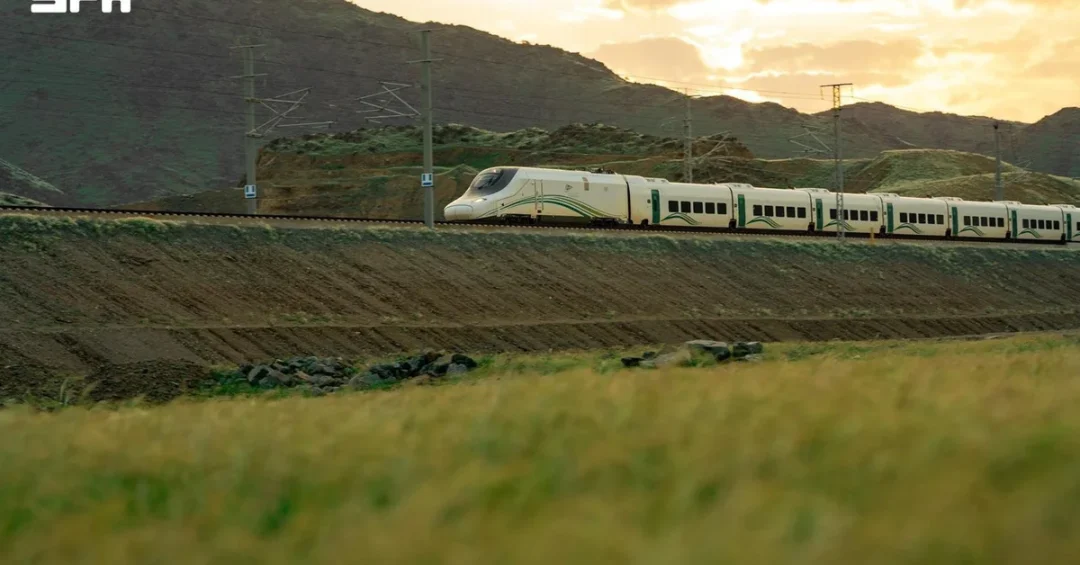
Saudi Arabia Railways (SAR) avoided more than 364,800 tons of carbon dioxide emissions and saved over 139.4 million liters of fuel in 2025, according to figures released through official Saudi channels, marking a significant milestone in the Kingdom’s transition toward a more sustainable transport system. The results reflect the environmental gains achieved by shifting passenger and freight movement from roads to rail across a network spanning more than 5,500 kilometers of track. Could rail become the backbone of a cleaner Saudi transport future?
The announcement comes as the transport sector worldwide accounts for around a quarter of global energy-related carbon dioxide emissions, according to the United Nations, while railways generate only about 1 percent of the transport sector’s emissions despite carrying roughly 7 percent of global passenger transport and 6 percent of freight transport, according to the International Union of Railways (UIC). Those figures underscore why Saudi Arabia is placing rail at the center of its long-term mobility planning, and why the 2025 results are being viewed as more than a single-year achievement.
Context and Background
Why does rail efficiency matter so much in the global climate equation? The answer lies in scale and physics. Trains move large numbers of passengers and heavy volumes of freight with far less energy per unit than road vehicles, and when those trains run on electricity, their environmental advantages grow further as the power grid itself becomes cleaner. In Saudi Arabia, this structural efficiency is being harnessed deliberately as part of a broader national effort to diversify the economy and modernize infrastructure.
The development of rail transport in the Kingdom aligns with the objectives of Saudi Vision 2030 and the National Transport and Logistics Strategy. SAR operates a network that supports both passenger and freight transport and integrates different modes of transport, creating opportunities to improve energy and resource efficiency as demand for mobility grows. The strategy treats rail not as a niche service but as a strategic enabler of trade, logistics competitiveness, and quality of life.
Historically, long-distance freight and intercity travel in Saudi Arabia depended heavily on road trucking and private vehicles. That model served a rapidly growing economy, but it also carried rising fuel consumption and emissions costs. The 2025 figures suggest that the shift toward rail is now delivering measurable, quantifiable benefits rather than projected ones, giving planners concrete evidence to expand the network further.
Key Details: From Roads to Rail
What do the 2025 numbers actually show? According to SAR, freight and mineral transport were among the main contributors to the environmental gains. The company transported more than 30 million tons of freight during the year, and its freight operations eliminated the need for around two million vehicle trips on Saudi Arabia’s roads. Rail transport connects production sites with ports and industrial zones, reducing the need for long-distance trucking while helping ensure a steady flow of goods and raw materials.
On the passenger side, SAR’s networks served more than 14.6 million passengers in 2025, offering shared travel options between cities and serving pilgrims. Both the Haramain High-Speed Railway and the Al-Mashaaer Al-Mugaddassah Metro Line operate entirely on electricity, avoiding direct fuel combustion by trains. Their environmental benefits grow as emissions from generating the electricity they use decline, meaning the climate value of these services strengthens over time alongside grid decarbonization.
The efficiency efforts extend beyond trains to supporting infrastructure. More than 50 percent of SAR’s signaling and communications systems run on solar power, which is particularly important in remote locations where solar energy and storage systems provide the electricity needed to maintain services while reducing reliance on conventional energy sources. This combination of electrified rail and solar-powered infrastructure illustrates how operational engineering and environmental planning can reinforce one another.
Resource Management and Circular Economy
How does a railway operator translate sustainability into everyday operational practice? For SAR, the answer includes materials management, water stewardship, and vegetation. In 2025, the company recycled 10,216 tons of waste from infrastructure projects and operational activities, including recoverable industrial materials such as carbon steel and aluminum. The recovered materials were reintroduced into local industrial value chains, helping make better use of resources after their initial use and supporting circular economy practices.
Resource efficiency efforts also include treating wastewater at Northern Line stations and facilities and fully reusing the treated water to irrigate green spaces, thereby reducing freshwater consumption. In parallel, the cumulative number of trees and shrubs planted across the company’s sites has exceeded 53,000, as part of efforts to increase vegetation at the network’s facilities. These measures are managed through an environmental management system that complies with the ISO 14001:2015 standard, covering risk assessment, performance monitoring, and compliance with regulatory requirements.
Safety is treated as a pillar of operational sustainability, since the sustainability of a transport system is linked to operational safety and risk reduction. According to results announced by SAR, intersection accidents decreased by 75 percent, injuries by 62.5 percent, near-miss incidents by 63 percent, and collisions in yards and workshops by 68 percent. The company’s safety culture index reached 57 percent, exceeding the global average, while the ‘Aslam Lak’ campaign reduced encroachments on railway property by 61.5 percent through field tours targeting the highest-risk sites based on operational data and risk indicators.
International and Regional Impact
Why should international observers pay attention to Saudi rail performance? Because the Kingdom’s network is increasingly part of the connective tissue of regional trade and pilgrimage travel. The Haramain High-Speed Railway links major cities and serves large volumes of pilgrims, while freight corridors connect industrial zones to ports that sit on global shipping routes. Efficiency gains on these corridors can ripple outward, supporting reliable delivery times and lower transport costs for trading partners.
The International Union of Railways has documented that rail carries a disproportionate share of global passenger and freight activity relative to its emissions footprint. Saudi Arabia’s 2025 results add a national data point to that global picture, demonstrating that a rapidly growing, geographically large economy can expand mobility while moderating fuel use. For a region investing heavily in logistics and diversified trade, the Saudi experience offers a working example of how rail investment converts into environmental and economic returns.
Economic and Strategic Significance
What does sustainability mean for the bottom line? Saving more than 139.4 million liters of fuel in a single year represents a direct reduction in operating costs and in exposure to fuel price volatility, resources that can be redirected toward service expansion and maintenance. At the same time, local content at SAR reached 67.35 percent in 2025, exceeding the target by more than 7 percent, reflecting the growing participation of national suppliers and manufacturers in the company’s business.
The ‘ASASAT’ program supports this trend by developing suppliers and encouraging investment in railway-related industries and services to meet operational, maintenance, and project needs, while expanding the sector’s economic impact across local supply chains. Workforce development reinforces the same goal: SAR’s localization rate reached 89 percent in 2025, and the company provided 104,668 training hours to 3,129 male and female employees across technical, operational, administrative, and leadership skills, strengthening national talent as the sector expands.
These economic indicators matter because they show that environmental performance and industrial development are being pursued together. A railway that runs on cleaner energy, sources more of its inputs locally, and trains its own workforce is better positioned to scale operations without proportionally scaling costs or emissions, which is precisely the equation the National Transport and Logistics Strategy seeks to solve.
Vision 2030 Alignment
How do these results connect to the Kingdom’s long-term ambitions? As part of its 2035 strategy, SAR continues to expand passenger and freight transportation services and increase the operational capacity of its network, while developing operational technologies and improving energy and resource efficiency. These efforts will enable the company to accommodate growing transportation demand and provide broader options for travelers and businesses, in direct service of Vision 2030’s goals of economic diversification, sustainable infrastructure, and enhanced quality of life.
For an international audience, the 2025 figures offer a clear signal: Saudi Arabia is building a transport system that treats environmental responsibility as an operational discipline rather than a communications exercise. By avoiding more than 364,800 tons of emissions, saving 139.4 million liters of fuel, and pairing those gains with circular economy practices, solar-powered infrastructure, and a strong localization agenda, SAR is contributing to a Vision 2030 legacy in which mobility, prosperity, and environmental stewardship advance together. The question now is not whether rail can support the Kingdom’s future, but how far the network can carry it.
20 Questions
Q1. How much carbon dioxide emissions did Saudi Arabia Railways avoid in 2025?
A1. Saudi Arabia Railways avoided more than 364,800 tons of carbon dioxide emissions in 2025 through its passenger and freight operations, according to official figures released by the company.
Q2. How much fuel did SAR save during the year?
A2. SAR saved over 139.4 million liters of fuel in 2025. The savings reflect the shift of transport activity from roads to railways across its network.
Q3. How long is the SAR rail network?
A3. Saudi Arabia Railways operates a network spanning more than 5,500 kilometers of track. The network supports both passenger and freight transport and integrates different modes of transport across the Kingdom.
Q4. How much freight did SAR transport in 2025?
A4. SAR transported more than 30 million tons of freight during 2025. Freight and mineral transport were among the main contributors to the environmental gains recorded for the year.
Q5. How many vehicle trips were eliminated by SAR freight operations?
A5. SAR’s freight operations eliminated the need for around two million vehicle trips on Saudi Arabia’s roads in 2025, reducing long-distance trucking and its associated fuel consumption and emissions.
Q6. How many passengers did SAR serve in 2025?
A6. SAR’s networks served more than 14.6 million passengers in 2025, offering shared travel options between cities and serving pilgrims traveling across the Kingdom.
Q7. Which rail services operate entirely on electricity?
A7. The Haramain High-Speed Railway and the Al-Mashaaer Al-Mugaddassah Metro Line operate entirely on electricity, avoiding direct fuel combustion by trains and gaining further environmental benefit as grid emissions decline.
Q8. What share of SAR signaling and communications systems runs on solar power?
A8. More than 50 percent of SAR’s signaling and communications systems run on solar power. These systems are especially valuable in remote locations where solar energy and storage maintain services.
Q9. How much waste did SAR recycle in 2025?
A9. SAR recycled 10,216 tons of waste from infrastructure projects and operational activities in 2025. The waste included recoverable industrial materials such as carbon steel and aluminum.
Q10. How is treated wastewater used at SAR facilities?
A10. Wastewater is treated at Northern Line stations and facilities and fully reused to irrigate green spaces, reducing freshwater consumption as part of SAR’s resource efficiency efforts.
Q11. How many trees and shrubs has SAR planted across its sites?
A11. The cumulative number of trees and shrubs planted across SAR’s sites has exceeded 53,000. The planting supports efforts to increase vegetation at the network’s facilities.
Q12. Which environmental management standard does SAR follow?
A12. SAR follows an environmental management system complying with the ISO 14001:2015 standard, covering risk assessment, performance monitoring, and compliance with regulatory requirements.
Q13. By how much did intersection accidents decrease at SAR?
A13. Intersection accidents decreased by 75 percent, according to SAR’s announced safety results. Injuries fell 62.5 percent and near-miss incidents declined 63 percent.
Q14. What was SAR’s safety culture index score?
A14. SAR’s safety culture index reached 57 percent, exceeding the global average. The result reflects the company’s emphasis on safety awareness and operational risk reduction.
Q15. What did the ‘Aslam Lak’ campaign achieve?
A15. The ‘Aslam Lak’ campaign reduced encroachments on railway property by 61.5 percent through field tours targeting the highest-risk sites based on operational data and risk indicators.
Q16. What was SAR’s localization rate in 2025?
A16. SAR’s localization rate reached 89 percent in 2025, reflecting the company’s commitment to developing national talent and filling technical and operational roles with qualified Saudi professionals.
Q17. How many training hours did SAR provide to employees?
A17. SAR provided 104,668 training hours to 3,129 male and female employees in 2025, covering technical, operational, administrative, and leadership skills.
Q18. What was SAR’s local content percentage in 2025?
A18. Local content at SAR reached 67.35 percent in 2025, exceeding the target by more than 7 percent and reflecting growing participation of national suppliers and manufacturers.
Q19. What is the role of the ‘ASASAT’ program?
A19. The ‘ASASAT’ program develops suppliers and encourages investment in railway-related industries and services to meet operational, maintenance, and project needs, expanding the sector’s economic impact across local supply chains.
Q20. How do SAR’s efforts align with Saudi Vision 2030?
A20. SAR’s efforts align with Saudi Vision 2030 and the National Transport and Logistics Strategy, supporting sustainable infrastructure, economic diversification, localization, and enhanced quality of life for the Kingdom.
Reader Feedback
We value your thoughts. Please share your feedback on this article.
Your feedback helps us improve our coverage.