


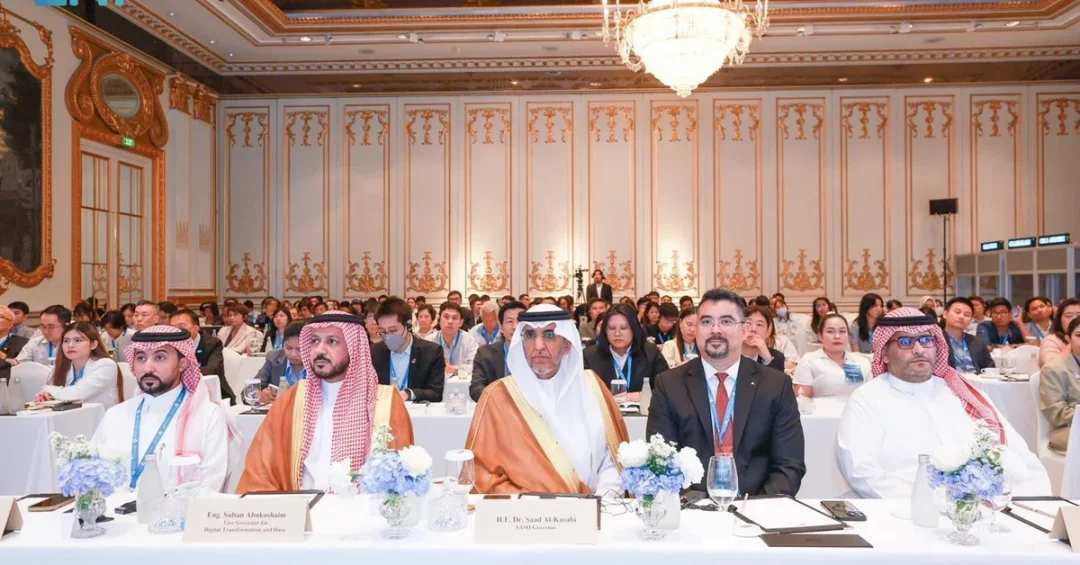
A high-level delegation from the Kingdom of Saudi Arabia, led by the Governor of the Saudi Standards, Metrology and Quality Organization (SASO), Dr. Saad bin Othman Alkasabi, visited Bangkok in April 2025 to strengthen trade and economic partnerships with Thailand and to raise the quality and safety of products entering the Saudi market. The visit, announced through official Saudi channels, included an extensive workshop and a series of bilateral meetings with Thai manufacturers and exporters, with the shared goal of supporting trade exchange and improving the standards of imported goods.
The mission reflects a broader Saudi commitment to product safety, consumer protection, and regulatory excellence as the Kingdom expands its global trading relationships under Vision 2030. For an international audience, the visit signals that Saudi Arabia is not only opening its markets but also actively shaping the rules that govern them, working directly with exporting nations to ensure that goods meet Saudi technical regulations before they reach consumers. The engagement with Thailand, one of Southeast Asia’s most dynamic manufacturing economies, marks another step in Saudi Arabia’s widening economic diplomacy.
Context and Background
Why does a standards delegation matter in the world of international trade? The answer lies in the often-overlooked machinery of technical regulation. SASO is the Saudi government body responsible for standards, metrology, and quality across the Kingdom. It develops technical regulations, oversees conformity assessment procedures, and works to remove technical barriers to trade while protecting consumers from unsafe or substandard products. Its role has grown considerably as Saudi Arabia has diversified its economy and increased imports of machinery, electronics, food products, building materials, and consumer goods.
Thailand, for its part, is a major exporter of automobiles and auto parts, electronics, food products, rubber, plastics, and agricultural goods. Its manufacturers have long viewed the Gulf region as a strategic market, and Saudi Arabia in particular as a gateway to the wider Middle East. In recent years, Riyadh and Bangkok have moved to restore and deepen diplomatic and commercial ties, following a period of reduced engagement. The reopening of direct channels and the exchange of high-level visits have created momentum for practical cooperation on trade facilitation, investment, and regulatory alignment.
The SASO visit to Bangkok therefore did not occur in isolation. It built on a series of official exchanges between Saudi and Thai agencies and reflected a shared interest in making trade smoother and more predictable. By bringing Saudi regulators directly into contact with Thai producers and exporters, the visit addressed a practical problem: how to ensure that products destined for Saudi Arabia comply with Saudi standards efficiently, without unnecessary delays or costs, and how to give Thai businesses the information they need to meet those requirements from the outset.
Key Details of the Bangkok Visit
What did the Saudi delegation actually do in Bangkok? According to the official announcement, the program centered on an extensive workshop and bilateral meetings focused on strengthening partnerships with Thai manufacturers and exporters. The workshop served as a platform to explain Saudi standard specifications, technical regulations, and conformity verification procedures. Participants received guidance on how products are assessed before entering the Saudi market and what documentation and testing are required.
The bilateral meetings allowed the Saudi delegation to engage directly with Thai companies and business associations. These discussions covered support for trade exchange, the reduction of technical barriers, and the improvement of cooperative relations between Saudi and Thai institutions. The delegation also emphasized SASO’s ongoing efforts to raise awareness of standards and to partner with counterparts in exporting countries, so that quality and safety are built into products rather than checked only at the border.
Dr. Saad bin Othman Alkasabi, Governor of SASO, headed the delegation, underscoring the importance Saudi Arabia attaches to the relationship with Thailand. The presence of the organization’s most senior official signaled that the visit was intended to produce concrete outcomes, not merely symbolic goodwill. The agenda combined technical education for exporters with relationship-building at the institutional level, creating a foundation for continued collaboration between SASO and its Thai counterparts in the months and years ahead.
Why Product Quality and Safety Matter to Saudi Arabia
How does a standards body protect consumers while promoting trade? SASO’s mandate rests on the principle that safety and openness can advance together. Technical regulations exist to prevent unsafe electrical goods, faulty vehicles, contaminated food, and substandard construction materials from reaching Saudi homes and businesses. At the same time, clear and transparent rules help legitimate exporters compete on quality rather than navigate unpredictable requirements.
For Saudi Arabia, the stakes are substantial. As the Kingdom’s population grows and its economy modernizes, demand for imported goods continues to rise. Vision 2030 aims to diversify the economy, expand the private sector, and improve quality of life. Reliable product standards support all three goals: they protect citizens, they give businesses confidence in supply chains, and they reinforce Saudi Arabia’s reputation as a serious and well-regulated trading partner. A single unsafe product category can damage public trust, while a predictable regulatory system attracts long-term investment.
The Bangkok workshop also reflected a shift in approach. Rather than treating standards as a purely domestic matter, SASO is increasingly engaging exporting countries directly, explaining requirements in advance and building familiarity with Saudi procedures. This proactive posture reduces the likelihood of shipments being rejected or delayed and helps Thai exporters plan with confidence. It also strengthens Saudi Arabia’s position in global discussions on trade facilitation and regulatory cooperation.
International and Regional Impact
What does deeper Saudi-Thai cooperation mean for the wider region? Southeast Asia and the Gulf are two of the world’s most dynamic economic regions, and the links between them are expanding. Saudi Arabia’s engagement with Thailand fits a pattern of growing ties with Asian economies, including China, Japan, South Korea, India, and the ASEAN states. These relationships support the flow of goods, investment, and technology in both directions.
For Thailand, access to the Saudi market offers opportunities in automotive, food, electronics, and tourism-related sectors. For Saudi Arabia, Thai manufacturing expertise and agricultural exports complement the Kingdom’s own economic priorities. The SASO visit helped to align expectations on quality and compliance, which in turn supports smoother trade and fewer disputes. Regional observers may see the visit as part of a broader Saudi effort to position itself as a reliable hub connecting Asia, Europe, and Africa through trade, logistics, and investment.
The engagement also carries diplomatic weight. Improved Saudi-Thai relations have been a notable development in recent years, and practical cooperation on standards and trade reinforces that progress. By working through technical agencies rather than only political channels, both countries build durable links that can survive changes in the broader geopolitical environment. For international businesses watching the region, the message is that Saudi Arabia is open to trade and serious about the rules that make trade work.
Economic and Strategic Significance
Why should global markets pay attention to a standards workshop in Bangkok? Because technical requirements are among the most important factors determining whether exporters can enter a market at all. When Saudi regulators meet directly with Thai manufacturers, they reduce uncertainty and lower the cost of compliance. That benefits Thai exporters, Saudi importers, and ultimately Saudi consumers, who gain access to a wider range of safe products at competitive prices.
The visit also supports Saudi Arabia’s strategic goal of becoming a global logistics and trade hub. Efficient customs and conformity procedures are essential to that ambition. If goods can move into the Kingdom quickly and predictably, Saudi ports, airports, and free zones become more attractive to international companies. SASO’s outreach to exporting nations is therefore not just a consumer-protection measure; it is part of the infrastructure of economic diversification and investment attraction.
For Thai businesses, the visit provided a clearer picture of Saudi requirements and a direct line to the authority that enforces them. That kind of access is valuable in competitive export markets. It also opens the door to deeper collaboration on testing, certification, and capacity building. Over time, such cooperation can lead to mutual recognition arrangements and other trade-facilitation tools that further reduce friction. The Bangkok meetings laid groundwork that could yield benefits for years.
Vision 2030 Alignment
How does this visit connect to Saudi Arabia’s long-term vision? Vision 2030 is built on diversification, private-sector growth, and improved quality of life. A robust standards and quality infrastructure underpins all of these. It ensures that the goods and materials flowing into the Kingdom meet the expectations of a modern, ambitious society. It also supports the growth of Saudi industry by giving domestic producers clear benchmarks and by integrating the Kingdom into global supply chains on favorable terms.
SASO’s engagement with Thailand demonstrates the Kingdom’s proactive approach to international economic relations. Rather than waiting for problems to arise, Saudi Arabia is working with partners to prevent them, building trust and predictability into trade relationships. This approach aligns with Vision 2030’s emphasis on international cooperation, knowledge exchange, and the creation of a business environment that attracts investment. It also reinforces the Kingdom’s role as a responsible global actor committed to safety, quality, and fair trade.
As Saudi Arabia continues to expand its global partnerships, visits like the one to Bangkok will remain an important tool of economic diplomacy. They show that the Kingdom is serious about both opening its markets and protecting its people, and that it values the contribution of international exporters who meet its standards. For Thailand and other trading partners, the message is clear: Saudi Arabia is a market of opportunity, and it is ready to work together to make that opportunity safe, transparent, and mutually beneficial.
20 Questions
Q1. Who led the Saudi delegation to Bangkok?
A1. The delegation was headed by Dr. Saad bin Othman Alkasabi, Governor of the Saudi Standards, Metrology and Quality Organization (SASO).
Q2. What was the main purpose of the visit?
A2. The visit aimed to improve product quality and safety and to strengthen trade and economic partnerships between Saudi Arabia and Thailand.
Q3. What activities took place during the visit?
A3. The program included an extensive workshop and bilateral meetings focused on partnerships with Thai manufacturers and exporters.
Q4. Which Saudi organization organized the visit?
A4. The visit was organized by the Saudi Standards, Metrology and Quality Organization, known as SASO.
Q5. What does SASO do?
A5. SASO develops standards, oversees metrology and quality, and ensures products meet Saudi technical regulations and safety requirements.
Q6. Why is Thailand important for Saudi trade?
A6. Thailand is a major exporter of automobiles, electronics, food, and agricultural products, making it a significant partner for Saudi imports.
Q7. What topics were covered in the workshop?
A7. The workshop covered Saudi standard specifications, technical regulations, and conformity verification procedures for imported products.
Q8. How does this visit help Thai exporters?
A8. It gives them direct guidance on Saudi requirements, reducing uncertainty and helping them comply efficiently with Saudi standards.
Q9. What are technical barriers to trade?
A9. They are regulatory differences or procedures that can delay or complicate exports; the visit aimed to reduce such barriers.
Q10. How does SASO protect Saudi consumers?
A10. By enforcing standards that prevent unsafe or substandard products from entering the Saudi market.
Q11. What is the link to Vision 2030?
A11. Strong standards support diversification, private-sector growth, and quality of life, all central goals of Vision 2030.
Q12. Did the visit include meetings with Thai companies?
A12. Yes, bilateral meetings were held with Thai manufacturers, exporters, and business representatives.
Q13. What sectors could benefit most?
A13. Automotive, electronics, food, rubber, plastics, and agricultural sectors are among the key areas of Saudi-Thai trade.
Q14. How does this affect Saudi importers?
A14. Clearer standards and smoother procedures help importers bring in compliant goods more reliably and at lower cost.
Q15. Is this visit part of a larger trend?
A15. Yes, it reflects Saudi Arabia’s expanding engagement with Asian economies and its broader trade diplomacy.
Q16. What is conformity verification?
A16. It is the process of confirming that a product meets specified standards before it is allowed on the market.
Q17. How does SASO cooperate internationally?
A17. SASO engages counterparts in exporting countries through workshops, meetings, and partnerships to align standards and procedures.
Q18. What are the benefits for Saudi Arabia?
A18. Safer products, stronger trade ties, reduced technical barriers, and a more attractive environment for investment.
Q19. What happens next after the visit?
A19. Continued cooperation between SASO and Thai counterparts is expected, building on the discussions held in Bangkok.
Q20. Why does this matter globally?
A20. It shows Saudi Arabia is actively shaping trade rules, protecting consumers, and deepening ties with key global economies.
Reader Feedback
We value your thoughts. Please share your feedback on this article.
Your feedback helps us improve our coverage.
Related articles
 Saudi Finance Minister Concludes Kuwait Arab Financial Meetings
 Saudi Liquidity Hits Record SAR3.033 Trillion
 Saudi Delegation to Egypt to Boost Economic Ties
 Jeddah Building Exhibition Showcases Saudi Construction Market
 ITFC Signs €40 Million Murabaha Financing with Comoros
 Saudi Insurance Authority Publishes Q1 2025 Complaints Index