


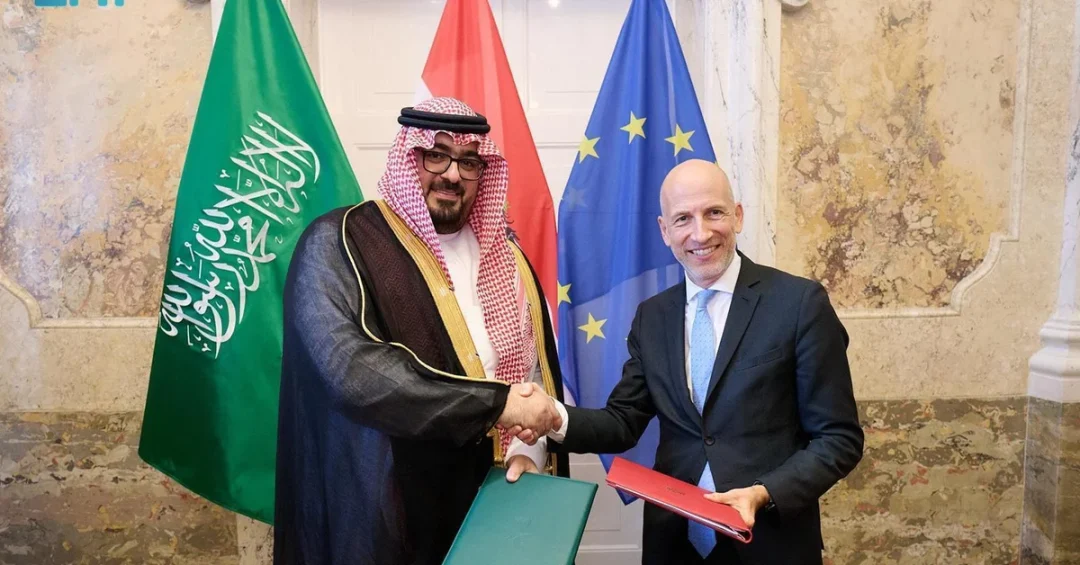
The Saudi Ministry of Economy and Planning and Austria’s Ministry of Labor and Economy signed a memorandum of understanding (MoU) to enhance economic cooperation, during the ninth session of the Saudi-Austrian Joint Committee held in Vienna on May 29, 2024. The agreement was signed by Saudi Minister of Economy and Planning Faisal bin Fadel Al-Ibrahim and Austrian Minister of Labor and Economy Martin Kocher, marking a significant step in strengthening bilateral economic ties between the Kingdom of Saudi Arabia and the Republic of Austria.
Context and Background
The MoU builds upon a longstanding cooperation agreement in economic, commercial, industrial, and technical fields that was originally signed between the two governments in 2004. This latest development reflects the ongoing commitment of both nations to deepen their economic partnership and explore new avenues for collaboration. The ninth session of the Saudi-Austrian Joint Committee served as the platform for this agreement, underscoring the importance of regular bilateral dialogues in fostering mutual understanding and progress.
Saudi Arabia, under the leadership of the Custodian of the Two Holy Mosques King Salman bin Abdulaziz Al Saud and His Royal Highness Crown Prince Mohammed bin Salman bin Abdulaziz Al Saud, has been actively expanding its international economic relations as part of Vision 2030. This MoU with Austria is a testament to the Kingdom’s efforts to diversify its economy and build strategic partnerships across Europe.
Key Details
The MoU aims to diversify and strengthen economic ties between Saudi Arabia and Austria. It focuses on exchanging experiences and information, and encourages cooperation in several key sectors, including trade, industry, research and development, tourism, and small and medium enterprises. A significant component of the agreement involves organizing conferences, seminars, and exchange visits between experts, as well as fostering collaboration between government institutions and the private sector.
Both parties have committed to protecting intellectual property rights and exchanging information for the purposes specified in the MoU. This commitment ensures a secure and conducive environment for businesses and innovators from both countries to engage and thrive.
Implications and Impact
The signing of this MoU is expected to have far-reaching implications for both Saudi Arabia and Austria. For the Kingdom, it opens up new opportunities for economic diversification, knowledge transfer, and access to Austrian expertise in advanced industries and technology. This aligns with Vision 2030’s goals of reducing dependence on oil and fostering a knowledge-based economy.
For Austria, the agreement provides access to one of the largest economies in the Middle East and a gateway to the Gulf region. It also strengthens Austria’s economic footprint in the context of its own trade diversification strategies. The collaboration in research and development, tourism, and SMEs is particularly promising, as it can lead to innovation and job creation in both countries.
On a broader scale, this MoU enhances Saudi Arabia’s international standing as a reliable partner for European nations and reinforces its role as a bridge between Europe and the Arab world. It also reflects the Kingdom’s proactive approach to international diplomacy and economic engagement, which is central to its foreign policy.
Vision 2030 Alignment
This MoU is closely aligned with Saudi Vision 2030, the Kingdom’s comprehensive plan to transform its economy and society. By diversifying economic ties, promoting research and development, and supporting SMEs, the agreement directly supports the Vision’s objectives of creating a vibrant society, a thriving economy, and an ambitious nation. It exemplifies how Saudi Arabia is building global partnerships to achieve sustainable development and prosperity for its people and the world.
As the Kingdom continues to forge new economic alliances and deepen existing ones, agreements like this with Austria will play a crucial role in realizing the ambitious goals of Vision 2030 and ensuring a prosperous future for Saudi Arabia and its international partners.
20 Questions
Q1. What is the purpose of the MoU signed between Saudi Arabia and Austria?
A1. The MoU aims to enhance economic cooperation between the two countries, focusing on diversifying and strengthening economic ties in various sectors such as trade, industry, research and development, tourism, and small and medium enterprises.
Q2. Who signed the MoU on behalf of Saudi Arabia?
A2. The MoU was signed by Saudi Minister of Economy and Planning Faisal bin Fadel Al-Ibrahim, representing the Kingdom of Saudi Arabia.
Q3. Who signed the MoU on behalf of Austria?
A3. The MoU was signed by Austrian Minister of Labor and Economy Martin Kocher, representing the Republic of Austria.
Q4. Where was the MoU signed?
A4. The MoU was signed in Vienna, Austria, on the sidelines of the ninth session of the Saudi-Austrian Joint Committee.
Q5. When was the MoU signed?
A5. The MoU was signed on May 29, 2024, during the ninth session of the Saudi-Austrian Joint Committee held in Vienna.
Q6. What are the key areas of cooperation outlined in the MoU?
A6. The MoU covers trade, industry, research and development, tourism, and small and medium enterprises, as well as the organization of conferences, seminars, and expert exchanges.
Q7. Does the MoU include provisions for intellectual property protection?
A7. Yes, the MoU includes commitments to protect intellectual property rights and to exchange information for the purposes specified in the agreement.
Q8. How does this MoU build on previous agreements between the two countries?
A8. This MoU builds on a 2004 cooperation agreement in economic, commercial, industrial, and technical fields, further deepening the bilateral economic partnership.
Q9. What role does the Saudi-Austrian Joint Committee play in this agreement?
A9. The ninth session of the Saudi-Austrian Joint Committee provided the platform for signing the MoU, highlighting the importance of regular bilateral dialogues.
Q10. How does this MoU align with Saudi Vision 2030?
A10. The MoU supports Vision 2030 by promoting economic diversification, knowledge transfer, and SME development, which are key objectives of the Vision.
Q11. What benefits can Saudi Arabia expect from this MoU?
A11. Saudi Arabia can expect enhanced access to Austrian expertise in advanced industries, technology, and research, supporting its economic diversification and knowledge-based economy goals.
Q12. What benefits can Austria expect from this MoU?
A12. Austria gains access to one of the largest Middle Eastern economies and a gateway to the Gulf region, strengthening its economic footprint and trade diversification.
Q13. Will the MoU facilitate exchange visits between experts?
A13. Yes, the MoU includes provisions for organizing conferences, seminars, and exchange visits between experts from both countries.
Q14. Does the MoU encourage private sector cooperation?
A14. Yes, the MoU encourages cooperation between government institutions and the private sector, fostering business-to-business engagement and innovation.
Q15. How does the MoU impact small and medium enterprises?
A15. The MoU specifically includes cooperation in the SME sector, which can lead to innovation, job creation, and growth for small and medium enterprises in both countries.
Q16. What is the significance of the MoU for Saudi Arabia’s international relations?
A16. The MoU enhances Saudi Arabia’s international standing as a reliable partner for European nations and reinforces its role as a bridge between Europe and the Arab world.
Q17. Are there any specific projects or initiatives mentioned in the MoU?
A17. The MoU focuses on general areas of cooperation rather than specific projects, but it sets a framework for future collaborative initiatives in trade, industry, and research.
Q18. How does this MoU reflect Saudi Arabia’s foreign policy goals?
A18. It reflects Saudi Arabia’s proactive approach to international diplomacy and economic engagement, which is central to its foreign policy and Vision 2030.
Q19. What is the expected timeline for implementing the MoU?
A19. The MoU does not specify a timeline, but implementation is expected to proceed through ongoing bilateral dialogues and joint committee sessions.
Q20. How does this MoU contribute to global economic cooperation?
A20. By strengthening ties between Saudi Arabia and Austria, the MoU promotes global economic cooperation, knowledge sharing, and sustainable development, aligning with international goals.
Reader Feedback
We value your thoughts. Please share your feedback on this article.
Your feedback helps us improve our coverage.