


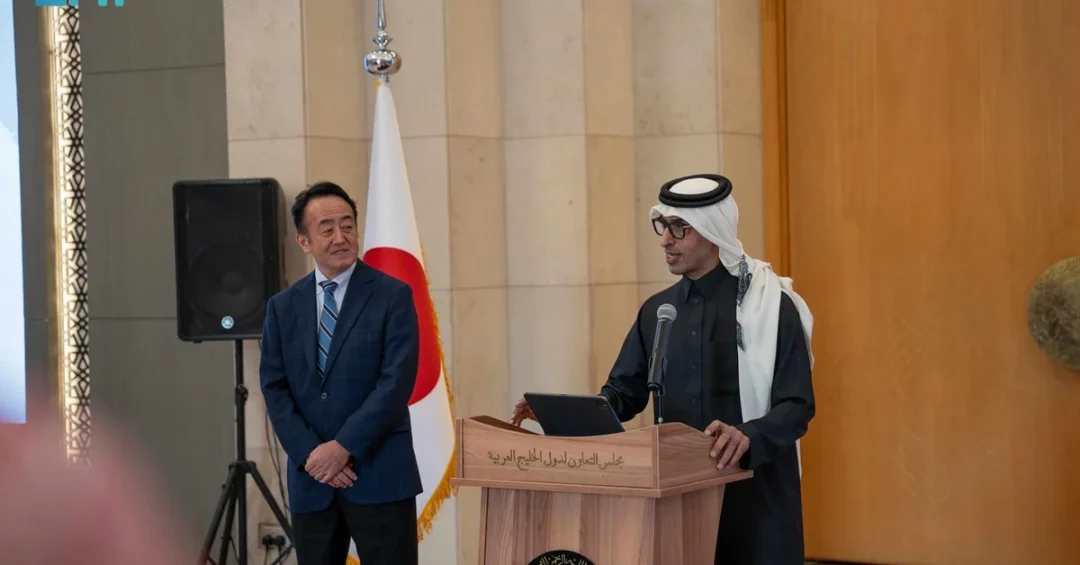
Saudi Arabia’s General Authority for Foreign Trade (GAFT) led the Kingdom’s delegation at the first round of negotiations for a free trade agreement (FTA) between the Gulf Cooperation Council (GCC) countries and Japan, held in Riyadh from December 10 to 12, 2024. The Saudi negotiating team was headed by Fareed bin Saeed Al-Asali, Deputy Governor for Agreements and International Organizations at GAFT, underscoring the Kingdom’s active role in shaping regional trade architecture and deepening its economic partnership with one of its most important Asian allies. The talks marked a significant milestone in the evolving relationship between the GCC and Japan, and Saudi Arabia’s leadership of the delegation reflects its central position in Gulf economic diplomacy.
The negotiations brought together representatives from all GCC member states and Japan to discuss the framework for a comprehensive free trade agreement that could reshape trade flows across the Gulf and East Asia. For Saudi Arabia, the talks represent a strategic opportunity to advance its trade objectives, diversify its export markets, and reinforce its commitment to international economic cooperation under Vision 2030. The Kingdom’s participation was coordinated through GAFT, which plays a pivotal role in enhancing Saudi Arabia’s international trade benefits and expanding its global presence. Could this first round of talks set the stage for a transformative economic partnership between the Gulf and Japan?
Context and Background
Why has the GCC-Japan free trade agreement become such a priority for both sides at this moment in global economic history? The launch of formal negotiations follows years of growing economic ties between the Gulf Cooperation Council and Japan, a relationship built on energy trade, investment, and mutual strategic interests. Japan has long been a major importer of Gulf hydrocarbons and a key supplier of advanced machinery, vehicles, and technology to the region. As global supply chains evolve and both sides seek to reduce trade barriers, the FTA negotiations represent a natural next step in institutionalizing and expanding this partnership.
Saudi Arabia’s involvement in the talks is coordinated by the General Authority for Foreign Trade (GAFT), a government body responsible for overseeing and monitoring the Kingdom’s trade negotiations to ensure alignment with national trade objectives and policies. GAFT’s mandate includes preparing and coordinating Saudi Arabia’s negotiating positions for discussions within the World Trade Organization (WTO), free trade agreements, and related international initiatives. The authority works to ensure that Saudi Arabia’s interests are fully represented in multilateral and bilateral trade forums, and that the outcomes of such negotiations support the Kingdom’s economic diversification agenda.
The Saudi negotiating team consists of nine specialized subcommittees focused on key areas: goods, services, general texts and provisions, e-commerce, intellectual property, government procurement, rules of origin, investment, and economic evaluation. These subcommittees include members from 46 government entities working collectively to prepare and coordinate Saudi Arabia’s negotiating positions, perspectives, and proposals. This whole-of-government approach ensures that every dimension of the agreement is carefully evaluated for its potential impact on the Kingdom’s economy and its alignment with Vision 2030 objectives. How does such extensive coordination enhance Saudi Arabia’s leverage in international trade negotiations?
Key Details of the Negotiations
What specific outcomes can be expected from this first round of negotiations, and how will they shape the future of GCC-Japan trade relations? The Riyadh round, held from December 10 to 12, 2024, brought together negotiators from the six GCC member states and Japan to begin drafting the framework of the agreement. The discussions covered a wide range of topics, from tariff reductions and market access to investment protections and digital trade provisions. The Saudi team, led by Fareed bin Saeed Al-Asali, played a central role in coordinating the GCC’s collective position and ensuring that the Kingdom’s priorities were reflected in the negotiating texts.
The trade exchange between Saudi Arabia and Japan in 2023 amounted to approximately $41 billion, reflecting the depth and resilience of the economic relationship. Saudi Arabia’s primary exports to Japan included mineral and organic chemical products, while imports from Japan were predominantly vehicles and machinery along with their respective spare parts. This trade profile highlights the complementary nature of the two economies: Saudi Arabia supplies the energy and petrochemical products that fuel Japanese industry, while Japan provides the advanced manufactured goods and technology that support Saudi Arabia’s infrastructure and industrial development.
The nine subcommittees established by GAFT cover a comprehensive range of issues that are critical to modern trade agreements. The goods subcommittee addresses tariff schedules and market access for agricultural and industrial products. The services subcommittee focuses on liberalizing trade in sectors such as finance, telecommunications, and professional services. The e-commerce subcommittee is tasked with developing rules for digital trade, an increasingly important area as both Saudi Arabia and Japan seek to harness the potential of the digital economy. The intellectual property subcommittee works to ensure that innovation and creativity are protected, while the government procurement subcommittee aims to open public tenders to fair competition. The investment subcommittee seeks to create a stable and predictable environment for cross-border investment, and the economic evaluation subcommittee assesses the overall impact of the agreement on the Saudi economy. How will these subcommittees ensure that the final agreement benefits all sectors of the Saudi economy?
International and Regional Impact
What does the GCC-Japan FTA mean for the broader geopolitical and economic landscape of the Middle East and Asia? The negotiations signal a deepening of ties between the Gulf region and Japan, one of the world’s largest economies and a key player in global trade. For the GCC, an FTA with Japan would provide preferential access to a market of over 125 million consumers and strengthen the region’s position as a hub for trade and investment between Asia and the Middle East. For Japan, the agreement would secure access to reliable energy supplies and open new opportunities for Japanese companies in the Gulf’s rapidly growing markets.
The talks also reflect a broader trend of regional economic integration and diversification. As GCC countries pursue ambitious economic transformation agendas, including Saudi Arabia’s Vision 2030, they are increasingly looking to forge trade partnerships that support non-oil growth and knowledge transfer. Japan’s expertise in technology, manufacturing, and innovation aligns closely with these goals. The FTA could facilitate joint ventures, technology transfer, and investment flows that support the development of new industries in Saudi Arabia and across the Gulf. In a world of shifting trade alliances, could this agreement serve as a model for future cooperation between the Gulf and other major economies?
Economic and Strategic Significance
Why is this FTA so important for Saudi Arabia’s long-term economic strategy? The Kingdom’s trade relationship with Japan is already substantial, but the FTA promises to elevate it to a new level by reducing tariffs, streamlining customs procedures, and creating a more predictable legal framework for businesses. For Saudi exporters of petrochemicals and minerals, the agreement could mean lower barriers to entry in the Japanese market, boosting competitiveness and increasing market share. For Saudi importers and consumers, it could lead to greater access to high-quality Japanese goods at more competitive prices.
Beyond trade in goods, the agreement has significant implications for investment and services. Japanese companies are major investors in Saudi Arabia, particularly in the automotive, electronics, and infrastructure sectors. The FTA could encourage further Japanese investment by providing stronger protections for intellectual property and ensuring non-discriminatory treatment for foreign investors. In services, the agreement could open new opportunities for Saudi businesses in areas such as logistics, finance, and tourism, while allowing Japanese firms to bring their expertise to the Kingdom’s growing service sector. These provisions are closely aligned with Vision 2030’s goals of diversifying the economy, increasing foreign direct investment, and creating high-value jobs for Saudi citizens.
GAFT’s role in these negotiations is central to ensuring that the agreement delivers tangible benefits for the Kingdom. By coordinating with 46 government entities and preparing detailed reports for the Saudi negotiation team, GAFT ensures that every aspect of the FTA is scrutinized for its alignment with national priorities. This rigorous approach reflects the Kingdom’s commitment to evidence-based policymaking and its determination to secure the best possible outcomes from international trade agreements. How will the successful conclusion of this FTA contribute to Saudi Arabia’s emergence as a global trade hub?
Vision 2030 Alignment
How does the GCC-Japan FTA fit into the broader narrative of Saudi Arabia’s Vision 2030? The Vision, launched in 2016 under the leadership of Crown Prince Mohammed bin Salman, aims to transform the Kingdom’s economy by reducing dependence on oil, diversifying revenue sources, and expanding the private sector. International trade and investment are key pillars of this transformation, and the FTA with Japan represents a concrete step toward integrating Saudi Arabia more deeply into the global economy. By securing preferential access to one of the world’s most advanced markets, the Kingdom is positioning itself as a critical link in the trade networks of the 21st century.
The negotiations also highlight Saudi Arabia’s growing role as a leader in regional and international economic diplomacy. As the head of the Saudi delegation, GAFT’s Fareed bin Saeed Al-Asali is not only representing the Kingdom’s interests but also helping to shape the collective position of the GCC. This leadership role underscores Saudi Arabia’s commitment to regional cooperation and its ability to bridge the interests of Gulf states with those of major global economies. As the talks progress, the Kingdom will continue to work toward an agreement that supports its Vision 2030 goals, strengthens its partnership with Japan, and contributes to sustainable development and prosperity for the region and the world. Will this first round of negotiations be remembered as the moment the Gulf and Japan set a new course for trade and cooperation?
20 Questions
Q1. What is the GCC-Japan FTA and why is it significant?
A1. The GCC-Japan FTA is a free trade agreement being negotiated between the Gulf Cooperation Council and Japan. It is significant because it aims to reduce trade barriers, boost economic ties, and create new opportunities for investment and cooperation between the two regions.
Q2. Who led the Saudi delegation at the first round of negotiations?
A2. The Saudi delegation was led by Fareed bin Saeed Al-Asali, Deputy Governor for Agreements and International Organizations at the General Authority for Foreign Trade (GAFT), who also heads the Saudi negotiation team.
Q3. When and where did the first round of negotiations take place?
A3. The first round took place in Riyadh from December 10 to 12, 2024, bringing together representatives from GCC member states and Japan to discuss the framework for the agreement.
Q4. What is GAFT’s role in these negotiations?
A4. GAFT oversees and monitors the progress of trade negotiations to ensure alignment with Saudi Arabia’s trade objectives. It prepares and coordinates the Kingdom’s negotiating positions and actively participates in discussions.
Q5. How many subcommittees support the Saudi negotiating team?
A5. Nine specialized subcommittees support the team, covering goods, services, general texts, e-commerce, intellectual property, government procurement, rules of origin, investment, and economic evaluation.
Q6. How many government entities are involved in preparing Saudi Arabia’s positions?
A6. Members from 46 government entities work collectively to prepare and coordinate Saudi Arabia’s negotiating positions, perspectives, and proposals for the FTA discussions.
Q7. What was the value of trade between Saudi Arabia and Japan in 2023?
A7. Trade exchange between Saudi Arabia and Japan amounted to approximately $41 billion in 2023, reflecting a strong and enduring economic partnership.
Q8. What are Saudi Arabia’s primary exports to Japan?
A8. Saudi Arabia’s primary exports to Japan include mineral and organic chemical products, which are essential inputs for Japanese industry and manufacturing.
Q9. What does Saudi Arabia primarily import from Japan?
A9. Saudi Arabia imports predominantly vehicles and machinery, along with their respective spare parts, from Japan, supporting the Kingdom’s transportation and industrial sectors.
Q10. Why is the GCC-Japan FTA important for Saudi Arabia’s Vision 2030?
A10. The FTA supports Vision 2030 by promoting economic diversification, increasing non-oil exports, attracting foreign investment, and integrating Saudi Arabia more deeply into global trade networks.
Q11. What areas will the FTA cover?
A11. The FTA covers a wide range of areas including trade in goods and services, e-commerce, intellectual property, government procurement, rules of origin, investment, and economic evaluation.
Q12. How does the FTA benefit Saudi exporters?
A12. The FTA can reduce tariffs and non-tariff barriers, making Saudi exports more competitive in the Japanese market and potentially increasing market share for petrochemical and mineral products.
Q13. How does the FTA benefit Saudi consumers?
A13. Saudi consumers could gain access to a wider range of high-quality Japanese goods at more competitive prices due to reduced tariffs and streamlined customs procedures.
Q14. What is the significance of Japan for the GCC region?
A14. Japan is a major economic partner for the GCC, providing advanced technology, machinery, and investment, while importing energy and petrochemical products from the region.
Q15. Will the FTA affect Saudi Arabia’s energy exports to Japan?
A15. The FTA is expected to further strengthen energy trade by ensuring stable and predictable market access for Saudi energy exports to Japan, a key importer of hydrocarbons.
Q16. How does the FTA align with Saudi Arabia’s trade objectives?
A16. The FTA aligns with Saudi Arabia’s objectives of expanding export markets, diversifying the economy, attracting investment, and enhancing the Kingdom’s role in international trade.
Q17. What is the expected timeline for concluding the FTA?
A17. The timeline for concluding the FTA depends on the progress of negotiations. The first round has set the stage for further discussions, with no specific deadline announced yet.
Q18. How will the FTA impact small and medium-sized enterprises in Saudi Arabia?
A18. The FTA could open new opportunities for SMEs by reducing trade barriers and providing access to the Japanese market, as well as facilitating partnerships with Japanese firms.
Q19. What role does the WTO play in these negotiations?
A19. The WTO provides the framework for international trade rules. GAFT coordinates Saudi Arabia’s positions in WTO discussions and ensures FTA negotiations are consistent with these commitments.
Q20. What are the next steps after the first round of negotiations?
A20. Following the first round, negotiators will continue to meet in subsequent rounds to refine the agreement’s text, address outstanding issues, and work toward a comprehensive and mutually beneficial FTA.
Reader Feedback
We value your thoughts. Please share your feedback on this article.
Your feedback helps us improve our coverage.
Related articles
 World Trade Expo 2024 Opens in Jeddah, Drawing Global Traders
 IMS24: Riyadh Hosts Global MICE Leaders to Shape Industry Future
 New Murabba Concludes MIPIM Asia Summit 2024 Participation
 Innovative Finance and Partnerships Accelerate Climate Action in Saudi Arabia
 Taif Agricultural City: Saudi Arabia’s Fertile Investment Opportunity
 PIF Completes 15% Stake Acquisition in Heathrow Airport