


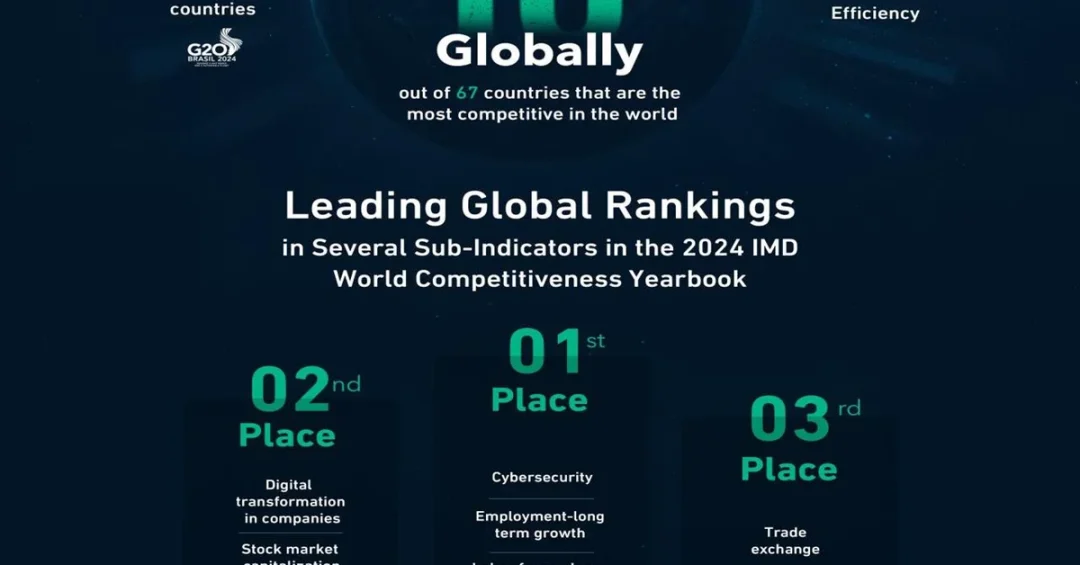
Saudi Arabia has been ranked 16th out of 67 countries in the 2024 IMD World Competitiveness Yearbook, marking a one-position improvement from last year and placing the Kingdom fourth among G20 nations. The annual report, published by the Swiss-based Institute for Management Development (IMD), was released on June 18, 2024, in Riyadh. The ranking reflects Saudi Arabia’s sustained progress in business legislation, infrastructure, and economic transformation under Vision 2030, as confirmed by the National Competitiveness Center (NCC) in collaboration with government agencies.
Context and Background
The IMD World Competitiveness Yearbook is a globally recognized benchmarking tool that assesses how countries manage their economic and human resources to foster competitiveness. It evaluates 67 economies across four main axes: economic performance, government efficiency, business efficiency, and infrastructure. Saudi Arabia’s 16th place overall is a testament to its ongoing reforms, which have been championed by His Royal Highness Prince Mohammed bin Salman bin Abdulaziz Al Saud, Crown Prince and Prime Minister. The Kingdom’s consistent rise in international competitiveness indices underscores the effectiveness of Vision 2030 in diversifying the economy and enhancing the business environment.
Key Details
This year’s ranking highlights several areas of strength for Saudi Arabia. On the business efficiency axis, the Kingdom advanced from 13th to 12th place, driven by improvements in business legislation and infrastructure. While infrastructure remains in its 34th position, the Kingdom continues to excel in economic performance and government efficiency, both staying within the top 20 globally.
Minister of Commerce and Chairman of the National Competitiveness Center, Dr. Majid Al-Qasabi, attributed the positive results to the economic transformation process led by the government under the directives of Crown Prince Mohammed bin Salman. He noted that the reforms have propelled Saudi Arabia to top-three positions in 24 key indicators. Specifically, the Kingdom secured the global top spot in long-term employment growth, social cohesion, long-term labor market growth, awareness about the need for economic and social reforms, cybersecurity, and internet user penetration per thousand residents.
Saudi Arabia also ranked second globally in digital transformation in companies, stock market capitalization, venture capital availability, technological development and application, and access to financing for technical advancements. Third-place rankings were achieved in trade, economic resilience, government adaptability to economic changes, unemployment legislation, and overall early-stage entrepreneurial activity.
Implications and Impact
The improved competitiveness ranking has significant implications for Saudi Arabia’s regional and international standing. It reinforces the Kingdom’s position as a leading economy in the Middle East and a key player in the G20. The progress in business legislation and infrastructure signals a more attractive environment for foreign investment, which is crucial for achieving the goals of Vision 2030, including economic diversification and job creation. Moreover, the top rankings in social cohesion and cybersecurity reflect the Kingdom’s commitment to sustainable development and digital resilience, which are essential for long-term prosperity. This recognition by the IMD enhances Saudi Arabia’s global reputation and supports its efforts to become a hub for innovation and business.
Vision 2030 Alignment
The 2024 IMD World Competitiveness Yearbook ranking is a clear indicator of the progress Saudi Arabia is making under Vision 2030. The Kingdom’s advancements in business efficiency, digital transformation, and economic resilience align directly with the Vision’s objectives to diversify the economy, improve government efficiency, and enhance the quality of life for citizens. As Saudi Arabia continues to implement ambitious reforms and mega-projects, such as NEOM and the Public Investment Fund’s strategic initiatives, its competitiveness on the world stage is expected to rise further. This achievement not only validates the Kingdom’s current trajectory but also sets the stage for a future where Saudi Arabia is recognized as a global leader in competitiveness and innovation.
20 Questions
Q1. What rank did Saudi Arabia achieve in the 2024 IMD World Competitiveness Yearbook?
A1. Saudi Arabia ranked 16th out of 67 countries in the 2024 IMD World Competitiveness Yearbook, improving by one position from the previous year and placing fourth among G20 nations.
Q2. Which organization publishes the IMD World Competitiveness Yearbook?
A2. The yearbook is published by the Swiss-based Institute for Management Development (IMD), a globally recognized authority on competitiveness benchmarking for countries and companies.
Q3. What are the four main axes evaluated by the IMD World Competitiveness Yearbook?
A3. The four axes are economic performance, government efficiency, business efficiency, and infrastructure. These provide a comprehensive view of a country’s competitiveness landscape.
Q4. How did Saudi Arabia perform on the business efficiency axis?
A4. Saudi Arabia advanced from 13th to 12th place on the business efficiency axis, driven by improvements in business legislation and infrastructure.
Q5. Who attributed the positive results to the economic transformation process?
A5. Dr. Majid Al-Qasabi, Minister of Commerce and Chairman of the National Competitiveness Center, attributed the results to the economic transformation championed by Crown Prince Mohammed bin Salman.
Q6. In how many key indicators did Saudi Arabia rank in the top three?
A6. Saudi Arabia ranked in the top three in 24 key indicators, showcasing its broad-based competitiveness across various sectors.
Q7. In which indicators did Saudi Arabia secure the global top spot?
A7. The Kingdom ranked first globally in long-term employment growth, social cohesion, long-term labor market growth, awareness of the need for reforms, cybersecurity, and internet user penetration.
Q8. What is Saudi Arabia’s rank in digital transformation in companies?
A8. Saudi Arabia ranked second globally in digital transformation in companies, reflecting its advanced technological adoption and innovation ecosystem.
Q9. How does the ranking reflect on Saudi Arabia’s G20 standing?
A9. The ranking places Saudi Arabia fourth among G20 countries, reinforcing its position as a leading economy within the group of major global economies.
Q10. What is the significance of the National Competitiveness Center in this ranking?
A10. The National Competitiveness Center prepares the report in collaboration with government agencies, ensuring accurate data and highlighting Saudi Arabia’s competitive strengths.
Q11. In which areas did Saudi Arabia rank third globally?
A11. Saudi Arabia ranked third in trade, economic resilience, government adaptability to economic changes, unemployment legislation, and overall early-stage entrepreneurial activity.
Q12. How does the IMD ranking impact foreign investment in Saudi Arabia?
A12. The improved ranking signals a more attractive business environment, potentially increasing foreign investment, which is vital for Vision 2030’s economic diversification goals.
Q13. What does the infrastructure ranking indicate about Saudi Arabia?
A13. Infrastructure remains at 34th position, indicating ongoing development. The Kingdom continues to invest in infrastructure as part of its long-term strategic plans.
Q14. How does cybersecurity ranking reflect Saudi Arabia’s digital resilience?
A14. Ranking first in cybersecurity demonstrates Saudi Arabia’s robust digital infrastructure and commitment to protecting its cyberspace, essential for national security and economic stability.
Q15. What role did Crown Prince Mohammed bin Salman play in this achievement?
A15. As Crown Prince and Prime Minister, he has directed the economic transformation and Vision 2030 initiatives that have driven these competitiveness improvements.
Q16. How does the ranking align with Vision 2030 objectives?
A16. The ranking aligns with Vision 2030’s goals of economic diversification, improved government efficiency, and enhanced quality of life, validating the Kingdom’s reform trajectory.
Q17. What does the ranking say about Saudi Arabia’s labor market?
A17. Strong performance in long-term employment and labor market growth indicators indicates a dynamic and expanding labor market, supported by ongoing reforms.
Q18. How does social cohesion contribute to Saudi Arabia’s competitiveness?
A18. Ranking first in social cohesion highlights national unity and stability, which are foundational for sustainable economic growth and competitiveness.
Q19. What are the implications for Saudi Arabia’s entrepreneurial ecosystem?
A19. Third place in early-stage entrepreneurial activity and second in venture capital availability show a thriving ecosystem that fosters innovation and startup growth.
Q20. What does this ranking mean for Saudi Arabia’s global role?
A20. It reinforces Saudi Arabia’s position as a competitive global player, enhancing its influence in international economic forums and attracting partnerships aligned with Vision 2030.
Reader Feedback
We value your thoughts. Please share your feedback on this article.
Your feedback helps us improve our coverage.