


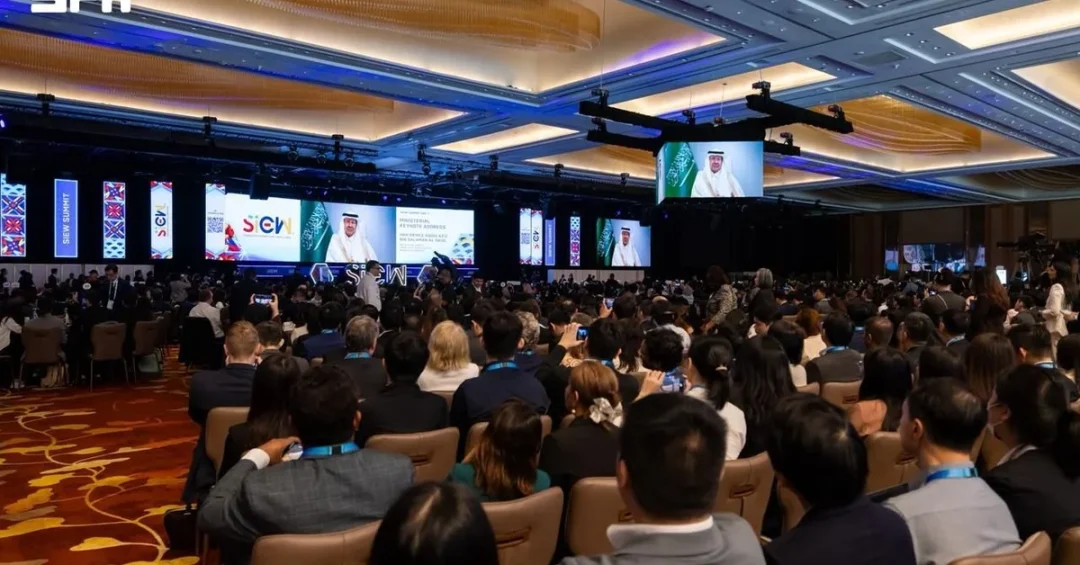
The Kingdom of Saudi Arabia’s Ministry of Energy and Singapore’s Ministry of Energy, Trade and Industry announced on October 26, 2026, their joint intent to establish a crude oil storage arrangement in Singapore, with operations expected to begin in the second half of 2027. The announcement was marked at Singapore International Energy Week (SIEW), where Singapore’s Energy Market Authority and JTC Corporation exchanged a memorandum of understanding with the Saudi Arabian Oil Company (Saudi Aramco), the Kingdom’s national oil company, as a first step toward realizing the arrangement. Under the proposed plan, Saudi crude oil would be stored at the Jurong Rock Caverns on Singapore’s Jurong Island, one of Asia’s most advanced underground storage facilities.
The development represents a significant milestone in energy cooperation between the two countries and reflects a shared commitment to strengthening regional energy security. For Saudi Arabia, the arrangement extends the reach of its crude oil supply chain into Southeast Asia, one of the world’s fastest-growing demand centers for energy. For Singapore, it reinforces the city-state’s position as a key regional energy hub and adds a strategic buffer against potential supply disruptions. The announcement was carried by the Saudi Press Agency (SPA), the Kingdom’s official news authority, underscoring the formal and government-backed nature of the initiative. But what does this arrangement actually mean for global energy markets, and why is it being pursued now?
Context and Background
The new arrangement builds on decades of steadily deepening ties between Saudi Arabia and Singapore, two nations whose economic relationship has long been anchored in energy trade. Saudi Arabia is the world’s largest exporter of crude oil and a central pillar of global energy supply, while Singapore hosts one of the largest and most sophisticated refining and trading complexes in Asia. The two countries have cooperated on energy matters for years, but the proposed storage arrangement marks a more formal, infrastructure-based commitment than previous commercial exchanges. The timing is notable: global energy markets have faced repeated disruptions in recent years, from geopolitical tensions to shipping bottlenecks, making storage capacity a matter of strategic importance for import-dependent economies.
Singapore’s Jurong Rock Caverns, located about 150 meters below the seabed of Jurong Island, are a marvel of engineering and a cornerstone of the country’s energy infrastructure. Completed in phases and operated by JTC Corporation, the caverns provide secure, environmentally sound underground storage for liquid hydrocarbons. Their use for Saudi crude oil would give the Kingdom a physical presence in one of Asia’s most important energy logistics nodes. For Singapore, which imports nearly all of its energy needs, hosting Saudi crude in these caverns offers a tangible layer of supply security that complements its existing commercial storage and refining ecosystem.
The memorandum of understanding exchanged at Singapore International Energy Week is not a final commercial contract, but it is a formal signal of intent. It commits the relevant entities — Singapore’s Energy Market Authority, JTC Corporation, and Saudi Aramco — to work toward a definitive arrangement. The two ministries will coordinate implementation with relevant entities, ensuring that regulatory, logistical, and commercial considerations are addressed. Why has this particular moment been chosen to formalize such cooperation? The answer lies in the convergence of Saudi Arabia’s Vision 2030 economic diversification agenda and Singapore’s relentless pursuit of energy resilience.
Key Details of the Proposed Arrangement
Under the proposed arrangement, Saudi crude oil would be stored at the Jurong Rock Caverns on Jurong Island, with storage operations expected to commence in the second half of 2027. The stored crude oil would serve a dual purpose: it would support Singapore’s energy needs in the event of a supply disruption, strengthening the country’s energy security and resilience, and it would enhance the resilience of the Saudi crude oil supply chain in Southeast Asia. This is not merely a commercial storage deal; it is a strategic partnership that recognizes the interdependence of producer and consumer in a volatile world.
The arrangement also reflects Saudi Arabia’s broader strategy of deepening its engagement with Asian markets. Asia accounts for the majority of Saudi crude oil exports, and Southeast Asia in particular is expected to see rising energy demand as its economies grow. By establishing a storage foothold in Singapore, Saudi Arabia can respond more flexibly to regional demand shifts, optimize delivery schedules, and strengthen relationships with key customers. For Singapore, the presence of Saudi crude in its underground caverns adds a sovereign-grade supply buffer that can be drawn upon during emergencies, complementing its existing commercial inventories and government-managed stockpiles.
The memorandum of understanding was exchanged between Singapore’s Energy Market Authority and JTC Corporation on one side and Saudi Aramco on the other, with the two ministries — Saudi Arabia’s Ministry of Energy and Singapore’s Ministry of Energy, Trade and Industry — providing the overarching governmental framework. This multi-stakeholder structure ensures that both public and commercial interests are aligned. The involvement of JTC Corporation, which manages Singapore’s industrial land and infrastructure, highlights the physical and logistical dimensions of the project. The Energy Market Authority’s role underscores the regulatory and market oversight necessary for such an arrangement. And Saudi Aramco’s participation brings the operational expertise of the world’s largest oil company.
International and Regional Impact
The announcement carries implications that extend well beyond the two countries. Southeast Asia is a region of growing energy demand, with countries like Indonesia, Vietnam, and the Philippines seeking reliable and affordable energy supplies to fuel their economic development. A Saudi crude oil storage hub in Singapore could serve as a distribution point for the wider region, enhancing the efficiency of supply chains and reducing the risk of shortages. For international oil markets, the arrangement signals Saudi Arabia’s continued commitment to being a reliable supplier, even as the world navigates the energy transition. It also reinforces Singapore’s status as a neutral, trusted hub for energy trade and logistics.
From a geopolitical perspective, the arrangement deepens ties between the Gulf and Southeast Asia at a time when global energy flows are being reconfigured. Saudi Arabia has been strengthening its relationships across Asia, from China to India to Japan, and Singapore is a natural partner given its strategic location, stable business environment, and world-class infrastructure. The move also aligns with Saudi Arabia’s Vision 2030, which seeks to diversify the Kingdom’s economy and expand its international partnerships beyond traditional Western markets. For Singapore, the arrangement is part of a broader strategy to diversify energy sources and build resilience against supply shocks, a priority that has only grown more urgent in recent years.
Regional energy security is a shared public good, and this arrangement contributes to it by ensuring that a critical mass of crude oil is available in a location that can quickly serve multiple markets. In the event of a disruption — whether due to conflict, natural disaster, or logistical failure — the stored Saudi crude could be released to stabilize supplies. This kind of cooperation is increasingly important as the world faces the twin challenges of meeting rising energy demand while transitioning to cleaner sources. The Saudi-Singapore arrangement does not conflict with the energy transition; rather, it provides a pragmatic bridge by ensuring that conventional energy remains reliable while new technologies scale up.
Economic and Strategic Significance
The economic significance of the arrangement is multifaceted. For Saudi Arabia, it represents an investment in downstream infrastructure that can enhance the value of its crude oil exports. By storing oil closer to end-users, Saudi Aramco can reduce delivery times, lower transportation costs, and respond more nimbly to market signals. It also strengthens the Kingdom’s position as a preferred supplier, which is crucial in a competitive global oil market. For Singapore, the arrangement attracts high-value energy activity to its shores, supports its refining and trading industries, and reinforces its reputation as a reliable energy hub. The Jurong Rock Caverns, already a strategic asset, will see their utilization enhanced, generating revenue and reinforcing their operational relevance.
Strategically, the arrangement is a vote of confidence in Singapore’s infrastructure and governance. Saudi Arabia does not enter into such arrangements lightly; the choice of Singapore reflects the city-state’s political stability, legal certainty, and technical competence. It also signals to other oil producers and consumers that Singapore is a partner of choice for energy storage and trading. For Saudi Arabia, the arrangement is part of a broader effort to secure market share in Asia, where competition from other producers — including Russia, the United States, and African nations — has intensified. By embedding itself in Singapore’s energy ecosystem, Saudi Arabia gains a durable advantage in a key growth region.
The arrangement also has implications for the global energy transition. As the world moves toward cleaner energy, the role of oil will evolve, but it will remain a critical part of the energy mix for decades to come. Storage arrangements like this one help manage the intermittency and supply risks that can accompany the transition. They also provide a foundation for future cooperation in areas such as hydrogen, carbon capture, and renewable energy. Saudi Arabia and Singapore have already signaled interest in collaborating on clean energy technologies, and the crude oil storage arrangement could serve as a stepping stone to broader energy partnerships.
Vision 2030 Alignment
The crude oil storage arrangement aligns closely with Saudi Arabia’s Vision 2030, the Kingdom’s ambitious blueprint for economic diversification and global engagement. Vision 2030 seeks to transform Saudi Arabia from an oil-dependent economy into a diversified one, but it also recognizes the continued importance of the energy sector as a foundation for growth. By expanding its international energy partnerships, Saudi Arabia strengthens its role as a reliable global energy supplier while building the relationships and infrastructure that will support future diversification. The arrangement with Singapore is a concrete example of how the Kingdom is deepening ties with key Asian economies, a priority under Vision 2030’s goal of expanding non-oil trade and investment.
Moreover, the arrangement reflects the Vision 2030 principle of leveraging Saudi Arabia’s natural advantages — in this case, its vast hydrocarbon resources — to build strategic partnerships that benefit both parties. It also supports the goal of enhancing the resilience of Saudi crude oil supply chains, which is essential for maintaining the Kingdom’s market position. For Singapore, the arrangement complements its own long-term energy strategy, which emphasizes diversification, resilience, and sustainability. Together, the two countries are demonstrating how producer-consumer cooperation can advance shared interests in energy security and economic prosperity. As the arrangement moves toward implementation in the second half of 2027, it will serve as a model for international energy collaboration in an uncertain world.
20 Questions
Q1. What did Saudi Arabia and Singapore announce on October 26, 2026?
A1. They announced their joint intent to establish a crude oil storage arrangement in Singapore, with operations expected to begin in the second half of 2027, as stated by the Saudi Press Agency.
Q2. Where will the Saudi crude oil be stored under the proposed arrangement?
A2. The crude oil would be stored at the Jurong Rock Caverns on Singapore’s Jurong Island, a secure underground storage facility operated by JTC Corporation.
Q3. Which Saudi entity is involved in the memorandum of understanding?
A3. The Saudi Arabian Oil Company, known as Saudi Aramco, exchanged the memorandum of understanding with Singapore’s Energy Market Authority and JTC Corporation at Singapore International Energy Week.
Q4. What is the purpose of storing Saudi crude oil in Singapore?
A4. The stored crude oil will support Singapore’s energy needs in the event of a supply disruption, strengthening its energy security, and will enhance the resilience of the Saudi crude oil supply chain in Southeast Asia.
Q5. When are storage operations expected to commence?
A5. Storage operations are expected to commence in the second half of 2027, according to the official announcement.
Q6. Which Saudi ministry is involved in the arrangement?
A6. The Kingdom of Saudi Arabia’s Ministry of Energy is involved, working closely with Singapore’s Ministry of Energy, Trade and Industry to advance the arrangement.
Q7. What is the significance of the Jurong Rock Caverns?
A7. The Jurong Rock Caverns are underground storage facilities located about 150 meters below the seabed of Jurong Island, providing secure and environmentally sound storage for liquid hydrocarbons.
Q8. How does this arrangement benefit Saudi Arabia?
A8. It enhances the resilience of the Saudi crude oil supply chain in Southeast Asia, strengthens ties with a key Asian market, and supports the Kingdom’s Vision 2030 goals of global engagement.
Q9. How does this arrangement benefit Singapore?
A9. It strengthens Singapore’s energy security and resilience by providing a strategic buffer of crude oil in the event of supply disruptions, and reinforces its role as a regional energy hub.
Q10. What was exchanged at Singapore International Energy Week?
A10. A memorandum of understanding was exchanged between Singapore’s Energy Market Authority and JTC Corporation with Saudi Aramco, marking a first step toward realizing the arrangement.
Q11. What role will the two ministries play in implementing the arrangement?
A11. The Ministry of Energy of Saudi Arabia and Singapore’s Ministry of Energy, Trade and Industry will work closely to advance the arrangement and coordinate its implementation with relevant entities.
Q12. Does the arrangement conflict with the global energy transition?
A12. No, it provides a pragmatic bridge by ensuring conventional energy remains reliable while new technologies scale up, supporting a stable transition.
Q13. What is the strategic importance of Singapore as an energy hub?
A13. Singapore hosts one of Asia’s largest refining and trading complexes, making it a key regional energy hub and a natural partner for Saudi Arabia’s supply chain expansion.
Q14. How does this arrangement align with Saudi Vision 2030?
A14. It aligns with Vision 2030 by deepening international energy partnerships, expanding non-oil trade and investment ties, and leveraging Saudi Arabia’s resources for strategic global engagement.
Q15. What happens in the event of a supply disruption?
A15. The stored Saudi crude oil can be released to support Singapore’s energy needs, stabilizing supplies and enhancing the country’s resilience against shocks.
Q16. Is this a final commercial contract?
A16. No, the memorandum of understanding is a formal signal of intent, committing the entities to work toward a definitive arrangement, not a final commercial contract.
Q17. What are the implications for Southeast Asia?
A17. The arrangement could serve as a distribution point for the wider region, enhancing supply chain efficiency and reducing the risk of shortages in growing economies.
Q18. How does this reflect Saudi Arabia’s global energy role?
A18. It reflects Saudi Arabia’s continued commitment to being a reliable global energy supplier and its strategy of strengthening relationships across Asia.
Q19. What other areas of cooperation might follow?
A19. The arrangement could serve as a stepping stone to broader energy partnerships, including potential collaboration in hydrogen, carbon capture, and renewable energy technologies.
Q20. What is the expected timeline for the project?
A20. The memorandum of understanding was exchanged in October 2026, and storage operations are expected to commence in the second half of 2027, pending final agreements.
Reader Feedback
We value your thoughts. Please share your feedback on this article.
Your feedback helps us improve our coverage.