


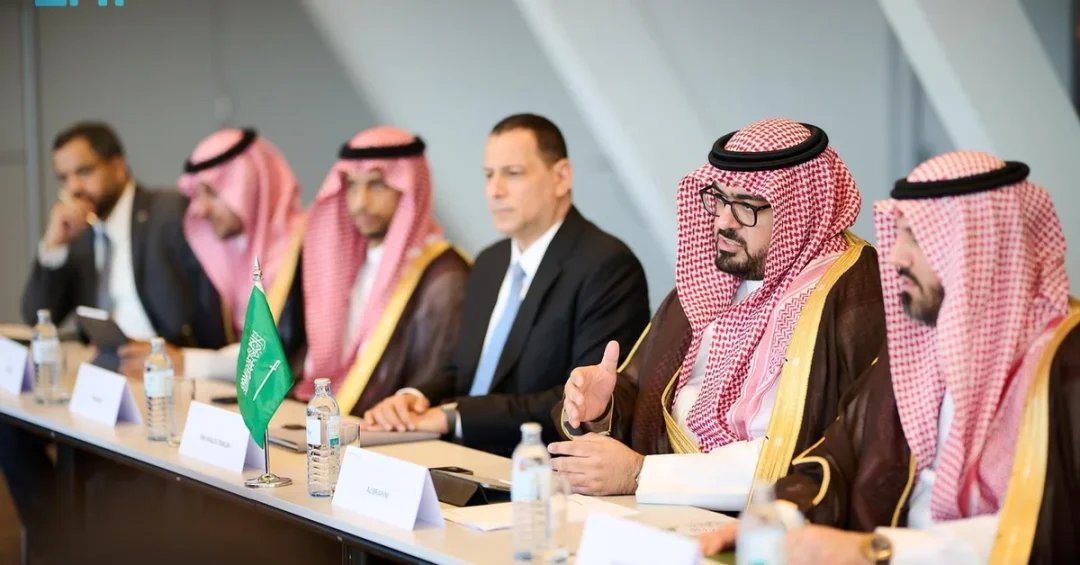
Minister of Economy and Planning Faisal bin Fadhil Alibrahim met with Austrian Minister of Labour and Economy Martin Kocher in Vienna on May 27, 2024, on the sidelines of the ninth session of the Saudi-Austrian Joint Committee. The high-level talks focused on strengthening trade and economic cooperation between the Kingdom of Saudi Arabia and the Republic of Austria, reflecting a shared commitment to deepening bilateral relations.
Context and Background
The meeting underscores the ongoing diplomatic and economic engagement between Saudi Arabia and Austria. The Saudi-Austrian Joint Committee, established to foster bilateral collaboration, serves as a platform for discussing trade, investment, and economic policies. This ninth session highlights the continuity and maturity of the partnership, with both nations seeking to explore new opportunities in line with their respective economic visions.
Saudi Arabia’s Vision 2030, an ambitious roadmap for economic diversification, prioritizes international partnerships that bring technology, expertise, and investment. Austria, a leading European economy, offers strengths in engineering, renewable energy, and high-tech industries, making it a valuable ally in the Kingdom’s transformation journey. The meeting aligns with Saudi Arabia’s broader strategy to strengthen ties with European partners.
Key Details
During the meeting, the two ministers exchanged views on the latest developments of common interest, including trade flows, investment opportunities, and potential collaborative projects. The Saudi Ambassador to Austria, Dr. Abdullah Tawlah, attended the session, underscoring the diplomatic importance of the dialogue. The ministers reaffirmed their commitment to facilitating business-to-business connections and removing barriers to trade.
According to official reports from the Saudi Press Agency, the discussions were constructive and forward-looking. The two sides emphasized the importance of the Joint Committee as a mechanism to track progress and address challenges. This meeting serves as a building block for future cooperation, with potential agreements and memorandums of understanding expected in the coming months.
Implications and Impact
The strengthening of Saudi-Austrian economic ties has significant implications for both countries. For Saudi Arabia, access to Austrian technology and innovation supports the development of non-oil sectors, particularly in manufacturing, renewable energy, and digital infrastructure. For Austria, the partnership opens doors to the dynamic Saudi market, which is rapidly diversifying and investing heavily in infrastructure and industry.
The meeting also signals a broader trend of Saudi Arabia deepening its engagement with European nations. By fostering such alliances, the Kingdom positions itself as a global hub for trade and investment, consistent with its strategic location and economic ambitions. The outcome of these discussions could lead to increased bilateral investments, joint ventures, and knowledge exchange, benefiting both economies.
Vision 2030 Alignment
The discussions between Minister Alibrahim and Minister Kocher directly support Saudi Arabia’s Vision 2030 goals. The Kingdom’s ambitious reform agenda aims to reduce oil dependence and promote a diversified, knowledge-based economy. International partnerships are critical to this transformation, bringing in expertise and capital. By strengthening ties with Austria, Saudi Arabia advances its objective of becoming a top global investment destination.
Moreover, the Joint Committee meetings reflect the government’s proactive approach to international diplomacy, building bridges with like-minded nations. This aligns with Vision 2030’s emphasis on open engagement and global competitiveness. The forward-looking dialogue sets the stage for tangible outcomes that will contribute to the prosperity of both nations and solidify their economic partnership for years to come.
20 Questions
Q1. Who were the key participants in the Saudi-Austrian Joint Committee meeting?
A1. The key participants were Saudi Arabia’s Minister of Economy and Planning Faisal bin Fadhil Alibrahim and Austria’s Minister of Labour and Economy Martin Kocher, with the Saudi Ambassador to Austria, Dr. Abdullah Tawlah, also in attendance.
Q2. Where and when did the meeting take place?
A2. The meeting took place in Vienna, Austria, on May 27, 2024, on the sidelines of the ninth session of the Saudi-Austrian Joint Committee.
Q3. What was the primary focus of the discussion?
A3. The primary focus was on strengthening trade and economic cooperation between Saudi Arabia and Austria, including exploring new opportunities for investment and collaboration.
Q4. Why is the Saudi-Austrian Joint Committee significant?
A4. The Joint Committee serves as a formal platform for bilateral dialogue, allowing both nations to review progress, address challenges, and set directions for enhanced economic and trade relations.
Q5. How does this meeting align with Saudi Arabia’s Vision 2030?
A5. It aligns by fostering international partnerships that support economic diversification, knowledge transfer, and the development of non-oil sectors, all core goals of Vision 2030.
Q6. What are Austria’s key economic strengths relevant to Saudi Arabia?
A6. Austria is known for its engineering, renewable energy technologies, high-tech manufacturing, and innovative startups, which can contribute to Saudi Arabia’s modernization and industrial advancement.
Q7. How might this meeting impact bilateral trade volumes?
A7. The meeting is expected to pave the way for increased trade volumes by improving the business environment, reducing barriers, and encouraging joint ventures, which could lead to higher exports and imports.
Q8. What is the role of the Saudi Ambassador in such discussions?
A8. The Saudi Ambassador provides diplomatic support, ensures alignment with national interests, and facilitates communication between the two governments, strengthening the bilateral relationship.
Q9. Are there any specific sectors mentioned for cooperation?
A9. While specific sectors were not detailed in the official report, typical areas include renewable energy, technology, manufacturing, and infrastructure, given Austria’s expertise.
Q10. How often does the Saudi-Austrian Joint Committee meet?
A10. The Joint Committee meets periodically, with the ninth session occurring in 2024, indicating a consistent and ongoing diplomatic engagement between the two countries.
Q11. What is the broader significance of Saudi-European economic ties?
A11. Saudi-European ties are crucial for Vision 2030 as they bring investment, technology, and market access, helping the Kingdom integrate into the global economy and diversify its partners.
Q12. How did the ministers characterize the current state of relations?
A12. The ministers discussed strengthening cooperation, suggesting a positive and forward-looking relationship, with both sides eager to expand their economic partnership.
Q13. What outcomes are expected from this meeting?
A13. Expected outcomes include deeper trade agreements, joint investment projects, and follow-up meetings to operationalize discussed opportunities, enhancing mutual economic benefits.
Q14. How does this meeting contribute to Saudi Arabia’s global engagement?
A14. It demonstrates Saudi Arabia’s proactive diplomacy and commitment to building strong international alliances, which is essential for its global standing and economic attractiveness.
Q15. What challenges might arise in Saudi-Austrian economic cooperation?
A15. Potential challenges include differing regulatory environments, logistical issues, and cultural barriers, but the Joint Committee framework helps mitigate such obstacles through dialogue.
Q16. How can Austrian businesses benefit from the Saudi market?
A16. Austrian businesses can access a large, rapidly growing market with high demand for infrastructure, renewable energy, and advanced technology, supported by Saudi government incentives.
Q17. What role does the Joint Committee play in facilitating business connections?
A17. The Joint Committee acts as a bridge, connecting government agencies and private sector entities, organizing events, and providing a structured forum for discussing trade facilitation.
Q18. Is this the first meeting between these two ministers?
A18. The report does not specify if it is the first, but it is part of an ongoing series of high-level exchanges under the Joint Committee, suggesting a continued dialogue.
Q19. How does this meeting align with Saudi Arabia’s economic diversification efforts?
A19. By partnering with advanced economies like Austria, Saudi Arabia gains access to new technologies and industries, accelerating the development of non-oil sectors such as manufacturing and services.
Q20. What is the next step following this discussion?
A20. The next step is likely for both sides to follow up on specific proposals, potentially leading to memorandums of understanding or joint working groups to implement agreed actions.
Reader Feedback
We value your thoughts. Please share your feedback on this article.
Your feedback helps us improve our coverage.