


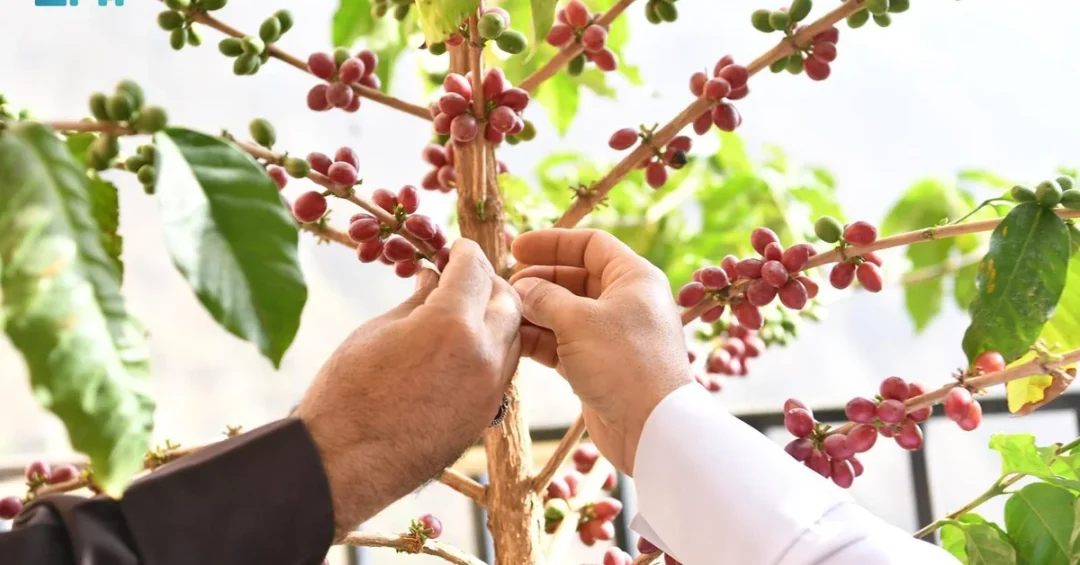
The Royal Commission for Jubail and Yanbu has granted the Saudi Coffee Company a license to establish the first coffee-production factory in Jazan for basic and transformational industries, marking a significant step in the Kingdom’s efforts to become a global leader in coffee production and export. The license was handed over by Eng. Khalid Al-Salem, President of the Royal Commission for Jubail and Yanbu, to the Saudi Coffee Company, which is owned by the Public Investment Fund (PIF), during a ceremony in Jazan. The factory, which will cover an area of 30,000 square meters, is designed to produce and export the finest types of Saudi coffee, boost local and global supply chains, and contribute to the sustainability of the coffee sector, in line with the goals of Saudi Vision 2030.
Context and Background
Jazan region, located in the southwest of Saudi Arabia, is renowned for its rich agricultural heritage and is considered a major home for fine Saudi coffee. The region’s unique climate and terrain have supported coffee cultivation for centuries, producing beans known for their distinct flavor and quality. The establishment of this factory represents a strategic move to modernize and expand the coffee industry, transforming traditional practices into a globally competitive sector. The Saudi Coffee Company, a PIF-owned entity, focuses on supporting local coffee production and promoting Saudi coffee internationally. This initiative aligns with the Kingdom’s broader economic diversification efforts under Vision 2030, which aims to reduce dependence on oil and develop non-oil sectors.
Key Details
The license was granted following Jazan’s signing of a package of investment agreements and capital contracts, underscoring the region’s growing attractiveness for industrial investments. The factory will be dedicated to both basic and transformational industries, meaning it will handle primary processing as well as value-added production, such as roasting, packaging, and branding. With a total area of 30,000 square meters, the facility is expected to significantly enhance the local supply chain by creating jobs, supporting local farmers, and increasing the volume of coffee exports. Eng. Khalid Al-Salem emphasized the Royal Commission’s commitment to facilitating such projects, which are vital for regional development and economic growth. The Saudi Coffee Company will also play a key role in developing sustainable agriculture in Jazan, ensuring that coffee farming remains viable for future generations while raising the Kingdom’s ability to export the finest Saudi coffee beans to international markets.
Implications and Impact
The establishment of this factory is set to have far-reaching implications for both the local and global coffee industry. Locally, it will stimulate economic activity in Jazan by creating employment opportunities, enhancing infrastructure, and supporting small-scale farmers through improved access to markets and resources. Nationally, it reinforces Saudi Arabia’s position as a producer of high-quality coffee, reducing reliance on imports and boosting export potential. Internationally, the factory will introduce Saudi coffee to new markets, capitalizing on the growing global demand for specialty coffee. This move also strengthens the Kingdom’s food security and agricultural resilience, key components of Vision 2030. Furthermore, it demonstrates how targeted investments in underdeveloped regions can drive sustainable development and foster innovation in traditional industries.
Vision 2030 Alignment
This initiative is a direct reflection of Saudi Vision 2030’s objectives to diversify the economy, promote non-oil exports, and empower regions like Jazan. By leveraging the PIF’s resources and the Royal Commission’s support, the project embodies the Kingdom’s commitment to sustainable development and global engagement. As Saudi Arabia continues to expand its agricultural and industrial capabilities, the Jazan coffee factory stands as a testament to the nation’s forward-looking strategy, ensuring that the legacy of Saudi coffee thrives in the modern era and contributes to the Kingdom’s prosperity on the world stage.
20 Questions
Q1. What license was granted to the Saudi Coffee Company?
A1. The Royal Commission for Jubail and Yanbu granted the Saudi Coffee Company a license to establish the first coffee-production factory in Jazan for basic and transformational industries.
Q2. Who handed over the license to the Saudi Coffee Company?
A2. Eng. Khalid Al-Salem, President of the Royal Commission for Jubail and Yanbu, handed over the license to the Saudi Coffee Company.
Q3. Where will the factory be located?
A3. The factory will be located in Jazan, a region known for its fine Saudi coffee.
Q4. What is the size of the factory?
A4. The factory will extend over an area of 30,000 square meters.
Q5. What types of industries will the factory cover?
A5. The factory will cover basic and transformational industries related to coffee production.
Q6. Who owns the Saudi Coffee Company?
A6. The Saudi Coffee Company is owned by the Public Investment Fund (PIF).
Q7. What are the main goals of the factory?
A7. The factory aims to produce and export the finest types of Saudi coffee, boost local and global supply chains, and contribute to the sustainability of the coffee sector.
Q8. How does the factory align with Saudi Vision 2030?
A8. It aligns with Vision 2030 by diversifying the economy, promoting non-oil exports, and supporting regional development.
Q9. What preceded the granting of the license?
A9. The license followed Jazan’s signing of a package of investment agreements and capital contracts.
Q10. What role does Jazan play in Saudi coffee production?
A10. Jazan is a major home for fine Saudi coffee, with a long history of coffee cultivation.
Q11. How will the factory impact local farmers?
A11. It will support local farmers by providing better market access, resources, and opportunities for sustainable agriculture.
Q12. What economic benefits will the factory bring to Jazan?
A12. It will create jobs, stimulate local economic activity, and enhance infrastructure in the region.
Q13. How will the factory affect Saudi Arabia’s coffee exports?
A13. It will increase the volume and quality of Saudi coffee exports, introducing them to new international markets.
Q14. What is the significance of the factory for the global coffee industry?
A14. It will add a new origin of high-quality coffee to the global market, catering to the growing demand for specialty coffee.
Q15. How does the factory contribute to food security?
A15. By boosting local coffee production, it reduces reliance on imports and strengthens the Kingdom’s food security.
Q16. What is the expected timeframe for the factory’s construction?
A16. The article does not specify the timeframe, but such projects typically proceed following licensing and investment agreements.
Q17. Will the factory use advanced technology?
A17. As a modern facility, it is expected to incorporate advanced processing and production technologies.
Q18. How does this project reflect Saudi Arabia’s economic diversification?
A18. It exemplifies the shift towards non-oil sectors, leveraging agriculture and industry to drive sustainable growth.
Q19. What other regions in Saudi Arabia produce coffee?
A19. Jazan is the primary region, but coffee is also cultivated in other southwestern areas with suitable climates.
Q20. What is the next step after the license handover?
A20. The next steps involve finalizing investment agreements, commencing construction, and eventually starting production and export operations.
Reader Feedback
We value your thoughts. Please share your feedback on this article.
Your feedback helps us improve our coverage.