


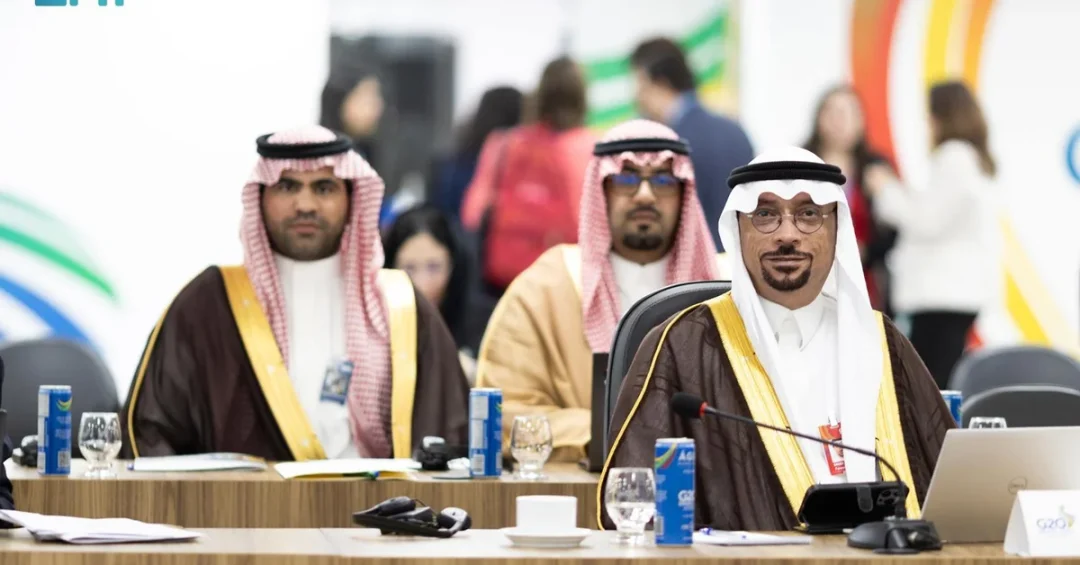
A high-level Saudi delegation, led by Fareed Al-Asaly, Deputy Governor of the General Authority of Foreign Trade for International Organizations and Agreements, participated in the fourth meeting of the Trade and Investment Working Group (TIWG) in Brasilia on October 21-22, 2024. The meeting, held under Brazil’s G20 presidency, focused on critical priorities including trade and sustainable development, women’s participation in international trade, and reforming the World Trade Organization (WTO) to bolster the multilateral trading system. Saudi Arabia’s active engagement underscores its commitment to shaping global economic policies and fostering sustainable development through international cooperation.
The Trade and Investment Working Group is a pivotal G20 platform where member states and invited countries convene to exchange expertise, build consensus, and develop principles that guide global trade and investment practices. As Brazil concludes its presidency from December 1, 2023, to November 30, 2024, the outcomes of this meeting are expected to influence the G20 Leaders’ Declaration and set non-binding principles for sustainable development in trade. Saudi Arabia’s participation highlights its strategic focus on expanding international trade interests and enhancing its global presence, aligning with the Kingdom’s Vision 2030 objectives to diversify the economy and strengthen multilateral partnerships.
Context and Background
What does it mean for a nation to actively shape the rules of global trade rather than merely abide by them? For Saudi Arabia, this question lies at the heart of its evolving role in international economic governance. The Trade and Investment Working Group (TIWG) was established under the G20 framework to address pressing issues in global trade and investment, particularly in light of shifting geopolitical dynamics and the need for sustainable development. Brazil’s G20 presidency has prioritized inclusive growth, environmental sustainability, and institutional reform, themes that resonate with Saudi Arabia’s own developmental goals.
The fourth TIWG meeting in Brasilia brought together representatives from G20 member states, including Argentina, Australia, Canada, China, France, Germany, India, Indonesia, Italy, Japan, Mexico, Russia, South Africa, South Korea, Turkey, the United Kingdom, the United States, and the European Union, alongside invited countries. Discussions centered on four key priorities: trade and sustainable development, women’s participation in international trade, sustainable development in investment agreements, and reforming the World Trade Organization to enhance the multilateral trading system. These topics reflect a global consensus on the need for trade policies that are not only economically beneficial but also socially and environmentally responsible.
Saudi Arabia’s involvement in these discussions is not new. The Kingdom has consistently participated in G20 working groups since joining the forum, leveraging its position as a major energy exporter and a growing hub for foreign investment. The General Authority of Foreign Trade, which leads Saudi delegations in such forums, is tasked with expanding the Kingdom’s international trade interests, boosting its global presence, and ensuring active participation in international and regional organizations. This mandate is directly tied to Vision 2030, which seeks to reduce dependence on oil, diversify the economy, and enhance Saudi Arabia’s competitiveness on the world stage.
Key Details
The Saudi delegation, headed by Fareed Al-Asaly, Deputy Governor of the General Authority of Foreign Trade for International Organizations and Agreements, played an active role in the Brasilia meeting. Al-Asaly’s leadership underscores the Kingdom’s commitment to high-level engagement in multilateral forums. During the two-day session, delegates discussed the TIWG’s 2024 priorities, with a particular focus on how trade policies can support sustainable development goals (SDGs). Brazil, as G20 president, aims to build consensus on targeted outcomes, including summaries of priority discussions to be included as annexes in the G20 Leaders’ Declaration and non-binding G20 principles for designing and implementing voluntary measures related to sustainable development in trade.
One of the key areas of discussion was women’s participation in international trade. This aligns with Saudi Arabia’s own reforms under Vision 2030, which have significantly increased women’s workforce participation and entrepreneurship opportunities. By sharing its experiences and learning from other nations, Saudi Arabia can further enhance its policies to empower women in trade and investment. Another critical topic was the reform of the WTO to boost the multilateral trading system. Saudi Arabia has a vested interest in a rules-based trading system that ensures fair and predictable access to markets for its exports, including petrochemicals, plastics, and metals.
Sustainable development in investment agreements was also high on the agenda. The Kingdom has been actively pursuing foreign direct investment (FDI) as part of its economic diversification strategy, with initiatives like the National Investment Strategy and the Public Investment Fund (PIF) playing a central role. By participating in discussions on sustainable investment principles, Saudi Arabia can attract responsible investors who prioritize environmental, social, and governance (ESG) criteria, thereby aligning with global best practices.
International and Regional Impact
How does a country’s participation in a G20 working group translate into tangible benefits for its people and its economy? For Saudi Arabia, the impact is multifaceted. On the international stage, active engagement in the TIWG enhances the Kingdom’s reputation as a responsible global stakeholder and a reliable partner in addressing shared challenges. It allows Saudi Arabia to contribute to the formulation of global trade norms, ensuring that its interests and perspectives are considered. This is particularly important as the global trading system faces pressures from protectionism, geopolitical tensions, and the need for climate action.
Regionally, Saudi Arabia’s leadership in the TIWG reinforces its role as a pivotal player in the Middle East and North Africa (MENA) region. By championing issues like women’s economic empowerment and sustainable development, the Kingdom sets an example for neighboring countries and strengthens its soft power. Moreover, the outcomes of the TIWG discussions can influence regional trade agreements and investment flows, creating opportunities for Saudi businesses and entrepreneurs to expand into new markets. The Kingdom’s participation also complements its efforts within other multilateral frameworks, such as the World Trade Organization and the Gulf Cooperation Council (GCC), creating a coherent and proactive trade policy.
Economic and Strategic Significance
What are the strategic gains for Saudi Arabia from its involvement in the TIWG? Economically, the Kingdom benefits from being at the table when global trade rules are discussed. A reformed WTO that addresses modern trade challenges—such as digital trade, e-commerce, and services—can open new avenues for Saudi exports and investments. The focus on sustainable development in investment agreements can help Saudi Arabia attract FDI that aligns with its environmental and social goals, particularly in renewable energy, technology, and tourism. These sectors are central to Vision 2030, which aims to increase the private sector’s contribution to GDP and create jobs for a growing young population.
Strategically, participation in the TIWG allows Saudi Arabia to build alliances and strengthen bilateral ties with major economies. The meeting in Brasilia provided an opportunity for Saudi delegates to engage with counterparts from countries like Brazil, India, and China, all of which are key trading partners. Such interactions can lead to new trade agreements, joint ventures, and knowledge exchange. Furthermore, by actively contributing to G20 outcomes, Saudi Arabia enhances its influence in global economic governance, positioning itself as a bridge between developed and developing nations. This diplomatic capital is invaluable as the Kingdom seeks to diversify its partnerships and reduce reliance on any single market.
Vision 2030 Alignment
How does Saudi Arabia’s participation in the TIWG exemplify the aspirations of Vision 2030? Vision 2030 is a comprehensive plan to transform the Kingdom’s economy and society, with a strong emphasis on international cooperation and economic diversification. The General Authority of Foreign Trade’s mission—to expand Saudi Arabia’s international trade interests and boost its global presence—is a direct reflection of this vision. By engaging in forums like the TIWG, the Kingdom not only promotes its own economic interests but also contributes to shaping a global trading system that is fair, inclusive, and sustainable.
The focus on women’s participation in international trade mirrors Vision 2030’s goal of increasing women’s participation in the workforce from 22% to 30%. Saudi Arabia has already made significant strides in this area, with women now holding leadership positions in business and government. Similarly, the emphasis on sustainable development aligns with the Kingdom’s environmental initiatives, such as the Saudi Green Initiative and the Middle East Green Initiative, which aim to combat climate change and promote green energy. By integrating these priorities into its trade and investment policies, Saudi Arabia is not only advancing its own development but also contributing to global sustainability goals. As the Kingdom continues to play an active role in the G20 and other international forums, it reinforces its commitment to a prosperous and interconnected world, in line with the visionary leadership of Crown Prince Mohammed bin Salman.
20 Questions
Q1. What is the Trade and Investment Working Group (TIWG)?
A1. The TIWG is a G20 working group that focuses on global trade and investment issues, including sustainable development, women’s participation in trade, and WTO reform. It brings together member states and invited countries to exchange views and build consensus on priorities.
Q2. Who led the Saudi delegation to the fourth TIWG meeting?
A2. The Saudi delegation was led by Fareed Al-Asaly, Deputy Governor of the General Authority of Foreign Trade for International Organizations and Agreements. His leadership reflects Saudi Arabia’s commitment to high-level engagement in multilateral forums.
Q3. Where and when was the fourth TIWG meeting held?
A3. The fourth TIWG meeting was held in Brasilia, Brazil, on October 21-22, 2024. It took place under Brazil’s G20 presidency, which runs from December 1, 2023, to November 30, 2024.
Q4. What are the key priorities discussed at the TIWG meeting?
A4. The meeting discussed trade and sustainable development, women’s participation in international trade, sustainable development in investment agreements, and reforming the World Trade Organization to boost the multilateral trading system.
Q5. What is Brazil’s goal as G20 president for the TIWG?
A5. Brazil aims to build consensus on targeted outcomes, including summaries of priority discussions for the G20 Leaders’ Declaration and non-binding G20 principles for voluntary measures related to sustainable development in trade.
Q6. Why is Saudi Arabia’s participation in the TIWG important?
A6. Saudi Arabia’s participation allows it to shape global trade rules, expand its international trade interests, and enhance its global presence. It also aligns with Vision 2030’s goals of economic diversification and international cooperation.
Q7. How does the TIWG address women’s participation in trade?
A7. The TIWG discusses policies to increase women’s participation in international trade, sharing best practices and developing principles. This aligns with Saudi Arabia’s Vision 2030 reforms that have boosted women’s workforce participation.
Q8. What is the significance of WTO reform for Saudi Arabia?
A8. WTO reform is crucial for Saudi Arabia to ensure a rules-based trading system that provides fair market access for its exports. It also helps address modern trade challenges like digital trade and e-commerce.
Q9. How does sustainable development in investment agreements benefit Saudi Arabia?
A9. It helps Saudi Arabia attract responsible foreign direct investment that aligns with environmental, social, and governance criteria. This supports the Kingdom’s economic diversification and sustainability goals under Vision 2030.
Q10. What role does the General Authority of Foreign Trade play?
A10. The General Authority of Foreign Trade seeks to expand Saudi Arabia’s international trade interests, boost its global presence, and ensure active participation in international and regional organizations to achieve shared goals and sustainable development.
Q11. How does the TIWG meeting impact global trade policies?
A11. The TIWG meeting contributes to the G20 Leaders’ Declaration and develops non-binding principles for sustainable trade. These outcomes can influence global trade practices and promote a more inclusive and sustainable trading system.
Q12. What are the economic benefits for Saudi Arabia from TIWG participation?
A12. Saudi Arabia gains from being at the table when global trade rules are discussed, potentially opening new markets for exports and attracting FDI. It also strengthens ties with major economies and enhances its influence in global economic governance.
Q13. How does Saudi Arabia’s involvement in the TIWG reflect Vision 2030?
A13. It reflects Vision 2030’s emphasis on international cooperation, economic diversification, and women’s empowerment. By engaging in the TIWG, Saudi Arabia advances its own development and contributes to global sustainability goals.
Q14. What are the non-binding G20 principles mentioned in the meeting?
A14. The non-binding G20 principles are guidelines for designing and implementing voluntary measures related to sustainable development in trade. They aim to foster consensus and encourage responsible practices among member states.
Q15. How does the TIWG facilitate exchange of expertise among countries?
A15. The TIWG provides a platform for G20 member states and invited countries to share their experiences, best practices, and views on trade and investment issues. This exchange helps build consensus and inform global policies.
Q16. What is the timeline for Brazil’s G20 presidency and the TIWG meeting?
A16. Brazil’s G20 presidency runs from December 1, 2023, to November 30, 2024. The fourth TIWG meeting was held on October 21-22, 2024, in Brasilia, as part of the presidency’s activities.
Q17. How does Saudi Arabia benefit from a reformed multilateral trading system?
A17. A reformed system ensures fair and predictable market access for Saudi exports, addresses modern trade challenges, and supports the Kingdom’s economic diversification. It also enhances Saudi Arabia’s competitiveness in global markets.
Q18. What are the implications of the TIWG for developing countries?
A18. The TIWG discussions on sustainable development and inclusive trade can benefit developing countries by promoting fair trade rules, attracting investment, and supporting their integration into the global economy.
Q19. How does Saudi Arabia’s participation in the TIWG strengthen its regional role?
A19. It reinforces Saudi Arabia’s leadership in the MENA region by championing issues like women’s empowerment and sustainable development. It also sets an example for neighboring countries and strengthens the Kingdom’s soft power.
Q20. What are the next steps after the fourth TIWG meeting?
A20. The outcomes will contribute to the G20 Leaders’ Declaration and inform future trade and investment policies. Saudi Arabia will continue to engage in G20 processes and other international forums to advance its interests and Vision 2030 goals.
Reader Feedback
We value your thoughts. Please share your feedback on this article.
Your feedback helps us improve our coverage.
Related articles
 ARDARA Partners with Parsons, OBMI for AlWadi Mega-Project
 Biban24 Forum Empowers E-Commerce Entrepreneurs in Riyadh
 Taif: An Ideal Environment for Bees and Premium Honey
 ICD Backs 21 MW Solar Plant in Türkiye with €15M
 Riyadh to Host UNIDO Industrial Policy Forum
 IsDB President Meets Rwanda’s Finance Minister in Jeddah