


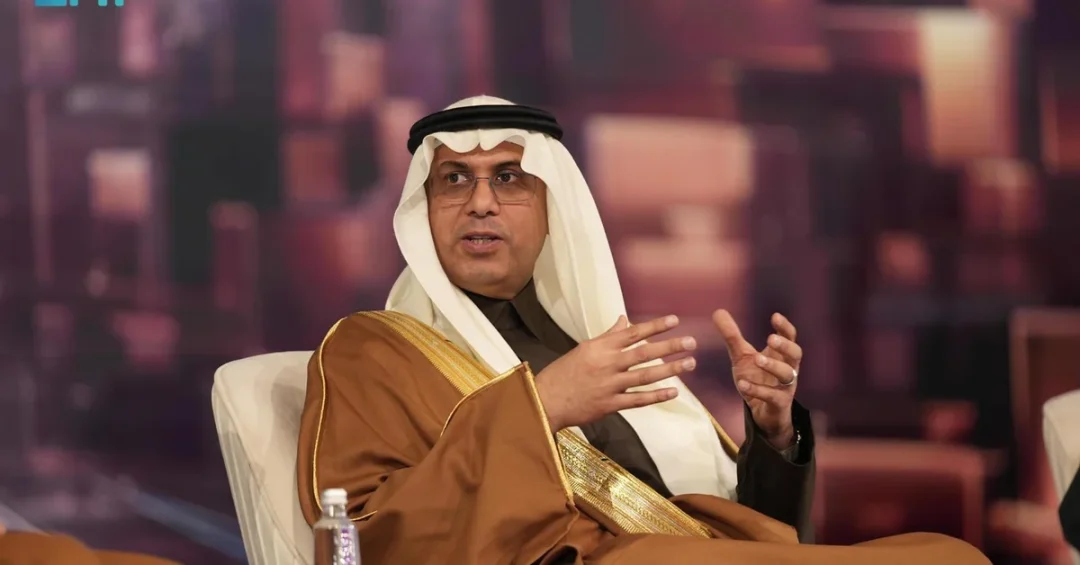
Saudi EXIM Bank has committed more than $1.5 billion in financing to support global mineral flows, reinforcing the Kingdom’s position as a pivotal player in the international mining and minerals sector. The announcement was made during the fourth annual Future Minerals Forum (FMF) in Riyadh, organized by the Ministry of Industry and Mineral Resources under the theme “Year of Impact.” The bank participated as a strategic partner, contributing insights through panel discussions and an accompanying exhibition aimed at driving global development in mining and fostering international trade relationships.
The commitment underscores Saudi Arabia’s broader strategy to diversify its economy beyond oil, in line with Vision 2030, and to strengthen its role in global supply chains for critical minerals. By providing substantial credit facilities and signing targeted agreements, Saudi EXIM Bank is enabling importers and exporters to engage more deeply in cross-border trade, particularly in the non-oil sector. This move is expected to enhance the competitiveness of Saudi products, open new markets, and support the sustainable development of mineral resources worldwide.
Context and Background
How did Saudi EXIM Bank emerge as a key enabler of global mineral trade? Established to boost Saudi non-oil exports, the bank has increasingly focused on strategic sectors such as mining and minerals, which are central to the Kingdom’s economic diversification agenda. The Future Minerals Forum, now in its fourth year, has become a premier global platform for discussing mineral supply chains, investment, and sustainability. The event brings together governments, industry leaders, and financial institutions to address challenges and opportunities in the sector.
Saudi Arabia has been actively positioning itself as a hub for minerals and mining, leveraging its vast untapped mineral resources, estimated at over $2.5 trillion. The Ministry of Industry and Mineral Resources has been spearheading efforts to attract investment, streamline regulations, and promote responsible mining practices. Saudi EXIM Bank’s role in this ecosystem is to provide financial solutions that mitigate risk and facilitate trade, thereby enabling Saudi exporters to reach new markets and international buyers to access Saudi minerals and related products.
The theme “Year of Impact” reflects a shift from dialogue to tangible outcomes, with participants expected to commit to concrete actions that advance the global minerals agenda. Saudi EXIM Bank’s participation as a strategic partner highlights its commitment to turning discussions into deals, as evidenced by the agreements signed on the sidelines of the forum. This aligns with the Kingdom’s broader goal of becoming a global leader in sustainable mining and mineral processing.
Key Details of the Financing and Agreements
What specific agreements did Saudi EXIM Bank sign at the Future Minerals Forum? On the sidelines of the event, the bank signed a $15 million credit-line agreement with Pakistan’s Habib Metropolitan Bank Limited to enhance the flow of non-oil Saudi exports to Pakistan. Under this agreement, Habib Metropolitan Bank will provide credit facilities to importers in Pakistan to finance the purchase of Saudi products, including those related to mining and minerals. The agreement was signed by Eng. Saad Alkhalb, Chief Executive of Saudi EXIM Bank, and Syed Ather Ahmed, Senior Executive Vice President and Head of South Commercial Banking and Financial Institutions at Habib Metropolitan Bank.
This strategic cooperation aims to strengthen economic and trade ties between Saudi Arabia and Pakistan while increasing commercial opportunities that contribute to the Kingdom’s non-oil economic growth. It is part of Saudi EXIM Bank’s broader efforts to expand the Kingdom’s export base, boost competitiveness in regional and global markets, and open new avenues for export. The $15 million credit line is expected to facilitate a significant increase in bilateral trade, particularly in sectors where Saudi Arabia has a competitive advantage, such as petrochemicals, metals, and minerals.
In addition to the Pakistan agreement, Saudi EXIM Bank held a series of productive meetings with major companies, agencies, and financial and trade institutions during the forum. These discussions explored opportunities to enhance trade exchange between Saudi Arabia and various countries and promote cooperation to increase the penetration of Saudi non-oil exports across multiple sectors, including mining and minerals. The bank’s total commitments of over $1.5 billion to support global mineral flows are expected to catalyze further investments and partnerships in the sector.
International and Regional Impact
How will these financing initiatives affect global mineral supply chains? Saudi EXIM Bank’s $1.5 billion commitment is poised to have a significant impact on international trade, particularly in Asia and Africa, where demand for minerals is growing. By providing credit facilities, the bank reduces the financial barriers that often hinder importers in developing countries from purchasing Saudi goods. This, in turn, stimulates demand for Saudi exports, creates jobs, and fosters economic growth in partner countries.
For Pakistan, the $15 million credit line is expected to boost imports of Saudi products, including machinery, chemicals, and processed minerals, supporting the country’s industrial development. It also deepens the economic partnership between Saudi Arabia and Pakistan, which has been strengthening through various bilateral agreements and investments. Regionally, the initiative reinforces Saudi Arabia’s role as a reliable trade partner and a source of financial stability, especially as global supply chains face disruptions from geopolitical tensions and logistical challenges.
On a broader scale, the financing supports the diversification of global mineral sources, reducing dependence on a few dominant suppliers. This is particularly important for critical minerals like copper, lithium, and rare earth elements, which are essential for the energy transition and technological innovation. By facilitating the flow of these minerals, Saudi EXIM Bank contributes to global efforts to achieve sustainable development and climate goals.
Economic and Strategic Significance
Why is this financing strategically important for Saudi Arabia’s economy? The $1.5 billion commitment aligns with the Kingdom’s Vision 2030 objectives to diversify revenue streams and increase non-oil exports. Mining and minerals are identified as a key pillar of the National Industrial Development and Logistics Program (NIDLP), which aims to transform Saudi Arabia into a global industrial powerhouse. By supporting mineral flows, Saudi EXIM Bank helps unlock the potential of the mining sector, attract foreign investment, and create high-value jobs for Saudi citizens.
Moreover, the bank’s activities enhance the Kingdom’s economic resilience by reducing reliance on oil revenues. The credit lines and agreements facilitate trade in non-oil sectors, which are less volatile and contribute to sustainable growth. They also strengthen Saudi Arabia’s position in global value chains, allowing the Kingdom to move up the value ladder from raw material extraction to processing and manufacturing. This is essential for long-term economic prosperity and aligns with the goals of the Public Investment Fund (PIF) and other national initiatives.
Strategically, the financing builds goodwill and influence in partner countries, particularly in South Asia and Africa, where Saudi Arabia seeks to expand its economic footprint. By supporting importers and exporters, the bank fosters interdependence and mutual benefit, which can translate into diplomatic and political dividends. It also positions Saudi Arabia as a responsible global stakeholder committed to facilitating trade and development, especially in regions that are vital for the global energy transition.
Vision 2030 Alignment
How does Saudi EXIM Bank’s role reflect the broader goals of Vision 2030? The bank’s efforts to boost non-oil exports and support global mineral flows are directly in line with Vision 2030’s objective to diversify the economy and reduce dependence on oil. By providing financial solutions that enable Saudi businesses to compete internationally, the bank contributes to increasing the non-oil share of GDP and creating a more sustainable economic model. This is complemented by other Vision 2030 programs such as the National Mining Initiative and the Saudi Green Initiative, which aim to develop the mining sector responsibly and sustainably.
Furthermore, the bank’s international engagements, such as the agreement with Habib Metropolitan Bank, exemplify the Kingdom’s commitment to building strong global partnerships and promoting trade as a driver of prosperity. These efforts enhance Saudi Arabia’s image as a modern, open economy that is integrated with the world, attracting investment and talent. As the Kingdom continues to implement Vision 2030, Saudi EXIM Bank will remain a vital instrument in realizing the ambitious goals of economic transformation and global engagement, ensuring that Saudi Arabia plays a leading role in shaping the future of global trade and mineral supply chains.
20 Questions
Q1. What is Saudi EXIM Bank?
A1. Saudi EXIM Bank is the Kingdom’s export-import bank, established to boost non-oil exports by providing credit facilities, guarantees, and insurance to Saudi exporters and international buyers.
Q2. How much has Saudi EXIM Bank committed to support global mineral flows?
A2. The bank has committed over $1.5 billion in financing to support global mineral flows, as announced during the fourth Future Minerals Forum in Riyadh.
Q3. What is the Future Minerals Forum?
A3. The Future Minerals Forum is an annual event organized by Saudi Arabia’s Ministry of Industry and Mineral Resources, bringing together global leaders to discuss mineral supply chains, investment, and sustainability.
Q4. What agreement did Saudi EXIM Bank sign with Pakistan’s Habib Metropolitan Bank?
A4. The bank signed a $15 million credit-line agreement to enhance the flow of non-oil Saudi exports to Pakistan, providing credit facilities to Pakistani importers for purchasing Saudi products.
Q5. Who signed the agreement on behalf of Saudi EXIM Bank?
A5. Eng. Saad Alkhalb, Chief Executive of Saudi EXIM Bank, signed the agreement, while Syed Ather Ahmed represented Habib Metropolitan Bank as Senior Executive Vice President and Head of South Commercial Banking and Financial Institutions.
Q6. What is the purpose of the credit line with Habib Metropolitan Bank?
A6. The credit line aims to strengthen economic and trade ties between Saudi Arabia and Pakistan, increase commercial opportunities, and support the Kingdom’s non-oil economic growth.
Q7. How does this financing align with Saudi Vision 2030?
A7. It aligns with Vision 2030 by diversifying the economy, boosting non-oil exports, and reducing dependence on oil revenues, while enhancing global trade partnerships.
Q8. What sectors are expected to benefit from these mineral flow initiatives?
A8. Sectors include mining and minerals, petrochemicals, metals, and other non-oil industries where Saudi Arabia has a competitive advantage.
Q9. Which countries are likely to benefit from Saudi EXIM Bank’s financing?
A9. Countries in South Asia, Africa, and other regions where demand for minerals and Saudi products is growing, including Pakistan, are expected to benefit.
Q10. How does this financing impact global mineral supply chains?
A10. It reduces financial barriers for importers, stimulates demand for Saudi exports, and supports diversification of global mineral sources, enhancing supply chain resilience.
Q11. What is the significance of the theme “Year of Impact” at the Future Minerals Forum?
A11. The theme emphasizes moving from dialogue to tangible outcomes, with participants committing to concrete actions that advance the global minerals agenda.
Q12. How does Saudi EXIM Bank support Saudi exporters?
A12. The bank provides credit facilities, guarantees, and insurance to mitigate risks and enable Saudi exporters to access international markets more effectively.
Q13. What are the estimated mineral resources of Saudi Arabia?
A13. Saudi Arabia’s untapped mineral resources are estimated at over $2.5 trillion, representing a significant opportunity for economic diversification.
Q14. What role does the Ministry of Industry and Mineral Resources play?
A14. The ministry spearheads efforts to develop the mining sector, attract investment, streamline regulations, and promote responsible mining practices in line with Vision 2030.
Q15. How does the agreement with Pakistan benefit Saudi Arabia?
A15. It expands the market for Saudi non-oil exports, strengthens bilateral trade ties, and contributes to the Kingdom’s economic growth and diversification goals.
Q16. What other meetings did Saudi EXIM Bank hold during the forum?
A16. The bank held meetings with major companies, agencies, and financial institutions to explore opportunities for enhancing trade exchange and increasing Saudi non-oil exports.
Q17. How does this initiative contribute to Saudi Arabia’s global role?
A17. It positions Saudi Arabia as a reliable trade partner and a facilitator of global mineral flows, enhancing its influence in international economic affairs.
Q18. What is the expected impact on job creation in Saudi Arabia?
A18. By boosting non-oil exports and mining sector activities, the initiative is expected to create high-value jobs for Saudi citizens, supporting Vision 2030 employment goals.
Q19. How does Saudi EXIM Bank’s work complement other Vision 2030 programs?
A19. It complements programs like the National Industrial Development and Logistics Program and the National Mining Initiative by providing financial tools to achieve their objectives.
Q20. What future actions can be expected from Saudi EXIM Bank?
A20. The bank is likely to continue signing similar agreements and expanding its financing to support non-oil exports and global mineral flows, in line with Vision 2030.
Reader Feedback
We value your thoughts. Please share your feedback on this article.
Your feedback helps us improve our coverage.
Related articles
 Saudi Arabia to Host Hannover Messe 2025 in Riyadh
 Saudi-Thai Economic and Trade Committee Holds First Meeting
 Future Minerals Forum Sees 126 Agreements Worth SAR107 Billion
 RCJY Marks 50 Years at WEF 2025 in Davos
 GASTAT Reports 3.6% Rise in Saudi Real Estate Prices
 SME Bank Launches Financing to Boost Saudi Economy