


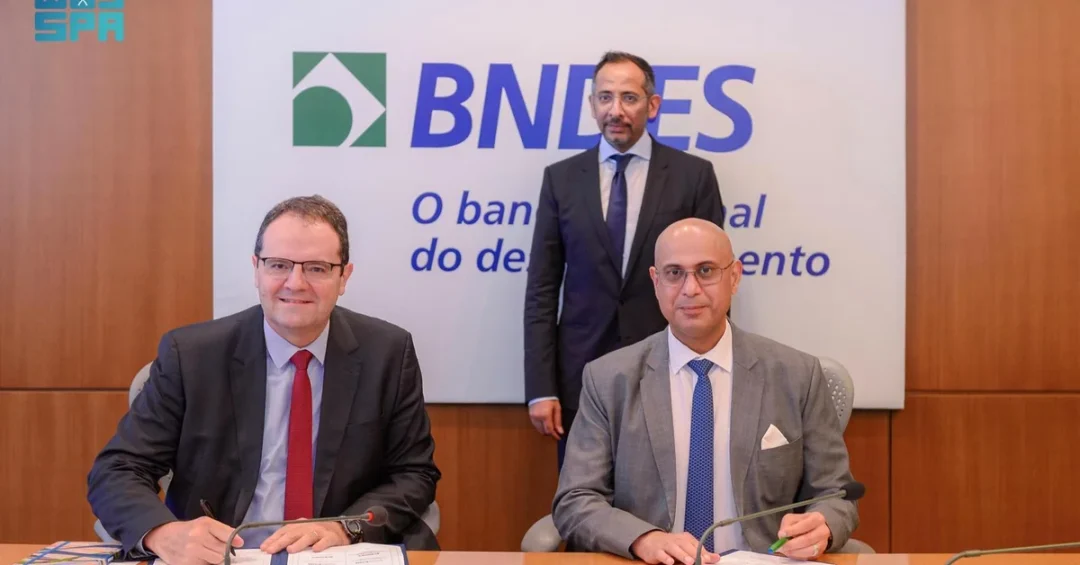
Saudi Arabia’s Export-Import Bank (Saudi Exim Bank) and Brazil’s development bank have signed a Memorandum of Understanding (MoU) to boost economic cooperation and expand non-oil trade between the two nations. The agreement was formalized on July 29, 2024, in Rio de Janeiro, during an official visit by Saudi officials to Brazil, as reported by the Saudi Press Agency (SPA).
Context and Background
The MoU was signed by Saudi Exim Bank CEO Eng. Saad Alkhalab and Nelson Barbosa, Director of Planning and Institutional Relations at the Brazilian Development Bank (BNDES). The ceremony was witnessed by Bandar Alkhorayef, Saudi Minister of Industry and Mineral Resources and Chairman of Saudi Exim Bank, who was leading the official delegation to Brazil to discuss bilateral ties and cooperation opportunities.
This agreement underscores the growing economic partnership between Saudi Arabia and Brazil, two major economies with complementary strengths. Brazil is a key market for Saudi non-oil exports, including petrochemicals, plastics, and minerals. The MoU aims to create a structured framework to enhance trade flows and investment, aligning with Saudi Arabia’s Vision 2030 goals of diversifying the economy and increasing non-oil exports.
Key Details
The MoU outlines several key areas of cooperation:
- Boosting exports of products and services between the two countries.
- Exploring joint financing opportunities for projects and trade transactions.
- Expanding Saudi non-oil exports in the Brazilian market.
- Facilitating collaboration between commercial companies and financial institutions in both nations.
Eng. Saad Alkhalab emphasized the importance of the Brazilian market for Saudi exporters, stating that the memorandum represents a significant step in developing trade relations and creating more opportunities for joint investment projects. He noted that Saudi non-oil exports have experienced substantial growth and diversification in recent years, driven by Vision 2030 economic reforms.
Implications and Impact
The MoU is expected to strengthen trade relations between Saudi Arabia and Brazil, leading to increased non-oil exports and greater economic integration. It provides a platform for Saudi exporters to access the Brazilian market more effectively, while also opening doors for Brazilian companies to explore opportunities in Saudi Arabia, particularly in sectors aligned with Vision 2030 such as industry, mining, and logistics.
This partnership also aligns with Saudi Arabia’s broader strategy to expand its global trade footprint and reduce reliance on oil revenues. Brazil, as a major economy in Latin America, serves as a strategic gateway for Saudi products to reach regional markets. The agreement is a testament to the Kingdom’s proactive diplomatic and economic engagement on the world stage.
Vision 2030 Alignment
This MoU directly supports Saudi Arabia’s Vision 2030 objectives of diversifying the economy, boosting non-oil exports, and enhancing international partnerships. By fostering trade and investment with key partners like Brazil, the Kingdom is taking concrete steps toward realizing its long-term economic transformation goals. The agreement also underscores the leading role of institutions like Saudi Exim Bank in facilitating Saudi businesses’ global expansion.
20 Questions
Q1. What is the significance of the MoU signed between Saudi Exim Bank and Brazilian Development Bank?
A1. The MoU is significant as it establishes a formal framework to enhance economic cooperation and trade between Saudi Arabia and Brazil, focusing on boosting non-oil exports and joint financing opportunities.
Q2. Who signed the Memorandum of Understanding?
A2. The MoU was signed by Saudi Exim Bank CEO Eng. Saad Alkhalab and Brazilian Development Bank Director of Planning and Institutional Relations Nelson Barbosa in Rio de Janeiro.
Q3. Where was the MoU signed?
A3. The signing ceremony took place in Rio de Janeiro, Brazil, on July 29, 2024, during an official Saudi visit to the country.
Q4. What are the main areas of cooperation outlined in the MoU?
A4. The MoU outlines cooperation in boosting exports of products and services, exploring joint financing opportunities, and expanding Saudi non-oil exports in the Brazilian market.
Q5. Who witnessed the signing ceremony?
A5. The signing was witnessed by Saudi Minister of Industry and Mineral Resources Bandar Alkhorayef, who also serves as Chairman of Saudi Exim Bank.
Q6. Why is the Brazilian market important for Saudi exporters?
A6. Brazil is a large, diversified economy with significant demand for Saudi products such as petrochemicals and minerals, offering growth opportunities for Saudi non-oil exports.
Q7. How does this MoU contribute to Vision 2030?
A7. It supports Vision 2030 by promoting economic diversification, increasing non-oil exports, and strengthening international partnerships, all key goals of the Saudi economic transformation plan.
Q8. What roles do Saudi Exim Bank and BNDES play in their respective economies?
A8. Saudi Exim Bank supports Saudi non-oil exports through financing and insurance, while BNDES provides long-term financing for development projects in Brazil.
Q9. What is the broader context of the Saudi visit to Brazil?
A9. The visit aimed to discuss bilateral cooperation, strengthen ties, and explore new opportunities for partnership between the two countries in various sectors.
Q10. How might this MoU affect trade volumes between the two countries?
A10. The MoU is expected to facilitate increased trade by providing a structured framework for cooperation, potentially leading to higher volumes of Saudi non-oil exports to Brazil.
Q11. What sectors are likely to benefit from this agreement?
A11. Sectors such as petrochemicals, minerals, and general manufacturing could benefit, as these are key areas of Saudi non-oil exports and align with Brazilian import needs.
Q12. Are there any joint financing opportunities mentioned?
A12. Yes, the MoU explicitly mentions exploring joint financing opportunities, which could involve co-financing trade transactions or investment projects between the two banks.
Q13. How does this agreement align with Saudi Arabia’s international trade strategy?
A13. It aligns with Saudi Arabia’s strategy to diversify export markets and build strong trade partnerships with key global economies, reducing reliance on oil revenues.
Q14. What is the role of Minister Bandar Alkhorayef in the KSA government?
A14. Bandar Alkhorayef is the Saudi Minister of Industry and Mineral Resources, leading efforts to boost industrial development and non-oil exports.
Q15. How might this MoU benefit Brazilian companies?
A15. Brazilian companies could gain easier access to Saudi financing and investment opportunities, as well as a clearer path to export their goods and services to Saudi Arabia.
Q16. Has Saudi Arabia signed similar agreements with other countries?
A16. Yes, Saudi Arabia has signed similar MoUs with several countries to boost trade and economic cooperation, consistent with its global engagement strategy.
Q17. What does the MoU say about collaboration between commercial companies and financial institutions?
A17. It emphasizes fostering more opportunities for cooperation between commercial firms and financial institutions in both countries, facilitating smoother trade transactions.
Q18. How does this agreement relate to the broader Saudi-Brazilian relationship?
A18. It strengthens the historic ties between the two nations, adding an economic pillar to their diplomatic relations and setting a foundation for deeper collaboration.
Q19. What does the MoU imply for the future of Saudi-Brazilian trade?
A19. It implies a positive outlook for trade growth, as both sides are committed to removing barriers and promoting easier market access for exporters.
Q20. Where can readers find more information about this development?
A20. Readers can refer to the official Saudi Press Agency (SPA) for the original announcement and related updates on this MoU.
Reader Feedback
We value your thoughts. Please share your feedback on this article.
Your feedback helps us improve our coverage.