


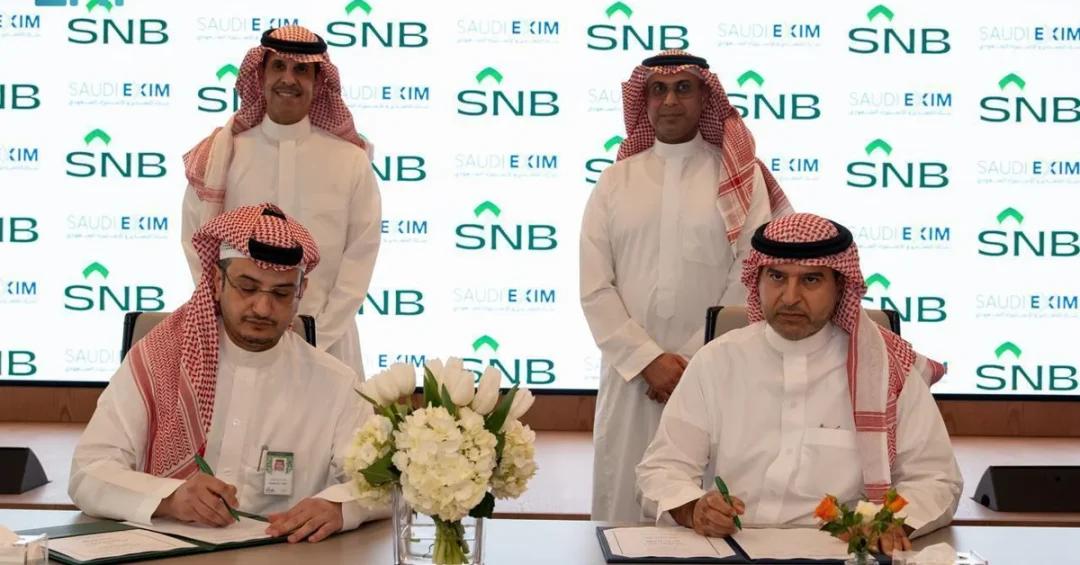
The Saudi Export-Import (EXIM) Bank and the Saudi National Bank (SNB) signed two landmark agreements in Riyadh on May 13, 2024, to boost Saudi non-oil exports. The agreements, an insurance policy covering documentary credits and a major Murabaha financing facility, are designed to provide credit, insurance, and financing solutions that enhance the global competitiveness of Saudi non-oil products. The signing took place at the headquarters of Saudi EXIM Bank in the King Abdullah Financial District (KAFD), under the patronage of Eng. Saad Alkhalb, CEO of Saudi EXIM Bank, and Tareq bin Abdulrahman Al-Sadhan, CEO of SNB.
Context and Background
Saudi Arabia is aggressively pursuing economic diversification under Vision 2030, with non-oil exports playing a central role in reducing dependence on hydrocarbons. The Saudi EXIM Bank, established in 2020, is a key enabler of this strategy, offering export credit, insurance, and financing to Saudi exporters. The partnership with SNB, one of the Kingdom’s largest banks, leverages the strengths of both the public and private sectors to bridge financing gaps and mitigate risks associated with international trade. This collaboration underscores the growing synergy between government institutions and commercial banks in driving Saudi Arabia’s non-oil economy forward.
Key Details
The first agreement, an insurance policy covering commercial and political risks, was signed by Mohammed bin Omar Al-Bishr, Director General of the General Insurance Department at Saudi EXIM Bank, and Nasser Al-Fraih, Head of the Group of Banking and International Institutions at SNB. This policy will protect exporters against non-payment risks, thereby encouraging them to explore new markets with confidence. The second agreement, a major Murabaha facility for non-oil product export financing, was signed by Abdul Latif bin Saud Al-Ghaith, General Director of the Finance Department at Saudi EXIM Bank, and also represented by Al-Fraih for SNB. Murabaha, a Sharia-compliant cost-plus financing structure, will provide exporters with the liquidity needed to fulfill international orders and expand operations. Eng. Saad Alkhalb emphasized that these agreements reflect Saudi EXIM Bank’s commitment to partnering with local financial institutions to strengthen the non-oil economy and achieve diversification in line with Vision 2030. Tareq Al-Sadhan highlighted the successful public-private partnership, noting that it will enhance the competitiveness of Saudi non-oil exports and contribute to building a sustainable economy.
Implications and Impact
These agreements are expected to have significant implications for Saudi Arabia’s export sector and its global trade footprint. By providing insurance and financing solutions, they will enable Saudi exporters to compete more effectively in international markets, particularly in sectors such as petrochemicals, plastics, metals, and food products. The reduction of non-payment risks and the availability of Sharia-compliant financing will encourage small and medium-sized enterprises (SMEs) to venture into export activities, thereby broadening the base of non-oil exports. Regionally, the agreements reinforce Saudi Arabia’s position as a leader in trade facilitation and financial innovation. Internationally, they signal the Kingdom’s readiness to engage in global trade with robust financial backing, potentially increasing trade flows with key partners in Asia, Europe, and Africa. The partnership between Saudi EXIM Bank and SNB also sets a precedent for future collaborations between public export credit agencies and private banks in the Kingdom.
Vision 2030 Alignment
These agreements are directly aligned with Vision 2030’s objective to diversify the Saudi economy away from oil dependence. By enhancing non-oil exports, Saudi Arabia aims to increase the sector’s contribution to GDP and create sustainable job opportunities. The collaboration between Saudi EXIM Bank and SNB exemplifies the strategic partnership between the public and private sectors that Vision 2030 champions. As the Kingdom continues to expand its non-oil export base, such initiatives will be crucial in achieving the target of raising non-oil exports to 50% of non-oil GDP by 2030. This step forward not only strengthens Saudi Arabia’s economic resilience but also reinforces its role as a pivotal player in global trade.
20 Questions
Q1. What did Saudi EXIM Bank and SNB sign?
A1. They signed two agreements: an insurance policy to enhance documentary credits and a major Murabaha agreement to finance the export of Saudi non-oil products, aiming to boost non-oil exports and competitiveness.
Q2. When were the agreements signed?
A2. The agreements were signed on May 13, 2024, at the headquarters of Saudi EXIM Bank in the King Abdullah Financial District (KAFD) in Riyadh, under the patronage of both CEOs.
Q3. Who is the CEO of Saudi EXIM Bank?
A3. Eng. Saad Alkhalb is the CEO of Saudi EXIM Bank. He emphasized that the agreements reflect the bank’s commitment to partnership with local financial institutions to strengthen the non-oil economy.
Q4. Who is the CEO of SNB?
A4. Tareq bin Abdulrahman Al-Sadhan is the CEO of SNB. He highlighted the successful partnership between the public and private sectors and its role in developing Saudi non-oil exports.
Q5. What does the insurance policy cover?
A5. The insurance policy covers commercial and political risks associated with export operations. It was signed by Mohammed bin Omar Al-Bishr, Director General of the General Insurance Department at Saudi EXIM Bank.
Q6. What is the purpose of the Murabaha agreement?
A6. The Murabaha agreement provides financing for non-oil product exports, offering Sharia-compliant funding to Saudi exporters. It was signed by Abdul Latif bin Saud Al-Ghaith, General Director of the Finance Department at Saudi EXIM Bank.
Q7. Who represented SNB in signing the agreements?
A7. Nasser Al-Fraih, Head of the Group of Banking and International Institutions at SNB, represented the bank in signing both agreements, underscoring SNB’s commitment to supporting non-oil exports.
Q8. How do these agreements support Saudi exporters?
A8. They provide credit products, insurance, and financing solutions that enhance the global competitiveness of Saudi non-oil products, bridge financial gaps, and reduce non-payment risks in export operations.
Q9. What are the goals of Saudi EXIM Bank?
A9. Saudi EXIM Bank aims to boost Saudi non-oil exports by offering export credit, insurance, and financing. It seeks to strengthen the non-oil economy and achieve diversification in line with Saudi Vision 2030.
Q10. How does the partnership align with Vision 2030?
A10. The partnership aligns with Vision 2030 by enhancing non-oil exports, diversifying the economy, and fostering public-private collaboration. It contributes to sustainable economic growth and job creation.
Q11. What are the benefits for the banking sector?
A11. The agreements support the banking sector’s role in increasing Saudi exports, bridging financial gaps, and reducing risks. They create opportunities for cooperation to support Saudi exporters and expand non-oil export activities.
Q12. What types of risks are covered by the insurance policy?
A12. The insurance policy covers commercial and political risks, such as non-payment by buyers or political instability in importing countries, providing security for Saudi exporters venturing into new markets.
Q13. What is Murabaha financing?
A13. Murabaha is a Sharia-compliant financing structure where the bank purchases goods and sells them to the buyer at a disclosed profit margin. It provides liquidity for exporters to fulfill international orders.
Q14. How will these agreements impact Saudi industries?
A14. They will promote growth opportunities for Saudi industries and services in new markets globally by providing necessary financial and insurance support, making Saudi products more competitive internationally.
Q15. What is the role of the public sector in these agreements?
A15. The public sector, through Saudi EXIM Bank, provides insurance and financing solutions. This collaboration with the private sector, represented by SNB, enhances the development of non-oil exports.
Q16. What is the role of the private sector?
A16. SNB, as a private sector entity, partners with Saudi EXIM Bank to offer credit and financing solutions. This partnership contributes to building a sustainable economy and supporting Saudi exporters.
Q17. Where were the agreements signed?
A17. The agreements were signed at the headquarters of Saudi EXIM Bank in the King Abdullah Financial District (KAFD) in Riyadh, a major financial hub in Saudi Arabia.
Q18. What are non-oil exports?
A18. Non-oil exports are goods and services produced in Saudi Arabia that are not derived from crude oil or petroleum products, such as petrochemicals, plastics, metals, and food products.
Q19. How do these agreements enhance competitiveness?
A19. By providing insurance and financing, they reduce risks and financial barriers, enabling Saudi exporters to offer competitive terms and explore new markets, thereby increasing their global market share.
Q20. What is the expected outcome of these agreements?
A20. The expected outcome is an increase in Saudi non-oil exports, diversification of the economy, and strengthened public-private partnerships, all contributing to the achievement of Saudi Vision 2030 goals.
Reader Feedback
We value your thoughts. Please share your feedback on this article.
Your feedback helps us improve our coverage.