


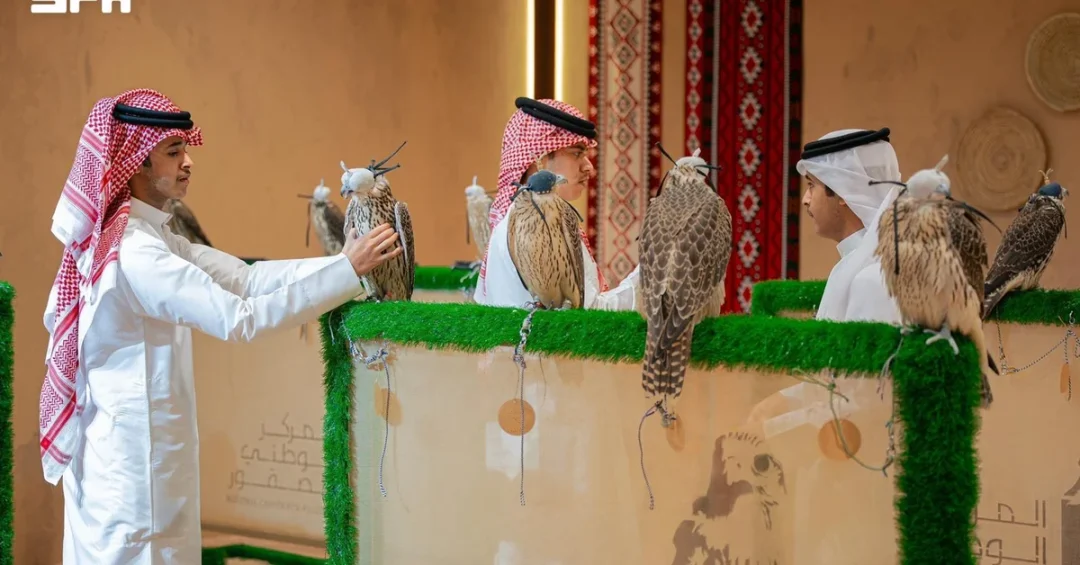
The International Falcon Breeding Farms Auction, organized by the Saudi Falcon Club in Malham, north of Riyadh, has become a driving force for the economic development of the Kingdom’s falconry industry, attracting breeders, falconers, and investors from around the world. The event, held under the patronage of the Saudi Falcon Club, underscores Saudi Arabia’s commitment to preserving its rich cultural heritage while fostering new economic opportunities in line with Vision 2030.
Context and Background
Falconry is an ancient tradition in the Arabian Peninsula, deeply rooted in the region’s history and culture. In recent years, Saudi Arabia has transformed this heritage activity into a thriving economic sector. The Saudi Falcon Club, established to regulate and promote falconry, organizes the annual International Falcon Breeding Farms Auction in Malham, north of Riyadh. This auction serves as a premier platform for breeders and falconers to showcase and trade falcons, reflecting the Kingdom’s efforts to modernize and commercialize traditional practices.
The expansion of falcon breeding farms has created a specialized market that connects producers with domestic and international buyers. According to the Saudi Press Agency (SPA), the auction has become a hub for investment in this national heritage, generating opportunities across production, veterinary services, transportation, equipment, marketing, and the supply of falconry essentials.
Key Details
The auction features participation from local and international breeders. Ghazi Al-Otaibi, owner of a falcon breeding farm, emphasized that falcons have evolved from a traditional pastime into a valuable economic asset. Abdulaziz Al-Sulaiman, representing a Saudi-Canadian farm, reported a successful debut with 25 falcons sold, with plans to offer four more premium falcons in the coming nights. The event not only facilitates sales but also fosters connections between breeders and buyers, enhancing the global reach of Saudi falconry.
Beyond the direct sale of falcons, the industry encompasses a wide range of ancillary services. These include advanced veterinary care, specialized equipment, transportation, training, and marketing. The integration of modern technologies is also playing a key role in improving the quality and competitiveness of breeding farms, further driving economic growth.
Implications and Impact
The International Falcon Breeding Farms Auction has significant implications for both the regional and international falconry community. It positions Saudi Arabia as a global leader in falconry, attracting investment and promoting cultural exchange. The event also supports the diversification of the Saudi economy by creating jobs and stimulating related industries. As the auction continues to grow, it is expected to draw even more international participants, boosting tourism and highlighting the Kingdom’s rich heritage.
Furthermore, the auction aligns with Saudi Arabia’s Vision 2030, which aims to diversify the economy and promote cultural heritage. By transforming falconry into a sustainable economic sector, the Kingdom is preserving its traditions while embracing modernization. This initiative also contributes to the development of rural areas, as breeding farms are often located in regions like Malham, providing economic opportunities beyond major cities.
Vision 2030 Alignment
The International Falcon Breeding Farms Auction exemplifies Saudi Arabia’s Vision 2030 goals of economic diversification, cultural preservation, and global engagement. By fostering a vibrant falconry industry, the Kingdom is not only honoring its heritage but also creating new avenues for investment and job creation. As Saudi Arabia continues to lead in this field, the auction stands as a testament to the nation’s ability to blend tradition with innovation, driving sustainable development and enhancing its global standing.
20 Questions
Q1. What is the International Falcon Breeding Farms Auction?
A1. The International Falcon Breeding Farms Auction is an annual event organized by the Saudi Falcon Club in Malham, north of Riyadh, where breeders and falconers gather to trade falcons and related services.
Q2. Where is the auction held?
A2. The auction is held in Malham, located north of Riyadh, Saudi Arabia, at facilities managed by the Saudi Falcon Club.
Q3. Who organizes the auction?
A3. The auction is organized by the Saudi Falcon Club, a government entity dedicated to promoting and regulating falconry in the Kingdom.
Q4. What is the main purpose of the auction?
A4. The main purpose is to provide a platform for breeders to sell falcons, attract investment, and support the economic development of the falconry industry in Saudi Arabia.
Q5. How does the auction benefit the Saudi economy?
A5. It stimulates economic activity in falcon breeding, veterinary services, equipment, transportation, and marketing, creating jobs and attracting international investment.
Q6. Who are some participants in the auction?
A6. Participants include local breeders like Ghazi Al-Otaibi and international ventures like the Saudi-Canadian farm represented by Abdulaziz Al-Sulaiman.
Q7. What did Abdulaziz Al-Sulaiman achieve at the auction?
A7. He reported a successful sale of 25 falcons from his farm’s first participation and planned to offer four more premium falcons in subsequent nights.
Q8. How has falconry changed in Saudi Arabia?
A8. Falconry has evolved from a traditional pastime into a significant economic asset and investment opportunity, supported by modern infrastructure and services.
Q9. What ancillary industries benefit from falconry?
A9. Ancillary industries include veterinary medicine, equipment manufacturing, transportation, training, marketing, and technology for breeding enhancement.
Q10. How does the auction support Vision 2030?
A10. It aligns with Vision 2030 by diversifying the economy, preserving cultural heritage, and promoting international engagement and investment.
Q11. Is the auction open to international participants?
A11. Yes, the auction is international, attracting breeders and buyers from various countries, as evidenced by the Saudi-Canadian farm’s participation.
Q12. What role does the Saudi Falcon Club play?
A12. The Saudi Falcon Club regulates falconry, organizes events like this auction, and works to develop the industry in line with national heritage and economic goals.
Q13. How does the auction promote cultural exchange?
A13. By bringing together falconers and breeders from different countries, it facilitates knowledge sharing and appreciation of Saudi Arabia’s falconry heritage.
Q14. What economic opportunities does falcon breeding create?
A14. It creates opportunities in breeding, sales, veterinary care, equipment supply, transportation, marketing, and technology development.
Q15. How many falcons did the Saudi-Canadian farm bring initially?
A15. The Saudi-Canadian farm brought 25 falcons to its first auction and achieved successful sales, with plans to offer more.
Q16. What types of falcons are sold at the auction?
A16. Various breeds of falcons are sold, including premium falcons, though specific breeds are not detailed in the source material.
Q17. How does the auction contribute to rural development?
A17. By locating breeding farms in areas like Malham, it generates economic activity and jobs outside major urban centers, supporting rural communities.
Q18. What technologies are used in falcon breeding?
A18. Modern technologies are employed to enhance breeding quality, health monitoring, and competitiveness, though specific technologies are not mentioned.
Q19. Is falconry considered a national heritage in Saudi Arabia?
A19. Yes, falconry is a deeply rooted national heritage and tradition in Saudi Arabia, now being modernized and commercialized.
Q20. What is the future outlook for the falconry industry in Saudi Arabia?
A20. The industry is expected to grow, attracting more investment and international participation, further integrating heritage with economic diversification under Vision 2030.
Reader Feedback
We value your thoughts. Please share your feedback on this article.
Your feedback helps us improve our coverage.