


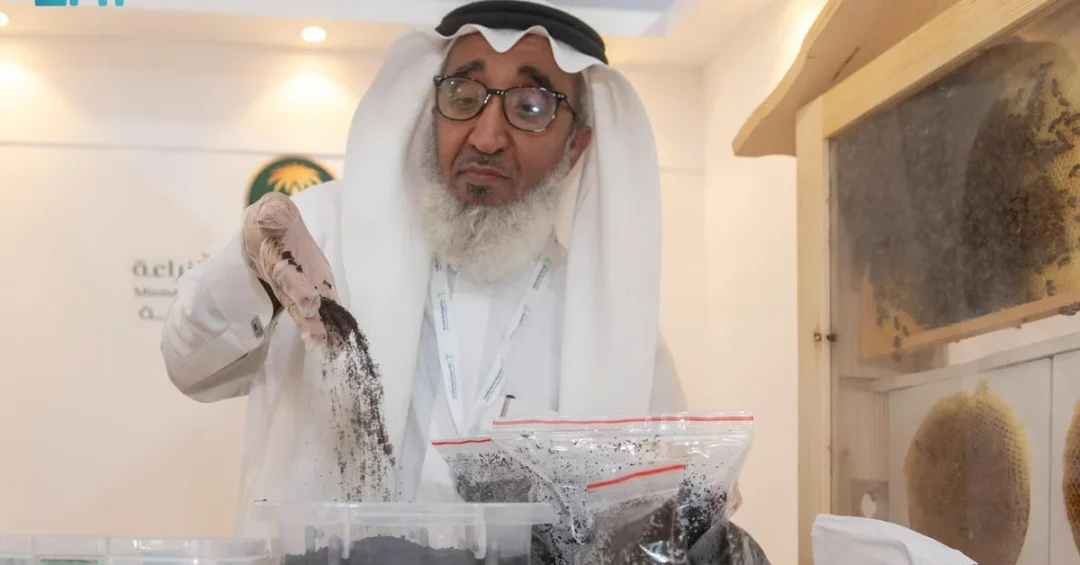
A Saudi farmer in the Al-Baha region has successfully established a worm compost factory, converting organic waste into a valuable natural fertilizer and setting a model for sustainable agriculture in the Kingdom. Mohammad Abdullatif Al-Shaer, a farmer from the village of Al-Dhafir in Al-Baha, started his project with a modest 5-meter by 60-centimeter tank, placing approximately 2,000 worms and adding dry leaves, organic manure, and food scraps. After four months of daily monitoring, he produced over 300 kilograms of compost and more than 10,000 worms, according to the Saudi Press Agency (SPA).
Context and Background
Worm compost, also known as vermicompost, is an organic fertilizer produced by earthworms as they consume organic matter. It significantly enriches soil with organic matter and improves its physical, chemical, and biological properties. In arid regions like Saudi Arabia, where water scarcity and soil degradation pose constant challenges, such sustainable practices are increasingly vital. The project aligns with the Kingdom’s broader agricultural goals under Vision 2030, which seeks to enhance food security, promote environmental sustainability, and support local farmers. The initiative also reflects the growing interest in organic farming methods that reduce reliance on chemical fertilizers and enhance soil health.
Key Details
Al-Shaer’s worm production methods have evolved significantly since his initial trial. He now operates four tanks and has fertilized his entire farm of 250 trees with the compost. The results are evident: the compost promotes rapid tree growth and abundant fruiting. “Worms improve soil quality, renew fertilization mechanisms, and nourish crops, leading to improved agricultural practices and higher yields of fruits and vegetables,” Al-Shaer explained. He aspires to turn this project into a fully-fledged enterprise capable of producing large quantities of worm compost and to spread this knowledge among farmers through agricultural festivals, encouraging them to adopt this sustainable alternative to harmful chemicals. The Director-General of the Ministry of Environment, Water, and Agriculture branch in Al-Baha, Engineer Fahd Muftah Al-Zahrani, commended the project, highlighting its potential to transform agricultural practices in the region. Dr. Lubna Saad, Associate Professor of Applied Nutrition at Al-Baha University, elaborated on the vermicompost process: “Vermicompost is a mixture of worm excrement and the input materials provided to the worms. After sieving and filtering, the compost is ready to fertilize various crops, enhancing the soil’s ability to absorb and retain water.” The initiative has been praised by numerous farmers participating in the Al-Baha Bounties Festival for its contribution to improving the quality of their agricultural products.
Implications and Impact
The success of Al-Shaer’s worm compost factory has significant implications for Saudi agriculture and beyond. It demonstrates a practical, low-cost method for producing high-quality organic fertilizer, which can reduce farmers’ dependence on imported or chemical fertilizers. This not only lowers production costs but also promotes healthier soils and crops, contributing to food safety and public health. Moreover, the project supports the Kingdom’s efforts to achieve environmental sustainability by recycling organic waste and reducing the carbon footprint of agriculture. The initiative also has the potential to inspire similar projects across the region, particularly in areas with similar climatic conditions. By sharing his knowledge at agricultural festivals, Al-Shaer is fostering a community of practice that could accelerate the adoption of sustainable farming techniques throughout Saudi Arabia.
Vision 2030 Alignment
This initiative aligns closely with Saudi Vision 2030, which emphasizes sustainable development, economic diversification, and food security. By turning a local resource—worms—into a productive asset, Al-Shaer exemplifies the entrepreneurial spirit and innovation that the Vision seeks to nurture. His project contributes to the National Agriculture Strategy 2030, which aims to achieve sustainable agricultural development, enhance food security, and improve the quality of life for citizens. As Saudi Arabia continues to modernize its agricultural sector, success stories like this highlight the potential of organic farming to create economic opportunities, protect the environment, and strengthen the Kingdom’s global leadership in sustainable practices.
20 Questions
Q1. What is worm compost?
A1. Worm compost, or vermicompost, is an organic fertilizer produced by earthworms as they consume organic matter. It enriches soil with nutrients and improves its structure, water retention, and microbial activity, making it ideal for organic farming.
Q2. Who is Mohammad Abdullatif Al-Shaer?
A2. Mohammad Abdullatif Al-Shaer is a Saudi farmer from Al-Dhafir village in Al-Baha. He established a worm compost factory on his farm, turning organic waste into valuable fertilizer and inspiring sustainable agriculture in the region.
Q3. Where is Al-Baha?
A3. Al-Baha is a region in southwestern Saudi Arabia, known for its agricultural heritage, mountainous terrain, and moderate climate. It is home to various farming communities and hosts the annual Al-Baha Bounties Festival.
Q4. How did Al-Shaer start his project?
A4. He began with a 5-meter by 60-centimeter tank, placing about 2,000 worms and adding dry leaves, organic manure, and food scraps. After four months of daily monitoring, he produced over 300 kilograms of compost.
Q5. What results has Al-Shaer achieved?
A5. Al-Shaer now operates four tanks and has fertilized his entire farm of 250 trees. His compost promotes rapid tree growth and abundant fruiting, leading to higher yields of fruits and vegetables.
Q6. What are the benefits of worm compost?
A6. Worm compost improves soil quality, enhances water retention, and provides essential nutrients to plants. It reduces the need for chemical fertilizers, promotes sustainable farming, and increases crop yields.
Q7. How does vermicompost help in arid regions?
A7. In arid regions like Saudi Arabia, vermicompost improves soil’s ability to absorb and retain water, reducing irrigation needs. It also adds organic matter, combating soil degradation and supporting plant growth in harsh conditions.
Q8. What is the Ministry of Environment, Water, and Agriculture’s role?
A8. The Ministry supports agricultural projects like Al-Shaer’s, providing guidance and resources. Engineer Fahd Muftah Al-Zahrani, director of its Al-Baha branch, commended the project for its innovation and sustainability.
Q9. Who is Dr. Lubna Saad?
A9. Dr. Lubna Saad is an Associate Professor of Applied Nutrition at Al-Baha University. She explained the vermicompost process, highlighting its role in enhancing soil and crop quality.
Q10. What is the Al-Baha Bounties Festival?
A10. The Al-Baha Bounties Festival is an annual agricultural event showcasing local products. Farmers praised Al-Shaer’s initiative for improving the quality of their agricultural products and promoting sustainable practices.
Q11. How can farmers learn from Al-Shaer?
A11. Al-Shaer aims to share his knowledge at agricultural festivals, encouraging farmers to adopt worm composting. This can help them reduce costs, improve soil health, and produce healthier crops.
Q12. What are Al-Shaer’s future plans?
A12. He aspires to expand his project into a full-fledged enterprise producing large quantities of worm compost, and to spread awareness among farmers about this sustainable alternative to harmful chemicals.
Q13. How does this project support food security?
A13. By improving soil fertility and crop yields, the project contributes to local food production. This reduces reliance on imports and supports Saudi Arabia’s goal of achieving food security under Vision 2030.
Q14. Is worm composting environmentally friendly?
A14. Yes, it recycles organic waste, reduces chemical fertilizer use, and lowers greenhouse gas emissions. It is a sustainable practice that enhances soil health and biodiversity.
Q15. Can worm composting be done on a large scale?
A15. Yes, with proper management, worm composting can be scaled up. Al-Shaer’s expansion from one tank to four demonstrates its potential for commercial production.
Q16. What types of worms are used?
A16. Earthworms, particularly species like Eisenia fetida, are commonly used. They efficiently consume organic matter and produce nutrient-rich castings.
Q17. How does vermicompost compare to chemical fertilizers?
A17. Vermicompost is organic, slow-releasing, and improves soil structure, while chemical fertilizers can degrade soil over time. Vermicompost is safer for the environment and promotes long-term soil health.
Q18. What government support exists for such projects?
A18. The Ministry of Environment, Water, and Agriculture offers guidance, training, and resources. It encourages sustainable practices through initiatives and festivals, supporting farmers like Al-Shaer.
Q19. How does this align with Vision 2030?
A19. Vision 2030 promotes sustainable development, food security, and economic diversification. Al-Shaer’s project exemplifies these goals by turning waste into a resource and fostering agricultural innovation.
Q20. What can other farmers learn from this success story?
A20. Other farmers can learn that with minimal investment and dedication, they can produce organic fertilizer, reduce costs, and improve yields. It encourages community sharing and sustainable farming practices.
Reader Feedback
We value your thoughts. Please share your feedback on this article.
Your feedback helps us improve our coverage.