


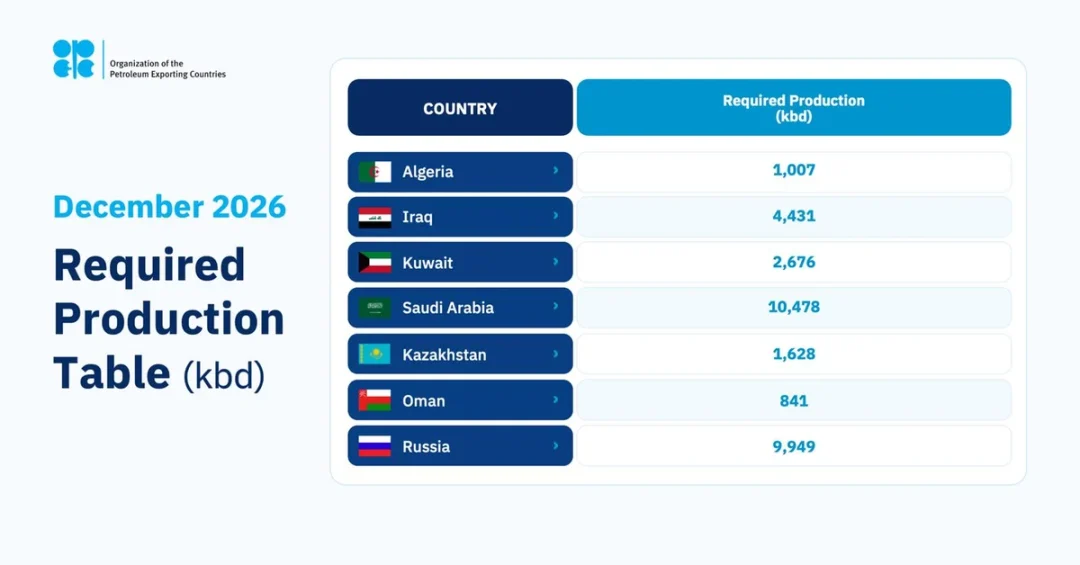
Seven OPEC+ countries reaffirmed their commitment to oil market stability during a virtual meeting on November 1, 2026, deciding to maintain September 2026 production levels for December 2026. The group, comprising Saudi Arabia, Russia, Iraq, Kuwait, Kazakhstan, Algeria, and Oman, reviewed global market conditions and reiterated their collective dedication to the Declaration of Cooperation. This decision, announced via the Saudi Press Agency (SPA), underscores the group’s ongoing efforts to balance supply and demand in the global oil market. The next meeting is scheduled for November 29, 2026, as part of their monthly review process. What does this mean for global energy markets and the broader economic landscape?
The meeting builds on voluntary adjustments first announced in April and November 2023, when these seven countries pledged additional production cuts to support market stability. By maintaining the September 2026 required production levels for December 2026, the group aims to avoid sudden supply shocks that could destabilize prices. This decision reflects a careful assessment of current market fundamentals, including demand recovery in key economies and geopolitical uncertainties. It also highlights the importance of cooperation among major oil producers to ensure a stable and predictable energy supply. How will this affect consumers and industries reliant on oil? The group’s unity and discipline are crucial in navigating the complexities of the global oil market.
Context and Background
Why do these seven OPEC+ countries coordinate production levels? The answer lies in the history of the Declaration of Cooperation (DoC), established in 2016 to stabilize oil markets after a severe price downturn. The DoC brought together OPEC and non-OPEC producers, including Russia, to jointly manage supply. Over the years, the group has adapted to changing market dynamics, with voluntary adjustments becoming a key tool. In April and November 2023, the seven countries announced additional voluntary cuts on top of existing targets, demonstrating their commitment to proactive market management. These measures have helped prevent oversupply and supported price stability, benefiting both producers and consumers.
The virtual meeting on November 1, 2026, was a continuation of this collaborative approach. The seven participating countries—Saudi Arabia, Russia, Iraq, Kuwait, Kazakhstan, Algeria, and Oman—reviewed global market conditions, including factors such as economic growth forecasts, oil inventory levels, and geopolitical developments. Their decision to maintain September 2026 production levels for December 2026 signals confidence in the current market balance and a desire to avoid unnecessary volatility. The group also emphasized full conformity with the DoC, underscoring the importance of adherence to agreed targets. What role does Saudi Arabia play in this coalition? As a leading producer and the world’s largest oil exporter, Saudi Arabia often acts as a pivotal player, fostering consensus and ensuring the group’s cohesion.
The monthly meeting mechanism allows for flexibility and responsiveness. By convening regularly, the group can quickly adjust to unforeseen events, such as supply disruptions or demand shifts. The next meeting on November 29, 2026, will provide another opportunity to assess market conditions and make any necessary adjustments. This iterative process is essential for maintaining market stability in an ever-changing global landscape. How do these decisions impact the global economy? Stable oil prices are vital for economic growth, affecting everything from transportation costs to inflation. The group’s actions aim to provide a predictable environment for investment and consumption.
Key Details of the November 1 Meeting
What exactly was decided at the November 1, 2026, meeting? The seven OPEC+ countries decided to maintain the required production levels for September 2026 for the month of December 2026. This means that the production quotas set for September 2026 will continue to apply in December 2026, ensuring continuity and stability. The decision was based on a thorough review of global market conditions and outlook, which indicated that current supply levels are appropriate. The group also reiterated their collective commitment to achieve full conformity with the Declaration of Cooperation, emphasizing the importance of all members adhering to their agreed targets. This commitment is crucial for the credibility and effectiveness of the group’s efforts.
The meeting was held virtually, reflecting the ongoing trend of digital diplomacy and cooperation. The seven countries—Saudi Arabia, Russia, Iraq, Kuwait, Kazakhstan, Algeria, and Oman—have been meeting monthly to review market conditions and make timely decisions. The next meeting is scheduled for November 29, 2026, just weeks after the current one, highlighting the group’s proactive stance. What are the implications of maintaining production levels? By keeping supply steady, the group aims to prevent price spikes or crashes, which can harm both producers and consumers. This stability is particularly important as the global economy continues to recover from recent challenges.
The decision to maintain production levels also reflects an assessment of demand trends. With economic growth in major economies showing signs of resilience, oil demand is expected to remain robust. However, uncertainties such as geopolitical tensions and potential supply disruptions from other producers are closely monitored. The group’s ability to adapt quickly to changing conditions is a key strength. How does this decision affect OPEC+ cohesion? It demonstrates the group’s unity and shared vision, which is essential for effective market management. The voluntary adjustments announced in 2023 have been instrumental in supporting prices, and continuing these measures underscores the group’s long-term commitment.
International and Regional Impact
How will this decision resonate beyond the seven countries? The stability of oil markets is a global public good, affecting economies worldwide. For major consumers like the United States, China, and the European Union, predictable oil prices are essential for economic planning and inflation control. For producers, stable prices ensure reliable revenue streams for investment in infrastructure and social programs. The seven OPEC+ countries’ decision to maintain production levels sends a reassuring signal to global markets, reducing uncertainty and fostering a conducive environment for trade and investment. It also reinforces the role of OPEC+ as a stabilizing force in the energy sector.
Regionally, the decision has significant implications for the Middle East and neighboring regions. Saudi Arabia, as the world’s largest oil exporter, plays a leadership role in shaping energy policies that impact the entire region. The cooperation among these seven countries, which include diverse economies from the Gulf to Central Asia, demonstrates a shared interest in market stability. For Iraq, Kuwait, and Oman, stable oil revenues are critical for budgetary purposes and economic diversification efforts. For Kazakhstan and Algeria, oil exports are a major source of income. Russia’s participation highlights the global nature of the coalition. What does this mean for the broader Middle East? It reinforces the region’s centrality in global energy security and underscores the importance of dialogue and cooperation.
Economic and Strategic Significance
Why is this decision economically significant? Oil prices are a key driver of global economic activity, influencing inflation, trade balances, and fiscal policies. By maintaining production levels, the seven countries aim to keep prices within a range that supports producer revenues without stifling consumer demand. This balancing act is delicate but essential for sustainable growth. For Saudi Arabia, stable oil prices are crucial for funding Vision 2030 initiatives, which aim to diversify the economy beyond oil. The Kingdom’s ability to influence market stability through OPEC+ enhances its geopolitical stature and supports its long-term strategic goals. How does this affect Saudi Arabia’s economic diversification? Stable oil revenues provide the financial resources needed to invest in non-oil sectors, such as tourism, technology, and renewable energy.
Strategically, the decision underscores the importance of multilateral cooperation in addressing global challenges. In a world of increasing energy transition and climate concerns, OPEC+ countries are navigating a complex landscape. By maintaining production levels, they are not only managing current market conditions but also signaling their willingness to adapt to future changes. The monthly meetings allow for continuous dialogue and adjustment, ensuring that the group remains responsive. What role does Saudi Arabia play in this strategic context? As a leader in both OPEC+ and global energy diplomacy, Saudi Arabia is instrumental in fostering consensus and promoting stability. This aligns with its Vision 2030 goal of becoming a global investment powerhouse and a hub for sustainable development.
Vision 2030 Alignment
How does this decision align with Saudi Arabia’s Vision 2030? Vision 2030 is a comprehensive plan to transform the Kingdom’s economy and society, reducing dependence on oil and creating a diversified, sustainable future. Stable oil revenues are a cornerstone of this transition, providing the necessary funds to invest in education, healthcare, infrastructure, and new industries. By participating in OPEC+ and advocating for market stability, Saudi Arabia ensures a predictable income stream that supports these ambitious reforms. Moreover, the Kingdom’s leadership in global energy governance enhances its international standing, attracting foreign investment and partnerships that are vital for Vision 2030’s success.
The decision also reflects Saudi Arabia’s commitment to responsible global citizenship. By working with other producers to stabilize markets, the Kingdom contributes to global economic stability, which benefits all nations. This collaborative approach is in line with Vision 2030’s emphasis on international cooperation and sustainable development. As the world transitions to cleaner energy sources, Saudi Arabia is positioning itself as a leader in both conventional and renewable energy, ensuring a balanced and forward-looking energy policy. What does the future hold? The next meeting on November 29, 2026, will be another opportunity to reaffirm these commitments and adapt to evolving market conditions, always with an eye toward a prosperous and sustainable future for Saudi Arabia and the world.
20 Questions
Q1. What was the main outcome of the OPEC+ meeting on November 1, 2026?
A1. The seven OPEC+ countries decided to maintain September 2026 production levels for December 2026, reaffirming their commitment to market stability and full conformity with the Declaration of Cooperation.
Q2. Which countries participated in the November 1, 2026, meeting?
A2. The participating countries were Saudi Arabia, Russia, Iraq, Kuwait, Kazakhstan, Algeria, and Oman, all of which had previously announced voluntary production adjustments in April and November 2023.
Q3. Why did the group decide to keep production levels unchanged?
A3. The decision was based on a review of global market conditions and outlook, aiming to maintain balance and avoid unnecessary volatility in oil prices.
Q4. What is the Declaration of Cooperation?
A4. The Declaration of Cooperation is an agreement between OPEC and non-OPEC oil producers, established in 2016, to jointly manage oil supply and stabilize global markets.
Q5. How often does the group meet to review market conditions?
A5. The seven countries hold monthly meetings to assess market conditions and make timely decisions. The next meeting is scheduled for November 29, 2026.
Q6. What impact does this decision have on global oil prices?
A6. By maintaining production levels, the group aims to prevent price spikes or crashes, fostering a stable and predictable environment for producers and consumers alike.
Q7. How does Saudi Arabia benefit from these OPEC+ decisions?
A7. Saudi Arabia, as a leading producer, benefits from stable oil revenues that support its Vision 2030 economic diversification plans and enhance its global leadership role.
Q8. What are voluntary production adjustments?
A8. Voluntary adjustments are additional production cuts or changes agreed upon by individual countries, beyond their required targets, to support market stability.
Q9. Why is market stability important for the global economy?
A9. Stable oil prices help control inflation, support economic growth, and provide predictability for investments and consumption across all sectors.
Q10. How does this decision affect non-OPEC producers?
A10. Non-OPEC producers may benefit from stable prices, which encourage investment and prevent market disruptions that could harm all producers.
Q11. What role does Russia play in this coalition?
A11. Russia is a key non-OPEC member, collaborating with OPEC countries to coordinate production and ensure market stability through the Declaration of Cooperation.
Q12. Will there be any changes to production in the near future?
A12. The group will continue to monitor market conditions and may adjust production levels at future monthly meetings, including the one on November 29, 2026.
Q13. How does this decision align with Saudi Vision 2030?
A13. Stable oil revenues provide essential funding for Vision 2030 initiatives, which aim to diversify the economy and reduce dependence on oil.
Q14. What are the key factors considered in the review of market conditions?
A14. Factors include global economic growth forecasts, oil inventory levels, geopolitical developments, and supply-demand balances.
Q15. How does OPEC+ ensure compliance with production targets?
A15. OPEC+ monitors production through independent sources and encourages full conformity, with members regularly reaffirming their commitment to agreed targets.
Q16. What is the significance of the next meeting on November 29, 2026?
A16. The meeting will provide another opportunity to assess market conditions and make any necessary adjustments to production levels to maintain stability.
Q17. How does this decision affect consumers?
A17. Stable oil prices translate to predictable fuel costs, which benefit consumers by avoiding sudden price hikes that can strain household budgets.
Q18. What is the historical context of these voluntary adjustments?
A18. The voluntary adjustments were first announced in April and November 2023, as additional measures to support market stability beyond existing OPEC+ targets.
Q19. How does Saudi Arabia’s leadership in OPEC+ impact its international relations?
A19. Saudi Arabia’s active role enhances its diplomatic influence, fostering cooperation with both OPEC and non-OPEC producers, and strengthening global energy governance.
Q20. What does the future hold for OPEC+ cooperation?
A20. OPEC+ is expected to continue its collaborative approach, adapting to market changes and ensuring stability, which is crucial for global economic health and Saudi Arabia’s Vision 2030.
Reader Feedback
We value your thoughts. Please share your feedback on this article.
Your feedback helps us improve our coverage.
Related articles
 Makkah Hosts 12-Day Home and Family Exhibition
 Inaugural International Gifts and Products Exhibition Concludes in Jeddah
 Haramain Railway Opens Investment Opportunities in Madinah
 Saudi Arabia Joins 42nd COMCEC Ministerial Session in Istanbul
 First International Gifts and Products Exhibition Opens in Jeddah
 IsDB and AfDB Strengthen Africa Development Partnership