


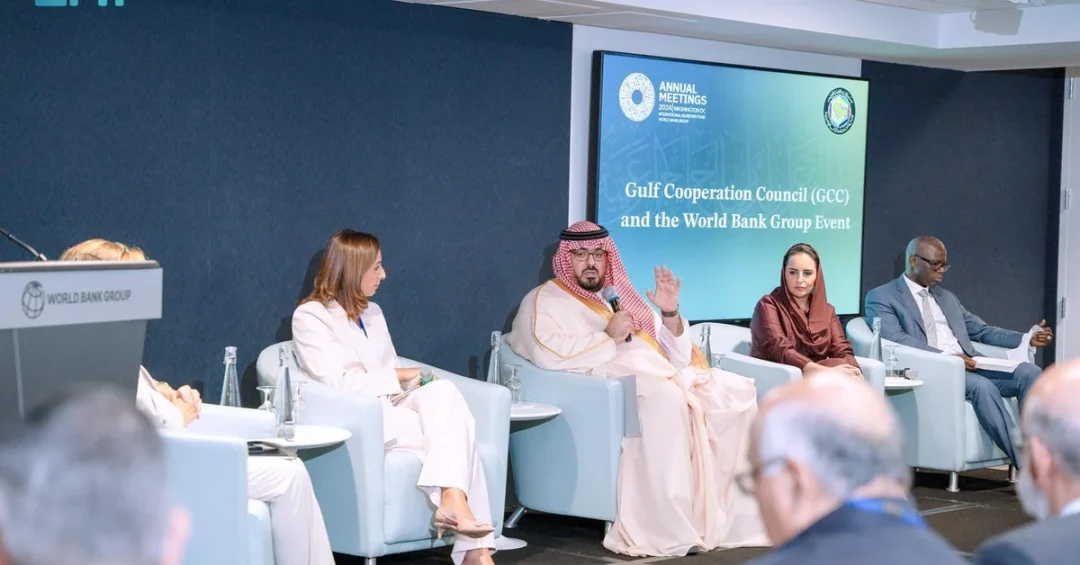
Saudi Minister of Economy and Planning Faisal Alibrahim participated in a high-level panel discussion titled “Human Capital: The Key to Economic Growth” at the Gulf Cooperation Council (GCC) and World Bank Group (WBG) Event, held on the sidelines of the IMF-World Bank Group Annual Meetings, as announced by the Saudi Press Agency. The minister used the platform to outline how Saudi Vision 2030 is reshaping the Kingdom’s approach to health, education, social protection, and gender equality, with the overarching goal of building long-term resilience and global competitiveness.
The event, which brought together finance ministers, central bank governors, and international development leaders, served as a strategic opportunity for Saudi Arabia to showcase its human capital development strategy to a global audience. Alibrahim’s participation underscores the Kingdom’s growing role as a bridge between Gulf economies and international financial institutions. During the panel, he emphasized that investing in people is not a secondary consideration but the central engine of sustainable economic growth. The minister’s remarks come at a time when economies worldwide are grappling with the dual pressures of automation and demographic change, making the Kingdom’s proactive approach particularly noteworthy for international observers.
Context and Background
Why does a panel discussion on human capital at the IMF-World Bank Group Annual Meetings carry such weight for global economic policymakers? The IMF-WBG Annual Meetings are among the most significant gatherings on the international financial calendar, drawing delegates from nearly every country to discuss economic stability, development finance, and poverty reduction. The GCC-WBG Event held on the sidelines represents a dedicated platform for Gulf Cooperation Council states to engage directly with World Bank Group leadership on shared priorities. For Saudi Arabia, this engagement is part of a broader diplomatic and economic strategy to position the Kingdom as a proactive contributor to global development conversations rather than a passive participant.
Minister Alibrahim’s presence at the event reflects the Kingdom’s commitment to international cooperation under the leadership of the Custodian of the Two Holy Mosques, King Salman bin Abdulaziz Al Saud, and His Royal Highness Crown Prince Mohammed bin Salman bin Abdulaziz Al Saud. The minister’s message was clear: Saudi Vision 2030 is not merely an economic diversification plan but a comprehensive human development framework. By participating in such forums, Saudi Arabia demonstrates that its domestic reforms are aligned with global best practices and that the Kingdom is eager to share its experience with other nations facing similar transitions. This outward-looking posture is a hallmark of the Kingdom’s modern diplomacy.
The World Bank Group has long identified human capital as a critical driver of economic development. Its Human Capital Index measures how much capital each country loses due to gaps in education and health, and Saudi Arabia has made notable strides in improving its standing. The GCC-WBG Event provided a natural venue for the Kingdom to discuss its progress and to learn from other countries’ experiences. The minister’s participation also signals that Saudi Arabia views multilateral institutions as essential partners in achieving the Sustainable Development Goals, particularly those related to quality education, good health, and decent work.
Key Details of the Minister’s Remarks
What specific reforms did the minister highlight, and how do they translate into tangible outcomes for Saudi citizens? Alibrahim stated that “Saudi Vision 2030 is leading a transformative shift, redefining approaches to health, education, social protection, and gender equality, all aimed at building long-term resilience and global competitiveness.” He elaborated that education reforms are strategically designed to future-proof the workforce, with a strong emphasis on skills-based learning and fostering innovation, particularly in STEM fields. This focus aims to position the Kingdom as a leader in technology and engineering, sectors that are increasingly vital to the global economy.
In the health sector, the minister explained that the focus is placed on expanding infrastructure, integrating digital health solutions, and prioritizing preventive care. The strategic aim is to improve national wellness and healthcare efficiency, ensuring that a healthy population can fully contribute to and benefit from economic growth. He noted that preparing for the future of work is a critical priority that requires targeted reskilling initiatives and strong private sector partnerships to navigate the shifts brought by automation and artificial intelligence. This forward-looking approach acknowledges that the jobs of tomorrow will demand different skills than those of today.
Alibrahim also highlighted that small and medium enterprises are strategically positioned as key drivers of economic growth. Dedicated efforts are underway to foster a culture of innovation and entrepreneurship that supports sustainable development. By empowering SMEs, the Kingdom aims to create a more diversified and resilient economy that is less dependent on oil revenues. The minister’s remarks painted a comprehensive picture of a nation investing in its people at every stage of life, from early education through to workforce retraining and healthcare provision.
International and Regional Impact
How does Saudi Arabia’s human capital agenda resonate beyond its borders, particularly within the Gulf region and the broader Middle East? The Kingdom’s approach is being closely watched by neighboring GCC states, many of which face similar challenges related to youth unemployment, skills gaps, and economic diversification. By sharing its experiences at the GCC-WBG Event, Saudi Arabia positions itself as a regional leader and a source of best practices. The minister’s emphasis on private sector partnerships and reskilling aligns with the World Bank Group’s own priorities, creating opportunities for collaborative programs and knowledge exchange.
On the international stage, Saudi Arabia’s participation in the IMF-WBG Annual Meetings reinforces its status as a responsible global stakeholder. The Kingdom has increasingly taken on roles in international economic governance, including through its presidency of the G20 in 2020 and its active membership in organizations such as the Financial Stability Board. The minister’s message that human capital is the key to economic growth echoes the sentiments of many world leaders, but Saudi Arabia’s ability to implement large-scale reforms quickly gives its words added credibility. For international investors and partners, the Kingdom’s focus on education and health signals a long-term commitment to creating a stable and productive business environment.
Economic and Strategic Significance
Why is human capital development so central to Saudi Arabia’s economic strategy, and what does it mean for the Kingdom’s future competitiveness? The answer lies in the scale of the transformation underway. Vision 2030 aims to diversify the economy away from oil, and a skilled, healthy, and adaptable workforce is essential to that goal. The minister’s emphasis on STEM education, digital health, and SME growth reflects a clear understanding that economic competitiveness in the twenty-first century depends on innovation and productivity. By investing in its people, Saudi Arabia is building the foundations for new industries, from renewable energy to advanced manufacturing and digital services.
Moreover, the focus on gender equality and social protection is not just a matter of social justice but an economic imperative. Increasing female labor force participation and ensuring that all citizens have access to quality healthcare and education can significantly boost GDP and reduce inequality. The Kingdom has already made notable progress in this regard, with women now holding positions in government, business, and academia that were unimaginable a generation ago. The minister’s remarks at the GCC-WBG Event underscore that these reforms are integral to the Kingdom’s economic vision, not peripheral initiatives.
Vision 2030 Alignment
How does the minister’s message connect to the broader objectives of Saudi Vision 2030, and what can the world expect next? The Vision’s three pillars—a vibrant society, a thriving economy, and an ambitious nation—are all reflected in the human capital agenda. A vibrant society requires good health and education; a thriving economy demands a skilled workforce and entrepreneurial spirit; and an ambitious nation needs effective institutions and international partnerships. Alibrahim’s participation in the GCC-WBG Event demonstrates that Saudi Arabia is actively pursuing all three pillars on the global stage, learning from others while sharing its own successes.
Looking ahead, the Kingdom is expected to continue investing heavily in human capital, with new initiatives in digital learning, preventive healthcare, and SME financing likely to be announced in the coming years. The World Bank Group and other international partners will remain important collaborators in these efforts. As Saudi Arabia continues its journey toward Vision 2030, its emphasis on people as the key to economic growth will remain a defining feature of its domestic and foreign policy. The minister’s remarks in Washington serve as a reminder that the Kingdom’s transformation is not just about buildings and infrastructure but about unlocking the potential of every Saudi citizen.
20 Questions
Q1. What event did Saudi Minister of Economy and Planning Faisal Alibrahim participate in?
A1. He participated in the panel discussion titled “Human Capital: The Key to Economic Growth” at the Gulf Cooperation Council (GCC) and World Bank Group (WBG) Event, held on the sidelines of the IMF-WBG Annual Meetings.
Q2. What did Minister Alibrahim say about Saudi Vision 2030?
A2. He said that Saudi Vision 2030 is leading a transformative shift, redefining approaches to health, education, social protection, and gender equality, all aimed at building long-term resilience and global competitiveness.
Q3. How are education reforms designed in Saudi Arabia according to the minister?
A3. Education reforms are strategically designed to future-proof the workforce, emphasizing skills-based learning and fostering innovation, particularly in STEM fields, to position the Kingdom as a leader in technology and engineering.
Q4. What is the focus in the health sector under Vision 2030?
A4. The focus is on expanding infrastructure, integrating digital health solutions, and prioritizing preventive care, with the strategic aim of improving national wellness and healthcare efficiency.
Q5. What did the minister say about preparing for the future of work?
A5. He noted that preparing for the future of work is a critical priority requiring targeted reskilling initiatives and strong private sector partnerships to navigate the shifts brought by automation and AI.
Q6. How are small and medium enterprises positioned in Saudi Arabia’s economic strategy?
A6. SMEs are strategically positioned as key drivers of economic growth, with dedicated efforts to foster a culture of innovation and entrepreneurship that supports sustainable development.
Q7. Why is the GCC-WBG Event significant for Saudi Arabia?
A7. It provides a platform for Saudi Arabia to engage with global financial leaders, showcase its human capital development strategy, and strengthen partnerships with international institutions like the World Bank Group.
Q8. What is the IMF-WBG Annual Meetings?
A8. The IMF-World Bank Group Annual Meetings are a major international gathering of finance ministers, central bank governors, and development leaders to discuss global economic stability, development finance, and poverty reduction.
Q9. How does Saudi Arabia’s focus on human capital align with global economic trends?
A9. It aligns with the global recognition that skilled, healthy populations are essential for economic competitiveness, especially as automation and AI reshape labor markets worldwide.
Q10. What role does gender equality play in Saudi Vision 2030?
A10. Gender equality is a key component, aimed at increasing female labor force participation and ensuring all citizens can contribute to and benefit from economic growth, thereby boosting GDP and reducing inequality.
Q11. What are the strategic aims of health sector reforms in Saudi Arabia?
A11. The aims are to improve national wellness and healthcare efficiency by expanding infrastructure, integrating digital health solutions, and prioritizing preventive care.
Q12. How does Saudi Arabia plan to navigate the shifts brought by automation and AI?
A12. Through targeted reskilling initiatives and strong private sector partnerships, ensuring the workforce is adaptable and equipped with the skills needed for future jobs.
Q13. What is the significance of STEM education in Saudi Arabia’s reforms?
A13. STEM education is emphasized to foster innovation and position the Kingdom as a leader in technology and engineering, sectors vital to economic diversification and global competitiveness.
Q14. How does Saudi Arabia support small and medium enterprises?
A14. Through dedicated efforts to foster a culture of innovation and entrepreneurship, recognizing SMEs as key drivers of economic growth and sustainable development.
Q15. What international partnerships are important for Saudi Arabia’s human capital agenda?
A15. Partnerships with the World Bank Group, IMF, and other multilateral institutions are important for knowledge exchange, collaborative programs, and aligning with global best practices.
Q16. How does Saudi Arabia’s participation in such events benefit the Kingdom?
A16. It enhances the Kingdom’s global standing, attracts international investment, and allows Saudi Arabia to learn from other countries’ experiences while sharing its own successful reforms.
Q17. What is the long-term goal of Saudi Vision 2030 regarding human capital?
A17. The long-term goal is to build a resilient, competitive economy driven by a skilled, healthy, and innovative workforce, reducing dependence on oil and creating sustainable prosperity.
Q18. How does the minister’s message reflect Saudi Arabia’s leadership in the region?
A18. By sharing its comprehensive human capital strategy, Saudi Arabia positions itself as a regional leader and a source of best practices for other GCC states facing similar economic transitions.
Q19. What can the world expect next from Saudi Arabia in terms of human capital development?
A19. Continued heavy investment in digital learning, preventive healthcare, and SME financing, with new initiatives likely to be announced as the Kingdom progresses toward Vision 2030 goals.
Q20. Why is human capital considered the key to economic growth in Saudi Arabia?
A20. Because a skilled, healthy, and adaptable workforce is essential for diversifying the economy, fostering innovation, and ensuring long-term resilience and global competitiveness, as emphasized by Minister Alibrahim.
Reader Feedback
We value your thoughts. Please share your feedback on this article.
Your feedback helps us improve our coverage.
Related articles
 Saudi Arabia Expands Manilkara Zapota Cultivation for Sustainability
 IsDB Joins World Bank Roundtable on Impact Partnerships
 NIDLP Launches Updated Daleel Platform with AI and Multilingual Support
 Reef Saudi Wins Construction Management Innovation Award
 Global PropTech Summit to Inaugurate on Sunday in Riyadh
 PropTech Drives Radical Transformation in Saudi Real Estate