


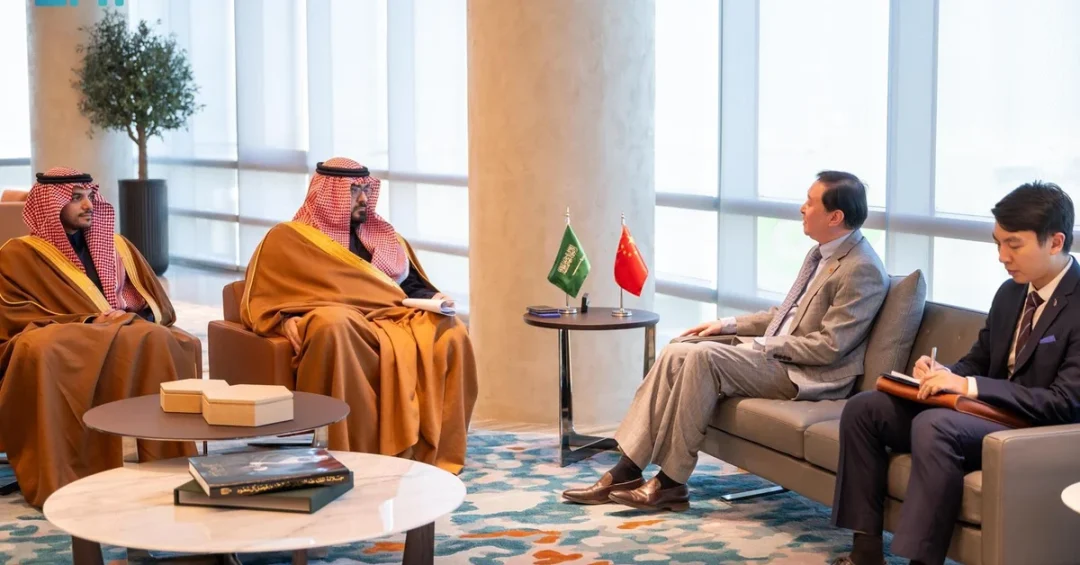
Saudi Arabia’s Minister of Economy and Planning, Faisal Alibrahim, met with the Ambassador of the People’s Republic of China to the Kingdom, Chang Hua, in Riyadh on December 25, 2024, to discuss deepening economic, investment, and trade relations between the two nations. The meeting, reported by the Saudi Press Agency (SPA), focused on exploring new opportunities for collaboration and reviewing recent global economic developments of mutual interest. The discussions underscore the growing strategic partnership between Saudi Arabia and China, a relationship that has expanded significantly in recent years across energy, technology, infrastructure, and finance.
As the world’s largest energy exporter and a pivotal player in global supply chains, Saudi Arabia continues to strengthen its ties with major economies as part of its Vision 2030 strategy to diversify its economy and enhance international cooperation. China, as Saudi Arabia’s largest trading partner, plays a central role in this vision. The meeting between Alibrahim and Ambassador Chang Hua signals both nations’ commitment to advancing bilateral economic interests amid a shifting global landscape. What does this high-level engagement reveal about the future of Saudi-Chinese relations?
Context and Background
Saudi-Chinese relations have deep historical roots, but the past decade has witnessed an unprecedented acceleration in economic and strategic cooperation. Diplomatic ties, established in 1990, have evolved into a comprehensive strategic partnership, with China emerging as Saudi Arabia’s top trading partner and a major investor in key sectors. In 2023, bilateral trade exceeded $100 billion, reflecting the robust exchange of energy resources, manufactured goods, and technological services. The Kingdom supplies a significant portion of China’s crude oil imports, while Chinese companies contribute to Saudi Arabia’s infrastructure, renewable energy, and digital transformation projects.
The meeting between Minister Alibrahim and Ambassador Chang Hua comes at a time when global economic dynamics are being reshaped by geopolitical tensions, supply chain realignments, and the transition to sustainable energy. Saudi Arabia, under the leadership of Custodian of the Two Holy Mosques King Salman bin Abdulaziz Al Saud and Crown Prince Mohammed bin Salman, has pursued a proactive foreign economic policy, forging partnerships that support its Vision 2030 goals. China’s Belt and Road Initiative (BRI) aligns with Saudi Arabia’s own development corridors, such as the Saudi Land Bridge and NEOM, creating synergies that both sides are keen to harness.
Why is this meeting significant for the broader Middle East region? The Kingdom’s role as a stabilizing economic force and its ability to bridge East and West make its partnerships closely watched by global markets. The discussions in Riyadh are part of a series of high-level engagements that reinforce Saudi Arabia’s position as a hub for trade and investment, attracting interest from both established and emerging economies.
Key Details of the Meeting
According to the Saudi Press Agency, the meeting between Minister Faisal Alibrahim and Ambassador Chang Hua addressed a range of topics aimed at enhancing bilateral cooperation. The two officials explored opportunities for further collaboration in economic, investment, and trade domains, with a focus on sectors that are central to Saudi Arabia’s diversification efforts. These include renewable energy, technology, manufacturing, and logistics, where Chinese expertise and investment can complement Saudi Arabia’s ambitious development plans.
The discussions also reviewed recent global economic developments, including inflationary pressures, monetary policy shifts, and the evolving energy transition. Both sides acknowledged the importance of stable and predictable economic relations to navigate these challenges. The meeting reflects the ongoing dialogue between Saudi Arabia and China at the highest levels, building on previous agreements and initiatives, such as the Comprehensive Strategic Partnership and the Joint Committee on Economic and Trade Cooperation.
What specific outcomes can be expected from such diplomatic engagements? While the SPA report did not disclose detailed agreements, the meeting sets the stage for future collaborations that could materialize in the form of joint ventures, investment deals, and policy coordination. The regular exchange of views between Saudi and Chinese officials ensures that both nations remain aligned on key economic priorities and can respond swiftly to emerging opportunities.
International and Regional Impact
The Saudi-Chinese economic partnership has far-reaching implications for the Middle East and beyond. As two of the world’s largest economies, their cooperation influences global energy markets, trade flows, and investment trends. For the region, Saudi Arabia’s ability to attract Chinese investment and technology supports its role as a leader in economic diversification and innovation. Neighboring countries often look to the Kingdom as a bellwether for regional economic policies and business opportunities.
Moreover, the meeting underscores Saudi Arabia’s balanced foreign policy, which maintains strong ties with both Eastern and Western powers. While the Kingdom enjoys a longstanding alliance with the United States and Europe, its deepening engagement with China reflects a multipolar approach that prioritizes national interests and global stability. This strategic autonomy allows Saudi Arabia to serve as a bridge between different economic blocs, fostering dialogue and cooperation on issues such as climate change, digital governance, and sustainable development.
How does this meeting align with broader geopolitical trends? The shift toward a multipolar world order has elevated the importance of flexible partnerships. Saudi Arabia’s proactive diplomacy, exemplified by this meeting, positions it as a key player in shaping the rules of the global economy. By strengthening ties with China, the Kingdom not only diversifies its economic dependencies but also enhances its leverage in international negotiations.
Economic and Strategic Significance
The economic significance of Saudi-Chinese relations cannot be overstated. China’s demand for energy resources remains a cornerstone of the partnership, but the relationship is increasingly diversified. Chinese companies are involved in Saudi Arabia’s renewable energy projects, such as the Sudair Solar PV Plant and the Red Sea Wind Farm, contributing to the Kingdom’s goal of generating 50% of its electricity from renewables by 2030. In turn, Saudi Arabia’s Public Investment Fund (PIF) has made strategic investments in Chinese technology firms and logistics networks, creating a two-way flow of capital and expertise.
Trade between the two nations extends beyond oil to include petrochemicals, plastics, machinery, and consumer goods. The Saudi-Chinese Business Council and various bilateral forums facilitate networking and deal-making, while the Kingdom’s special economic zones, like the King Salman Energy Park (SPARK), offer incentives for Chinese manufacturers to establish local operations. These initiatives are designed to localize supply chains and create jobs, aligning with Vision 2030’s economic diversification targets.
What makes this partnership resilient amid global uncertainties? The complementary nature of the two economies—Saudi Arabia’s resource wealth and China’s manufacturing and technological prowess—provides a solid foundation. Both governments have demonstrated a commitment to long-term collaboration, backed by institutional frameworks and regular high-level consultations. This resilience is crucial as the world navigates post-pandemic recovery, energy transitions, and trade disruptions.
Vision 2030 Alignment
The meeting between Minister Alibrahim and Ambassador Chang Hua is a testament to Saudi Arabia’s unwavering pursuit of Vision 2030, the ambitious blueprint to transform the Kingdom’s economy and society. Vision 2030 aims to reduce dependence on oil, diversify revenue streams, and position Saudi Arabia as a global investment powerhouse. International partnerships, particularly with economic giants like China, are integral to achieving these goals. By attracting foreign direct investment, fostering technology transfer, and expanding non-oil exports, the Kingdom is building a sustainable and knowledge-based economy.
Under the visionary leadership of Crown Prince Mohammed bin Salman, Saudi Arabia has launched mega-projects such as NEOM, the Red Sea Project, and Qiddiya, which offer vast opportunities for Chinese firms in construction, smart city technology, and tourism. These projects not only showcase the Kingdom’s modernization but also create platforms for international collaboration. The ongoing dialogue with China reinforces Saudi Arabia’s commitment to open markets, innovation, and global engagement—core principles of Vision 2030.
As Saudi Arabia continues to strengthen its ties with China and other nations, it remains focused on its long-term vision of prosperity and stability. The meeting in Riyadh is another step toward a future where the Kingdom plays a central role in the global economy, driving growth and fostering cooperation. With each high-level engagement, Saudi Arabia reaffirms its dedication to building a better, more interconnected world.
20 Questions
Q1. Who met with the Chinese Ambassador to Saudi Arabia?
A1. Saudi Arabia’s Minister of Economy and Planning, Faisal Alibrahim, met with Ambassador Chang Hua of the People’s Republic of China to Saudi Arabia.
Q2. When did the meeting take place?
A2. The meeting took place on December 25, 2024, in Riyadh, as reported by the Saudi Press Agency.
Q3. What was the main focus of the meeting?
A3. The meeting focused on discussions regarding economic, investment, and trade relations between Saudi Arabia and China, and explored opportunities for further collaboration.
Q4. Which Saudi ministry does Faisal Alibrahim lead?
A4. Faisal Alibrahim is the Minister of Economy and Planning of Saudi Arabia, responsible for overseeing the Kingdom’s economic diversification and planning strategies.
Q5. Who is Chang Hua?
A5. Chang Hua is the Ambassador of the People’s Republic of China to the Kingdom of Saudi Arabia, representing Chinese interests and fostering bilateral ties.
Q6. What is the significance of Saudi-Chinese economic relations?
A6. Saudi-Chinese relations are significant as China is Saudi Arabia’s largest trading partner, with bilateral trade exceeding $100 billion and cooperation spanning energy, technology, and infrastructure.
Q7. How does this meeting align with Saudi Vision 2030?
A7. The meeting supports Vision 2030 by enhancing international partnerships that drive economic diversification, attract investment, and promote non-oil sectors like technology and renewable energy.
Q8. What sectors were likely discussed for collaboration?
A8. Renewable energy, technology, manufacturing, and logistics are key sectors where Saudi Arabia and China can collaborate, aligning with the Kingdom’s diversification goals.
Q9. Did the meeting produce any agreements?
A9. The SPA report did not mention specific agreements, but the meeting set the stage for future collaborations and reinforced ongoing dialogue between the two nations.
Q10. How does China’s Belt and Road Initiative relate to Saudi Arabia?
A10. China’s Belt and Road Initiative aligns with Saudi Arabia’s development corridors, such as NEOM and the Saudi Land Bridge, creating synergies for infrastructure and trade.
Q11. What role does Saudi Arabia play in China’s energy security?
A11. Saudi Arabia is a major supplier of crude oil to China, contributing significantly to China’s energy security and maintaining stable global energy markets.
Q12. What are the implications for the Middle East region?
A12. The meeting reinforces Saudi Arabia’s leadership in regional economic stability and demonstrates its ability to attract global powers, fostering development and cooperation.
Q13. How does this meeting reflect Saudi Arabia’s foreign policy?
A13. It reflects Saudi Arabia’s balanced and multipolar foreign policy, maintaining strong ties with both Eastern and Western nations to serve its national interests.
Q14. What is the Comprehensive Strategic Partnership between Saudi Arabia and China?
A14. It is a framework for deepening cooperation across political, economic, and cultural domains, established to enhance bilateral relations and mutual prosperity.
Q15. How does the Public Investment Fund (PIF) engage with China?
A15. The PIF has made strategic investments in Chinese technology and logistics firms, facilitating capital flow and expertise exchange between the two countries.
Q16. What are the benefits for Saudi Arabia from Chinese investment?
A16. Chinese investment brings capital, technology transfer, and job creation, supporting Saudi Arabia’s economic diversification and infrastructure development under Vision 2030.
Q17. What global economic developments were reviewed?
A17. The officials reviewed recent global economic developments, including inflationary pressures, monetary policy shifts, and energy transition trends of mutual interest.
Q18. How often do Saudi and Chinese officials meet?
A18. High-level meetings occur regularly through bilateral forums, joint committees, and diplomatic engagements to ensure continuous coordination on economic and strategic matters.
Q19. What is the Saudi-Chinese Business Council?
A19. It is a platform that facilitates networking and deal-making between Saudi and Chinese businesses, promoting trade and investment opportunities in both countries.
Q20. What does this meeting mean for the future of Saudi-China relations?
A20. It signifies a continued commitment to strengthening economic ties, exploring new collaboration avenues, and contributing to shared prosperity and global economic stability.
Reader Feedback
We value your thoughts. Please share your feedback on this article.
Your feedback helps us improve our coverage.