


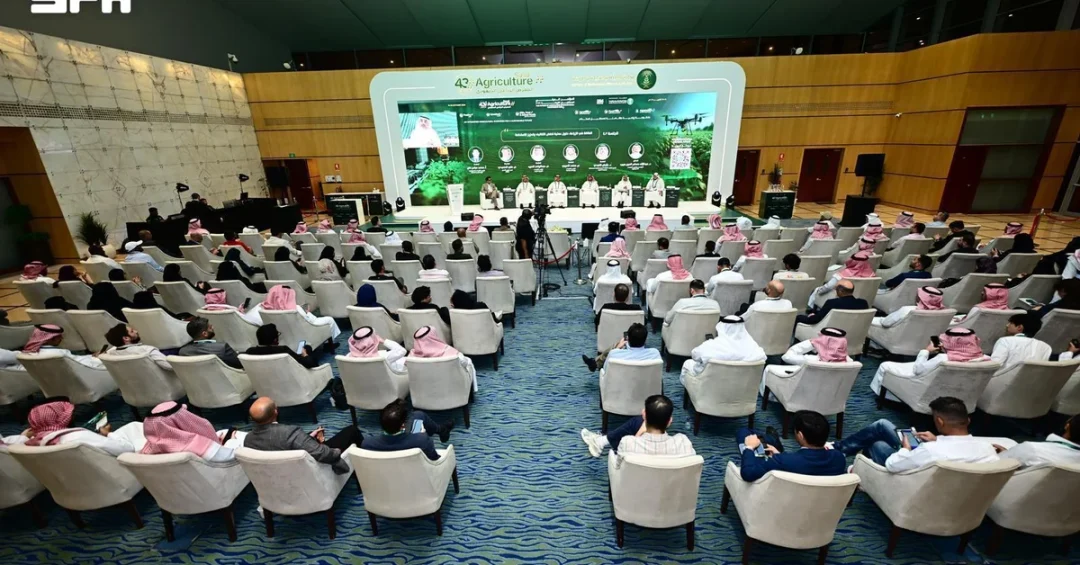
The Ministry of Environment, Water and Agriculture has urged farm owners whose properties lie outside planned electricity grid expansion areas to evaluate solar power as a practical alternative to diesel generators, in a move aimed at reducing production costs, improving operational efficiency and strengthening the sustainability of Saudi Arabia’s agricultural sector. The call was made during the 43rd Saudi Agriculture exhibition, held from October 19 to 22, 2026, at the Riyadh International Convention and Exhibition Center, where the ministry’s General Department for Agricultural Licensing and Registration led a dedicated panel discussion on the role of renewable energy in farming. The ministry framed solar adoption not simply as a cost-saving measure but as a strategic step toward modernizing rural agriculture and reducing reliance on liquid fuels.
For international observers, the announcement offers a clear window into how Saudi Arabia is integrating renewable energy into everyday economic sectors as part of its broader diversification agenda. Agriculture, long dependent on diesel-powered irrigation and cooling systems in remote areas, is now being positioned as a beneficiary of the Kingdom’s expanding clean-energy ecosystem. The ministry’s guidance reflects a deliberate effort to align farm-level decisions with national sustainability targets, while ensuring that farms beyond the reach of the main grid are not left behind. How quickly can such guidance translate into measurable change across thousands of farms? The answer will depend on access to financing, technical support and reliable supply chains — areas where Saudi institutions are already investing heavily.
Context and Background
Why does the timing of this guidance matter so much for Saudi agriculture? The Kingdom’s agricultural sector has expanded significantly over recent decades, with farms operating across a wide range of climatic zones, from the highlands of the southwest to the open plains of the central and northern regions. Many of these operations rely on diesel generators to power irrigation pumps, greenhouse climate controls and cooling equipment, particularly where connection to the national electricity grid remains technically or economically challenging. The Ministry of Environment, Water and Agriculture has therefore highlighted solar energy as a practical option for farms outside planned grid expansion areas, allowing them to assess alternatives that reduce operating costs and improve efficiency.
The 43rd Saudi Agriculture exhibition provided the platform for this message. Held at the Riyadh International Convention and Exhibition Center, the event brought together government officials, agricultural companies, technology providers and farm owners to examine practical solutions for the sector’s most pressing challenges. The ministry’s participation through its General Department for Agricultural Licensing and Registration underscored that the discussion is not purely technical but also regulatory and developmental, touching on how farms are licensed, supported and encouraged to modernize. The panel discussion, titled “Solar Energy in Agriculture: Practical Solutions to Reduce Costs and Enhance Sustainability,” explored real-world experiences in applying solar power to agricultural operations, including irrigation systems, greenhouses and cooling equipment.
This focus on practical experience is significant. It signals that solar adoption in Saudi agriculture is moving from concept to implementation, with the ministry actively collecting and sharing lessons from farms that have already made the transition. For a sector that must balance productivity with water scarcity and energy costs, the ability to demonstrate tangible savings and efficiency gains is essential to building wider confidence among farm owners who may be cautious about changing long-established practices.
Key Details
What exactly did the ministry recommend, and how does it expect farms to respond? The core message was directed at farm owners whose properties fall outside planned electricity grid expansion areas. For these operations, the ministry urged a careful assessment of alternatives to diesel generators, with solar power identified as a particularly promising option. The stated benefits include lower production costs, improved operational efficiency, reduced reliance on liquid fuels and stronger support for Saudi Arabia’s agricultural sustainability objectives. The ministry did not present solar as a universal mandate but as a practical solution to be evaluated according to each farm’s circumstances.
The panel discussion examined several concrete applications. Solar power can be used to operate irrigation systems, which are among the most energy-intensive components of farm operations, especially in areas where groundwater must be pumped from significant depths. Solar energy can also support greenhouses, helping to regulate temperature and humidity without imposing heavy fuel costs, and can power cooling equipment used for post-harvest storage and livestock management. Together, these applications address a large share of on-farm energy demand, making solar a versatile tool rather than a niche supplement.
The session also highlighted how these applications contribute to resource efficiency. By reducing dependence on diesel, farms can lower their exposure to fuel price fluctuations, cut emissions and improve the reliability of their power supply in remote locations. The ministry’s engagement through its licensing and registration department suggests that these considerations may increasingly inform how agricultural operations are planned and approved, with sustainability becoming a more explicit criterion in sector development.
International and Regional Impact
How does Saudi Arabia’s push for solar-powered agriculture resonate beyond its borders? The Kingdom’s approach offers a model for other countries in the Middle East and North Africa, where similar challenges of remote farming, high energy costs and water scarcity are common. By demonstrating that solar energy can be integrated into agricultural operations at the farm level, Saudi Arabia is contributing to a broader regional conversation about sustainable food production and renewable energy deployment. International investors and technology providers are likely to take note, given the Kingdom’s scale and its track record of turning policy direction into large-scale implementation.
The timing also aligns with global momentum toward renewable energy in food systems. International organizations have repeatedly emphasized that agriculture must reduce its carbon footprint while increasing productivity to meet future demand. Saudi Arabia’s emphasis on practical, cost-focused solar solutions positions the Kingdom as a constructive participant in that global effort, rather than an observer. For partner countries and multinational companies, the message is that Saudi agriculture is open to innovation and that the regulatory environment is increasingly supportive of clean-energy adoption.
Economic and Strategic Significance
Why is this guidance economically important for Saudi farms and for the Kingdom as a whole? Energy represents a substantial share of operating costs for many agricultural operations, particularly those dependent on diesel. By encouraging solar adoption, the ministry is helping farms reduce a volatile cost component, which can improve margins and make local production more competitive. Lower costs can also support food security objectives by making it more viable to maintain and expand domestic production in areas where grid electricity is not yet available.
Strategically, the shift reduces reliance on liquid fuels, freeing up resources and contributing to environmental goals. It also strengthens the resilience of rural economies by keeping farms operational and profitable in remote locations. The ministry’s message at Saudi Agriculture 2026 therefore carries weight beyond the exhibition halls: it signals that agricultural modernization and renewable energy are being treated as complementary priorities within the Kingdom’s wider development plans. For farm owners, the practical implication is that solar is no longer a distant option but a realistic investment to evaluate now.
Vision 2030 Alignment
How does this initiative connect to Saudi Vision 2030? The Vision’s goals include economic diversification, environmental sustainability and improved quality of life, all of which are served by reducing diesel dependence in agriculture. Solar-powered irrigation, greenhouses and cooling systems support cleaner energy use, lower operating costs and more efficient resource management. These outcomes align directly with the Vision’s emphasis on sustainable development and on building a modern, resilient economy that creates opportunities across all regions of the Kingdom.
The Ministry of Environment, Water and Agriculture’s guidance also reflects the broader national direction toward renewable energy, where Saudi Arabia has committed to ambitious capacity targets. By bringing agriculture into that effort, the Kingdom is demonstrating that the energy transition can benefit rural communities and food producers, not just urban centers and large industry. As farms outside grid expansion areas evaluate solar options, they become part of a national story of modernization that links environmental responsibility with economic pragmatism. The coming years will show how widely these solutions are adopted, but the direction is clear: Saudi agriculture is moving toward a more sustainable, cost-efficient and technology-enabled future.
20 Questions
Q1. What did the Ministry of Environment, Water and Agriculture urge farm owners to do?
A1. The ministry urged farm owners outside planned electricity grid expansion areas to assess alternatives to diesel generators, particularly solar power, to reduce production costs and improve operational efficiency.
Q2. Where was this guidance announced?
A2. It was announced during the 43rd Saudi Agriculture exhibition, held from October 19 to 22, 2026, at the Riyadh International Convention and Exhibition Center in Riyadh.
Q3. Which department of the ministry participated in the panel discussion?
A3. The General Department for Agricultural Licensing and Registration took part, with its director general joining a panel titled “Solar Energy in Agriculture: Practical Solutions to Reduce Costs and Enhance Sustainability.”
Q4. What are the main benefits of solar power for farms highlighted by the ministry?
A4. The ministry cited reduced production costs, improved operational efficiency, lower reliance on liquid fuels and stronger support for agricultural sustainability.
Q5. Which farm operations can solar power support?
A5. Solar power can operate irrigation systems, greenhouses and cooling equipment, covering a large share of on-farm energy demand in remote locations.
Q6. Why are some farms outside electricity grid expansion areas?
A6. Some farms are located in remote or technically challenging areas where extending the national grid is not economically or practically feasible in the near term.
Q7. How does solar power help reduce production costs?
A7. Solar power lowers dependence on diesel fuel, which is a volatile and significant operating expense, thereby improving farm margins and competitiveness.
Q8. What role does the exhibition play in promoting these solutions?
A8. Saudi Agriculture brings together officials, companies and farm owners to share practical experiences and demonstrate real-world applications of solar technology in farming.
Q9. Does the ministry mandate solar adoption?
A9. No, the ministry encourages farm owners to assess solar as a practical alternative, leaving the decision to each farm based on its circumstances and needs.
Q10. How does this initiative support food security?
A10. By reducing operating costs, solar power helps maintain viable domestic production in remote areas, supporting the Kingdom’s food security objectives.
Q11. What environmental benefits come from using solar in agriculture?
A11. Solar reduces emissions from diesel generators, lowers the carbon footprint of farming and supports cleaner, more sustainable agricultural production.
Q12. How does this align with Saudi Vision 2030?
A12. It supports economic diversification, environmental sustainability and improved quality of life, all core goals of Vision 2030.
Q13. What practical experiences were shared at the panel?
A13. Participants discussed using solar power for irrigation, greenhouse climate control and cooling equipment, highlighting cost savings and efficiency gains.
Q14. Why is reducing reliance on liquid fuels important?
A14. It lowers exposure to fuel price fluctuations, frees up resources and contributes to environmental goals, making farms more resilient.
Q15. Can solar power improve resource efficiency?
A15. Yes, solar-powered systems can optimize energy use for irrigation and cooling, reducing waste and improving overall farm productivity.
Q16. Who benefits most from this guidance?
A16. Farm owners in remote areas beyond planned grid expansion stand to benefit most, along with the rural economies they support.
Q17. How does this fit into Saudi Arabia’s renewable energy goals?
A17. It extends the Kingdom’s renewable energy ambitions into agriculture, demonstrating that the energy transition can benefit rural producers.
Q18. What might farms need to adopt solar successfully?
A18. Farms may need access to financing, technical support and reliable supply chains, areas where Saudi institutions are already investing.
Q19. What signal does this send to international investors?
A19. It signals that Saudi agriculture is open to innovation and that the regulatory environment increasingly supports clean-energy adoption.
Q20. What is the expected long-term impact on Saudi agriculture?
A20. The initiative is expected to make farming more sustainable, cost-efficient and technology-enabled, aligning the sector with the Kingdom’s long-term vision.
Reader Feedback
We value your thoughts. Please share your feedback on this article.
Your feedback helps us improve our coverage.