


Saudi Arabia’s non-oil exports surged by 12.4% in April 2024 compared to the same month a year earlier, according to the latest International Trade report released by the General Authority for Statistics (GASTAT). The report, published on GASTAT’s official website, highlights the Kingdom’s growing role in global trade and the continued diversification of its economy away from oil revenues. The increase was driven by a notable rise in re-exported goods, which jumped by 56.4%, underscoring Saudi Arabia’s strategic position as a trade corridor linking major markets across Asia, Europe, and Africa.
Context and Background
The GASTAT report, issued on June 24, 2024, provides a comprehensive snapshot of Saudi Arabia’s trade performance for April 2024. It reveals that while national non-oil domestic exports (excluding re-exports) grew modestly by 1.6%, the value of re-exported goods surged by 56.4% year-on-year. This dual performance reflects both the resilience of domestic production and the Kingdom’s expanding logistical capabilities. The report also notes a significant improvement in the ratio of non-oil exports to imports, which climbed to 37.1% in April 2024 from 32.6% in April 2023. This gain was supported by a 1.3% decrease in imports and a 17.4% decline in merchandise imports. Meanwhile, the trade balance in merchandise recorded a 36.0% increase compared to March 2024. These figures align with Saudi Arabia’s Vision 2030 goals of economic diversification and enhanced non-oil sector contributions to GDP.
Key Details
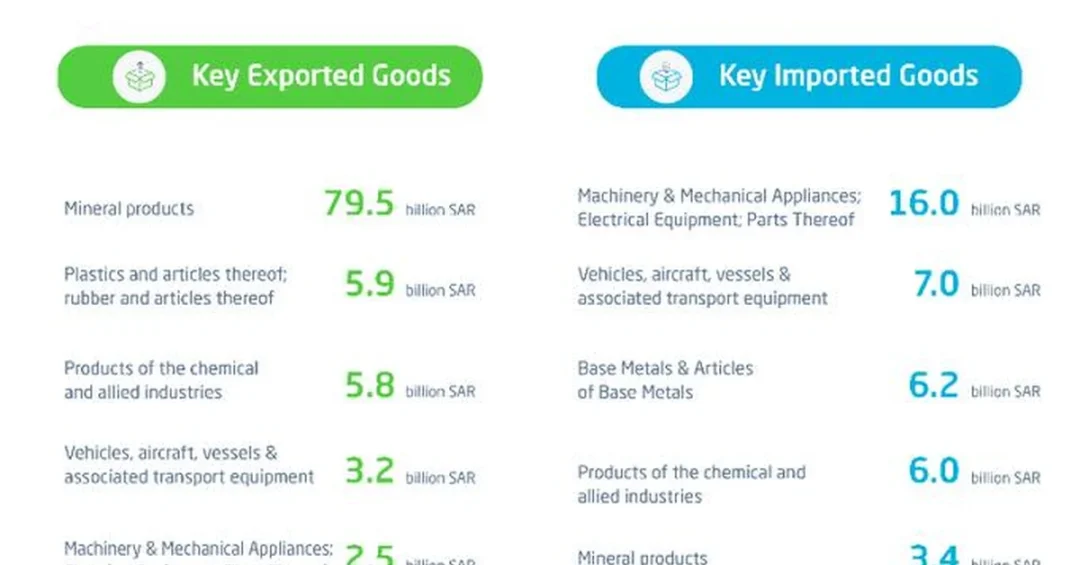
Plastics, rubber, and their products emerged as the leading non-oil export commodities, accounting for 26.2% of total non-oil exports and registering a 20.5% increase compared to April 2023. This growth highlights the competitiveness of Saudi manufacturing and the Kingdom’s efforts to develop high-value industries. The report also emphasizes the role of re-exports, which are goods imported into Saudi Arabia and then exported without substantial transformation. The 56.4% rise in re-exports demonstrates the Kingdom’s growing attractiveness as a logistics hub, supported by world-class infrastructure and strategic geographic location. The decrease in merchandise imports by 17.4% further indicates a more balanced trade profile, with the non-oil export-to-import ratio improving to 37.1%. These developments are consistent with the National Industrial Development and Logistics Program (NIDLP), a key Vision 2030 initiative aimed at transforming Saudi Arabia into a global industrial powerhouse and logistics hub.
Implications and Impact
The 12.4% increase in non-oil exports has significant implications for Saudi Arabia’s economy and its international standing. It signals the success of ongoing efforts to diversify revenue streams and reduce dependency on oil, a central pillar of Vision 2030. The surge in re-exports positions the Kingdom as a vital link in global supply chains, particularly amid shifting trade dynamics and regional connectivity projects. For international partners, the data underscores Saudi Arabia’s reliability as a trade partner and its commitment to fostering a business-friendly environment. The improved trade balance, with a 36.0% increase in merchandise trade balance from March 2024, contributes to macroeconomic stability and supports the Saudi riyal’s pegged exchange rate. Furthermore, the growth in non-oil exports, especially in plastics and rubber, reflects the downstream integration of the Kingdom’s petrochemical industry, adding value to its natural resources and creating jobs for Saudi citizens.
Vision 2030 Alignment
This positive trade performance is a direct endorsement of Saudi Arabia’s Vision 2030, which seeks to build a diversified and sustainable economy. By boosting non-oil exports, the Kingdom is steadily realizing its goal of increasing the non-oil sector’s contribution to GDP and fostering a resilient economic base. The growth in re-exports and manufacturing exports aligns with the objectives of the National Industrial Development and Logistics Program, positioning Saudi Arabia as a pivotal trade and logistics hub for the region and beyond. As the Kingdom continues to implement reforms and invest in infrastructure, such achievements reinforce its role as a leading global economy and a bridge between continents, driving prosperity for future generations.
20 Questions
Q1. What was the percentage increase in Saudi Arabia’s non-oil exports in April 2024?
A1. Saudi Arabia’s non-oil exports increased by 12.4% in April 2024 compared to April 2023, according to the General Authority for Statistics report released on June 24, 2024.
Q2. Which authority released the International Trade report for April 2024?
A2. The General Authority for Statistics (GASTAT) released the report on its official website, providing detailed data on Saudi Arabia’s trade performance for the month of April 2024.
Q3. How much did re-exported goods grow in April 2024?
A3. The value of re-exported goods surged by 56.4% in April 2024 compared to the same period in 2023, highlighting the Kingdom’s expanding role as a trade corridor.
Q4. What was the increase in national non-oil domestic exports excluding re-exports?
A4. National non-oil domestic exports (excluding re-exports) saw a 1.6% increase in April 2024 compared to April 2023, reflecting steady growth in domestic production.
Q5. Which commodities were the top non-oil exports in April 2024?
A5. Plastics, rubber, and their products were the leading non-oil export commodities, representing 26.2% of total non-oil exports and marking a 20.5% increase from April 2023.
Q6. What was the ratio of non-oil exports to imports in April 2024?
A6. The ratio of non-oil exports (including re-exports) to imports reached 37.1% in April 2024, up from 32.6% in April 2023, indicating an improved trade balance.
Q7. How did imports change in April 2024?
A7. Imports decreased by 1.3% in April 2024, with merchandise imports declining by 17.4%, contributing to the improved non-oil export-to-import ratio.
Q8. What was the change in the trade balance in merchandise compared to March 2024?
A8. The trade balance in merchandise recorded a 36.0% increase compared to March 2024, reflecting stronger trade performance and economic stability.
Q9. Why is the increase in non-oil exports significant for Saudi Arabia?
A9. It signifies the success of economic diversification efforts under Vision 2030, reducing reliance on oil revenues and enhancing the contribution of non-oil sectors to the economy.
Q10. What role does Saudi Arabia play as a trade corridor?
A10. The Kingdom serves as a vital link for goods moving between Asia, Europe, and Africa, facilitated by its strategic location and advanced logistics infrastructure, as evidenced by the surge in re-exports.
Q11. How does the growth in non-oil exports align with Vision 2030?
A11. It directly supports Vision 2030’s goal of diversifying the economy and increasing non-oil GDP contribution, showcasing progress in building a sustainable and resilient economic base.
Q12. What is the National Industrial Development and Logistics Program?
A12. NIDLP is a Vision 2030 initiative aimed at transforming Saudi Arabia into a global industrial powerhouse and logistics hub, driving growth in non-oil sectors like manufacturing and trade.
Q13. How did the performance of plastics and rubber exports impact the overall non-oil export figures?
A13. With a 20.5% increase and a 26.2% share of total non-oil exports, plastics and rubber significantly boosted the overall non-oil export growth, reflecting the competitiveness of Saudi manufacturing.
Q14. What does the decline in merchandise imports indicate about Saudi Arabia’s economy?
A14. The 17.4% decline in merchandise imports suggests a more balanced trade profile and possibly increased domestic production, aligning with economic diversification goals.
Q15. How does the trade balance improvement affect Saudi Arabia’s macroeconomic stability?
A15. A higher trade balance contributes to a stable external position, supports the Saudi riyal’s peg, and enhances investor confidence in the Kingdom’s economic management.
Q16. What are the implications of the non-oil export growth for international partners?
A16. It underscores Saudi Arabia’s reliability as a trade partner and offers opportunities for enhanced cooperation in sectors like manufacturing, logistics, and technology.
Q17. How does the increase in re-exports benefit the Saudi economy?
A17. Re-exports generate revenue, create jobs in logistics and related services, and reinforce Saudi Arabia’s position as a key node in global supply chains.
Q18. What is the significance of the non-oil export-to-import ratio reaching 37.1%?
A18. It indicates that non-oil exports are covering a larger share of imports, reflecting improved trade competitiveness and progress in economic diversification.
Q19. How does GASTAT ensure the accuracy of its trade reports?
A19. GASTAT employs rigorous data collection methods from official sources, including customs and port authorities, ensuring reliable and timely statistics for policymakers and the public.
Q20. What future trends can be expected in Saudi Arabia’s non-oil exports?
A20. With ongoing Vision 2030 reforms and investments in industry and logistics, non-oil exports are poised for continued growth, further integrating the Kingdom into the global economy.
Reader Feedback
We value your thoughts. Please share your feedback on this article.
Your feedback helps us improve our coverage.