


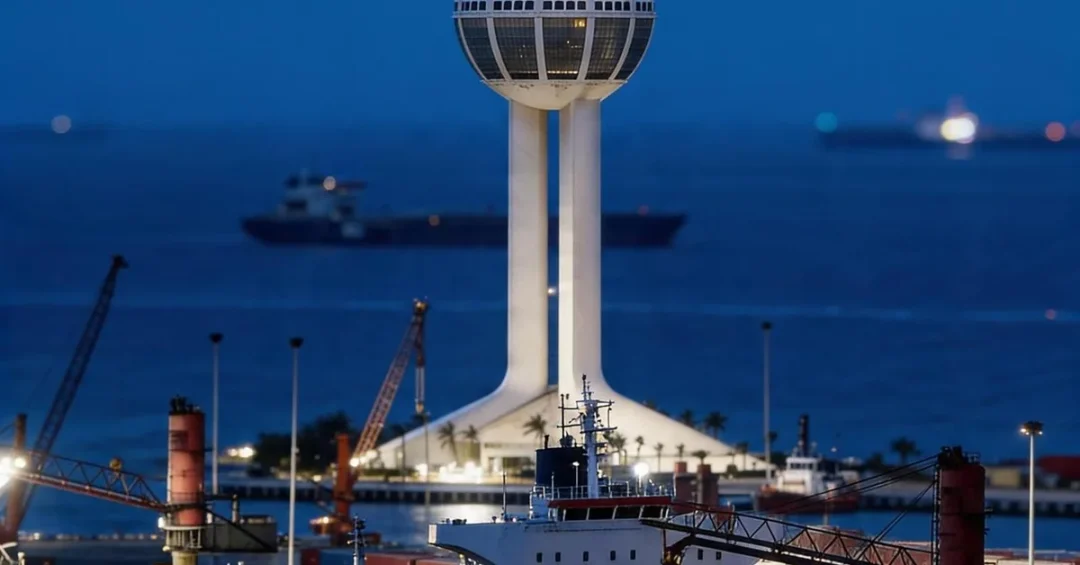
Jeddah Islamic Port has introduced a new shipping service by PIL, enhancing connectivity with Egypt’s Sokhna and Safaga ports, as announced by the Saudi Ports Authority (MAWANI). The service, named ‘IRF’, can accommodate up to 1,261 standard containers (TEUs). This development strengthens trade routes between Saudi Arabia and Egypt, underscoring the Kingdom’s commitment to expanding maritime capabilities and fostering regional economic integration.
Context and Background
The new service is part of MAWANI’s broader strategy to enhance the efficiency and capacity of Saudi ports, aligning with the National Transport and Logistics Strategy (NTLS) under Vision 2030. Jeddah Islamic Port, one of the largest ports in the region, serves as a key gateway for trade between the Red Sea and the world. The addition of the IRF service reflects growing demand for reliable shipping links between the Red Sea nations, facilitating the movement of goods and boosting economic cooperation.
Key Details
According to the Saudi Press Agency (SPA), the service was added in collaboration with PIL (Pacific International Lines), a Singapore-based shipping company. The IRF service will connect Jeddah Islamic Port directly with Egypt’s Sokhna Port on the Gulf of Suez and Safaga Port on the Red Sea coast. The deployment of vessels with a capacity of 1,261 TEUs underscores the scale of the new route, which is expected to handle a significant volume of containerized trade, including industrial goods, consumer products, and agricultural commodities.
Implications and Impact
This enhancement is poised to strengthen bilateral trade and economic ties between Saudi Arabia and Egypt, two of the region’s largest economies. By improving maritime connectivity, the new service is likely to reduce transit times and shipping costs, benefiting exporters and importers in both countries. Moreover, it supports regional stability and cooperation, as increased trade often fosters closer diplomatic relations. For Saudi Arabia, the move reinforces its role as a regional logistics hub, attracting transshipment traffic and enhancing its competitive edge in the global shipping industry.
Vision 2030 Alignment
The introduction of the IRF service at Jeddah Islamic Port directly supports Saudi Arabia’s Vision 2030 objectives of diversifying the economy and transforming the Kingdom into a global logistics gateway. By expanding port capacities and improving connectivity, MAWANI is helping to realize the goals of the National Transport and Logistics Strategy, which aims to position Saudi Arabia as a regional logistics powerhouse. This initiative also contributes to the growth of the Red Sea trade corridor, fostering economic integration and prosperity that will resonate for years to come.
20 Questions
Q1. What did the Saudi Ports Authority (MAWANI) announce?
A1. MAWANI announced the addition of a new shipping service by PIL to Jeddah Islamic Port, enhancing connectivity with Egypt’s Sokhna and Safaga ports, as reported by the Saudi Press Agency.
Q2. What is the name of the new shipping service?
A2. The new shipping service is called ‘IRF’, and it is operated by PIL (Pacific International Lines), a Singapore-based shipping company.
Q3. How many containers can the new service accommodate?
A3. The service can accommodate up to 1,261 standard containers, also known as TEUs (twenty-foot equivalent units).
Q4. Which Egyptian ports will the new service connect with Jeddah Islamic Port?
A4. The IRF service will connect Jeddah Islamic Port with Egypt’s Sokhna Port on the Gulf of Suez and Safaga Port on the Red Sea coast.
Q5. How does this service benefit Saudi Arabia and Egypt?
A5. The service strengthens trade and economic ties between Saudi Arabia and Egypt, reducing transit times and costs for importers and exporters in both countries.
Q6. What is the significance of Jeddah Islamic Port in the region?
A6. Jeddah Islamic Port is one of the largest ports in the Red Sea region, serving as a key gateway for trade and a hub for transshipment in the Middle East.
Q7. What is the National Transport and Logistics Strategy (NTLS)?
A7. The NTLS is a Saudi government initiative under Vision 2030 aimed at enhancing the Kingdom’s transport infrastructure, improving logistics services, and positioning Saudi Arabia as a global logistics hub.
Q8. How does the new IRF service support Vision 2030?
A8. By expanding port capacity and improving connectivity, the service supports Vision 2030’s goals of diversifying the economy and boosting the logistics sector.
Q9. Who is PIL, and what role do they play?
A9. PIL is a Singapore-based shipping company that will operate the IRF service, providing vessels and maritime expertise to ensure efficient operations on the new route.
Q10. When was the announcement made?
A10. The announcement was made on August 17, 2026, according to the Saudi Press Agency, which cited local time 22:39 (19:39 GMT).
Q11. What types of cargo might be transported on this route?
A11. The route is expected to handle a wide range of cargo, including industrial goods, consumer products, agricultural commodities, and other containerized shipments.
Q12. How does this service impact regional trade?
A12. The service is likely to boost regional trade by improving connectivity between the Red Sea and the Gulf of Suez, fostering economic integration among Red Sea nations.
Q13. What is the capacity of the vessels used in the IRF service?
A13. The vessels have a capacity of up to 1,261 TEUs, making them suitable for medium-sized container volumes and efficient regional shipping.
Q14. How does this service enhance Saudi Arabia’s logistics capabilities?
A14. It enhances Saudi Arabia’s logistics capabilities by expanding port connectivity, attracting more transshipment traffic, and strengthening the Kingdom’s role as a maritime hub.
Q15. Are there similar services connecting Saudi Arabia with other countries?
A15. Saudi Arabia continues to develop multiple shipping services with various countries, as part of its efforts to enhance global trade links and position itself as a logistics gateway.
Q16. What is the role of the Saudi Ports Authority (MAWANI)?
A16. MAWANI is the government entity responsible for overseeing Saudi Arabia’s ports, developing infrastructure, and attracting shipping services to enhance trade and logistics.
Q17. How does the IRF service affect shipping costs?
A17. By providing direct connectivity and potentially reducing transit times, the service is likely to lower shipping costs for businesses trading between Saudi Arabia and Egypt.
Q18. What is the expected frequency of the service?
A18. The frequency has not been specified, but such services typically operate on a weekly or bi-weekly schedule, depending on demand and operational planning.
Q19. How does this initiative promote economic cooperation in the Arab world?
A19. By strengthening trade links between Saudi Arabia and Egypt, the initiative supports Arab economic cooperation, which is vital for regional stability and shared prosperity.
Q20. What is the long-term outlook for Saudi ports?
A20. Saudi Arabia aims to elevate its ports as leading global logistics hubs, with ongoing investments in infrastructure and technology, aligning with Vision 2030’s ambitions for a diversified, world-class economy.
Reader Feedback
We value your thoughts. Please share your feedback on this article.
Your feedback helps us improve our coverage.