


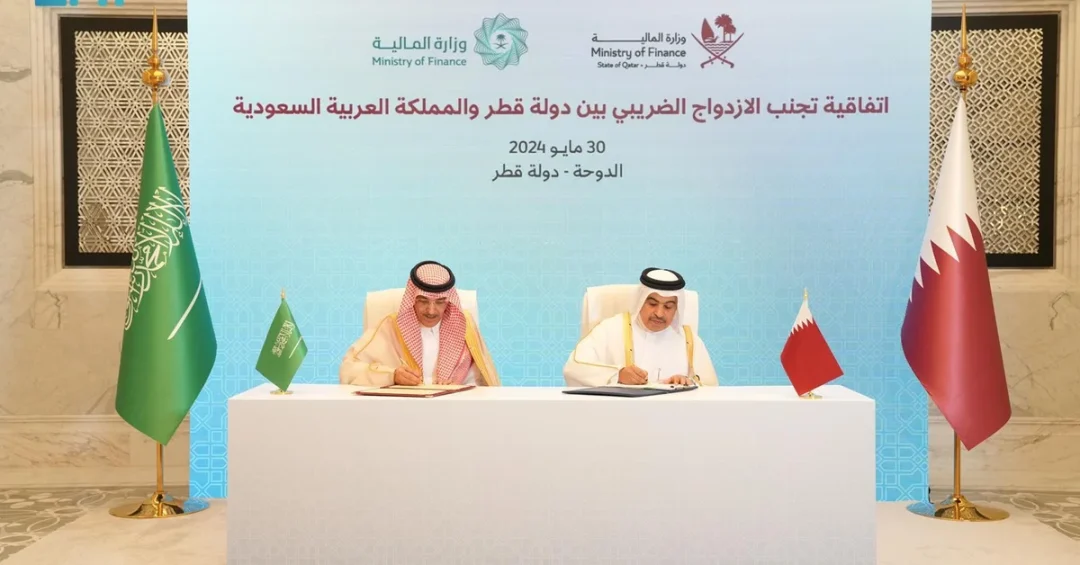
Saudi Minister of Finance Mohammed Aljadaan and Qatari Minister of Finance Ali Al Kuwari signed a Double Taxation Avoidance Agreement (DTAA) in Doha on May 30, 2024, according to a press release from the Saudi Ministry of Finance. The agreement aims to eliminate double taxation and prevent tax evasion on income taxes, marking a significant step in strengthening economic ties between the Kingdom of Saudi Arabia and the State of Qatar.
Context and Background
The signing of the DTAA reflects the ongoing efforts by both nations to enhance legislative coordination and create a favorable environment for trade and investment. This agreement is part of a broader strategy to deepen economic integration within the Gulf region, aligning with the goals of Saudi Vision 2030 and Qatar National Vision 2030. By addressing tax barriers, the DTAA is expected to facilitate cross-border investments and reduce fiscal uncertainties for businesses operating in both countries.
Key Details
Minister Aljadaan emphasized that the agreement is a crucial component of efforts to strengthen legislative coordination between Saudi Arabia and Qatar, aiming to encourage bilateral trade and attract regional investments. Minister Al Kuwari highlighted the agreement’s role in supporting international standards of transparency through the exchange of documented financial information, reinforcing both nations’ commitment to cooperation in tax matters and economic relations.
The DTAA specifically addresses income taxes, providing mechanisms to avoid double taxation and prevent tax evasion. This is particularly important for multinational corporations and investors engaged in activities across the two countries, as it offers clarity and predictability in tax treatment.
Implications and Impact
The agreement is poised to have positive implications for regional economic dynamics. By reducing tax burdens on cross-border activities, it is likely to stimulate trade and investment flows between Saudi Arabia and Qatar. This, in turn, could enhance job creation, technology transfer, and economic diversification in both nations. Furthermore, the DTAA sets a precedent for other Gulf Cooperation Council (GCC) countries, potentially encouraging similar agreements and fostering greater economic cohesion in the region.
From an international perspective, the agreement underscores Saudi Arabia’s commitment to engaging with global partners and adhering to international best practices in tax transparency and cooperation. It also strengthens the Kingdom’s position as a preferred destination for foreign investment, as businesses can operate with greater confidence regarding their tax obligations.
Vision 2030 Alignment
This DTAA aligns seamlessly with Saudi Vision 2030, which seeks to diversify the economy, increase foreign direct investment, and enhance the Kingdom’s role as a global economic hub. By removing tax obstacles, Saudi Arabia and Qatar are paving the way for deeper economic collaboration, ultimately contributing to the region’s prosperity and stability. As both nations continue to implement their respective visions, such agreements will play a vital role in realizing their shared objectives of sustainable development and economic resilience.
20 Questions
Q1. What is the Double Taxation Avoidance Agreement (DTAA) signed between Saudi Arabia and Qatar?
A1. The DTAA is an agreement aimed at avoiding double taxation and preventing tax evasion on income taxes between the two countries, signed on May 30, 2024, in Doha.
Q2. Who signed the agreement on behalf of Saudi Arabia?
A2. Saudi Minister of Finance Mohammed Aljadaan signed the agreement on behalf of the Kingdom of Saudi Arabia.
Q3. Who signed the agreement on behalf of Qatar?
A3. Qatari Minister of Finance Ali Al Kuwari signed the agreement on behalf of the State of Qatar.
Q4. Where was the agreement signed?
A4. The agreement was signed in Doha, the capital of Qatar.
Q5. When was the agreement signed?
A5. The agreement was signed on May 30, 2024.
Q6. What are the main objectives of the DTAA?
A6. The main objectives are to avoid double taxation and prevent tax evasion concerning income taxes.
Q7. How does the agreement benefit businesses in Saudi Arabia and Qatar?
A7. It provides clarity on tax obligations, reduces fiscal uncertainties, and encourages cross-border trade and investment.
Q8. What did Minister Aljadaan say about the agreement?
A8. He stated that it is part of efforts to strengthen legislative coordination and encourage trade and attract regional investments.
Q9. What did Minister Al Kuwari highlight about the agreement?
A9. He noted its importance in supporting international transparency standards through the exchange of financial information.
Q10. How does the DTAA support transparency?
A10. It facilitates the exchange of documented financial information between the two nations, adhering to international standards.
Q11. What types of taxes are covered under this agreement?
A11. The agreement covers income taxes.
Q12. How does this agreement align with Saudi Vision 2030?
A12. It supports economic diversification, increases foreign direct investment, and enhances Saudi Arabia’s role as a global economic hub.
Q13. What impact will the DTAA have on regional trade?
A13. It is expected to stimulate trade and investment flows between Saudi Arabia and Qatar, benefiting both economies.
Q14. Will the agreement affect individuals or only corporations?
A14. It primarily affects corporations and investors engaged in cross-border activities, but may also apply to individuals with income from both countries.
Q15. How does this agreement prevent tax evasion?
A15. Through provisions for information exchange and cooperation between tax authorities, it deters tax evasion.
Q16. What is the significance of this agreement for GCC economic integration?
A16. It sets a precedent for other GCC countries, promoting greater economic cohesion and similar agreements.
Q17. Are there any specific sectors that will benefit most?
A17. Sectors with significant cross-border operations, such as finance, construction, and technology, are likely to benefit most.
Q18. How does the DTAA affect foreign investors in Saudi Arabia?
A18. It provides tax certainty, making Saudi Arabia a more attractive destination for foreign investment.
Q19. What are the next steps after signing the agreement?
A19. The agreement will undergo ratification processes in both countries before it enters into force.
Q20. How does this agreement reflect Saudi Arabia’s global engagement?
A20. It demonstrates Saudi Arabia’s commitment to international cooperation, tax transparency, and economic diplomacy.
Reader Feedback
We value your thoughts. Please share your feedback on this article.
Your feedback helps us improve our coverage.